
Remember me




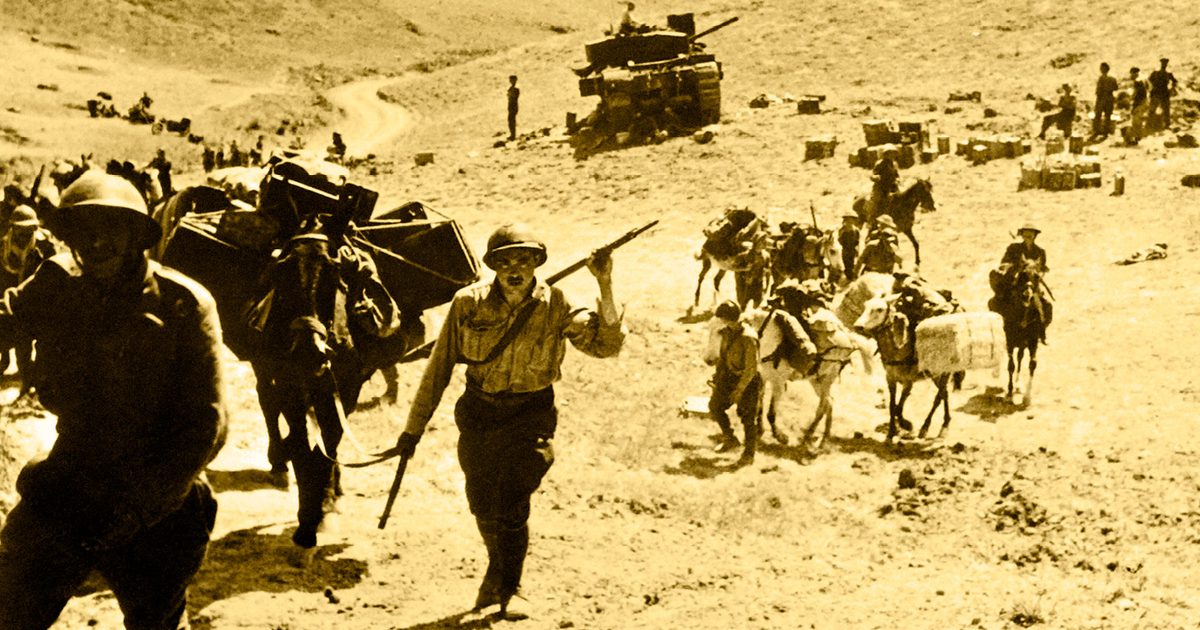
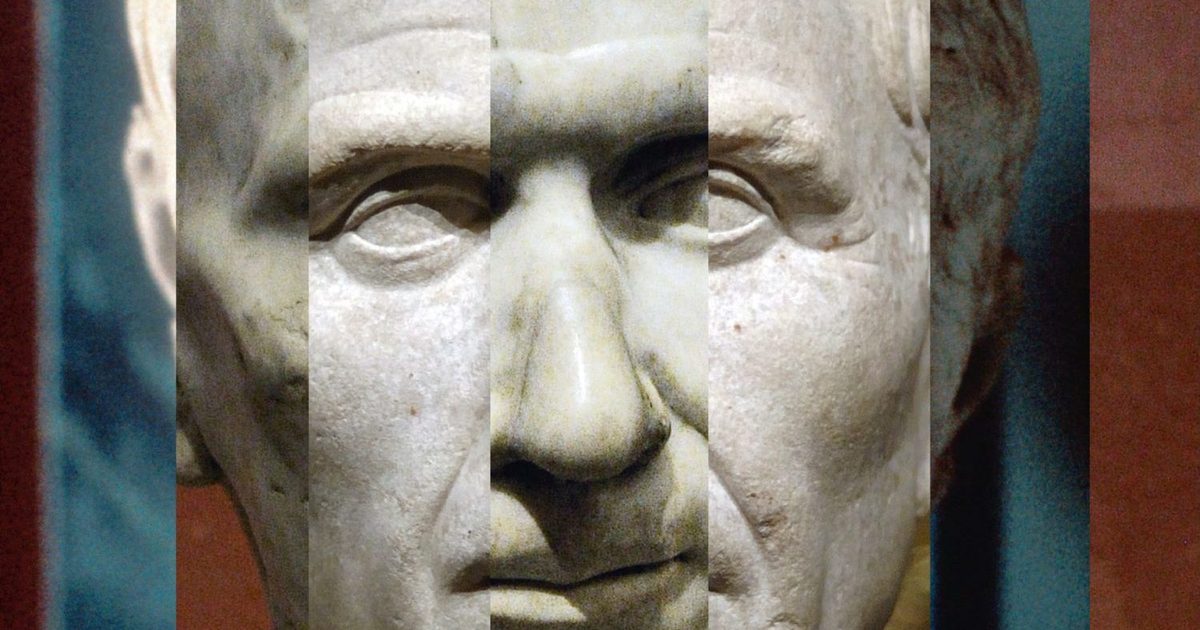
The most celebrated of all ancient Romans almost met a watery end before he’d made his big splash in the vast ocean of history. In 75 BC, Julius Caesar – then in his mid-20s and yet to establish himself as the most powerful man in Rome – sailed to Rhodes to study with a famous Greek rhetorician. But on his journey east, he was kidnapped by Cilician pirates from southern Anatolia.
There was nothing so unusual about this stroke of misfortune – the waters of the eastern Mediterranean were plagued by bandits all too willing to prey on Roman travellers. But there was certainly something unusual about what happened next.
Seemingly oblivious to the danger in which he now found himself, Caesar decisively took control of the situation. According to his biographer, Plutarch, “when the pirates demanded 20 talents for his ransom, he laughed at them for not knowing who their captive was, and of his own accord agreed to give them 50”. While his agents set out to raise the ransom money, Caesar made the pirates listen to his speeches and poetry, assuring them that he would come after them as soon as he was freed.
He was as good as his word. Having paid the ransom, Caesar raised a fleet from the cities of the Roman province of Asia (western Anatolia) and captured the pirates. Then, when he discovered that the corrupt governor of Asia was looking to make a profit from the captives, he “took the robbers out of prison and crucified them all, just as he had often warned them on the island that he would do, when they thought he was joking”. It was a brutal act of revenge – softened only slightly by the fact that he slit the pirates’ throats to spare them the agony that would have been their fate on the crosses.

A bust of Julius Caesar as a young boy. He learned his mastery of language from a tutor during his teens, and his wit from an uncle famed for humour (Image by Topfoto)
Origin storiesCaesar’s pirate-slaying escapades represent a truly extraordinary tale. But what are we to make of it? We know a great deal about Julius Caesar in the ‘colossus’ phase of his career – that period stretching from his mid-thirties to his assassination in his mid-fifties when he was an established political and military powerhouse. But for the earlier part of his life – before his every act was performed in the full glare of the ancient world’s attention – it’s a different story.
Caesar’s youth and young manhood is shrouded in mystery and conjecture. The tales of his formative years are subject to exaggeration, even outright invention. Yet that doesn’t make examining that early life any less worthwhile. Doing so gives us rich insights into not only the rise of one of the ancient world’s towering figures but also of the political motivations of those who wrote that history in the chaos that followed his death.
Caesar’s youth is shrouded in mystery, with tales subject to exaggeration, even outright invention
Much of what we know about Caesar’s early life has come to us through his two biographers, Suetonius and the aforementioned Plutarch, both writing towards the beginning of the second century AD, around 150 years after his death. Their accounts of those early years are quite similar, which suggests that they drew on a common source. Based on quotations in Suetonius’s writings, that source can be identified as Gaius Oppius, one of Caesar’s most powerful lieutenants.
When it came to setting the record straight, Oppius was more interested in a good story than the truth. The same was true of his colleague Aulus Hirtius, who was at work in the same months editing and updating notes that Caesar himself had left behind. Both men were working under the overall guidance of Cornelius Balbus, who had been Caesar’s chief of staff.
Oppius got to work soon after Caesar’s murder on the Ides of March 44 BC. He needed to set the record straight at a time when Caesar’s legacy was being challenged by two very different forces. First, and most predictably, there were the assassins, who presented the slain leader as a tyrant whose character was shaped by uncontrolled arrogance and ambition. The second was aspiring ruler Mark Antony – leading general and one of Caesar’s most powerful supporters – who was also shaping the dead dictator’s legacy to suppress the interests of his chosen heir, Octavian, the future emperor Augustus.
So what do Oppius’s writings, communicated to us via Suetonius and Plutarch, tell us about Caesar’s earlier years? And do they contain any clues about how this product of a moderately successful patrician family rose to such dizzying heights of power?

Caesar was reportedly devoted to his mother, Aurelia, shown in a 16th-century woodcut
Classical educationCaesar certainly seems to have benefited from a good eduction. His mother, Aurelia – whom Plutarch describes as “a woman of discretion” – saw to that. She found him an excellent tutor for his early teens, Marcus Antonius Gnipho, who went on to run his own well-regarded school. Gnipho had strong views on the Latin language, arguing that a word should only have a single meaning. This made quite an impression on his pupil: Caesar later wrote a book about this very subject, endorsing his tutor’s opinions. Another influence was an uncle, Caesar Strabo Vopiscus, who was famous for his wry sense of humour, which perhaps inspired the wit in Caesar’s writings.
One person missing from any story of Caesar’s youth is his father, Gaius Julius Caesar. The biographies emphasise Caesar junior’s devotion to his mother, Aurelia, and make a great deal of his link to another uncle, Gaius Marius, who was renowned as the saviour of Rome from a barbarian invasion around the time of Caesar’s birth. His father, however, is nowhere to be seen.
Was Caesar senior an absent dad? Or did he just not care? The marriages arranged for his offspring – to people who, while socially acceptable, lacked the drive to support the young Caesar – suggests the latter. The young Caesar’s first marriage, in his early teens, was to a girl named Cossutia, whose family hailed from well outside the political elite.
Young Caesar’s status changed after his uncle Marius had himself installed as consul of Rome – the highest elected public official in the Republic – alongside Cornelius Cinna, following a civil war in 87 BC. To bolster this alliance, Marius had Caesar’s marriage to Cossutia dissolved so that the teenager could marry Cinna’s daughter, Cornelia. Caesar, we’re told, loved Cornelia deeply. If his father had any influence on the new match, the sources don’t mention it.

This 1789 painting, Marius Returning to Rome, imagines the homecoming of Caesar’s uncle, who rose to become consul – then became embroiled in a bitter civil war with a rival, Sulla (Image by Alamy)
Thanks to his family connections, the young Caesar was increasingly pulled into the orbit of political power. For his later biographers, though, that wasn’t enough: what was needed at this stage in his life were adventures providing context for the great events that came later. If these episodes included triumph over loss and oppression, all the better. And in Caesar’s interactions with the Roman general and dictator Lucius Cornelius Sulla Felix, that’s exactly what they got. Sulla’s dramatic arrival on the scene – seizing Rome, establishing a dictatorship and ruthlessly hunting down his enemies – shaped the politics of a generation. It also shaped the politics of Caesar himself.
Sulla had become a major figure on the political stage when he was elected to one of Rome’s two consulships, in 88 BC. He was then awarded a campaign against Mithridates, ruler of the kingdom of Pontus, who had invaded Rome’s provinces in western Anatolia and encouraged the slaughter of Roman citizens. But then the command against Mithridates was taken from Sulla and awarded to Caesar’s uncle Marius. That’s when things turned ugly.
Outraged, Sulla marched on Rome, stormed the city and declared that he had restored the rightful constitution. Marius was forced into hiding, but then returned with Cinna a year later, in 87 BC, winning the civil war mentioned earlier. Sulla then turned the tables on his enemies once again, launching a huge invasion of Italy in 83 BC. His military victory was complete by the end of the following year, at which point he posted up the names of his enemies – his notorious ‘proscription lists’ – around Rome.
Where did this leave Caesar? We can’t know for sure. Yet, as the nephew of Marius and son-in-law of Cinna, he may well have been at the top of those lists. Sulla certainly seems to have made life pretty uncomfortable for him. The sources claim that the dictator deprived Caesar of the post of flamen dialis (high priest of Jupiter) to which he had been – or was about to be – appointed. They also tell us of Sulla’s demand that Caesar divorce Cornelia – and that, when the young man refused, he was forced to flee.
Marked manFor Caesar’s biographers, there was no lack of drama in this period of their subject’s life. He was, they tell us, pursued into hiding by one of Sulla’s assassins, who soon caught up with the fugitive – and spared him only after he agreed to pay a large bribe. When Caesar did eventually appear before Sulla, accompanied by his mother’s brothers and the Vestal Virgins, Sulla reluctantly granted him a pardon. “Have your way and take him,” he reportedly declared, “only bear in mind that the man you are so eager to save will one day deal the death blow to the cause of the aristocracy, which you have joined with me in upholding; for in this Caesar there is more than one Marius.”
At this point we must proceed with caution. Did Sulla really utter these portentous words? To many historians, they bear all the hallmarks of a dramatic device, injected into the story to add an extra layer of jeopardy. As for the claim that Sulla denied Caesar the priesthood, that appears to be even more unlikely – because the latter never would have held the position. Cornelius Tacitus, Rome’s greatest historian, states that the post of flamen dialis remained unoccupied for 75 years after the death of a priest called Merula in 87 BC. What’s more, a requirement for the post was that both of the priest’s parents be patricians – members of Rome’s archaic aristocracy. Aurelia was from a wealthy family, but she was no patrician.

Reliefs on a Roman sarcophagus depict events in a child’s life. Caesar’s youth was shaped by his mother, while his father seems to have been largely absent – or disinterested – during the boy’s early years (Image by Getty Images)
Some historians have also speculated that Sulla’s antipathy towards Caesar has been overstated. Light is shed on this point by Caesar’s first post, an appointment to the Roman province of Asia, where he served under one of Sulla’s most trusted lieutenants. Would this man really have taken on a youth whom his boss hated? It seems unlikely.
Caesar’s service in Asia was notable for two events. One was the award he won for valour, having saved the life of a fellow soldier in combat. The other was his dispatch to the kingdom of Bithynia in the north-west corner of Anatolia, where he convinced the ruler, Nicomedes IV, to lend Rome naval reinforcements. A story that has swirled for 2,000 years – that Caesar had a sexual relationship with Nicomedes (Suetonius writes that “he dawdled so long at the court of Nicomedes that he was suspected of improper relations with the king”) – appears to be baseless.
What does seem certain is that Caesar’s experience of persecution by Sulla – deprived of office and property, pursued by homicidal thugs – moulded his later career. After his rise to power in the 60s BC, Caesar repeatedly drew contrasts between the mercy he showed his defeated foes and Sulla’s mass murder of political rivals. And though he came from a noble family – descended, so the story goes, from Rome’s founder, Aeneas – he took the ‘popular’ path to the political summit in a bid to undo Sulla’s conservative constitution, which was designed to keep wealth in the hands of Sulla’s friends and prevent ambitious people from challenging the status quo.

Nicomedes IV of Bithynia, whom Caesar persuaded to lend Rome naval reinforcements during action in Asia (Public domain)
Sulla died in 78 BC, and Caesar returned to Rome soon afterwards. A year later he embarked on a career in law, prosecuting two of Sulla’s most prominent lieutenants for corruption in provincial offices. That wasn’t an act of anti-regime revenge: young men routinely drew attention to themselves by serving as prosecutors. Caesar’s speech in one of these cases, prosecuting a man named Antonius, was so effective that the officials in charge of maintaining the citizen roll quoted it when they banished the convicted man.
His biographer needed to burnish Caesar’s story, showcasing his subject’s courage, resilience and resourcefulness
Caesar’s eloquence was soon attracting more attention among the ranks of Rome’s elite. In the words of Plutarch: “It is said that Caesar had the greatest natural talent for political oratory, and cultivated his talent most ambitiously.” Even Cicero, who opposed Caesar, later stated that the latter could have become the greatest orator of his generation. But that wasn’t good enough for Oppius. He needed to burnish Caesar’s story with one more escapade showcasing his subject’s courage, resilience and resourcefulness. The tale of his capture by pirates did just that.
Unlikely anecdotesSo, to return to an earlier question, what are we to make of this tale? Caesar may well have been captured by pirates, but details in the story ring alarm bells. A ransom of 50 talents appears extremely high in a region that was largely bankrupt. And at the time, Caesar held no public office and, therefore, no authority to kill anyone, even a pirate.
Perhaps, then, we should reassess this episode by considering what Oppius was trying to say about his former boss. The story was, perhaps, an attempt to contrast the ‘mercy’ of Caesar with the brutality of Crassus, who crucified thousands of Spartacus’s followers a few years later – and didn’t cut their throats to spare them protracted suffering. It also establishes Caesar as a foe of piracy years before Pompey – his one-time ally, later bitter enemy – took on a command to purge pirates from the seas.

A Roman mosaic depicts the god Bacchus fighting pirates. Julius Caesar’s encounter with sea-going bandits may have been embellished to emphasise his courage and resilience, writes David S Potter (Image by Getty Images)
No matter how extravagantly the stories of Caesar’s dealings with Sulla and his capture by pirates were embellished, it’s not hard to join the dots between the young Caesar and the icon. He was a brilliant student of literature, shaped by excellent role models. His relationship with Aurelia, a strong character in her own right, may have influenced his own attraction to smart, powerful women, including his long-term mistress Servilia and later, Cleopatra. And he was courageous. The man who stood in the front line during crises in Gaul and the civil war against Pompey was the same person who had saved a fellow soldier’s life in Asia.
Caesar the politician, however, was more the product of the dysfunctional Rome of his adulthood than of any event in his youth. When all’s said and done, it was his meticulous attention to detail and supreme ability to think on his feet that powered his incredible rise. And it seems that these were talents with which he was born, rather than ones honed through the adventures of youth.
David S Potter is a professor of Greek and Roman history at the University of Michigan. His latest book, Master of Rome: A Life of Julius Caesar (OUP, 2025)
This article was first published in the December 2025 issue of BBC History Magazine
Comments (0)