


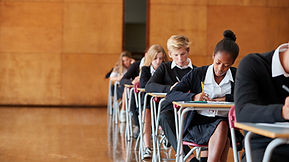
Secondary school student coaching is a focused, structured approach designed to help students navigate the increasing academic and personal demands of middle and high school education. At this stage, expectations rise significantly, requiring students to manage multiple subjects, deadlines, and responsibilities while also developing independence.
We position coaching as a practical system for performance and development, not just support. It equips students with the skills needed to organise their workload, manage their time effectively, and approach challenges with clarity and confidence. The emphasis is on building habits that lead to consistent results rather than temporary improvements.
Through a targeted coaching framework, students learn how to think strategically about their work, enabling them to perform at a higher level across all subjects.
Why Secondary School Years Are Critical
The secondary school years are a defining period in a student’s academic journey. It is during this time that foundational habits are formed, influencing future success in higher education and beyond.
We recognise that many students struggle not because they lack ability, but because they lack structure, direction, and effective systems. As academic pressure increases, so does the need for skills such as planning, prioritisation, and self-discipline.
Without these skills, students may experience missed deadlines, inconsistent performance, and unnecessary stress. Secondary school student coaching addresses these challenges directly, providing a clear path toward improvement.
Building Executive Function Skills in Students
A core component of effective coaching is the development of executive function skills. These are the mental processes that enable students to manage tasks, control their attention, and regulate their behaviour.
We focus on strengthening key areas such as organisation, time management, task initiation, and focus. These skills are essential for handling the complexity of secondary school workloads.
By improving executive function, students gain the ability to approach assignments methodically, rather than reactively. This leads to higher-quality work and a more controlled academic experience.
Supporting Students Beyond the Classroom
Secondary school student coaching extends beyond academic performance. It also addresses the broader challenges students face, including motivation, confidence, and emotional regulation.
We work with students to develop a strong sense of responsibility for their own learning. This includes setting realistic goals, tracking progress, and reflecting on outcomes. As a result, students become more engaged and invested in their education.
Maximising the Impact of Parent-Teacher Communication
An often overlooked aspect of student success is the role of effective communication between parents, teachers, and students. Parent-teacher meetings provide valuable insights, but without a clear strategy, their impact can be limited.
We guide students and families in making the most of these interactions. This involves preparing specific questions, understanding feedback, and translating that feedback into actionable steps.
Coaching ensures that information gained from teachers is not lost, but instead used to refine strategies and improve performance. This creates a cohesive support system that aligns efforts across school and home environments.
Developing Consistent Study Habits
Consistency is a defining factor in academic success. Many students rely on last-minute effort, which leads to stress and uneven results. Secondary school student coaching replaces this approach with structured study habits that promote steady progress.
We help students establish routines that fit their schedule and learning style. These routines are designed to reduce procrastination and increase efficiency.
Improving Time Management and Organisation
Time management is one of the most common challenges faced by secondary school students. With multiple subjects and competing priorities, it is easy to fall behind.
We introduce systems that bring clarity to how time is used. Students learn how to plan their week, allocate time to specific tasks, and adjust their schedule as needed.
Organisation is closely linked to time management. A well-organised system reduces confusion and allows students to focus on completing their work rather than searching for it.
These improvements create a more controlled and predictable academic experience.
Enhancing Focus and Reducing Distractions
Maintaining focus in a world filled with distractions is a significant challenge for students. Coaching addresses this by treating focus as a skill that can be developed.
We provide strategies that help students minimise interruptions and sustain attention for longer periods. This leads to deeper understanding and higher-quality work.
Students also learn how to recognise when their focus is declining and take appropriate action to regain it. This level of awareness is essential for maintaining productivity.
Encouraging Accountability and Independence
A key objective of secondary school student coaching is to develop independent learners. We encourage students to take ownership of their responsibilities and follow through on their commitments.
Accountability is built into the coaching process. Regular check-ins ensure that students remain on track and address any challenges promptly.
A Personalised Approach to Student Development
Every student is different, and effective coaching reflects this. We tailor our approach to match each student’s strengths, challenges, and goals.
This personalised approach ensures that strategies are relevant and practical. Students are more likely to engage with systems that feel natural and effective for them.
Flexibility is also essential. As students grow and their needs change, coaching adapts to ensure continued progress.
Long-Term Benefits of Secondary School Student Coaching
The impact of coaching extends far beyond immediate academic results. Students develop skills that will support them throughout their education and into their professional lives.
These include the ability to manage complex tasks, adapt to new challenges, and maintain consistent performance under pressure.
We view coaching as an investment in future success. The habits and skills developed during secondary school create a strong foundation for lifelong achievement.
Conclusion: Empowering Students for Lasting Success
Secondary school student coaching provides a clear, structured pathway for students to achieve their full potential. By focusing on executive function skills, effective study habits, and personal accountability, we enable students to navigate the demands of secondary education with confidence and control.
Comments (0)