


Interior demolition is a deceptive beast. On the surface, it looks straightforward—a bit of dust, some sledgehammer work, and a few dumpsters full of drywall. But anyone who has ever opened a wall in a Toronto home only to find a crumbling brick party wall or a main support beam compromised by decades of hidden water damage knows the truth. Interior demolition is a high-stakes operation where the line between a successful renovation and a structural catastrophe is razor-thin. Mammoth Demolition has built its expertise on understanding this reality, treating every interior project with the respect it deserves. Their approach is rooted in a simple but critical principle: before you can safely take something out, you must fully understand what is holding everything up.
Reading the Bones of Toronto's Older Buildings
Toronto's building stock tells a story of centuries of construction methods, from solid masonry Victorian homes to post-war concrete high-rises and modern steel-framed condos. Each era brought its own structural logic, and Mammoth's team begins every interior demolition project by learning to read these bones. They conduct exhaustive pre-demolition investigations, often peeling back small sections of finish material to reveal what lies beneath. Is that wall load-bearing, or is it a simple partition? Was that beam original to the construction, or was it added later as a repair? This detective work is essential because assumptions are dangerous. A wall that looks identical to its neighbor could be carrying the weight of three floors above, and a misplaced sledgehammer could have consequences that ripple through the entire structure. Mammoth's expertise lies in knowing what questions to ask and where to look for answers before any real work begins.
The Critical Importance of Engineered Shoring
Once the structural layout is understood, the next step is protection, and in interior demolition, protection means shoring. Mammoth Demolition employs a rigorous approach to temporary structural support that goes far beyond throwing up a few adjustable posts. Their shoring plans are engineered by qualified structural professionals who calculate the exact loads that must be carried and the precise points where support is needed. This might involve installing a network of steel beams and screw jacks to carry the weight of upper floors while a load-bearing wall is removed below. It might require needle beams threaded through existing walls to transfer loads to temporary foundations. Whatever the method, the goal is the same: to create a safe, stable environment where the demolition can proceed without any risk of unexpected settlement or collapse. This engineered approach is non-negotiable, and it is the foundation upon which every safe interior demolition Toronto is built.
Protecting Finishes and Adjacent Spaces
In many interior demolition projects, the work is not taking place in a vacuum. Often, the area being demolished is adjacent to spaces that will remain occupied or are scheduled for preservation. A retail store might be renovating half its space while keeping the other half open for business. A homeowner might be gutting a kitchen while living in the rest of the house. Mammoth Demolition excels at managing these complex boundaries. Their crews construct dust-tight barriers that seal off the work area, using zippered access doors and negative air pressure machines to prevent dust migration. They protect finished floors with heavy-duty ram board and wrap banisters and millwork in protective padding. This meticulous attention to the surrounding environment ensures that the demolition process does not inadvertently damage the very spaces the client is trying to preserve or improve.
The Delicate Work of Selective Demolition
Not every interior demolition is a full gut. Often, the goal is selective removal—taking out specific elements while leaving others perfectly intact. This might mean removing a non-load-bearing wall while preserving original plasterwork on an adjacent surface. It could involve carefully extracting old mechanical systems without damaging the structure that encases them. Mammoth's crews are trained in the art of selective demolition, using hand tools and precise cutting techniques to separate the wanted from the unwanted. They understand that a reciprocating saw can be just as destructive as a wrecking ball if used carelessly. By working methodically and with constant reference to the project plans, they ensure that what is supposed to stay, does stay, and what is supposed to go, goes without collateral damage.
Managing Hidden Hazards Within the Walls
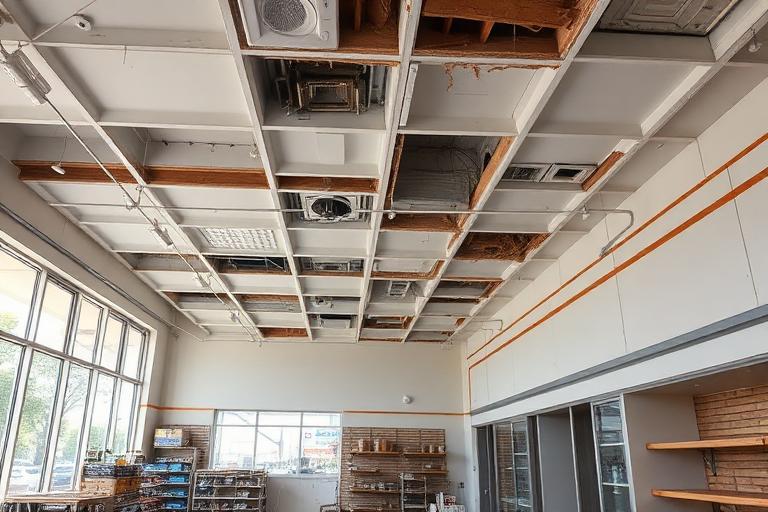
The spaces inside walls and ceilings are not just empty voids; they are often repositories for the hidden hazards of past construction. As Mammoth's crews open up a structure, they are constantly vigilant for the unexpected. Asbestos-containing insulation wrapped around old heating ducts. Lead paint layered beneath decades of wallcoverings. Knob-and-tube wiring that was never properly decommissioned. Mysterious odors indicating mold growth or even past animal occupation. Mammoth's protocols require that work stops immediately when something unexpected is encountered. A hazardous materials specialist is brought in to test and assess, and a plan is developed for safe abatement before demolition continues. This cautious approach protects not only the workers on site but also the future occupants of the space, who will breathe the air and live within those newly exposed walls.
Coordinating with Trades for a Seamless Transition
Interior demolition is rarely an end in itself; it is almost always the precursor to new construction. A successful demolition sets the stage for the trades that follow—electricians, plumbers, HVAC installers, and framers. Mammoth Demolition works closely with the project's general contractor and trade partners to understand exactly what they need. Does the electrician require certain chases left open for new wiring? Does the plumber need access to specific stacks? By coordinating these details in advance, Mammoth ensures that when they finish, the next crew can walk in and start work immediately, without having to redo demolition or clean up missed debris. This collaborative approach transforms interior demolition from a standalone task into an integrated part of a seamless construction process, saving time, money, and frustration for everyone involved.
Comments (0)