


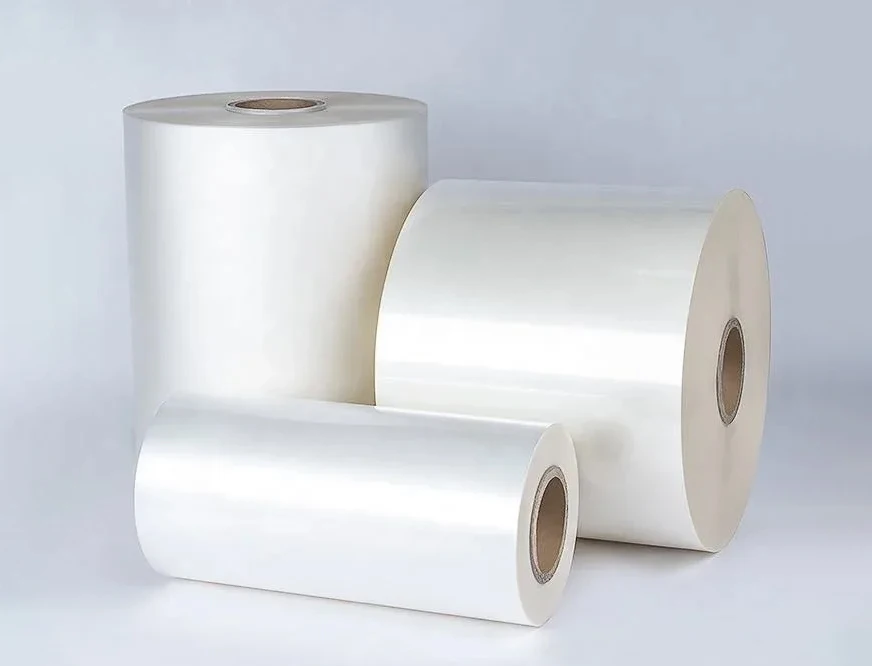
If you have ever wondered what makes BOPP film manufacturer so remarkably strong and clear despite being so thin, the answer lies in a process called biaxial orientation. In simple terms, the film is stretched in two directions—lengthwise and widthwise—while carefully controlled heat is applied. This aligns the polymer molecules like a perfectly organized parade, creating a material that punches far above its weight. HARDVOGUE has taken this foundational technology and pushed it further than most. Their advanced biaxial orientation lines are not just faster or bigger than competitors’ equipment; they are smarter, more precise, and capable of producing films that were impossible to make just a few years ago. Here is how that technology translates into real benefits for modern brands.
Precision Stretching for Molecular Perfection
The heart of HARDVOGUE’s advantage lies in their ability to control the stretching process with microscopic precision. Their biaxial lines use independent drive systems for each set of rollers, allowing them to adjust stretch ratios in real time based on sensor feedback. If the film shows signs of uneven thickness or orientation, the system corrects itself instantly. This precision means that every molecule ends up aligned in the optimal direction for strength and clarity. Competing manufacturers with older or less sophisticated equipment often end up with misaligned regions that create weak spots or optical defects. HARDVOGUE’s precision eliminates those flaws, producing film that is uniformly strong and uniformly clear from edge to edge.
Sequential vs. Simultaneous Orientation Mastery
There are two main approaches to biaxial orientation: sequential, where the film is stretched first in one direction and then the other, and simultaneous, where both stretches happen at once. Each has advantages, and HARDVOGUE has mastered both. Their sequential lines offer exceptional control for standard applications, while their simultaneous orientation capability allows them to produce films with more balanced properties in both directions. This versatility means that HARDVOGUE can choose the right technology for each product, rather than forcing every film through the same process. A brand needing film with equal strength in all directions gets a simultaneous-oriented product. A brand prioritizing low shrinkage in the machine direction gets a sequentially-oriented product. This technological flexibility is rare and valuable.
Temperature Zoning for Tailored Crystallinity
During biaxial orientation, temperature is just as important as stretch ratio. Too hot, and the polymer chains slide past each other without aligning properly. Too cold, and the film tears or develops haze. HARDVOGUE’s lines feature multiple independent temperature zones, allowing them to create customized thermal profiles for different film grades. They can start with a warmer zone for initial stretching, then cool gradually to lock in the oriented structure, then apply a final heat treatment to control shrinkage. This zoning capability means that HARDVOGUE can fine-tune the film’s crystalline structure for specific performance targets—higher strength, lower haze, better barrier, or reduced shrinkage. Competitors with simpler ovens cannot match this level of thermal control.
Reduced Gauge Variation Through Active Control
Gauge variation—changes in film thickness across the width of the roll—is the enemy of consistent performance. HARDVOGUE has attacked this problem with active gauge control systems that measure thickness hundreds of times per second and adjust die bolts automatically to compensate. Their biaxial orientation lines also contribute to gauge uniformity because the stretching process naturally smooths out minor variations from the extrusion stage. The combination of precision extrusion and precision stretching yields film with gauge variation measured in tenths of a micron. For brands running high-speed packaging lines, this uniformity means fewer seal failures, less wasted film, and more consistent print registration. It is a technical achievement that has direct, measurable business benefits.
High-Speed Production Without Quality Loss
Advanced technology is only useful if it can operate at commercial speeds. HARDVOGUE’s biaxial lines are designed for high throughput without compromising quality. Their orientation ovens maintain uniform temperature across the full width even at line speeds that would cause hot spots or cold zones in lesser equipment. Their winding systems handle the increased speeds without creating telescoped rolls or uneven tension. This combination of speed and quality means that HARDVOGUE can produce large volumes of premium film efficiently, keeping costs competitive. Brands benefit from shorter lead times and stable pricing, even as HARDVOGUE maintains the high quality standards that justify their reputation.
Enabling Thin-Gauge Films That Perform
One of the most exciting outcomes of HARDVOGUE’s biaxial technology is their ability to produce ultra-thin films that still meet demanding performance requirements. Thinner films require even more precise orientation because there is less margin for error. A tiny defect in a twelve-micron film represents a much larger percentage of the total thickness than the same defect in a twenty-micron film. HARDVOGUE’s advanced orientation control allows them to push gauges lower than most competitors can manage. These thin-gauge films use less plastic, cost less per square meter, and have a smaller environmental footprint—all while maintaining the strength and clarity that brands expect. That combination of thinness and performance is the hallmark of a manufacturer who has truly mastered biaxial orientation technology. And it is exactly why so many brands turn to HARDVOGUE when they need film that pushes the boundaries of what is possible.
Comments (0)