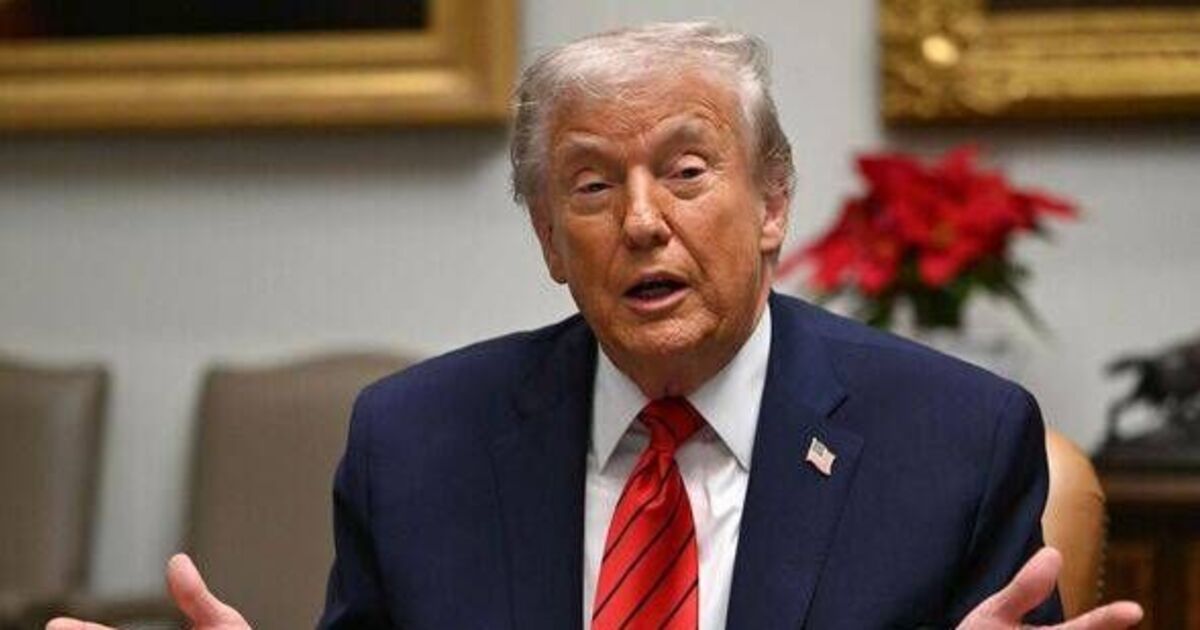
The BBC has come under fire for falsely claiming US President Donald Trump called for one of his leading critics Liz Cheney, to be shot in the face. In an internal memo reported on by The Telegraph, BBC News acknowledged that its coverage had been inaccurate, but the broadcaster failed to issue a public correction.
In the days leading up to the US presidential election in November 2022, a presenter on BBC World News America alleged that Trump "appeared to suggest Liz Cheney should face a firing squad for her stance on foreign policy."
Another presenter on the BBC News channel asked a guest, "He [Trump] is out there on the campaign trail saying he wants people to shoot Liz Cheney in the face… Is that the sort of thing women react well to?"
BBC's North America editor accused Trump of being a 'wannabe tyrant'
Sarah Smith, the BBC's North America editor, claimed on the Six O'Clock News that Trump had been "ratcheting up the violent rhetoric."
She added, "In the latest spat, Donald Trump has been accused of being petty, vindictive and a wannabe tyrant because he suggested that one of his political opponents should face guns, have them trained on her face."
Internal memo reveals BBC's admission of inaccurate coverage
In reality, Trump had accused Cheney, a vocal Republican opponent, of being a "radical war hawk" who wanted to send troops to war while she remained safe in Washington DC. He said, "Let's put her with a rifle standing there with nine barrels shooting at her face. OK? Let's see how she feels about it." The BBC's misrepresentation of Trump's comments sparked outrage among viewers and critics alike.
An internal memo on BBC bias concluded, "BBC News accepted that the Liz Cheney story was not covered accurately by the BBC, and the EGSC [editorial guidelines and standards committee] concluded errors were made on this specific issue." The memo, compiled by Peter Johnston, the director of the editorial complaints unit, was presented to the BBC board in October 2023 following claims of bias made by independent adviser Michael Prescott.
Leaked dossier exposes BBC's bias
Prescott's dossier, which was later leaked to The Telegraph, laid out his concerns about the corporation's news output. The memo, intended as a "preliminary analysis" and not for publication, was released at the request of MPs on the Culture, Media and Sport select committee.
Mr Johnston wrote: “BBC News did not agree with the assertion that the Panorama was anti-Trump. They pointed out that the programme was constructed with a spine of Trump supporters… so they argued that the overall tone was not anti-Trump, but seeking to understand his popular appeal.
“They also explained why due impartiality did not require an equivalent programme on [Kamala] Harris.”
The memo also revealed that BBC News staff defended the Panorama programme, which edited a speech by Trump to make it appear that he was directly inciting his followers to storm the Capitol. While staff argued that the programme was not anti-Trump, there was a "difference of opinion" on the editorial guidelines and standards committee about the editing of Trump's speech.
High-profile resignations at the BBC
Following the leak of the internal memo and the subsequent revelations by The Telegraph, BBC director-general Tim Davie and chief executive of BBC News Deborah Turness resigned from their positions. BBC chairman Samir Shah praised Davie as an "outstanding" director-general, citing the wider pressures of the job as the main reason for his resignation.
As the BBC faces mounting criticism over its handling of the Trump story and the subsequent fallout, the broadcaster has promised to publish a more detailed analysis of the matter in due course. The incident has raised serious questions about the BBC's impartiality and its commitment to accurate reporting, particularly when it comes to covering controversial political figures like Donald Trump.
The BBC published Johnston's note alongside a letter from Shah, discussing the resignations of Davie and Turness. The pair met in person over the weekend following The Telegraph's revelations, with Turness informing the board of her intention to resign earlier that day. Davie's resignation came as more of a surprise, with the board unanimously desiring him to stay, according to Shah.
While the Panorama edit was a contributory factor to Davie's resignation, Shah stated that "the wider pressures of the job over many years led him, reluctantly, to decide that this was the right moment to step down," praising him as an "outstanding" director-general.