
Remember me




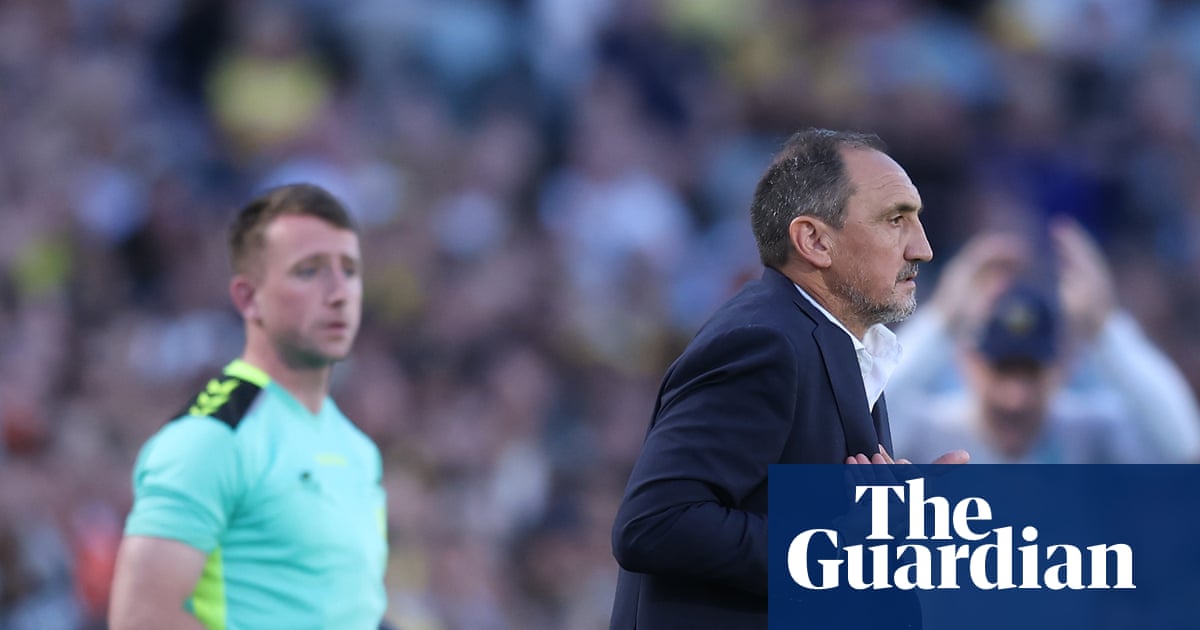





Liam Rosenior started this decade as a columnist for the Guardian and is now the favourite to replace Enzo Maresca as manager of Chelsea. While the prospect of Barney Ronay or Jonathan Liew making the move into management is a tantalising one, Rosenior’s rise – from a youth coach at Brighton to an assistant and interim manager at Derby before full-time management at Hull City and Strasbourg – shows just how far the 41-year-old has come.
After a very respectable playing career at Bristol City, Fulham, Reading, Hull and Brighton, Rosenior earned a coaching job at the latter, managing the Seagulls’ under-23 side and supplemented that with punditry roles.
Rosenior has claimed that his coaching has been informed by his work in the media, and also cites both NFL legend Bill Belichick and Wayne Rooney as key influences, with Rosenior appointed assistant manager to the latter at Derby County in 2021. “Without that experience with Wayne, I don’t think I would be the manager I am now,” Rosenior told the Athletic recently, praising Rooney’s “pressure management, man management, being intuitive and the lessons he learned from Sir Alex Ferguson.” Rosenior has described Ferguson as his “hero”.
After Rooney was sacked at Derby, Rosenior led the side on an interim basis, which convinced Hull to hire him as their permanent manager in November 2022. Despite leading the Tigers to a seventh-placed finish in 2023- 24, narrowly missing out on the Championship playoffs, Rosenior was sacked, a decision that shocked many. While Rosenior would go on to Strasbourg in 2024-25, Hull only avoided relegation to League One on goal difference.
Despite Rosenior not speaking French while at Strasbourg – he has been taking intensive lessons but assistant coach and former Reading teammate, Kalifa Cissé, serves as a translator – he has impressed both his players and the BlueCo hierarchy with his intelligence, insight and ambition., and was not afraid to admit in a recent interview that he hopes to return to England in the future and even manage the national team
Tactically, Rosenior employs a fluid formation which often moves from 3-2-5 in possession and 4-3-3 out of it, with a high press, although there are variations depending upon the opponent. This would not be too much of a jump from Maresca’s tactics, and is likely a key reason why Chelsea see him as a successor, someone who can tinker with the squad rather than overhaul it.
 Liam Rosenior was assistant to Wayne Rooney at Derby, and took over when Rooney was sacked in 2022. Photograph: George Wood/Getty Images
Media-savvy, articulate and already well versed in the complexities around BlueCo’s multi-club ownership, Rosenior would represent an attractive appointment for Chelsea. The London club’s board will also expect Rosenior to avoid any controversial comments, something that quickened Maresca’s exit. The Englishman is also familiar with Chelsea’s squad, with Andrey Santos enjoying a breakthrough season with him on loan at Strasbourg last season. The French club’s striker Emmanuel Emegha will also move to Chelsea next summer.
Why has Rosenior taken such an unfamiliar path? Outside of Eddie Howe and Sean Dyche, English managers rarely get mentioned for top-flight jobs and Graham Potter, Will Still and Scott Parker are a trio of English managers that have earned jobs in England after proving their credentials abroad. “I’ve actually enjoyed the freedom of coaching in a different country,” Rosenior told the Guardian last year. “Nobody has any preconceived idea of who you are.”
Rosenior would be just the 10th permanent black manager appointed in the history of the Premier League, with West Ham’s Nuno Espírito Santo the only currently active one. As the son of Leroy Rosenior, the former Fulham, Queens Park Rangers and West Ham forward who was latterly awarded an MBE for his work as an anti-racism campaigner, Liam is finely attuned to the importance of diversity in management and why representation matters. A 2024 report from the Black Footballers Partnership cited that “while 43% of the Premier League are black, only 4% of jobs that go to ex-professional footballers are filled by black footballers”.
There is no doubting that his father’s influence both as a player and a manager had its effect on a young Liam. “I’d be with my dad while he prepared his team-talk, in the dressing room as he delivered it, and in the dugout during the game,” he explained in 2022. “You see old pictures of Brian Clough on the bench with his son, Nigel. Well, it was the same with me. I’d be shouting at the players from the sidelines when I was 10. It’s always been in my blood.”
Rosenior gained his pro-licence aged just 32 and has always seen himself as a student of the game. As a player, if he was ever injured or out of the team, he would often watch the game from the mouth of the tunnel, so he could practise making snapshot decisions from the touchline. He may now get the chance to put those into practice at Stamford Bridge at a club that is relentlessly demanding.