
Remember me
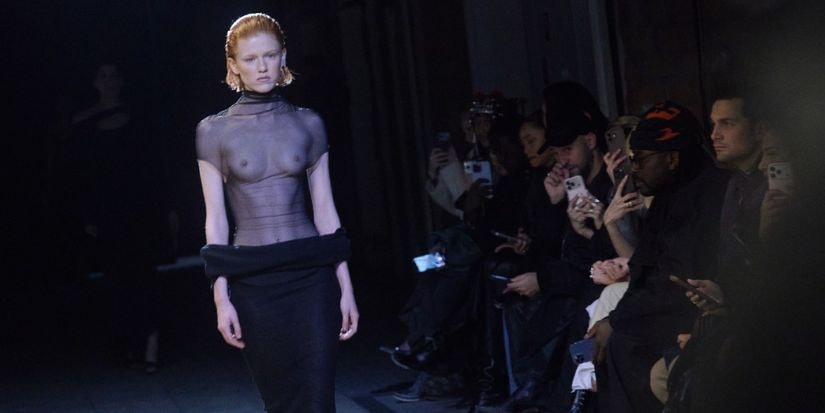


Berlin Fashion Week Fall/Winter 2026 embraced the city’s reputation for alternative edge, prioritizing identity and inclusivity over commercial conformity. With negative temperatures setting the backdrop, the German capital distinguished itself from other European fashion hubs through a distinct focus on creative risk-taking and experimental formats.
This season, the schedule highlighted a mix of emerging voices and established names, uniting figures like Vanessa Baernthol and GmbH under a shared ethos of freedom. True to Berlin‘s unconventional spirit, the city itself plays a central role, with presentations diverging from traditional runway setups. Lou de Bètoly occupied the historic town hall for a juxtaposition of heritage and modernity, while Haderlump transported guests to the Wintergarten Varieté theater for a musically charged experience.
Circular design also remains at the forefront of designers minds including Laura Gerte who worked with Dr. Martens to upcycled its boots and the return of PLNGNS ‘s who’s collections each season are made of stock fabrics and production waste.
Of course, sustainability continued to drive the conversation, with circular design principles evident across multiple collections. Laura Gerte partnered with Dr. Martens to present upcycled boots, reinforcing the potential of existing materials. Similarly, Ukraine-based brand PLNGNS returned with a collection constructed entirely from stock fabrics and production waste, cementing the event’s commitment to eco-conscious innovation.
Read on for the standout shows and collections that shaped Berlin Fashion Week.
While you’re here, check out our recap of Copenhagen Fashion Week FW26.
Dead Stock Lingerie Found Form at Lou de Bètoly
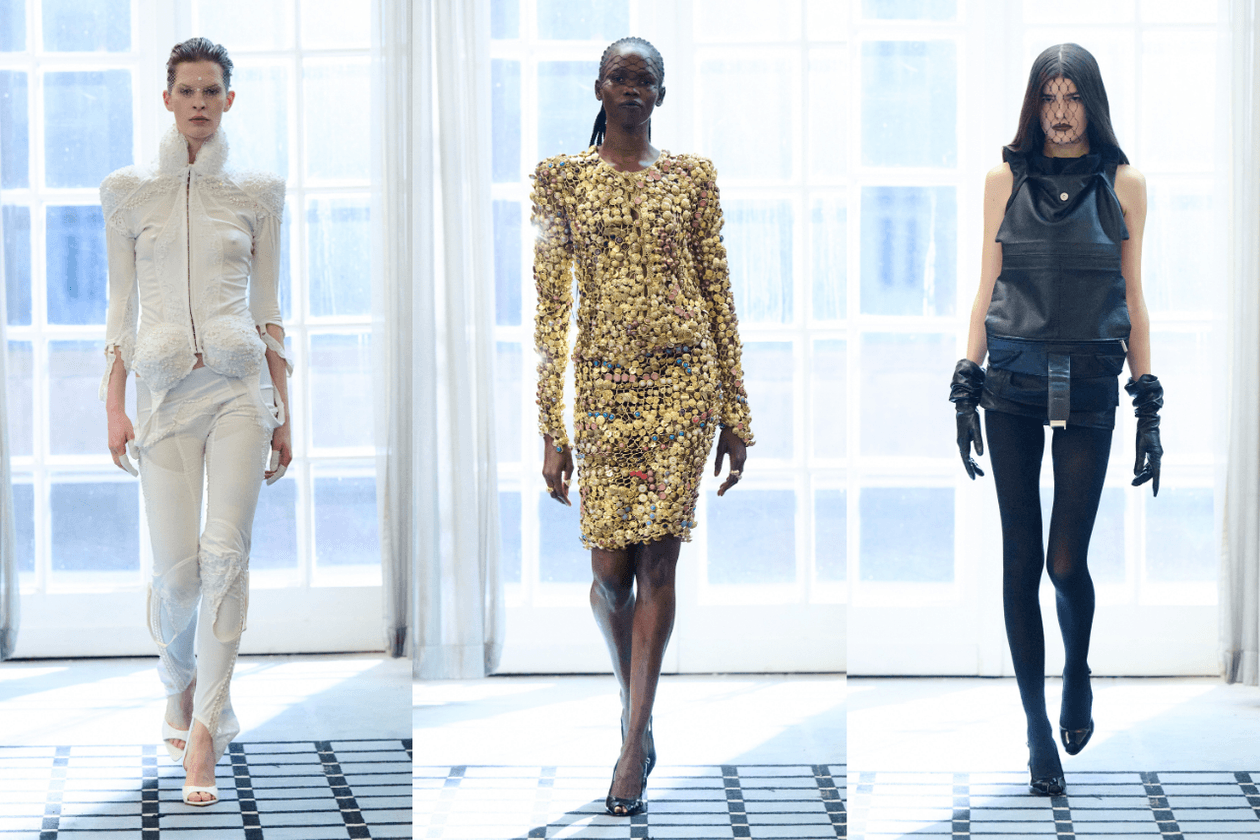
French designer Lou de Bètoly returned to BFW to present her FW26 collection inside Rathaus Schöneberg, Berlin’s historic town hall. The collection drew on flea market finds, with vintage corsetry, hosiery, lace, knits and leather rebuilt into sharp, pared-back silhouettes. From a distance the palette stayed muted in black, rose and beige, but up close garments revealed dense handwork crocheted panels, floral structures, beaded draping and intricate lacing.
Her FW26 offering refined the distressed techniques seen previously, this time rendered with greater delicacy and a more dispersed hand. Among the most striking details were three looks featuring upcycled pressed purses with metal handles, worn suspended from the neck as jewellery-object hybrids. A clear standout was a gold dress constructed entirely from gilded jewellery, sourced from Berlin-based Hatay Juwelier.
SF1OG Designed With The 2000’s Paparazzi-Era In Mind
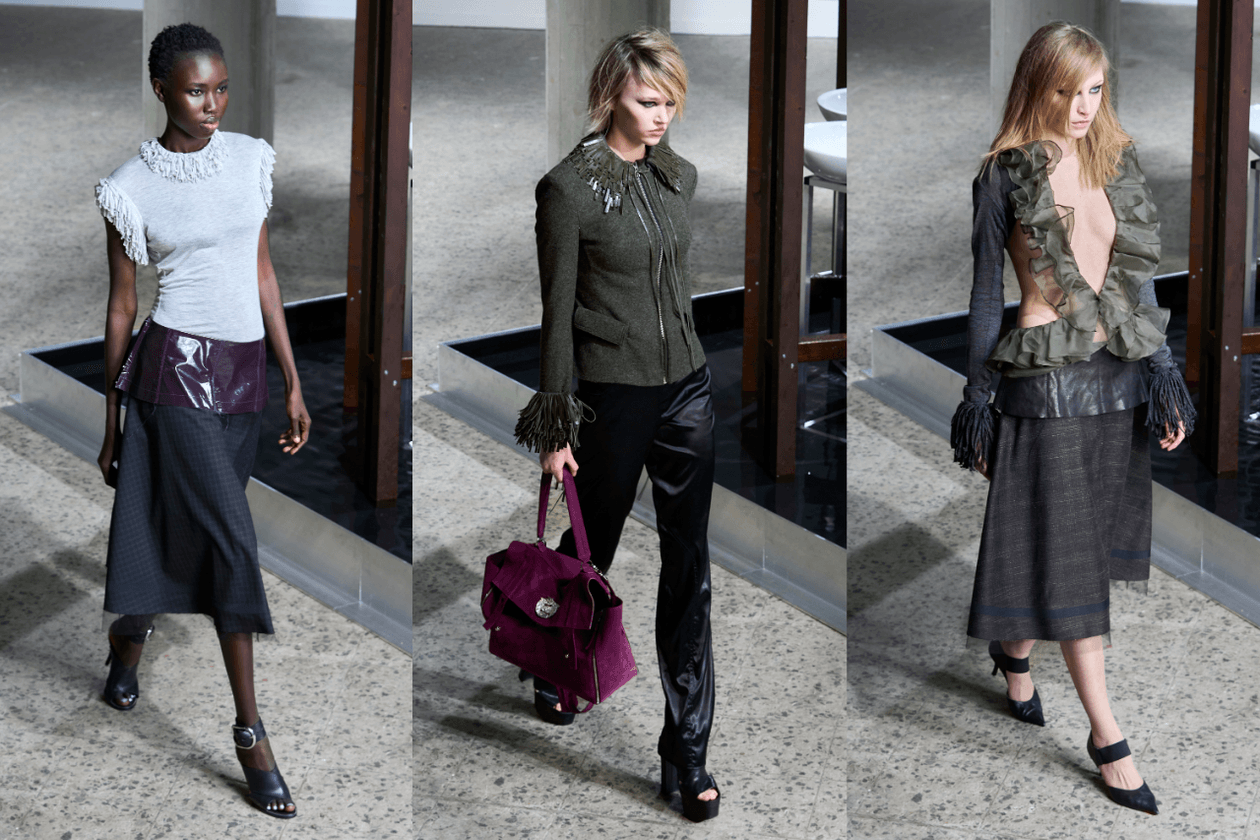
One thing about SF10G is that it knows exactly what it’s doing. More pertinently, the brand has a clear and confident sense of who it is. SF1OG’s FW26 show channelled Berlin’s underground spirit through clothing that felt resolutely personal. Antique linens, distressed cashmere, leather and velvet appeared rubbed, frayed and imperfect, carrying the intimacy of garments that have been worn over and over again.
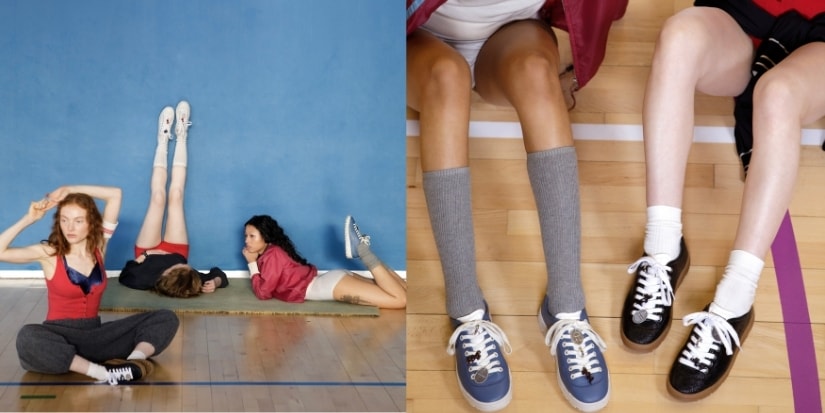
From a research methodology perspective, the designer looked at archival 2000’s paparazzi images of Amy Winehouse, Lindsay Lohan and Adam Sandler capturing “moments of fragility, imperfection and exhaustion… images that feel almost intrusive to witness,” according to a press release. If its FW25 collection manifested as an early adoption of an indie sleaze revival, FW26 was about executing that adoption with confidence and intention. As for footwear, the brand continued its partnership with Converse, introducing a new Chuck Taylor Lo.
Girlhood Was Grown in Latex at Kasia Kucharska

Kasia Kucharska explored the lived experiences of women through a collection that frames vulnerability as a form of resilience. The collection brought out familar furry friends from children’s movies and turned models into animals as well. Central to the collection is Kucharska’s technical mastery of liquid latex, treated here as a printing medium rather than a standard textile. By growing the garments layer by layer, the designer achieves intricate textures and sculptural volumes that would be impossible through conventional sewing. This method results in pieces that range from cocooning, protective shapes to second-skin silhouettes that sit flush against the body, emphasizing the physical form.
Sia Arnika Worked “OVERTIME”
 Sia Arnkia‘s FW26 collection dubbed “OVERTIME,” is a conceptual exploration of the charged hours that occur after the workday ends. The collection fuses the rigidity of office life with the euphoria of a countryside disco, resulting in an aesthetic that is unpolished and unapologetically alive. The immersive presentation was supported by a roster of key partners, including Kylie Cosmetics and Swarovski, the latter providing crystal mesh and accessories.
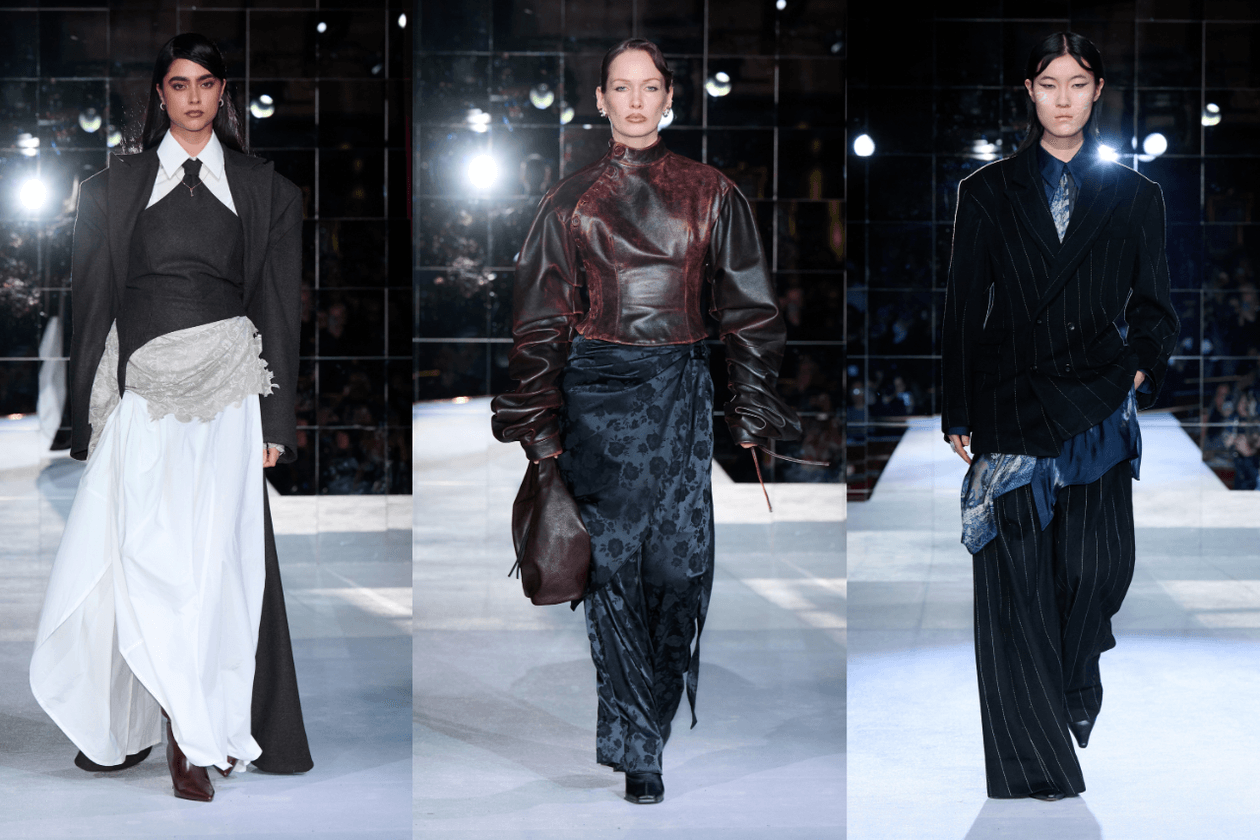
Inspired by German-American actress Marlene Dietrich, Haderlump unveiled its FW26 collection, “VARIUS,” on stage at Berlin’s Wintergarten Varieté theater… and the collection just worked. There were 28 looks, not a single one I wouldn’t wear in a heartbeat. Before the runway commenced, the crowd of 350 was a played an original soundscape by John Carlsson.
The brand utilized lace for the first time, paired with leather, denim and heavy wool. As an ode to the debut of the material, lace patterns were also handpainted on the faces of the models. Silhouettes range from gowns to sharply cut trousers, including references to Dietrich’s signature wide-leg pants.
GmbH Critiqued the “Fear of Peace”
GmbH returned to Berlin with a beautiful, politically charged show, as one of the few brands in the industry with the courage and composure to speak on the challenges being faced in the world. The collection’s narrative is anchored in the grotesque German compound word “Friedensangst” literally translating to “the fear of peace.” This term serves as a critique of arms manufacturers and shareholders who prioritize profit over human life, fearing that the end of conflict will disastrously impact their financial standing. Against this backdrop, the designers, Benjamin A. Huseby and Serhat Işık, frame the collection as a warning to ensure humanity avoids reliving past mistakes.
PLNGNS Found Errors In Assets
Mitya Hontarenko’s PLNGNS returned to Berlin to unveil its FW26 collection titled “Error in Assets” which confronts the mechanics of the fashion system by framing error and waste as active advantages. Staged within a historic Berlin villa, the 30-look collection operates through two distinct frameworks: the ICONIC line and the SIGNATURE line.
Serving as the ideological core, the ICONIC pieces are constructed entirely from discarded sneakers, with single garments demanding up to 80 hours of handcraft. The SIGNATURE line translates this radical approach into a scalable format, merging stock fabrics and production waste with reduced sneaker components to facilitate limited capsule releases.