Follow our live coverage here.
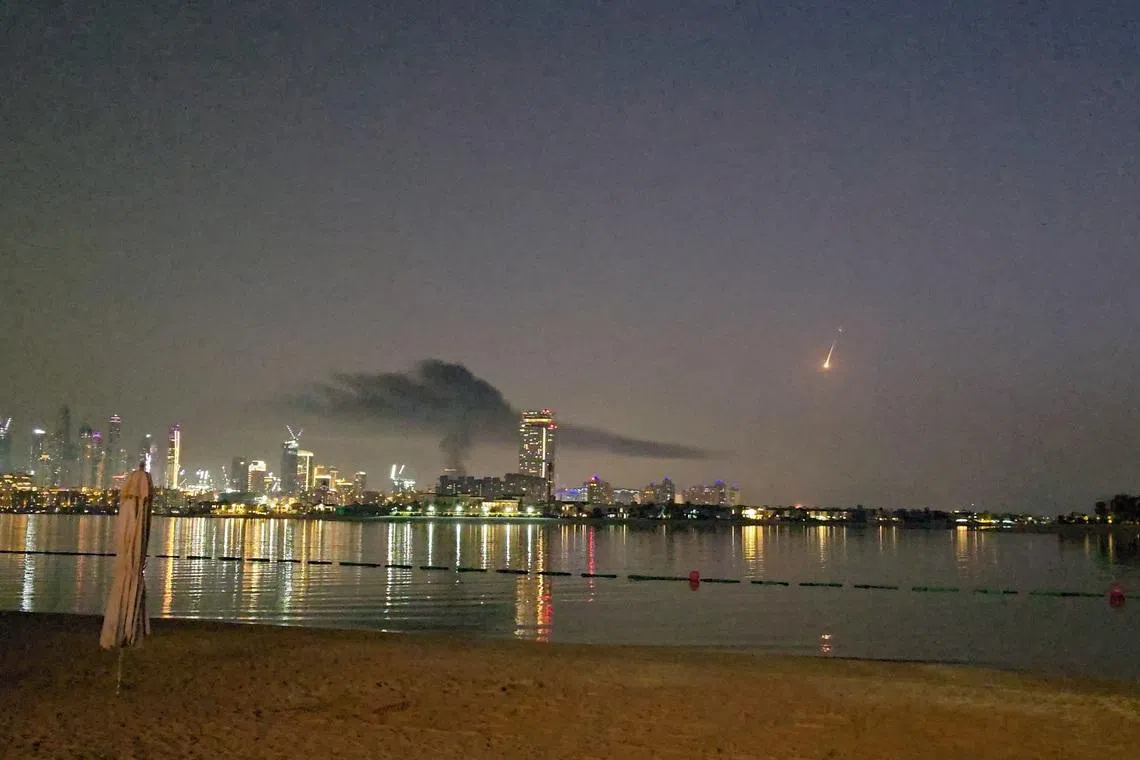
HOUSTON – Everything changed at 3.37pm on Feb 28 (5.37am on March 1, Singapore time) when the Truth Social post dropped.
Till then, it was hard to miss the sense of foreboding. Had US President Donald Trump, fresh off the snatching of Venezuela’s ex-president Nicolas Maduro
in January, bitten off too much? Would there be another bloody morass in the Middle East?
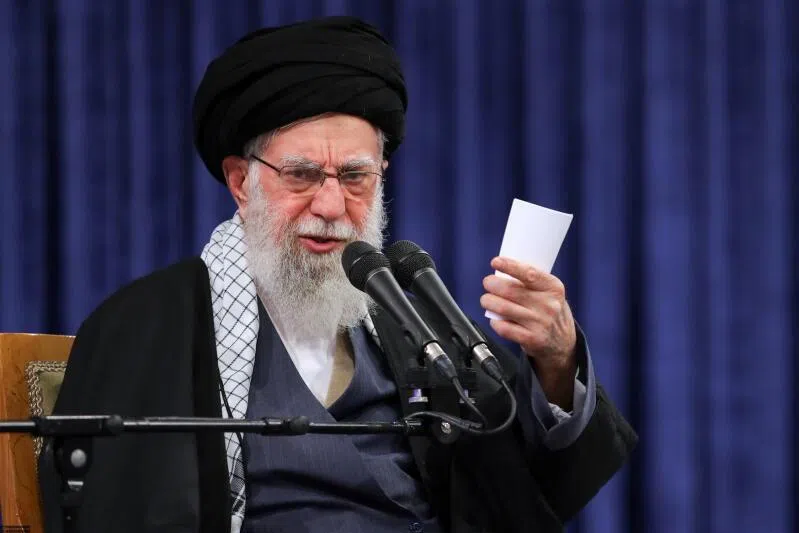
“Khamenei, one of the most evil people in history, is dead,” Mr Trump posted some 13 hours after the bombing of Iran
began in the wee hours of Feb 28.
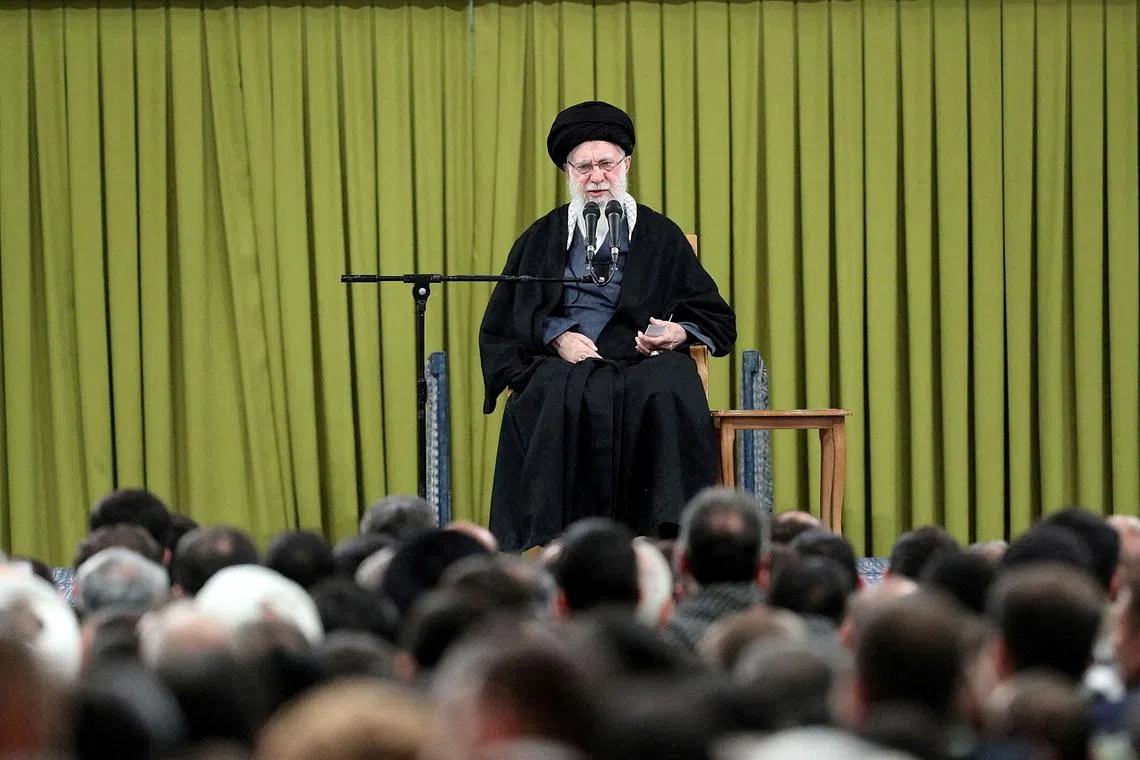
The news of the death of the Iranian Supreme Leader,
responsible for brutal repression and policies that devastated Iran while fuelling regional chaos, suddenly overturned predictions of another quicksand in the Middle East.
Comparisons of Mr Trump’s Operation Epic Fury to the Iraqi misadventure in 2003 began to sound hollow.
“This is the greatest chance for Iranians to take back their country,” Mr Trump said in the post, two months after large protests in Iran led him to promise that help was at hand and build up the largest concentration of US military in the Middle East in decades.
Although Mr Trump has promised to continue the bombing throughout the week, in coordination with Israel, it seemed like victory was a foregone conclusion.
While the possibility of another hardliner cleric coming to power cannot be discounted, the US seems to be banking on Iranians, who protested in force two months ago, to overthrow the regime.
If the military operation results in regime change with no cost to the US in blood – and no American casualty has been reported thus far – it will count as a major political victory with Mr Trump’s Make America Great Again supporters.
It is certain to boost the chances of the Republican Party at the Nov 3 midterm elections that will determine whether Mr Trump retains control of Congress.
Speaking to The Straits Times, Professor Ben Radd, an expert on politics and international relations at University of California, Los Angeles, said it counted as a major political and foreign policy win.
“He can now claim to have done something that no US president in 47 years has been able to do. An Iranian government that had for 47 years been saying ‘Death to the United States’ is now no more,” Prof Radd said.
The moment will rattle the Democrats, who have tried to press advantage by pointing out that the strikes were unauthorised by Congress and, thus, illegal.
“Iranians in Iran and the diaspora in the US are celebrating, it makes the Democrats look like they are on the side of the Islamic regime,” Prof Radd said.
It is too early to have a sense of the public reaction at home, cautioned Professor Michael Traugott, an expert on campaigns and elections at the Center for Political Studies at the University of Michigan.
“We don’t have polling results yet. And Trump promised during the campaign to reduce or eliminate foreign engagements, and this action runs contrary to that,” he told ST.
He added that the Iran attack could also worsen the affordability crisis in the US by raising the price of oil.
“It remains to be seen who Iran’s new leaders will be and how different that government’s policies will be. Enough damage has been done and will continue in the next few days that there is probably going to be some effect on oil prices in the near term,” he said.
The situation is still playing out but it is capable of transforming the look and feel of the Middle East, said Prof Radd.
“We’ve seen an end to the Syrian dictatorship. We’ve seen relationships between Israel and Arab states solidified. And now we’re seeing the possibility of regime change in Iran. These are fever dreams that many would have had, that no one thought were doable.”
These events also position the US as the top dog among geopolitical rivals.
“This weakens Russia, which had invested heavily in Iran and Syria. And the Chinese have not been able to expand in the Middle East. These are things that Trump can legitimately point to as foreign policy accomplishments,” Prof Radd added.
The attack came at a delicate moment for US-China relations, with Mr Trump due in Beijing on March 31 for a three-day visit to discuss tariffs, rare earths, AI chips and other nettlesome subjects.
The White House has not provided updates on the high-stakes summit, but analysts have wondered if the strikes would sharpen the great power rivalry even as it tests both sides’ realpolitik.
Former US diplomat David Meale, now with Eurasia Group, said the trip would proceed because Mr Trump is “capable of managing the Iran situation while keeping focus on broader foreign policy goals”.
Professor Dennis Wilder, a former White House Asia hand who now teaches at Georgetown University, went further. “Xi will respect Trump’s boldness. Trump will arrive in Beijing from a position of strength,” he told ST.
From China’s perspective, though, the Iran strikes are an unwelcome distraction.
“With the critical Two Sessions next week, the Iran crisis is about the last thing China needs as it gets its house in order,” said Mr Han Lin, the China managing director for The Asia Group, referring to annual meetings of China’s top advisory and legislative bodies that kick off on March 4 and 5 respectively.
China has refrained from coming out in support of Iran, its strategic partner. Its Ministry of Foreign Affairs mainly called for an immediate cessation of military operations in a Feb 28 statement.
Mr Lin said China might suggest to Iran via back channels that it should refrain from closing the Strait of Hormuz to avoid disruptions of oil shipments.
China stands to benefit from the unfolding situation by portraying itself as the chief defender of global stability while the US is trying to reorder the world by force.
“Both powers are increasingly aware that every regional crisis is also a proxy test of their global rivalry,” Mr Lin told ST.
It would not be in Beijing’s interest to see a regime collapse in Tehran that would be replaced by a Western-aligned government.
China is Iran’s largest oil customer, buying over 80 per cent of its crude in 2025, often at steep discounts. Iran is also a key node for China’s Belt and Road Initiative, providing land and sea corridors
across the Middle East.
The two nations signed a 25-year strategic agreement in 2021 and China is reportedly supplying air defence systems, anti‑ship and ballistic missile components that support Iran’s own missile and drone capabilities.
But Prof Wilder dismissed the ties as non-consequential.
“Iran is a marriage of convenience, not a strategic ally to China. Beijing is the ultimate realist,” he said.
For some US allies and partners in the Asia-Pacific, the attack on Iran could mean a slowdown in US arms shipments.
“Despite the Trump administration’s insistence that the Americas and Indo-Pacific are their top regional priorities, we are once again seeing military action in the Middle East,” said Dr Zack Cooper, an expert on US policy in Asia at the American Enterprise Institute.
“This will use up stocks of some critical munitions and once again distract the US government from the focus on Asia favoured by many experts and officials,” he told ST.
Analysts estimate the US has already burned through a significant share of air‑ and missile‑defence interceptors like the Patriot and THAAD systems and faces supply chain bottlenecks and workforce gaps in ramping up production.
’You don’t fire this many surface-to-air missiles in the Middle East and Ukraine without straining a very small production capacity,” said Prof Wilder, the former White House official.
Asia would still get attention from the Trump administration, he said.
“But it delays such things as arms transfers to Taiwan and Japan under existing contracts,” he added.