
Remember me


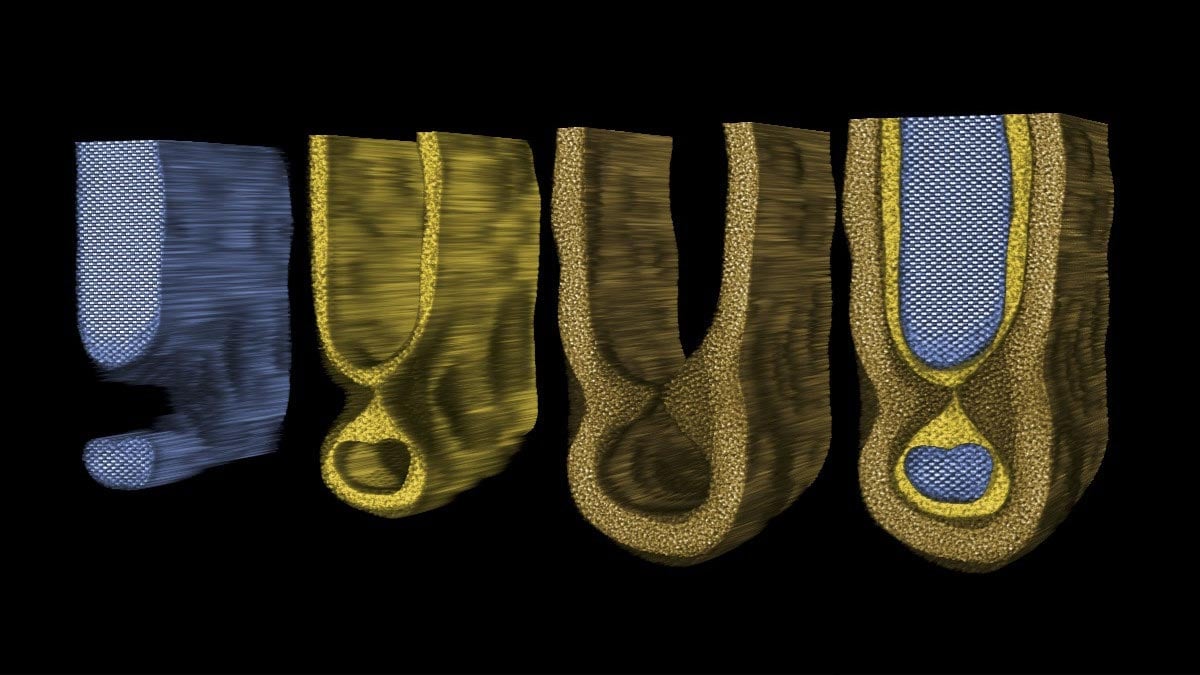






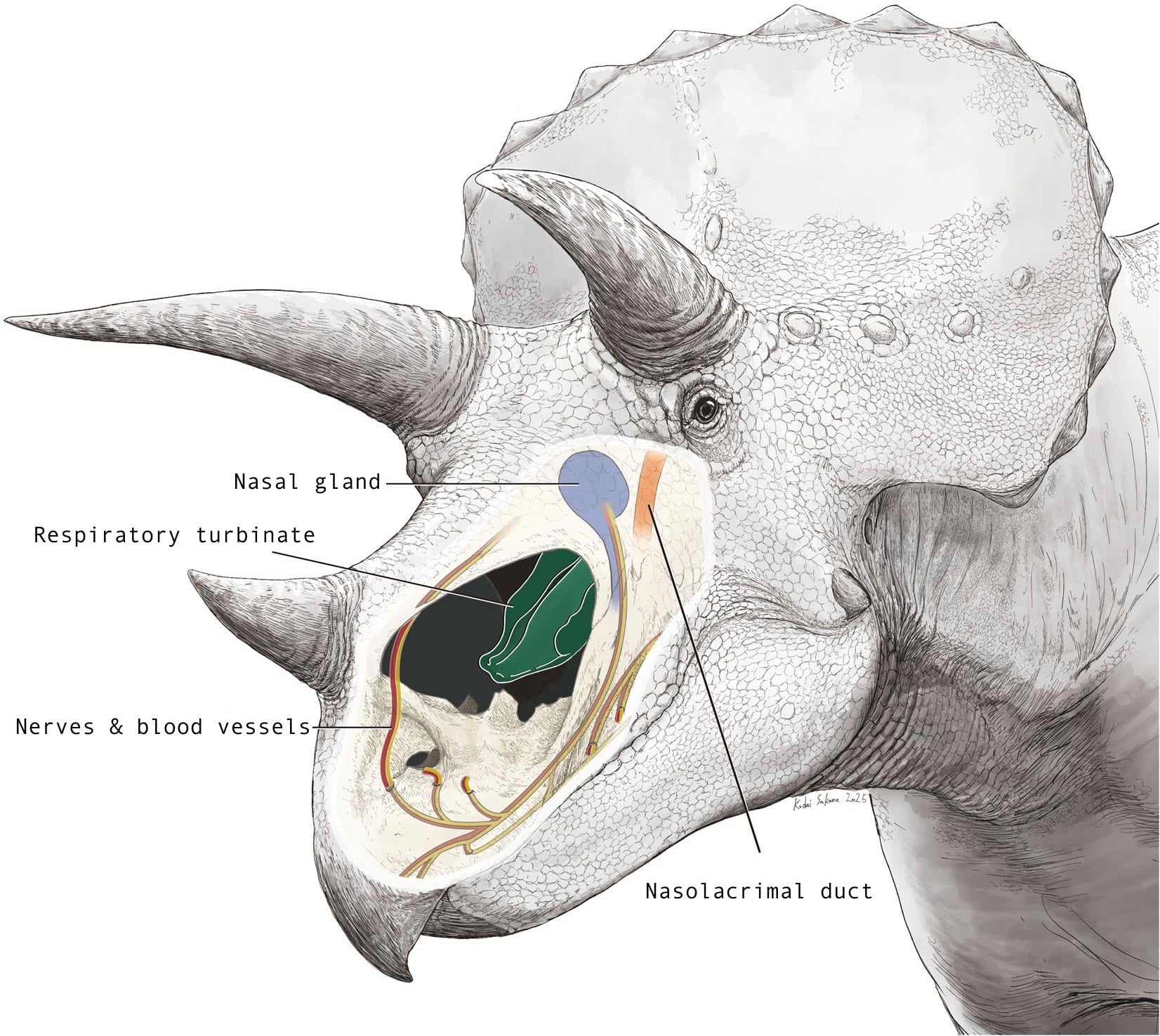 Illustration of researchers’ hypothesized layout for the inside of Triceratops nasal cavity. Credit: ©2026 K. Sakane CC-BY-ND
Triceratops’ enormous nose may have been a built-in cooling system for its massive head.
Triceratops and other horned dinosaurs had remarkably large nasal cavities compared with most animals. To understand what filled that space, researchers, including a team from the University of Tokyo, examined CT scans of fossilized Triceratops skulls and compared them with the snouts of living birds and crocodiles.
By carefully studying the bones and drawing on knowledge of modern reptiles, they reconstructed how nerves, blood vessels, and air passages were arranged inside the skull. Their analysis suggests these dinosaurs relied on their noses for more than detecting smells. The oversized nasal system likely helped regulate heat and maintain moisture.
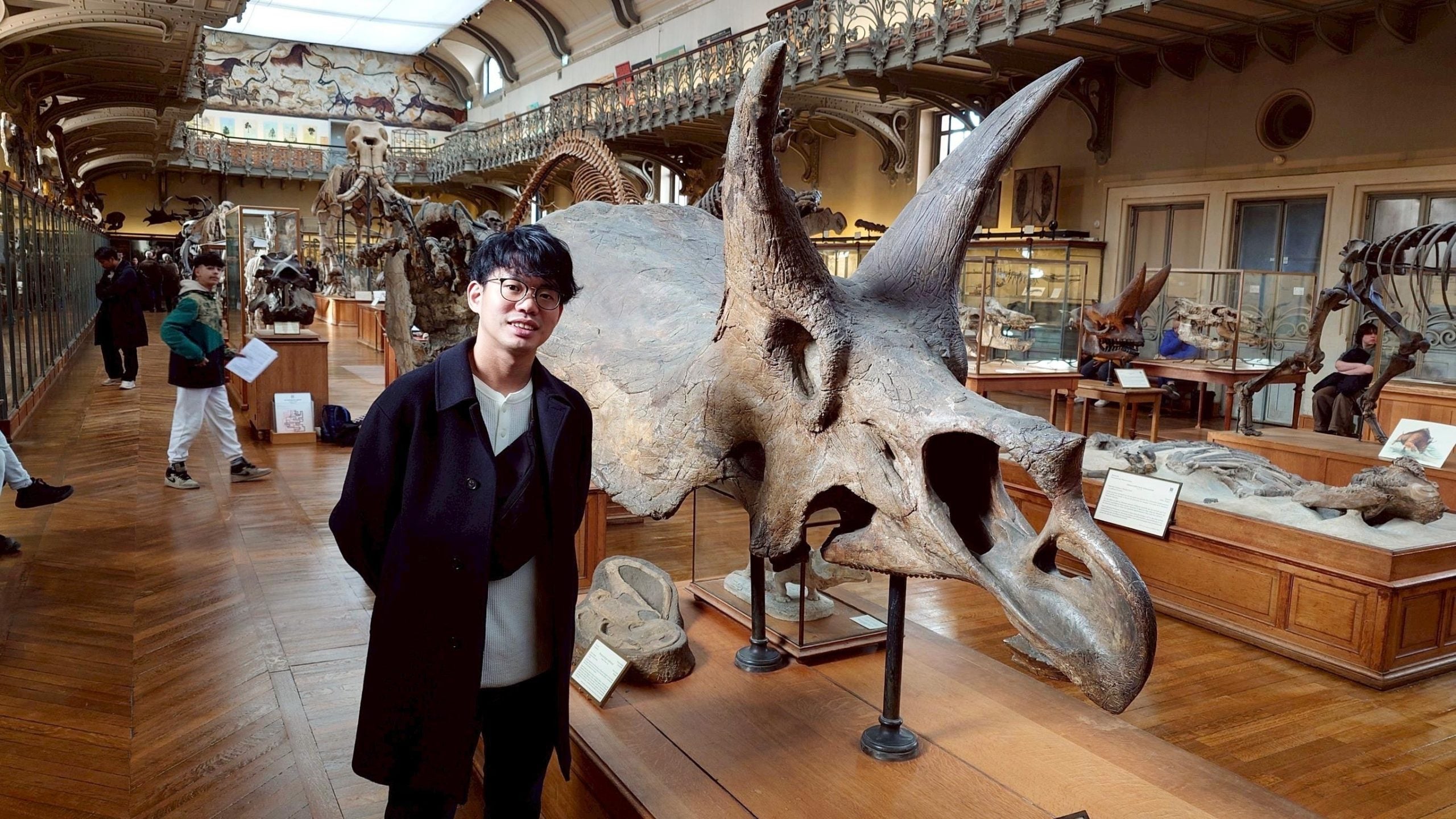 Seishiro Tada (left) standing next to an awe-inspiring Triceratops skull, with its enormous nasal cavity visible at the front. Credit: ©2026 Tada CC-BY-ND
A Closer Look at That Enormous Head
Seishiro Tada (left) standing next to an awe-inspiring Triceratops skull, with its enormous nasal cavity visible at the front. Credit: ©2026 Tada CC-BY-ND
A Closer Look at That Enormous Head
Imagine encountering a Triceratops and asking, “Aren’t they extinct?” followed by, “Why does it have such an enormous head?” That second question intrigued Project Research Associate Seishiro Tada of the University of Tokyo Museum as he examined a specimen (a fossilized one). “I have been working on the evolution of reptilian heads and noses since my master’s degree,” he said. “Triceratops in particular had a very large and unusual nose, and I couldn’t figure out how the organs fit within it even though I remember the basic patterns of reptiles. That made me interested in their nasal anatomy and its function and evolution.”
Dinosaurs displayed a wide variety of skull shapes, adding to their striking appearance. Among them, horned dinosaurs known as Ceratopsia developed especially elaborate head structures, and Triceratops remains one of the most recognizable. Despite its fame, scientists still have limited knowledge about the soft tissues that once filled its skull. Tada and his colleagues set out to reconstruct those missing internal features using advanced imaging tools.
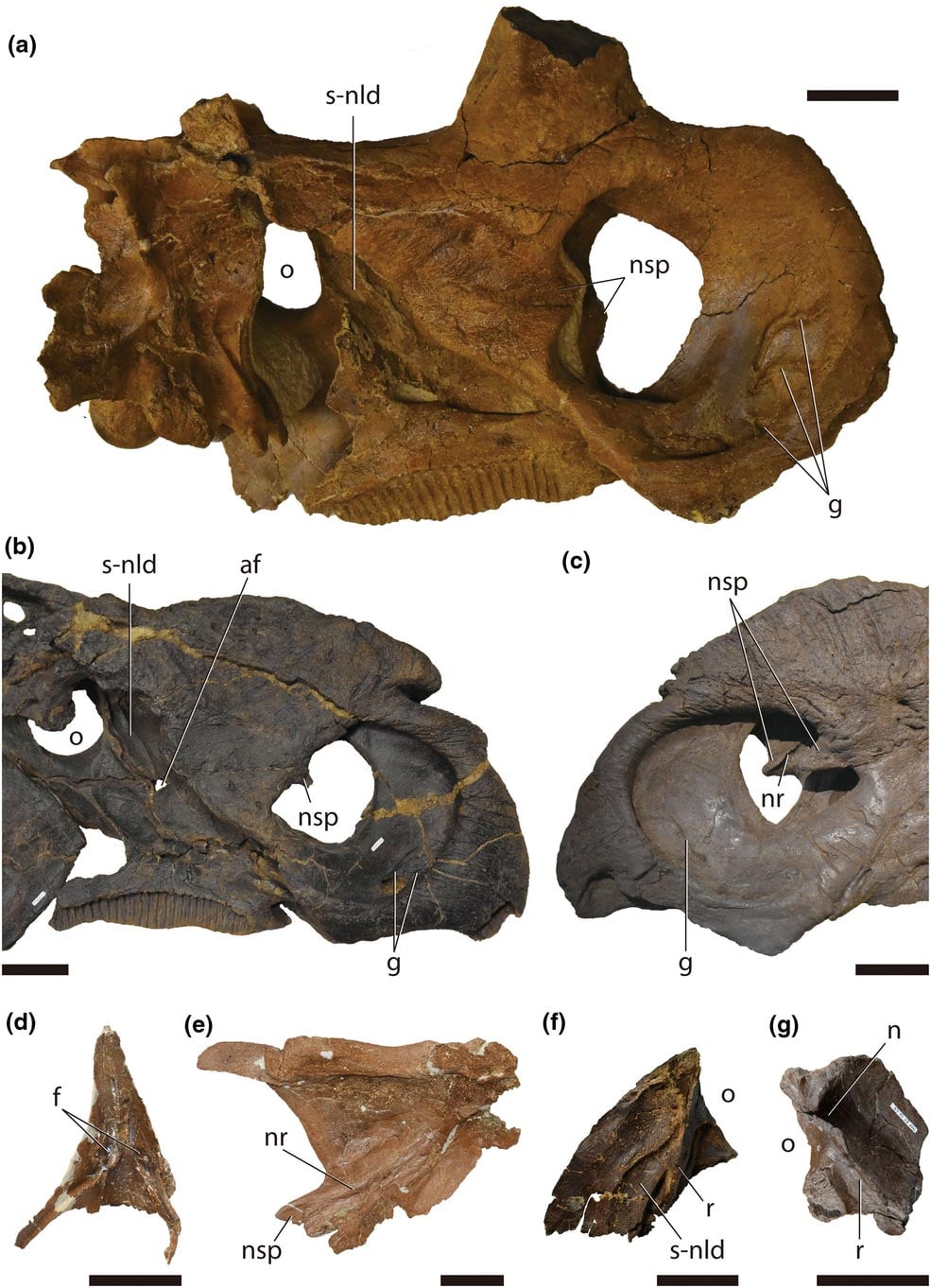 Various other dinosaurs related to Triceratops show a similar range of features that led the researchers to their conclusion. Credit: ©2026 Tada et al. CC-BY-ND
CT Scans Reveal Unusual Nerve Pathways
Various other dinosaurs related to Triceratops show a similar range of features that led the researchers to their conclusion. Credit: ©2026 Tada et al. CC-BY-ND
CT Scans Reveal Unusual Nerve Pathways
“Employing X-ray-based CT-scan data of a Triceratops, as well as knowledge on contemporary reptilian snout morphology, we found some unique characteristics in the nose and provide the first comprehensive hypothesis on the soft-tissue anatomy in horned dinosaurs,” he said. “Triceratops had unusual ‘wiring’ in their noses. In most reptiles, nerves and blood vessels reach the nostrils from the jaw and the nose. But in Triceratops, the skull shape blocks the jaw route, so nerves and vessels take the nasal branch. Essentially, Triceratops tissues evolved this way to support its big nose. I came to realize this while piecing together some 3D-printed Triceratops skull pieces like a puzzle.”
The researchers determined that the structure of the skull redirected nerves and blood vessels along a different route than seen in most reptiles. Instead of traveling through the jaw, these structures passed through the nasal region. This arrangement appears to have evolved to accommodate the dinosaur’s exceptionally large snout.
Respiratory Turbinates and Temperature ControlThe team also identified evidence of a structure called a respiratory turbinate inside the nose. Few dinosaurs are known to have had this feature, but birds, which are living descendants of dinosaurs, possess them, as do mammals. Respiratory turbinates are thin, curled structures within the nasal cavity that expand the surface area available for blood and air to exchange heat.
Although Triceratops was probably not fully warm-blooded, these structures may have helped regulate temperature and conserve moisture. Given the size of its skull, shedding excess heat could have been challenging. The presence of respiratory turbinates suggests its nasal cavity played an important role in maintaining stable internal conditions.
“Although we’re not 100% sure Triceratops had a respiratory turbinate, as most other dinosaurs don’t have evidence for them, some birds have an attachment base (ridge) for the respiratory turbinate and horned dinosaurs have a similar ridge at the similar location in their nose as well. That’s why we conclude they have the respiratory turbinate as birds do,” said Tada. “Horned dinosaurs were the last group to have soft tissues from their heads subject to our kind of investigation, so our research has filled the final piece of that dinosaur-shaped puzzle. Next, I would like to tackle questions around the anatomy and function of other regions of their skulls like their characteristic frills.”
Reference: “Nasal soft-tissue anatomy of Triceratops and other horned dinosaurs” by Seishiro Tada, Takanobu Tsuihiji, Hiroki Ishikawa, Noriyuki Wakimizu, Soichiro Kawabe and Kodai Sakane, 7 February 2026, The Anatomical Record.
DOI: 10.1002/ar.70150
Funding: Japan Society for the Promotion of Science (JSPS) KAKENHI, 24KJ1879; JSPS Overseas Challenge Program for Young Researchers.
Never miss a breakthrough: Join the SciTechDaily newsletter.
Follow us on Google and Google News.