
Remember me








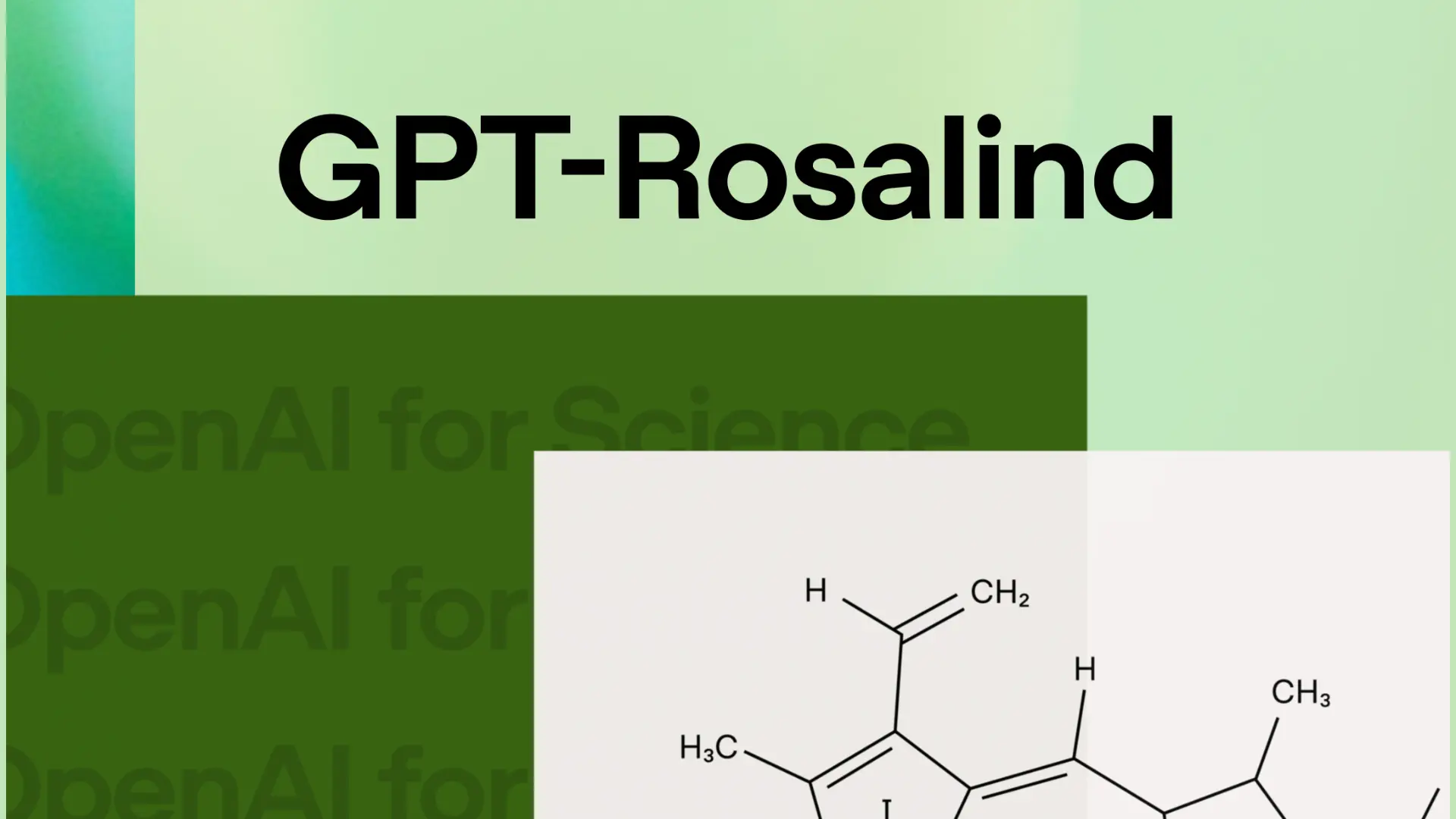
OpenAI just announced GPT-Rosalind, a new specialized AI model built exclusively for life sciences research. The model is named in honor of the pioneering British chemist Rosalind Franklin, whose X-ray diffraction work was critical to the discovery of the structure of DNA.
GPT-Rosalind is trained to be a deeply focused "reasoning" partner, specifically optimized for biochemistry, genomics, and protein engineering, rather than a broad, all-knowing conversationalist like its other models.
Just recently, OpenAI introduced GPT-5.4 and its smaller variants to tackle high-volume and generic workloads. But while models like GPT-5.4 are undeniably powerful, the demands of scientific research are far more than just rapid text generation. OpenAI built GPT-Rosalind exactly for this, so that scientists would be able to synthesize vast amounts of scientific evidence, generate viable biological hypotheses, and autonomously plan our experiments.
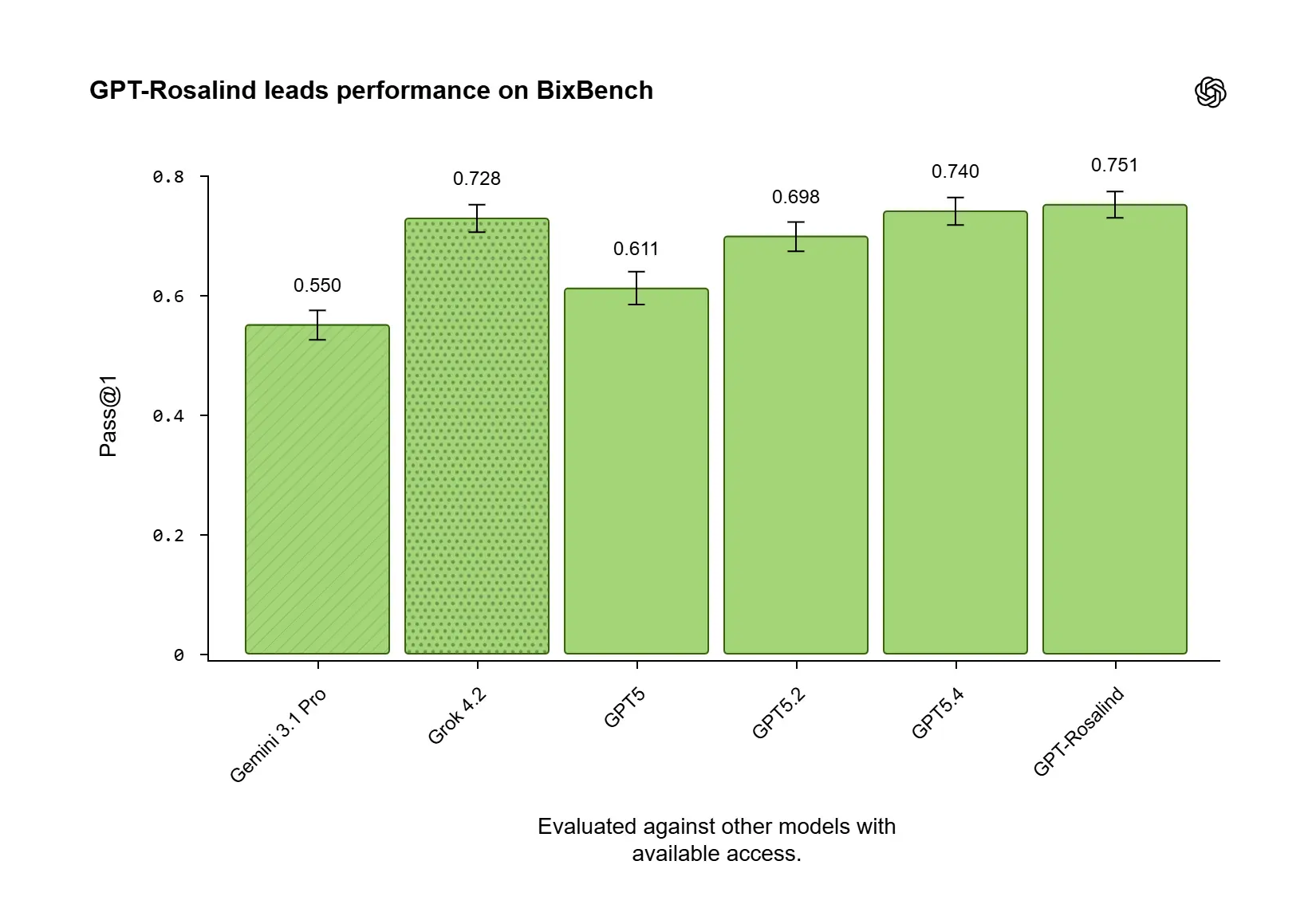
To test it, OpenAI put GPT-Rosalind through many industry benchmarks, like BixBench, where the model achieved leading performance among published scores. In the LABBench2 testing suite, GPT-Rosalind actually outperformed the flagship GPT-5.4 model on six out of eleven tasks.
OpenAI's entry into life sciences shows that biology is increasingly becoming important. Google DeepMind was the first among the leading AI labs to recognize this, and has been expanding its global AI research labs as well as its AlphaFold program that has revolutionised protein structure prediction. This proves that domain-specific fine-tuning and targeted reasoning can beat raw, general power when it comes to specialised fields.
GPT-Rosalind is already available with major industry players, including Amgen, Moderna, Thermo Fisher, and the Allen Institute, as well as national laboratories such as Los Alamos National Laboratory, to explore AI-guided protein and catalyst design. OpenAI says that organizations can request access through the company's qualification and safety review process.
OpenAI added that the company will continue improving the model’s biological reasoning, expanding support for tool-heavy and long-horizon research workflows, and working closely with leading scientific institutions to evaluate real-world impact.