
Remember me
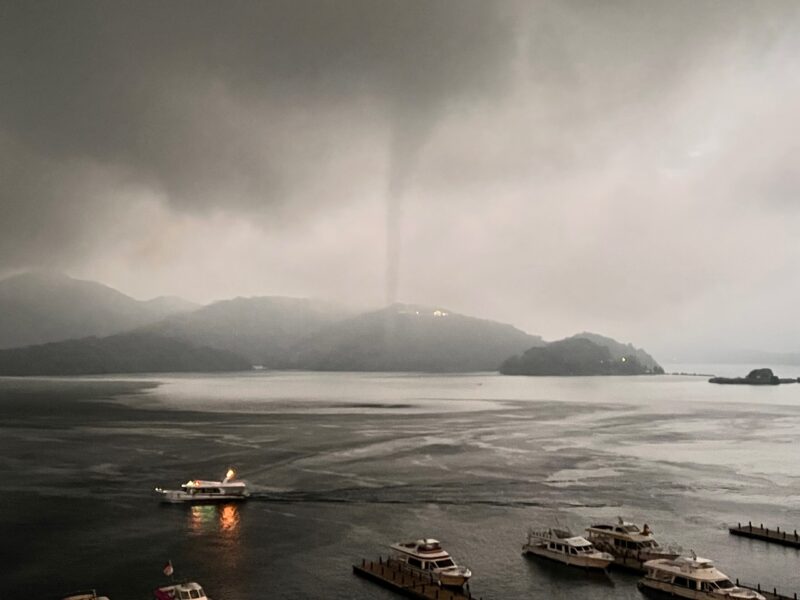
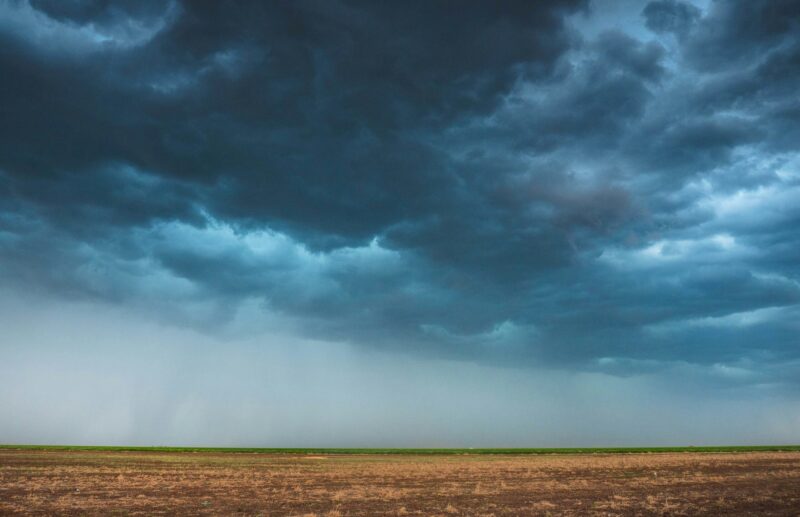






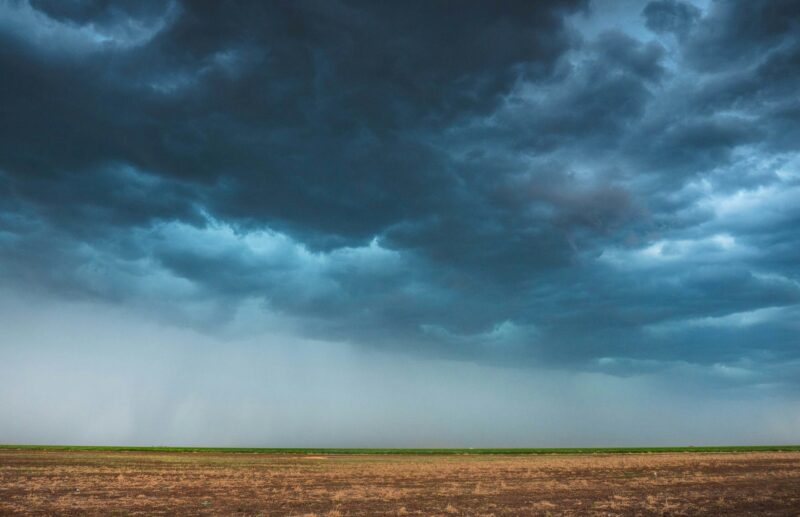 A new study has revealed that soil fungi can cause clouds like these to release their rain. Image via Raychel Sanner/ Unsplash.
Most rain starts as ice. Water in clouds needs to freeze into ice crystals before it can then fall as rain.
Certain forms of bacteria are able to trigger this process by traveling into the clouds and making water freeze at higher temperatures.
A new study says soil fungi do this too, having ‘stolen’ the genetic ability from bacteria.
A new study has revealed that soil fungi can cause clouds like these to release their rain. Image via Raychel Sanner/ Unsplash.
Most rain starts as ice. Water in clouds needs to freeze into ice crystals before it can then fall as rain.
Certain forms of bacteria are able to trigger this process by traveling into the clouds and making water freeze at higher temperatures.
A new study says soil fungi do this too, having ‘stolen’ the genetic ability from bacteria.
By Diana R. Andrade-Linares, University of Limerick
Hidden soil fungi stole bacterial DNA to control the rainTiny organisms on the ground – bacteria and fungi – have a superpower that allows them to reach up into the atmosphere and pull down the rain, according to a recent study.
To understand how a microbe can control a storm, we first have to look at how clouds become rain. High up in the atmosphere, water doesn’t always freeze at 0 degrees C (32 F). Temperatures are normally much lower at cloud level but pure water can stay liquid down to a bone-chilling -40 degrees C (-40 F).
Most rain starts as ice. In the atmosphere, clouds are full of supercooled water: liquid that is colder than freezing but hasn’t turned to ice yet because it has nothing to hold onto.
And for a cloud to turn into rain or snow, it needs a “seed”: a tiny particle for water molecules to grab onto so they can crystallise into ice, then fall from the clouds as rain. Dust, soot and salt – swept into the clouds by wind – can do this, but they aren’t very good at it. They usually require the temperature to drop significantly before they start working. This is where biology enters the frame.
Meet the ice-makersFor decades, scientists have known about ice-nucleating proteins (INpros) found in certain bacteria like Pseudomonas syringae. Bacteria travel from plant leaves into the clouds to trigger rain. They use special proteins to force water to freeze at temperatures as high as -2 degrees C (28 F). Remember, water freezes at a much lower temperature in the clouds).
But the recent discovery published in the journal Science Advances has revealed a new player in the climate game: fungal ice-nucleating proteins. While bacteria keep their ice-making proteins tucked away on their “skin”, fungi (mainly Fusarium and Mortierella) secrete these proteins into the soil around them. Their structure makes these fungal proteins water soluble and smaller than the bacterial ones, and with a high ice seeding activity which makes them more effective cloud seeds.
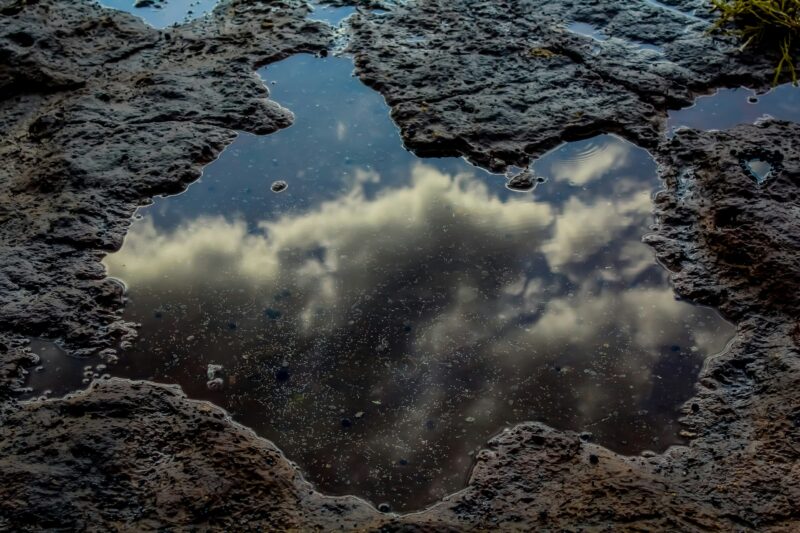 In soil like this, fungi can release proteins that help clouds turn to rain. Image via Andrew Tom/ Unsplash.
Making it rain
In soil like this, fungi can release proteins that help clouds turn to rain. Image via Andrew Tom/ Unsplash.
Making it rain
This leads us to the bio-precipitation cycle. Imagine a forest floor covered in these fungi. As the wind kicks up, their microscopic ice-making proteins are launched into the clouds. Once there, they act as powerful seeds.
And even in relatively warm clouds (above -5 degrees C or 23 F), these fungal proteins can force water to crystallize into ice. As these ice crystals grow, they become heavy and fall. Then as they drop through warmer air, they melt and turn into rain.
This consequently creates a loop:
Fungi grow in the damp soil of a forest. Proteins from the fungi are swept into the sky. Rain is triggered by these proteins, watering the forest below. Growth of more fungi is triggered by the rain, starting the cycle over again.Unlike the Pseudomonas bacteria, which use ice to “attack” and damage crops to access their nutrients, these Mortierella fungi are peaceful plant partners. They aren’t looking to destroy. Instead, they secrete their ice-making proteins into the surrounding soil, which seems to create a protective shield from harsh conditions and a nutrient-rich environment that helps both the fungus and the plant flourish.
The new discovery about fungi is exciting because it shows that even organisms buried in the soil can influence the atmosphere, adding a new dimension to this ancient partnership between life and the sky.
It’s a missing piece in the puzzle of how life and the global climate shape one another. This ice-making ability probably gives the fungi a survival edge. They use ice to pump moisture toward their mycelia (a vast, underground web of tiny fungal threads), shield themselves from jagged frost damage and hitchhike through the clouds to reach new homes.
The evolutionary heistThe new research also uncovered how fungi of the Mortierellaceae family gained the ability to create ice. When the researchers studied the fungi’s genetic code, they found that these fungi didn’t evolve this trait on their own. Millions of years ago, they “borrowed” the genetic code for it from bacteria, through a process called horizontal gene transfer.
Think of it as a biological copy and paste. While most animals only inherit DNA from their parents, microbes can swap snippets of genetic code with their neighbours, giving them an instant evolutionary upgrade.
But these fungi are much more efficient at making ice than the bacteria. That’s because the fungus secretes (sweats out) these proteins, meaning they can coat the environment around it and stay active in the soil after the fungus has moved on. These proteins are incredibly hardy. They can wash into streams, dry up into dust and get swept into the sky by the wind.
Why this matters?This discovery could change how researchers view conservation. If we clear-cut a forest, stripping every tree away and leaving the land bare, we aren’t just losing trees. We might be breaking the biological engine that triggers regional rainfall.
As we face a changing climate with more frequent droughts, understanding these fungal ice-nucleating proteins could be vital. We might one day use these natural, biodegradable proteins for cloud seeding to create rain.
Many countries (like the UAE, China and parts of the US) already have cloud-seeding programs to protect crops from frost. But this kind of cloud seeding relies on silver iodide, a heavy metal that can linger in the environment.
The fungal proteins offer a natural, biodegradable alternative. They could also protect crops from frost. By forcing ice to form early and smoothly, they release a tiny burst of heat that acts like a thermal blanket for the plant.
We could use them to make snow on ski slopes with less energy, create better-tasting frozen foods by preventing large ice crystals from damaging food cells, or even develop eco-friendly cooling systems that don’t rely on harsh chemical refrigerants.
Diana R. Andrade-Linares, Postdoctoral Fellow in Microbial Ecology, University of Limerick
This article is republished from The Conversation under a Creative Commons license. Read the original article.
Bottom line: Some soil fungi have a superpower, inherited from bacteria. It means they can reach up into the atmosphere and pull down the rain.
Comments (0)