
Remember me


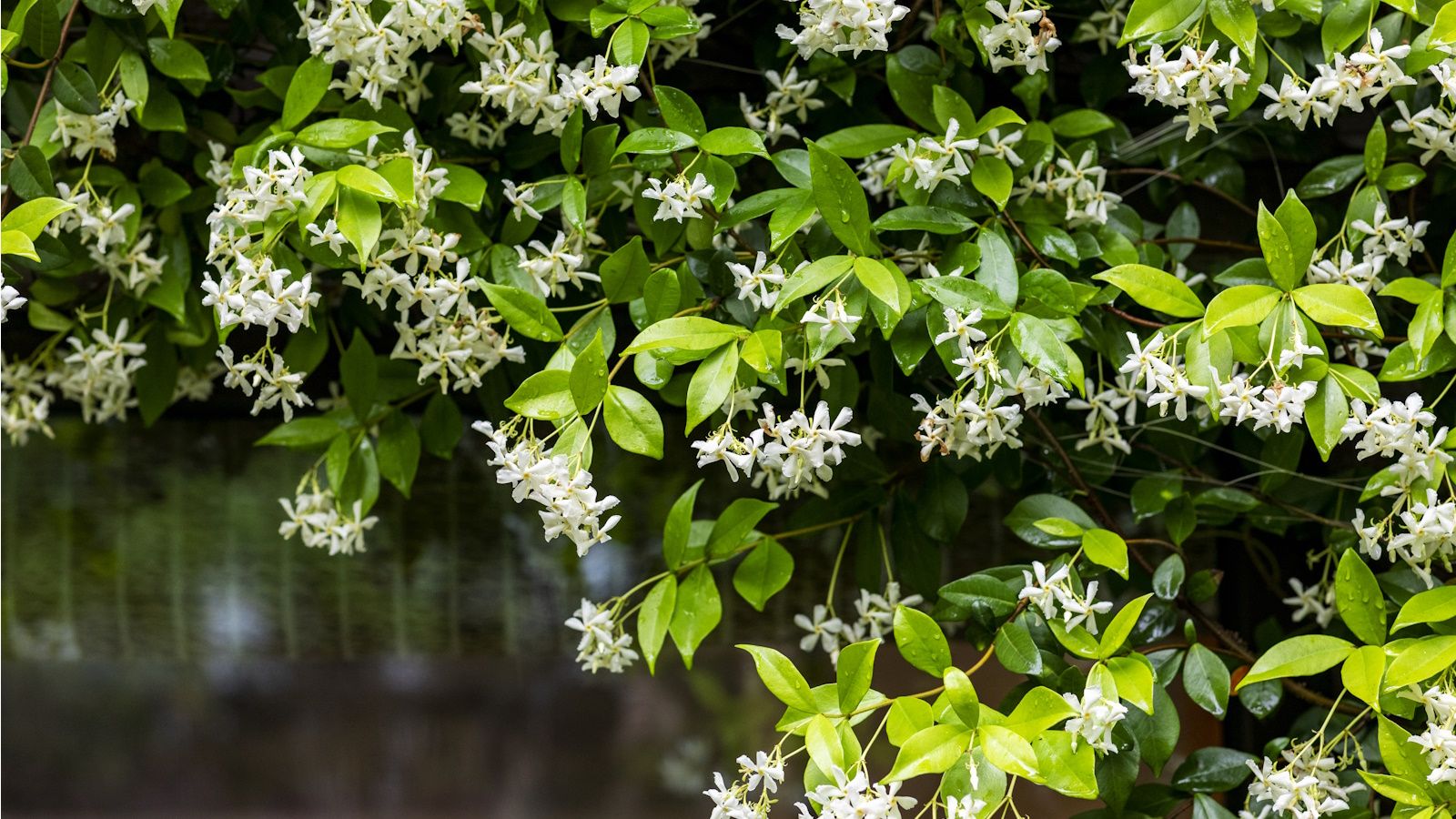


There is a moment, usually in late spring or early summer, when a well-tended star jasmine (Trachelospermum jasminoides), comes into its own: a cascade of fragrant white flowers, releasing a scent so sweet it stops you in your tracks. If you want that scent to last all summer long, April is the month that matters most.
April marks the transition from star jasmine's winter rest to active growth, setting the stage for its summer display – but only if you provide it with the right care at the right time. What you do now, from feeding and watering to pest watching, directly influences how vigorous and abundant your flowers will be. Do too much or too little, and you risk lush leaves without blossoms, or pest issues that escalate through the season.
Article continues below You may like The Only Evergreen Plant You Need to Make Your Patio Smell Amazing All Summer – Even at Night
 What to Do with Lavender in April to Set Your Plant Up for Its Best Summer Bloom Yet
 What Your Roses Really Need in April – Pros Share 5 Insider Tips for Bigger Blooms in Summer
1. Give It The Most Important Feed Of The Year
What Your Roses Really Need in April – Pros Share 5 Insider Tips for Bigger Blooms in Summer
1. Give It The Most Important Feed Of The Year
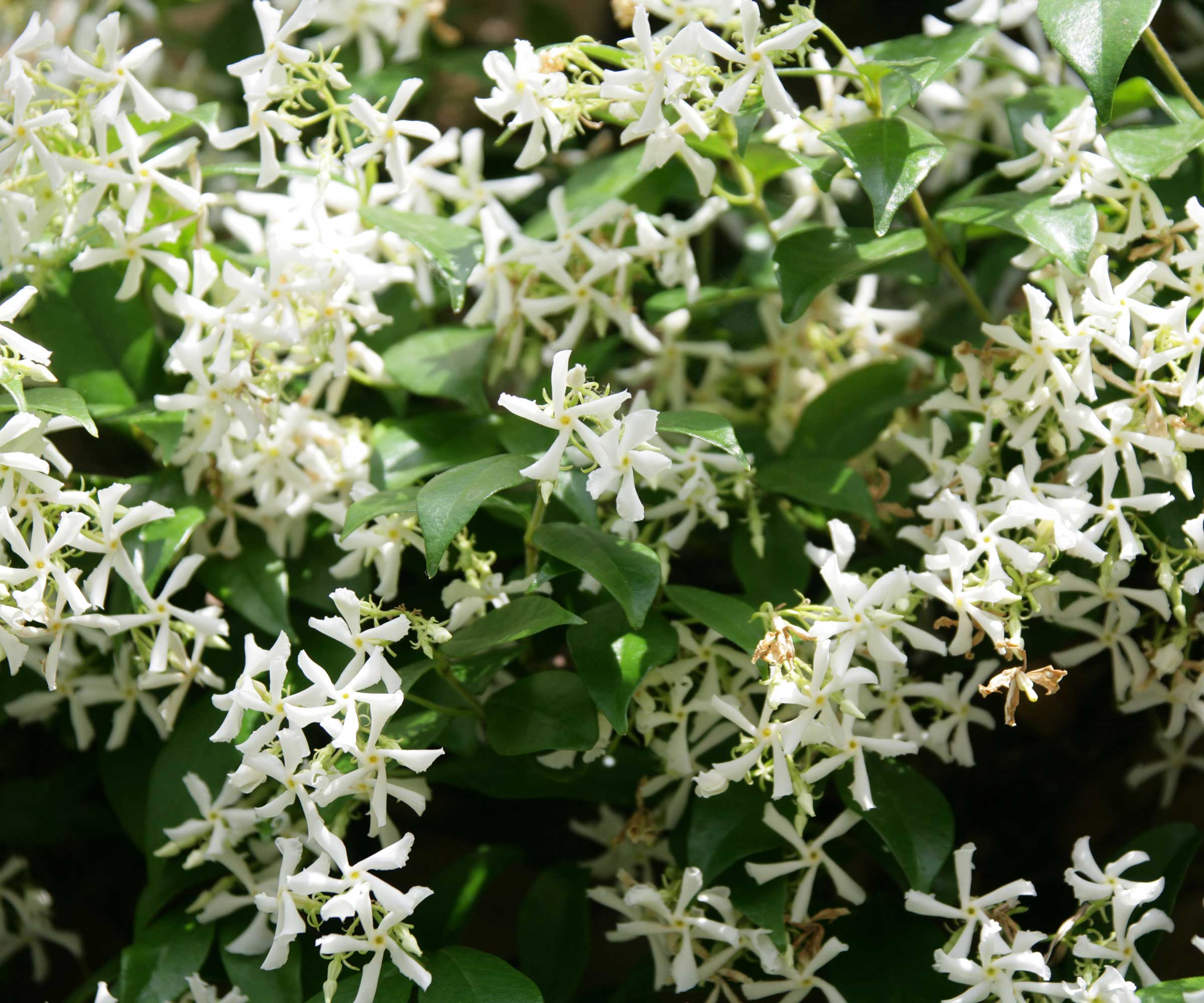
(Image credit: Florapix / Alamy Stock Photo)
The start of star jasmine's growing season begins in April, and knowing how to fertilize star jasmine correctly is the single, highest-impact thing you can do all year.
As new shoots extend rapidly and flower buds begin to form, the plant is drawing heavily on soil nutrients. If these nutrients aren't available, both growth and blooming will suffer.
The type of fertilizer you use matters just as much as timing. 'It’s tempting to add a heavy nitrogen fertilizer early in the season to push growth, but it’s detrimental to flower production, and it tells the plant to grow leaves and stems instead of flower buds,' warns Vikram Baliga, Assistant Professor of Practice of Horticulture at Texas Tech University.
Instead, Vikram recommends using a high potassium fertilizer which directly supports flower development and strong bud formation.
A product like Jack's Classic Blossom Booster 10-30-20, from Amazon is an ideal choice, with its high phosphorus and potassium levels doing the work Vikram describes.
For gardeners who prefer to keep things organic, Espoma Bone Meal at Home Depot will help to gently feed the plant through the season, while still encouraging healthy flowering.
 Assistant Professor of Practice of Horticulture at Texas Tech University
Vikram Baliga is an Assistant Professor of Practice of Horticulture at Texas Tech University. He has a doctorate in horticulture and teaches hundreds of college students every year about plant science and the environment. Vikram is the author of Plants to the Rescue, and the host of the Planthropology Podcast.
The most common mistake is over-feeding with high-nitrogen formulas, which pushes lush green growth at the expense of flowers.
What to read next What to Do With Sweet Peas in April – Act Now and Enjoy Fragrant, Blousy Blooms All Summer
 What to Do With an Orchid in April – 5 Crucial Tasks for large, Tropical Blooms and Vigorous Growth
 What to Do With Strawberry Plants in April – 5 Key Tasks for Huge Harvests and Sweeter Fruits This Summer
Another balanced application can be made in the late summer, preferably with an iron source, but stop fertilization about eight weeks before you expect a cold snap to protect it from frost.
2. Water Deeply, Not Often
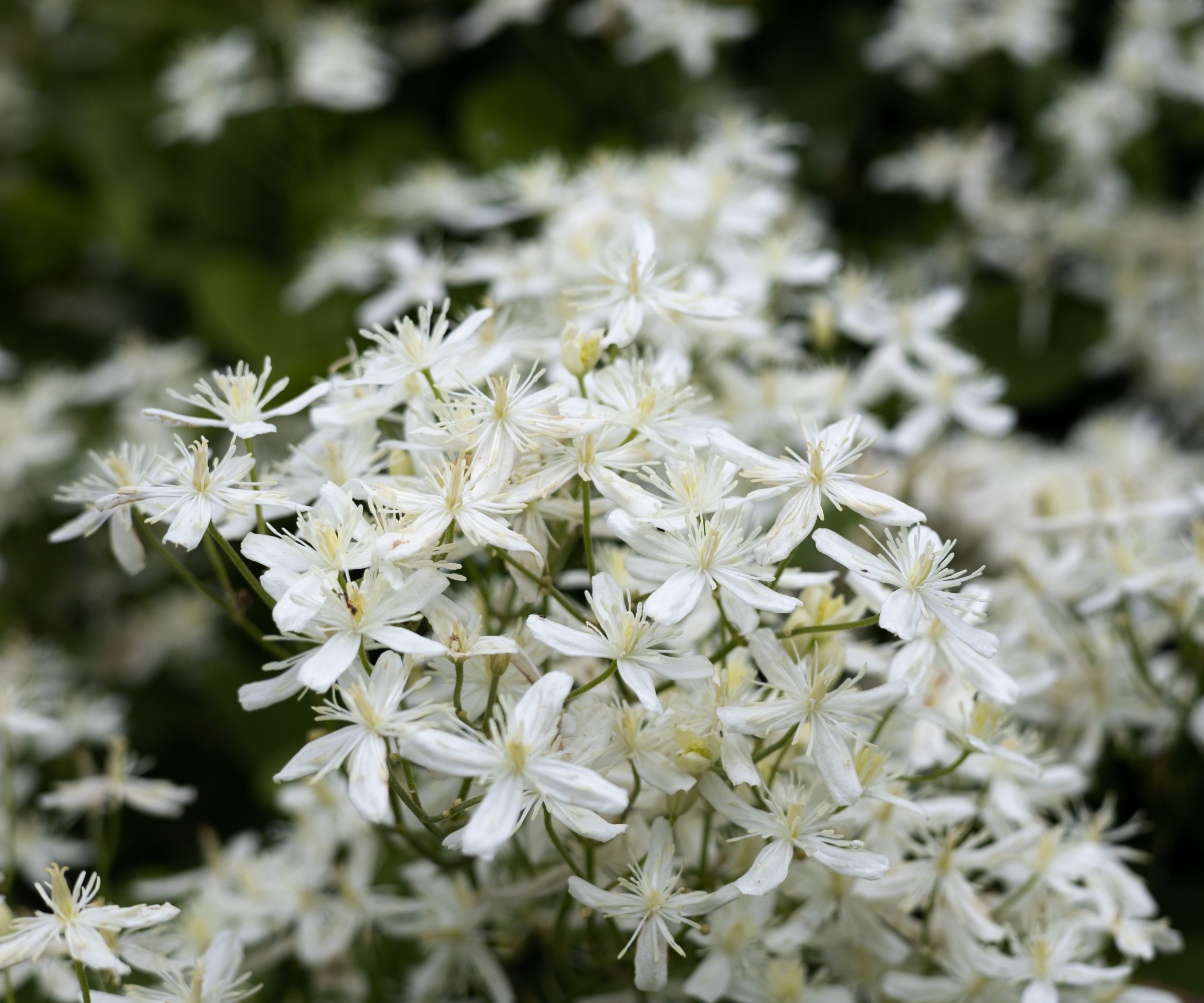
(Image credit: Getty/Catherine McQueen)
Star jasmine is surprisingly drought-tolerant once established, but spring is when it needs reliable moisture to fuel new growth.
Knowing when to water plants like star jasmine can be tricky, and the instinct in spring is to underwater because temperatures still feel mild. However, star jasmine is actively growing in April and needs consistent moisture. As temperatures start climbing toward 70°F and above, the plant's water demand increases quickly.
Rather than squeezing in little drinks every day, do the opposite and water deeply and infrequently. This encourages roots to chase moisture downward, building more resilience once the summer arrives. Understanding how to water plants correctly makes a real difference to how well your plant performs in summer.
'The best plan is to water thoroughly and saturate the soil every few days, rather than water a little bit every day,' advises Vikram . 'This drying time after heavy watering pushes moisture deeper into the soil, gives roots better access to oxygen and establishes stronger, deeper root systems.'
Changes in leaf color (such as noticing your star jasmine leaves are turning red) are a sign of inconsistent watering. Star jasmine often responds to water stress in this way before more obvious symptoms appear.
Wilting leaves and drooping stems are a clear sign that the plant needs watering more regularly.
3. Guide New Growth Now
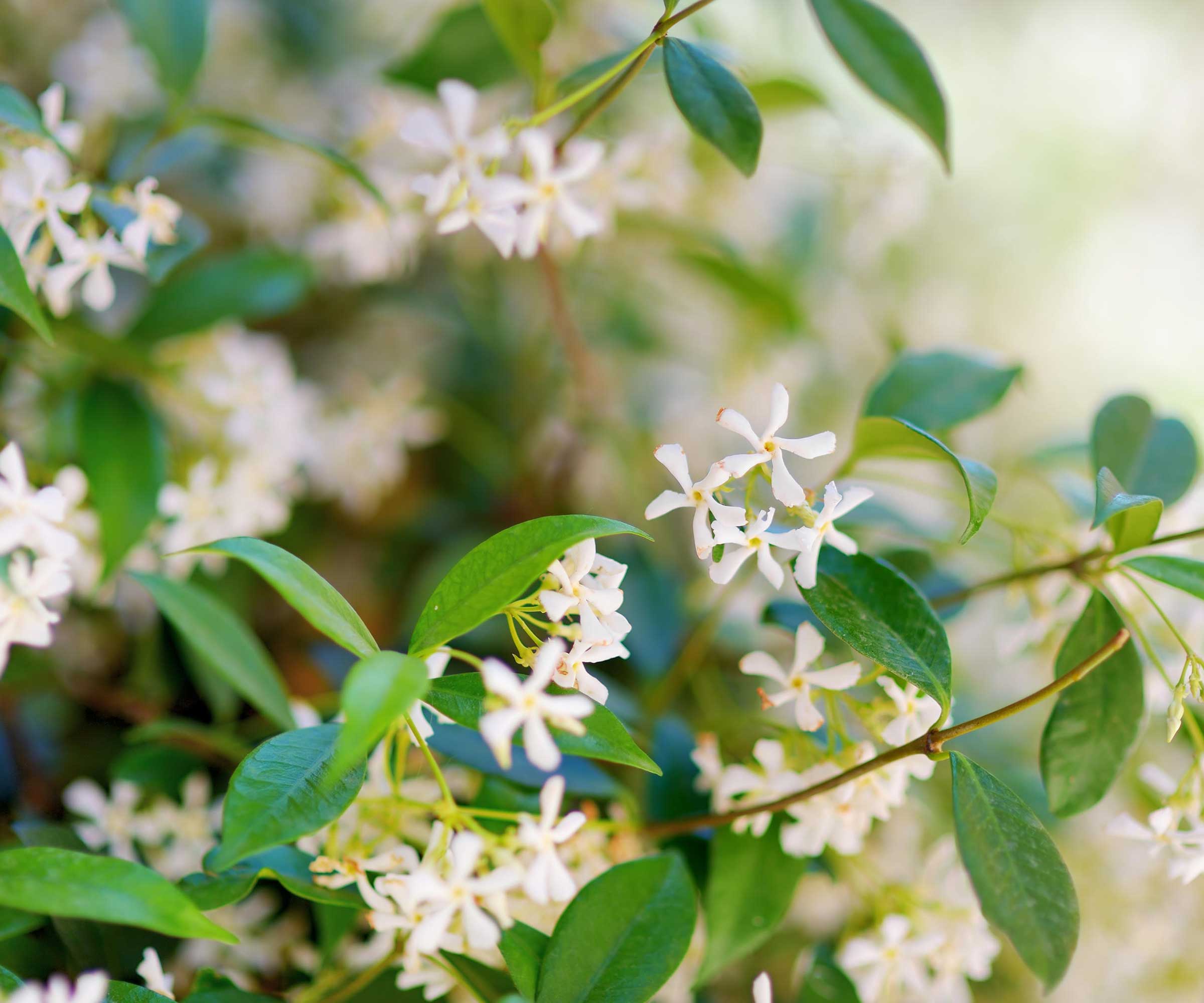
(Image credit: MNStudio / Alamy Stock Photo)
By April, star jasmine will be throwing out vigorous new shoots in different directions. If you don't guide them now, the vine can quickly become a tangled mess that's harder to manage and prone to poor airflow. This is a tidying task, rather than a pruning one.
Star jasmine blooms on growth from the previous season, so hard pruning now will cost you flowers. Instead, guide new growth along canes or fences, and remove any dead or crossing stems without cutting back healthy green growth.
Work through the plant methodically, tucking new stems behind your trellis or wires, and securing them loosely with soft plant ties, like these from Amazon.
Remove any winter-damaged stems that are brown and brittle to the touch, using bypass hand pruners, which you can also get from Amazon.
Vikram says it's best to prune star jasmine sparingly in April and reserve heavier pruning for after the first flush of flowers. 'Removing spent flowers regularly through the spring and summer will promote branching, new growth and season-long blooms.'
4. Check For Pests Early
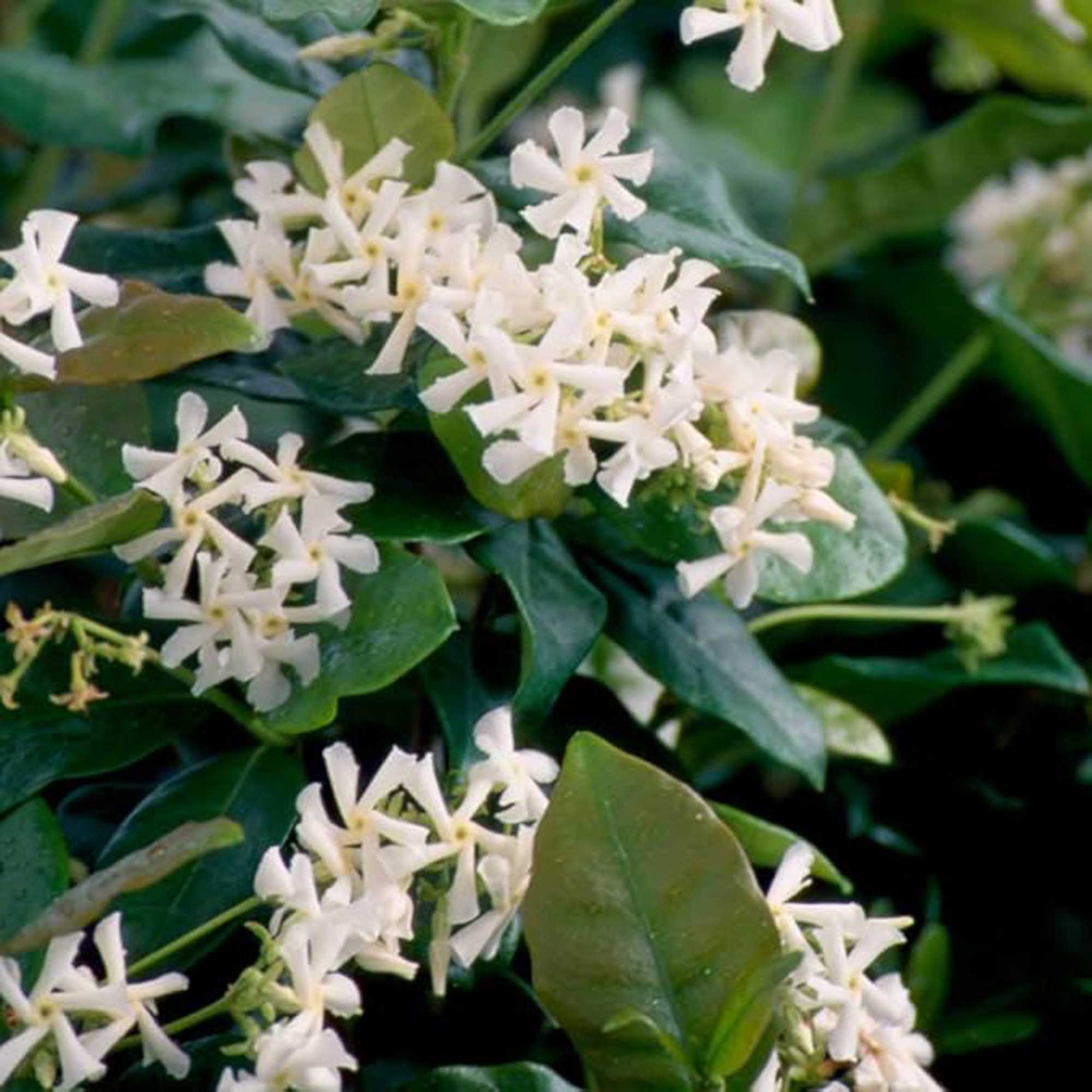
(Image credit: Plants by Mail / Amazon)
Star jasmine is a largely trouble-free plant, but early spring is when pests can make themselves known. Catching an infestation in April, before it has a chance to establish, makes it far easier than dealing with pests that can destroy plants once the summer heat arrives.
'April is when scale insects and spider mites start appearing,' says Kyle Turner, of Pro Active Pest Control. 'Check the undersides of leaves and along stems. Early intervention with neem oil or insecticidal soap is far easier than managing a full infestation once summer heat arrives.'
As buds form and shoots extend, budworms and leaf-rolling caterpillars become more active. Vikram advises routinely inspecting your plants is key to catching and stopping the problem early.
'Insecticidal soap, horticultural oil and over-the-counter insecticides are all effective control solutions, depending on how you like to manage your garden, especially if you treat it while pest populations are low,' he says.
You can try Bonide insecticidal soap from The Home Depot for low-impact, first intervention, and a bottle of Natria Neem Oil Spray from Walmart to spray on the affected area.
 President & CEO at Pro Active Pest Control
Kyle Turner is President & CEO at Pro Active Pest Control, a family-owned and locally-operated business serving residential and commercial customers across Northern California. Kyle founded Pro Active Pest Control in 2014, after working as a pest control technician in both Northern California and Arizona.
5. Repot Container Plants If Needed
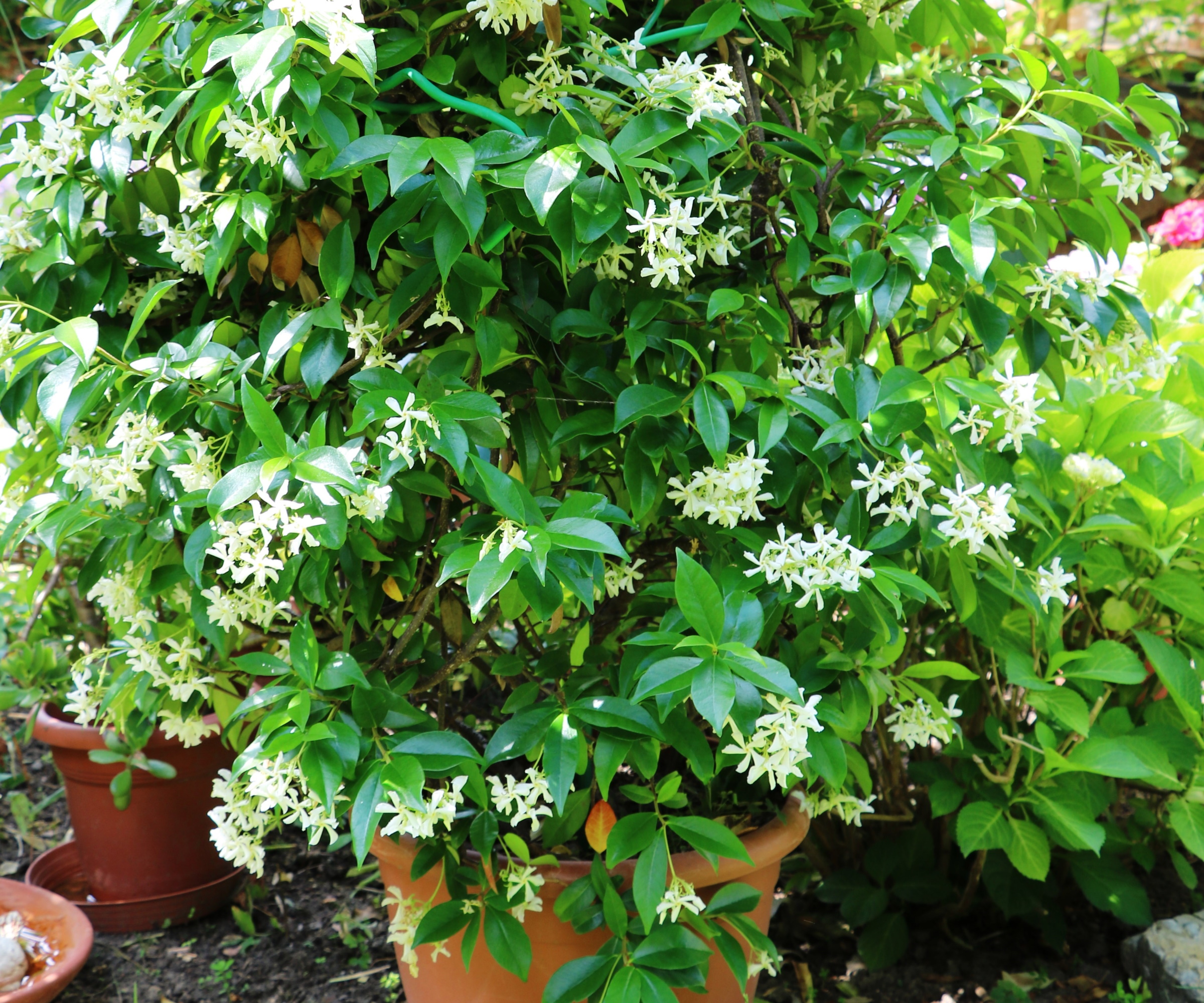
(Image credit: Getty Images/ClaraNila)
If your star jasmine grows in a pot, April is the ideal time to check whether it needs repotting, although generally you should only need to do this every two to three years.
'If you find yourself needing to water them more often than you’re used to, it’s a good idea to check the roots,' Vikram suggests.
'Carefully remove your plant from the pot and look for circling roots that are wrapped around the root ball. If you find the outside of the root-ball covered in circling roots, it’s time to trim those back so they branch and bump your plant into a larger pot.'
Choose a pot around two inches larger in diameter than the current one. A glazed ceramic pot, such as this one from Target strikes the right balance between drainage and moisture retention.
Star jasmine is one of the most rewarding plants you can grow in a container, and if you're growing it on a patio, it's the one that's guaranteed to make your space smell amazing all summer long.
With the right care in April, your star jasmine will more than repay the effort you put in by summer right through fall.
And if you love inspiring garden ideas, outdoor advice, and the latest news, sign up for our newsletter and get the latest features delivered straight to your inbox.
Comments (0)