
Remember me
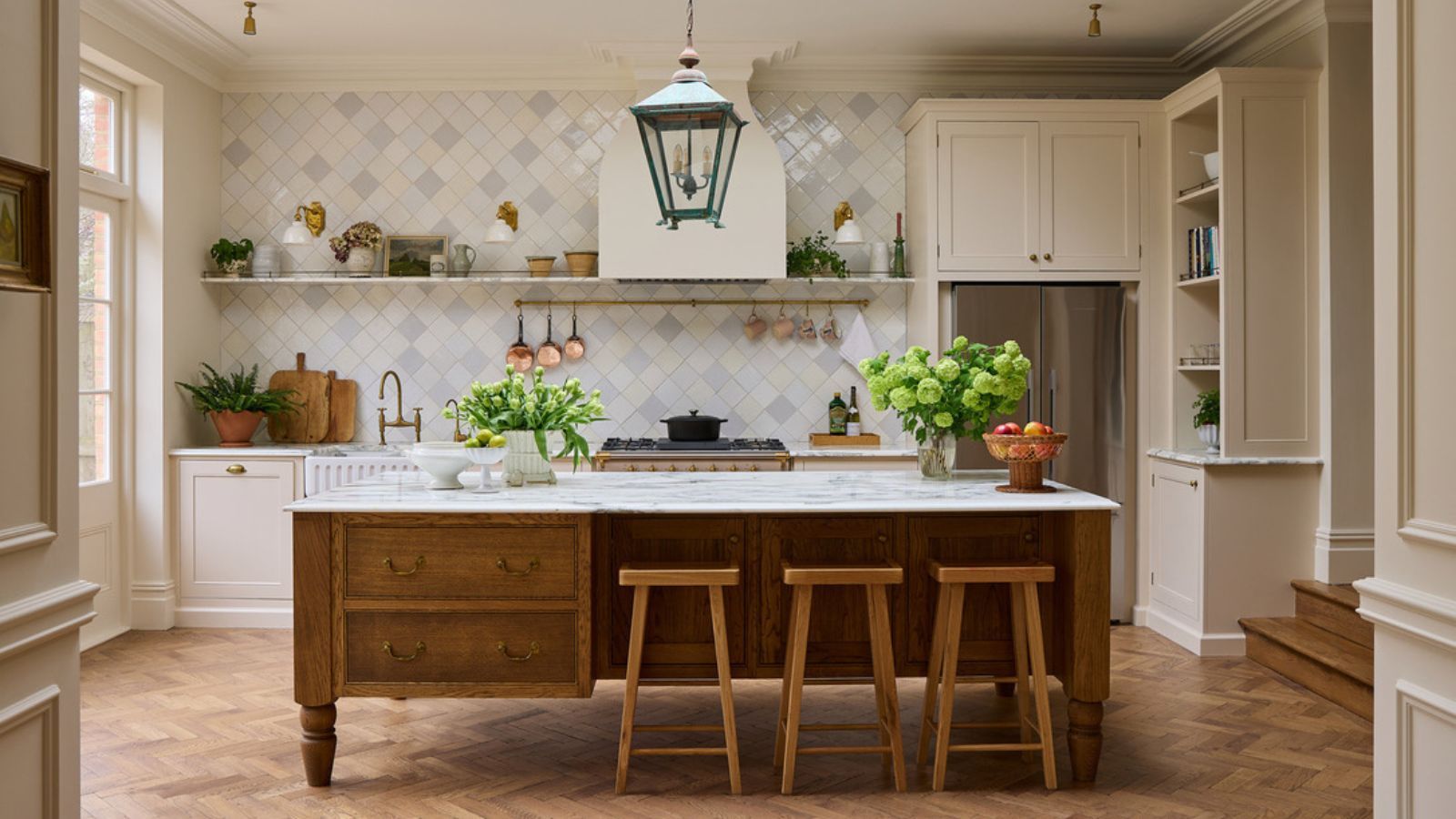




Introducing an island to your kitchen is a bit more complex than just adding a few units to the center of your space. The layout and how you use it are inevitably more important than style and the pretty details, yet something people get wrong all too often.
Your kitchen island ideas start with careful planning and understanding which layouts maximize function and make your cooking space work harder. Everything from shape and size to whether your kitchen can even accommodate an island all matters.
Article continues below You may like Kitchen Island Storage Ideas That Actually Work – 13 Smart Ways to Maximize Space and Function
 I’ve Designed Kitchens for Decades (and Married a Maker) – Here’s How to Get Every Detail Right First Time
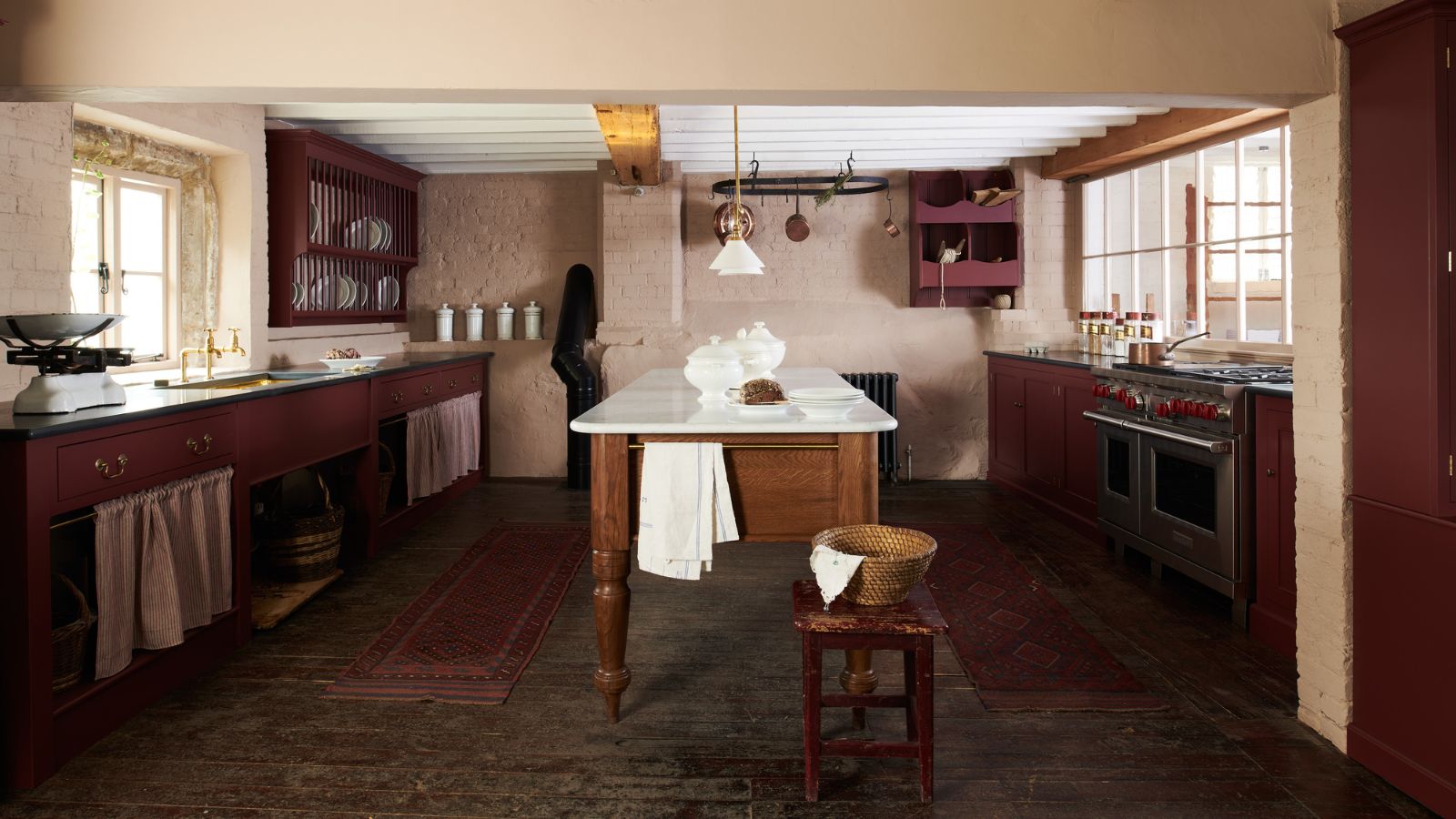 These Are the Only Kitchen Island Trends Interior Designers Are Paying Attention to This Year
Can Your Kitchen Fit an Island?
These Are the Only Kitchen Island Trends Interior Designers Are Paying Attention to This Year
Can Your Kitchen Fit an Island?
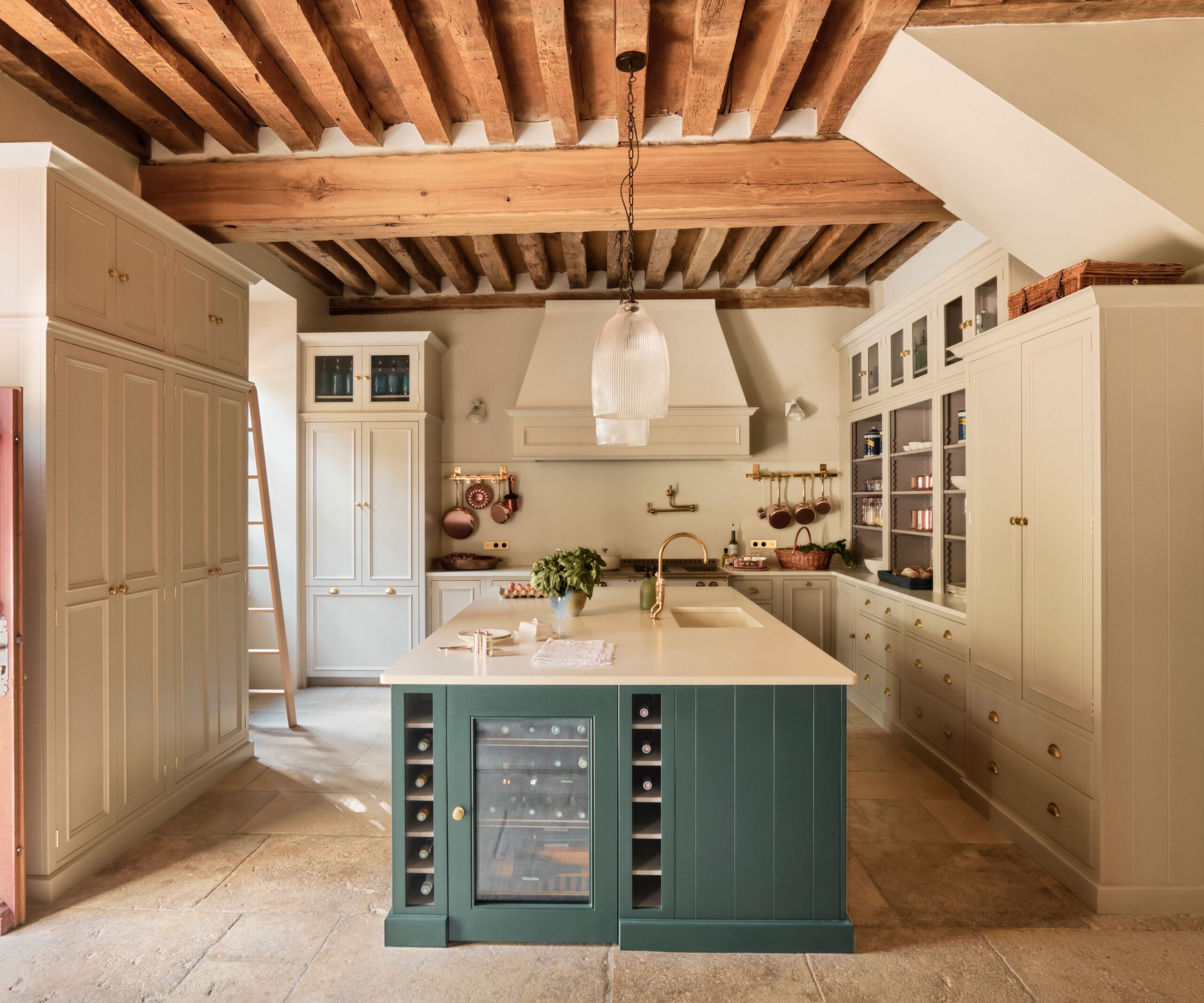
This U-shaped kitchen is large enough to fit a decent-sized island, which features smart storage on every side.
(Image credit: Neptune)
The first step in designing an island is figuring out whether or not it will actually fit in your kitchen. Generally, this will come down to the size and layout of the entire kitchen and how much space allowance you have to play with.
'We recommend a minimum of one meter between the island and cabinets as a comfortable distance for opening doors and appliances. If you’re going for a seated area, make sure you allow for enough clearance when a bar stool is pulled out and occupied,' says Fred Horlock, Design Director at Neptune.
That 1 meter (or 40 inches) is really important not only for accessing your various appliances properly, but also for ensuring easy flow around the kitchen, especially when more than one person is present.
If you can't accommodate these distances, an island is likely to cause more problems than it will add functionality to your kitchen. The flow will be disrupted, access to appliances will become awkward, and the overall spaces will be overcrowded.
The Best Kitchen Island LayoutsWhether your kitchen is long and rectangular, open plan, or more of a small square, these are the kitchen island layouts that work best in each room shape and size, and how to make the island work harder.
1. L-Shaped Kitchen with Island
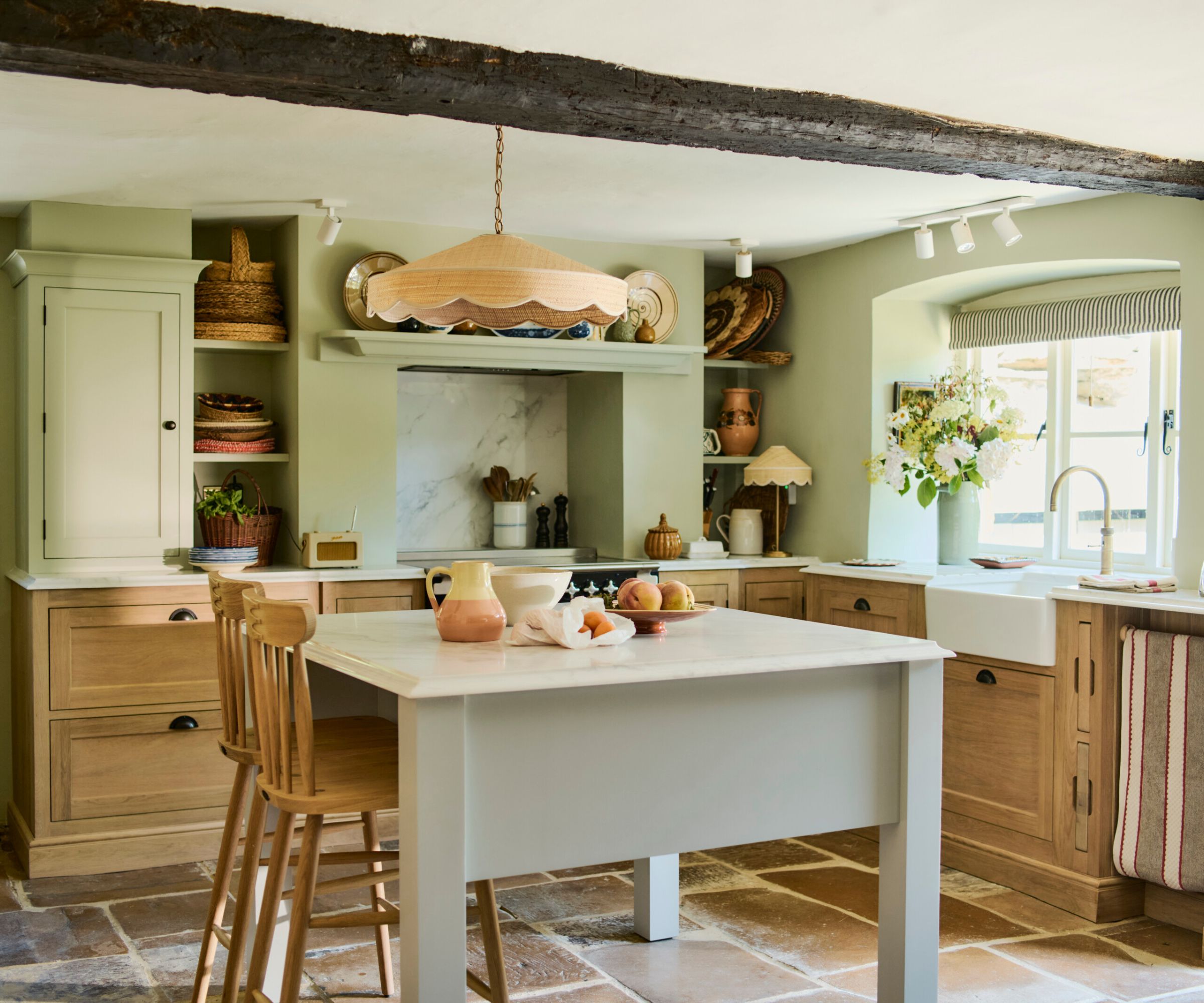
An L-shaped kitchen is ideal for adding an island. In this space, a freestanding-style island has been introduced, but there is still plenty of drawer storage to add function.
(Image credit: Neptune)
One of the most common kitchen layouts is an L-shaped kitchen with an island in the center, mirroring the proportions of the perimeter cabinetry. The wall cabinets can do most of the heavy lifting, housing the oven, cooktop, sink, and refrigerator, while the island becomes the hub of additional storage and ample prep space.
An open plan kitchen really thrives with this island layout, as it maximizes the available wall space, and the island then offers the extra surface and storage space you might usually get from another row of wall cabinets, like in a U-shaped configuration.
What to read next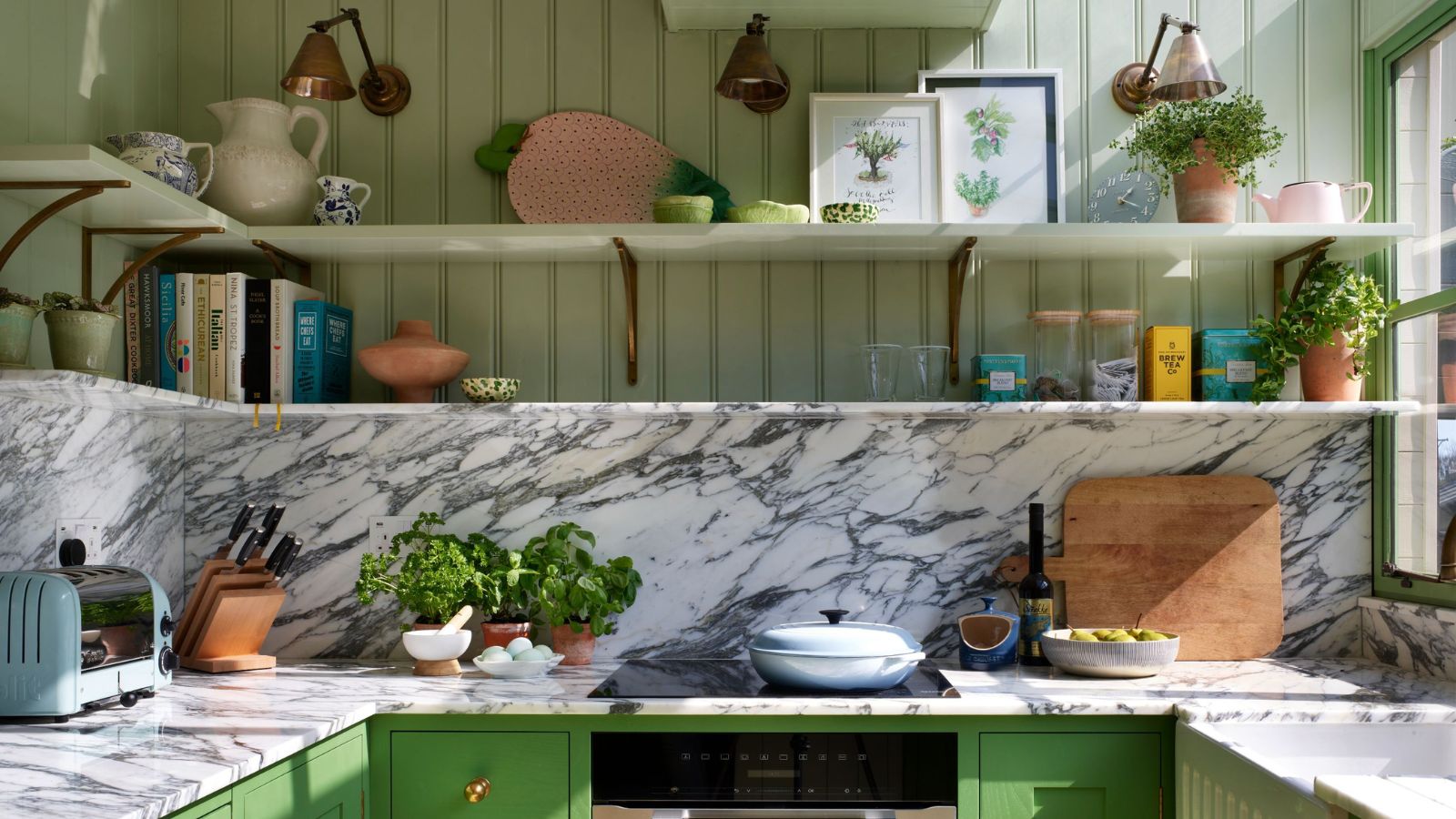 7 Outdated Small Kitchen Rules That Designers Say You Should Actually Break When Space Is Tight
 I Was Dreaming of a Sprawling Kitchen Island – Until Martha Stewart Convinced Me That This Small Space Alternative is Better
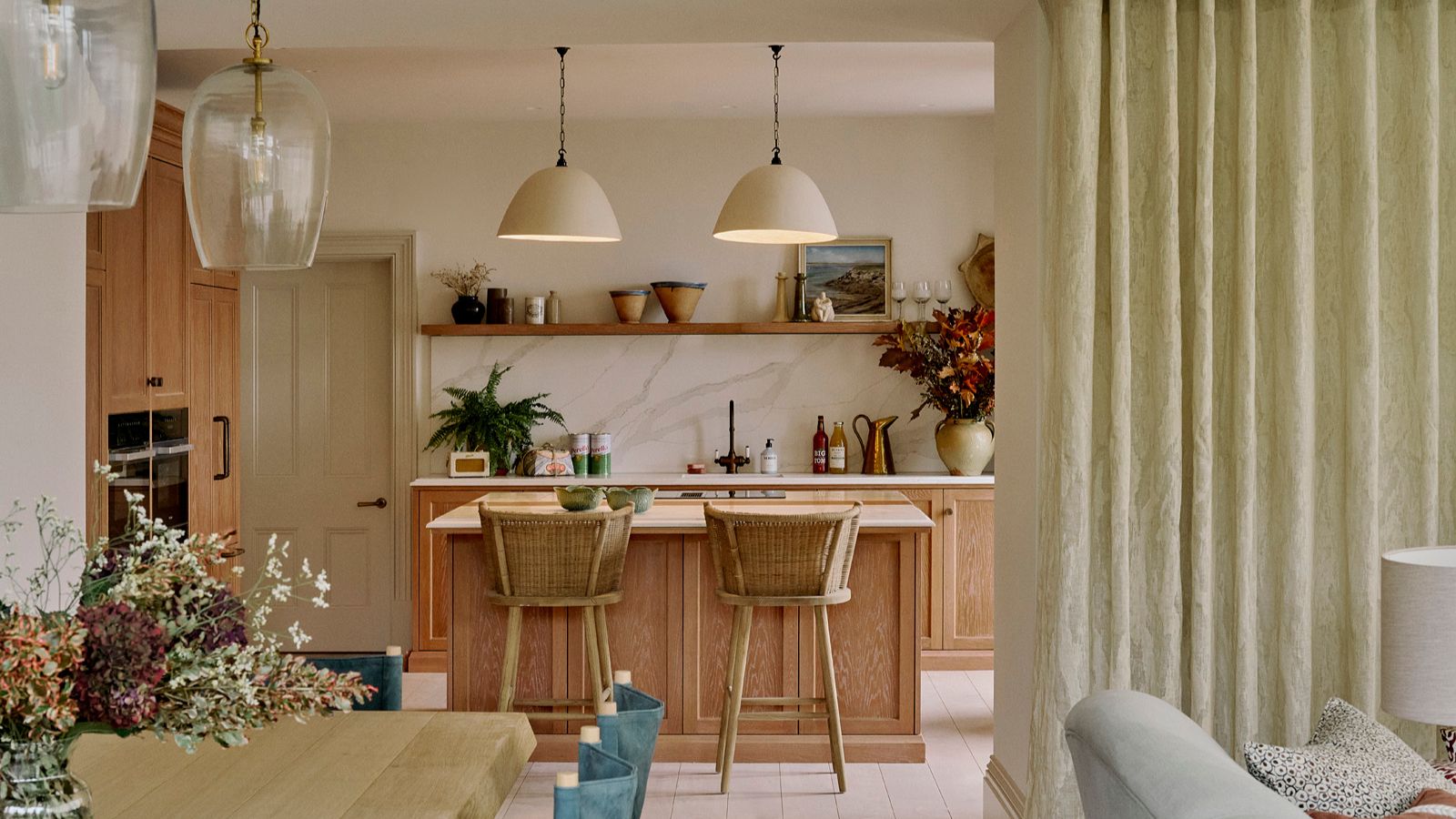 What’s Replacing the Kitchen Triangle? Zoning Is the Designer-Approved Way to Bring a More Personalized Function to Your Kitchen
If you are designing an island in this kitchen layout, use the two sides facing the kitchen to maximize storage and appliances that you want integrated here, and the sides facing the more lived-in spaces can be seating and smaller storage hidden behind panels for a more seamless finish.
And depending on the size and depth you have available to add an island, you may wish to mirror the kitchen's layout by adding an L-shaped island. This means you can extend the size of the island without creating storage that's too deep to access easily.
2. Galley Kitchen with Island
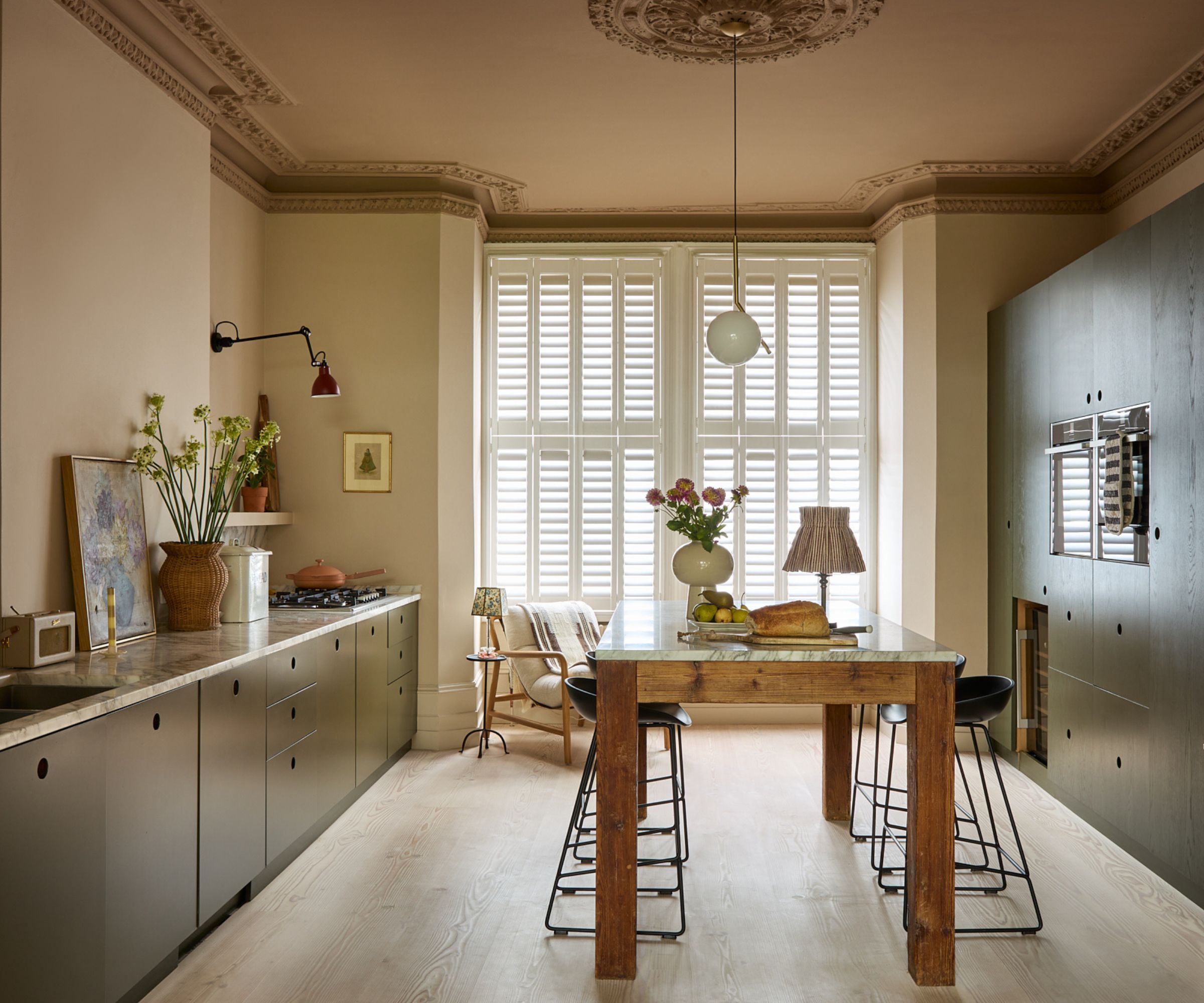
This wide galley kitchen offers plenty of space for an island. The designer opted for a prep-table-inspired design, as there is ample storage around the perimeter of the room, but you could also fit a built-in design for extra drawers and even appliances.
(Image credit: Laura Stephens)
A galley kitchen layout is one of the narrower configurations, so an island isn't always a possibility. If the room is wide enough, there is usually enough space for a slightly narrower island to sit between the two parallel rows of wall cabinets. Spacing is crucial here, so make sure you still have the 40-inch gap between the island and wall cabinets.
'We tend to favor a long, linear island that supports preparation, sometimes incorporating a prep sink, with the hob positioned opposite to maintain a natural dialogue between the two. The main sink is better placed along the main run, avoiding the awkwardness of people working back-to-back,' explains Anthony Earle, Creative Designer at Artichoke.
'Where the island faces the cooking area, it can become a highly functional working side, housing utensils, knives, chopping boards, and cookware in carefully planned drawers, while the outward-facing side remains lighter, more refined, and visually composed.'
It's also not uncommon to see galley kitchens with a more freestanding island design, sometimes even a portable one, to give the illusion of greater space. While storage is slightly less in these cases, you can still accommodate deep drawers for pots and pans.
3. U-Shaped Kitchen with Island
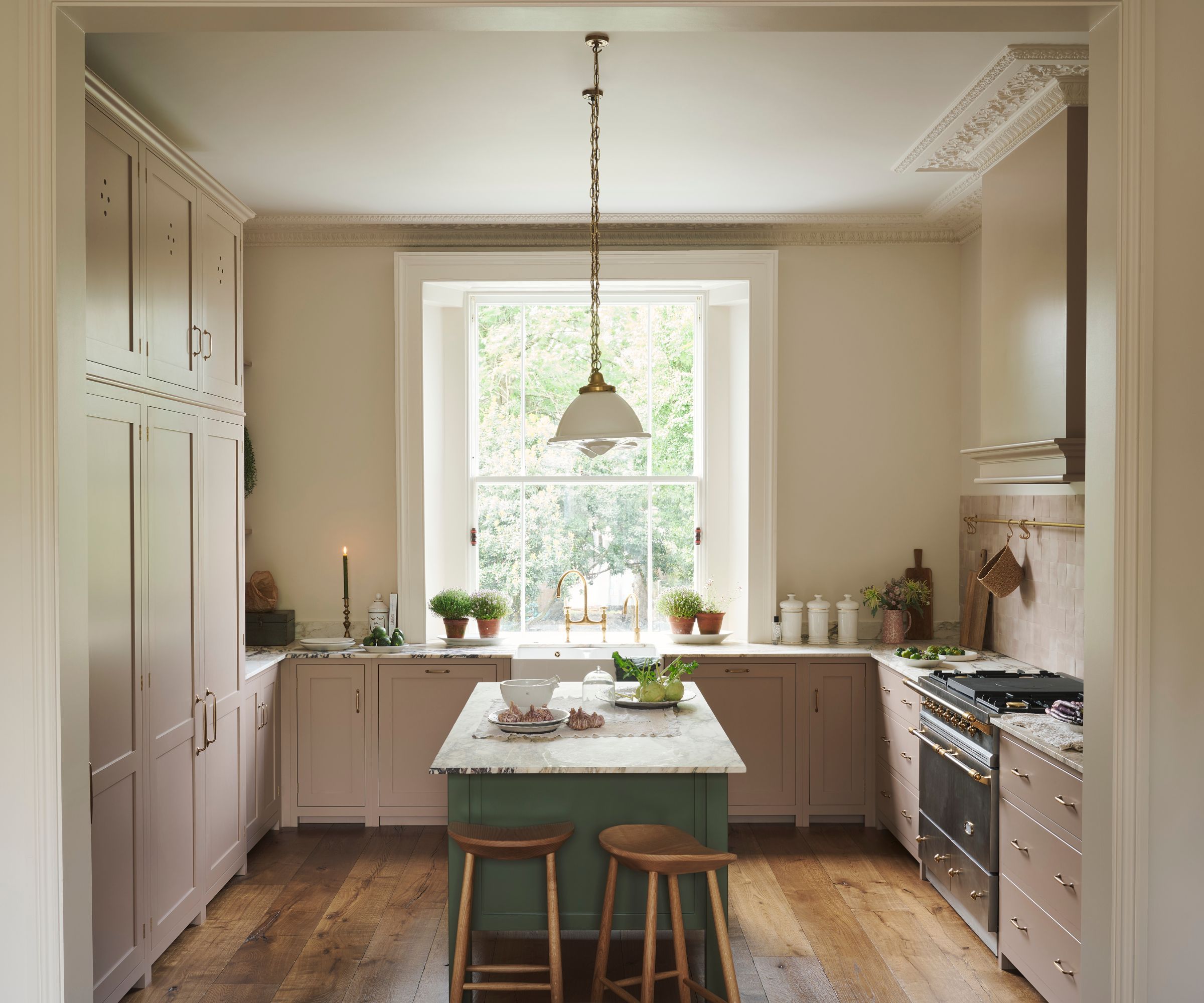
Island seating in this U-shaped kitchen has been introduced to the shorter end of the island to ensure the walkway space is kept free.
(Image credit: deVOL Kitchens)
A favored option in larger kitchens that really maximizes functionality, a U-shaped kitchen layout allows islands of varying sizes, depending on the room's shape and footprint.
This design is one of the most practical layouts, with ample storage and surface space on the perimeter units and the island. This is the one layout where you can really customize the location of storage and appliances, simply because you have the space to play around with different options.
The main consideration is where to introduce the island seating, if needed. If you've designed your kitchen with a working side and a social side, you can add seating to the livable section. Otherwise, it often makes the most sense to add counter seating on the side of the island that doesn't face any perimeter cabinetry for better walkway flow.
In this kitchen, the U-shape has one side with full-length cabinets and two of just base cabinets, which house the range cooker and sink. This means the island can be a bit smaller and design-led with a more freestanding look, as it doesn't need to offer as much storage.
On the opposite end of the spectrum, you can maximize the island in a U-shaped kitchen by adding really smart storage so you don't have to rely on full-length or upper cabinets, creating a more lived-in, soft kitchen look.
4. Open-Plan Kitchen with Island
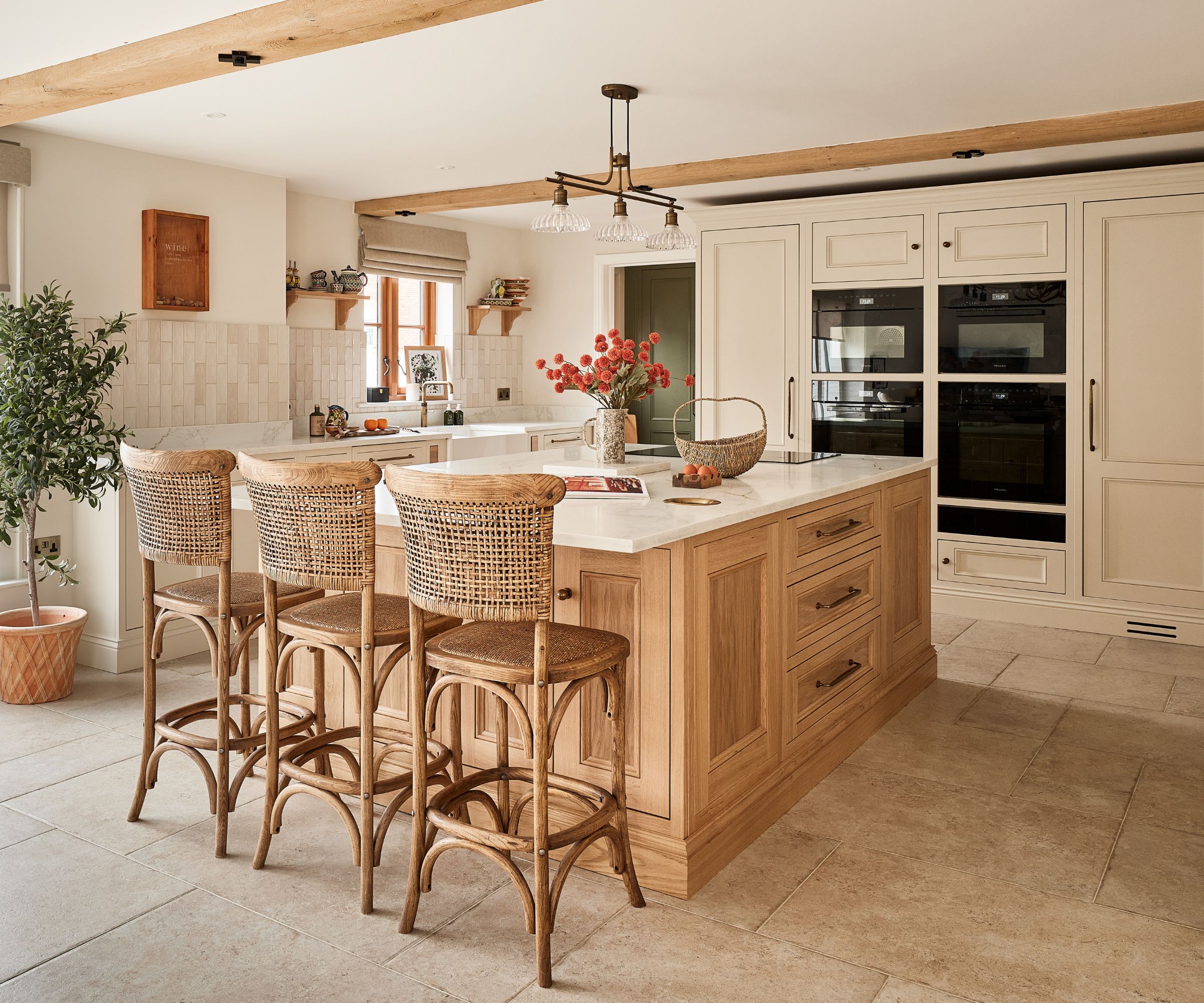
Seating along the open end of the kitchen here creates a softer, more lived-in look from the attached living space.
(Image credit: Ca' Pietra)
An open-plan kitchen layout requires zoning to separate the working areas from the social ones without a complete visual divide, and an island becomes a main feature to do this well.
The most effective way to utilize an island for kitchen zoning is to focus on the different requirements for each side. Generally, one side of the island will be facing the dining or living space within the open plan room, so it makes the most sense to use this end of the island as counter seating.
It feels more sociable, creating a soft divide between the two rooms that doesn't feel jarring. You can then utilize island lighting and counter stools to create a thread between different zones, whether it's a coordinating material to throw pillows on a sofa, or milk glass lighting that blends with sconces in a dining space.
You also want to think about the visuals in an open-plan kitchen. If the island is really visible from the living space, avoid installing your sink on the island, as there will be lots of visual clutter in the eyeline of people trying to relax. However, you may wish to put the cooktop on the island for a more sociable kitchen layout.
If you aren't adding island seating, the side that faces the living spaces can be used for more decorative storage options, such as open shelving or closed cabinets hidden behind well-designed panels.
5. Small Kitchen Island Layouts
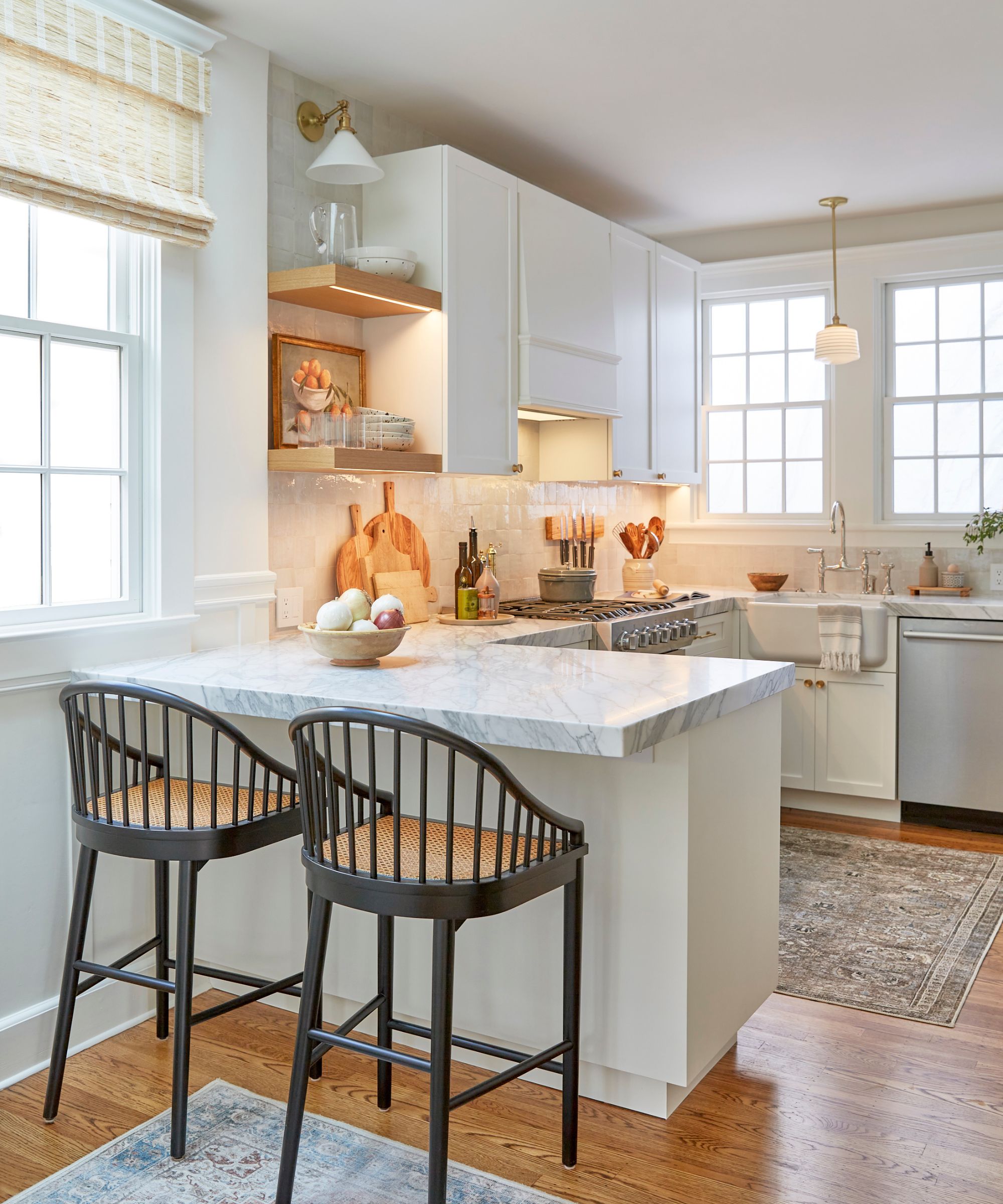
Here, a peninsula island provides a better use of space than a traditional island design.
(Image credit: Thecla Glueck Design/Allen J. Mort Photography)
The approach to small kitchen island layouts differs from other configurations, purely because you are working with a more compact footprint. The focus should be on storage and prep space, rather than cramming in lots of appliances.
'In smaller kitchens, the island should work quietly and intelligently rather than trying to do everything at once. We often favor keeping the surface clear of sinks or appliances, allowing it to function as a generous, uninterrupted workspace,' says Anthony.
'A thoughtful arrangement might see the hob positioned along the main run, with the island supporting prep and serving opposite. Refrigeration and washing up are best kept to either end, creating a natural rhythm to the space, while a separate drinks or coffee station allows others to use the kitchen without getting under the cook’s feet,' he explains.
'Storage here should be purposeful and discreet – well-organized drawers for everyday items such as cutlery – with larger appliances and heavier elements housed within the wall cabinetry if possible. The result is an island that feels composed, rather than cluttered.'
In some small kitchens, a peninsula layout can feel the most appropriate, allowing you to extend the length of the island for storage, surface space, and seating without the need for a full 40-inch clearance around every side.
6. Double Kitchen Island Layouts
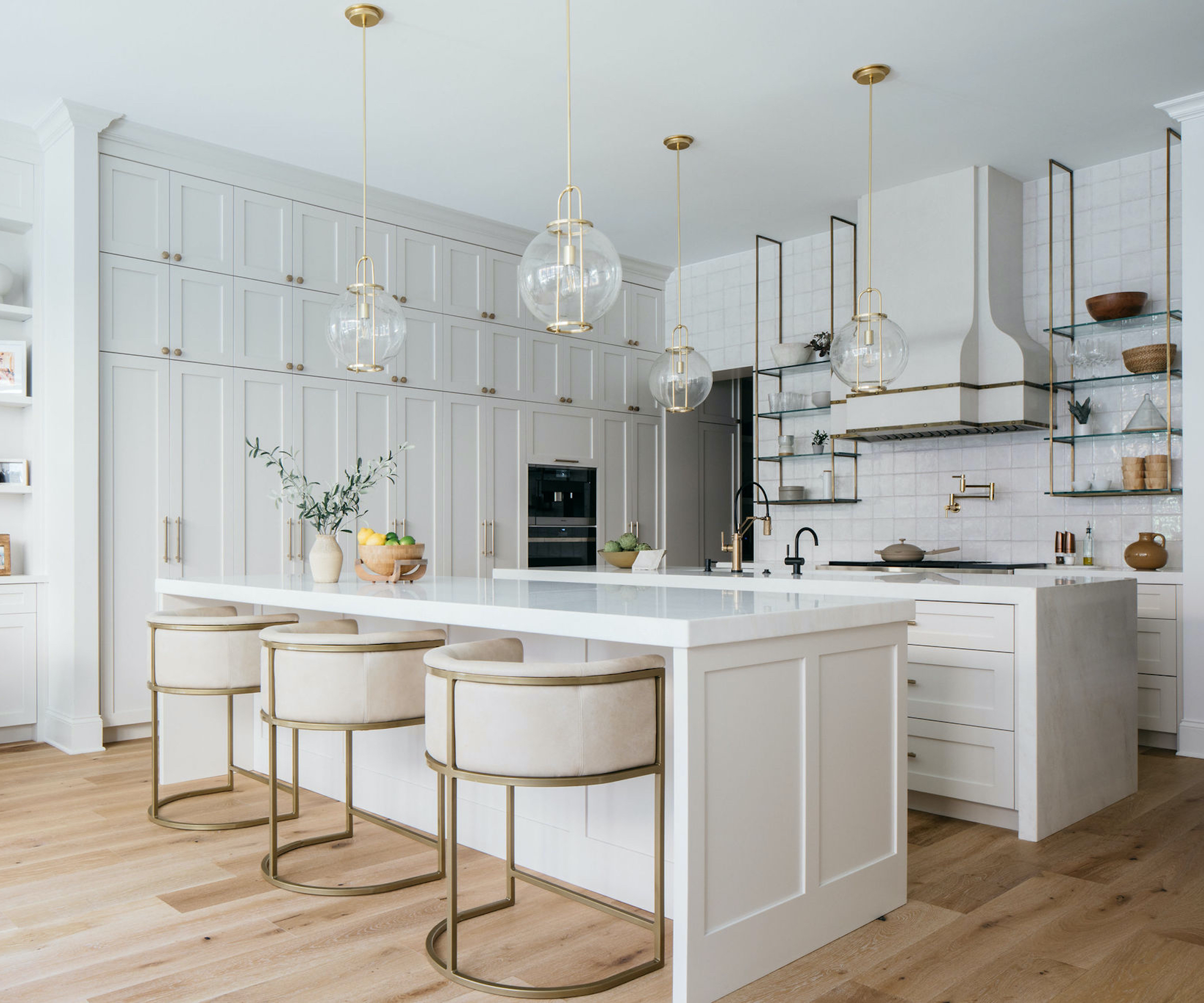
Two islands in this kitchen effectively zone the work and social spaces.
(Image credit: Margaret Rajic/Outline Interiors)
A double kitchen island layout is a real luxury, reserved only for the largest kitchens. There are really only two layout options with two islands: the islands sat parallel to the cabinetry housing the range cooker (as shown above), or perpendicular.
Spacing is still really important here, not just between the islands and perimeter cabinetry, but between the islands themselves. Try to maintain that 40-inch gap on all sides as a minimum for maximum flow and functionality.
The key to getting this layout right is understanding the different requirements of each island. Generally, the island closest to the range becomes the workstation, maybe housing appliances, but definitely storing pots, pans, utensils, and ingredients you need close to hand. You can also get away with having the kitchen sink on this island, as it is far enough away from the more social zones.
The second island then becomes the more social hub, with counter-height seating and perhaps those 'nice to have' additions like wine racks, drinks fridges, and decorative shelving.
What to Put in Your Kitchen IslandStart with how you actually use your kitchen, rather than following what other people do. Figure out the function you need your island to perform – this will help you make informed decisions about whether or not certain features are best added to the island, or left on the perimeter cabinets.
Island Storage
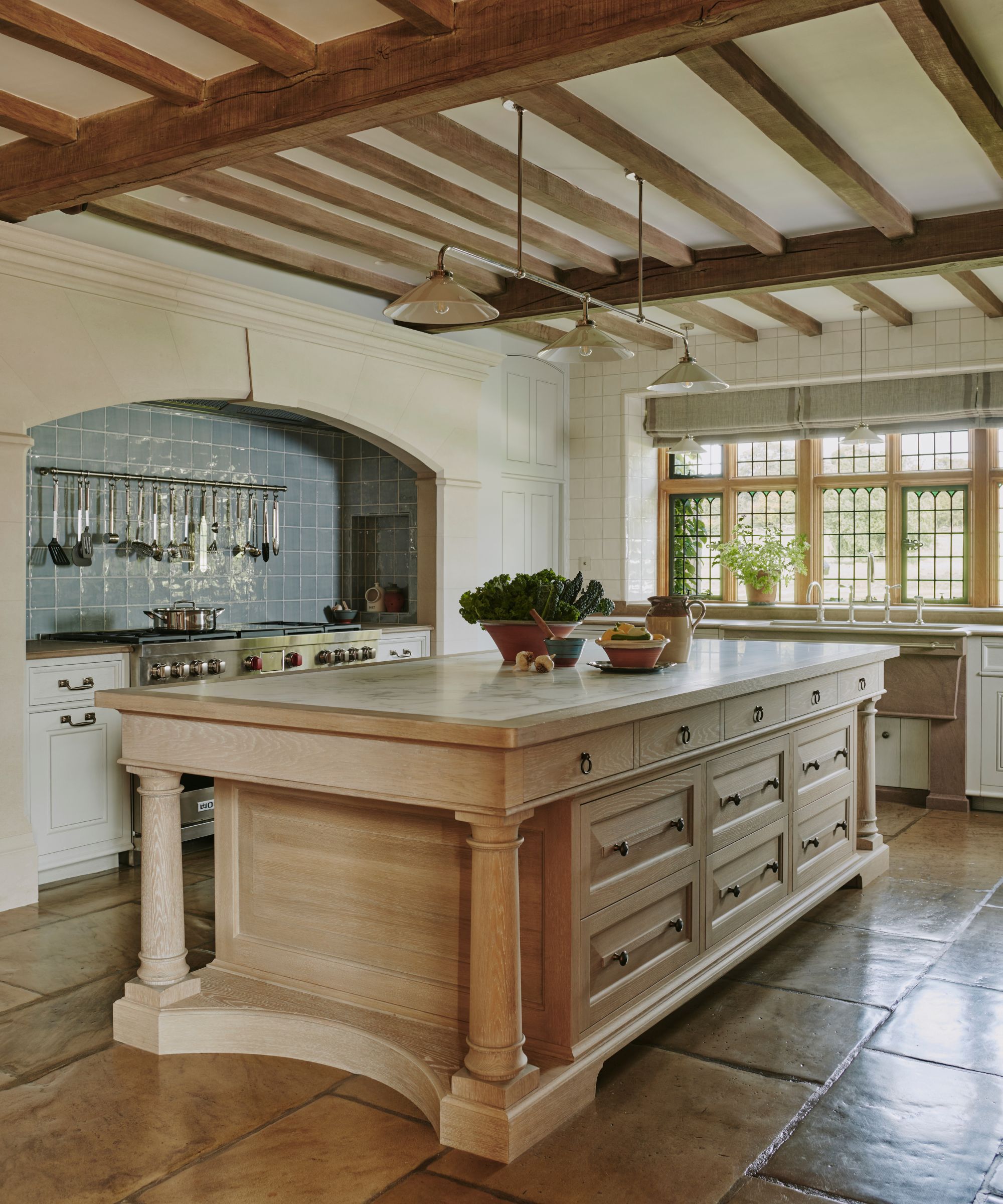
This kitchen island makes the most of the depth with drawers of varying sizes.
(Image credit: Artichoke)
One of the most important considerations in your design should be your kitchen island storage. It's not just about making the most of the space, but introducing the most functional styles of storage to ensure the full depth is usable.
'Storage is often tailored to the client, but we tend to favour drawers for their practicality and ease of access. Deeper drawers are ideal for pots and pans, while shallower ones work beautifully for organizing smaller kitchen items such as cutlery and utensils,' says Sophie Pringle, Founder of Pringle & Pringle.
'Storage becomes an exercise in meticulous design and master craftsmanship: solid timber cutlery trays, knife drawers with layered compartments, and carefully designed internal organizers. These are not simply practical additions, but small moments of joy for our clients,' adds Anthony.
You also need to consider both sides of the island here. Even if you are adding seating along one side, the space beneath can still be utilized for storage, even if it's shallower or a more hidden design.
'If you’re incorporating seating, you can use half-depth cupboards on the reverse side for things like glassware, which is a great way to maximise storage without compromising legroom,' interior designer Laura Stephens suggests.
Sink vs Cooktop vs Prep Space
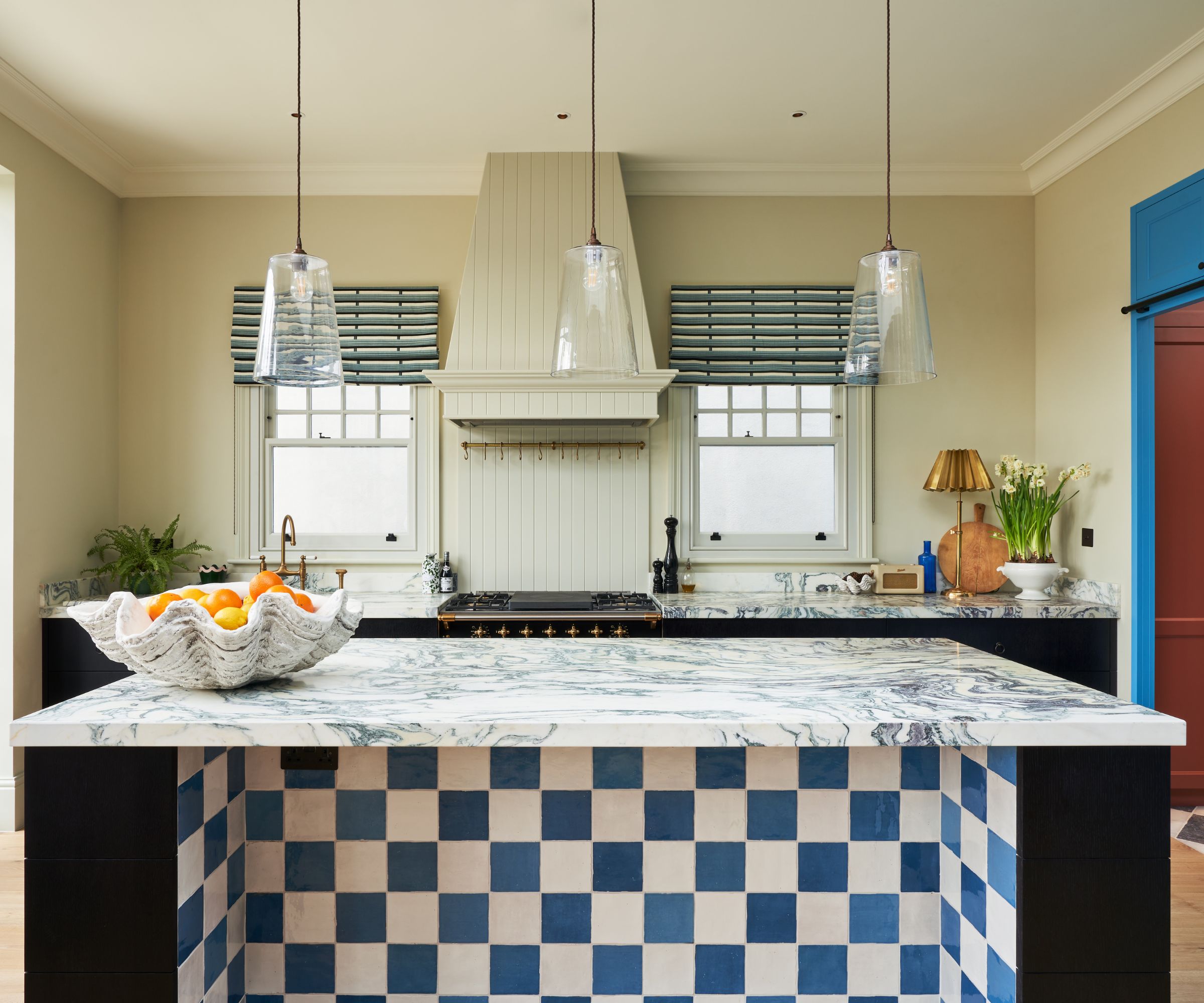
In this scheme, the kitchen island is reserved for prep space only, creating a really clean, uncluttered look.
(Image credit: Pringle & Pringle/Photographer Barnaby Dixon)
One of the biggest decisions to make is whether you will install appliances on your island or leave it as prep space. The decision will depend on the layout of your kitchen, as well as the way you plan to use the island.
'What you include should be guided entirely by how you live. For some, the island becomes a place to dine, while for others, it’s a sociable hub where they can engage with family or guests while cooking,' says Sophie.
'We often prioritise seating and storage, keeping the surface as uncluttered as possible, and avoiding sinks or cooktops can help maintain a cleaner, more inviting focal point.'
'Personally, I tend to avoid putting sinks on islands as no one really wants to look at a pile of washing up in the centre of the room,' agrees Laura, echoing the same sentiment as other designers, who emphasize the messy look a hardworking sink can leave.
A cooktop, however, is worth considering, especially if you want to create a more sociable layout that allows the cook to socialize with people seated around the island. However, where the kitchen layout allows, designers generally recommend keeping the island counters as purely prep space.
'I often prefer to keep islands completely free of utilities and design them more like a freestanding piece of furniture, sometimes on legs, so you can see the floor beneath. It makes the kitchen feel lighter and less blocky,' says Laura.
Seating Layouts
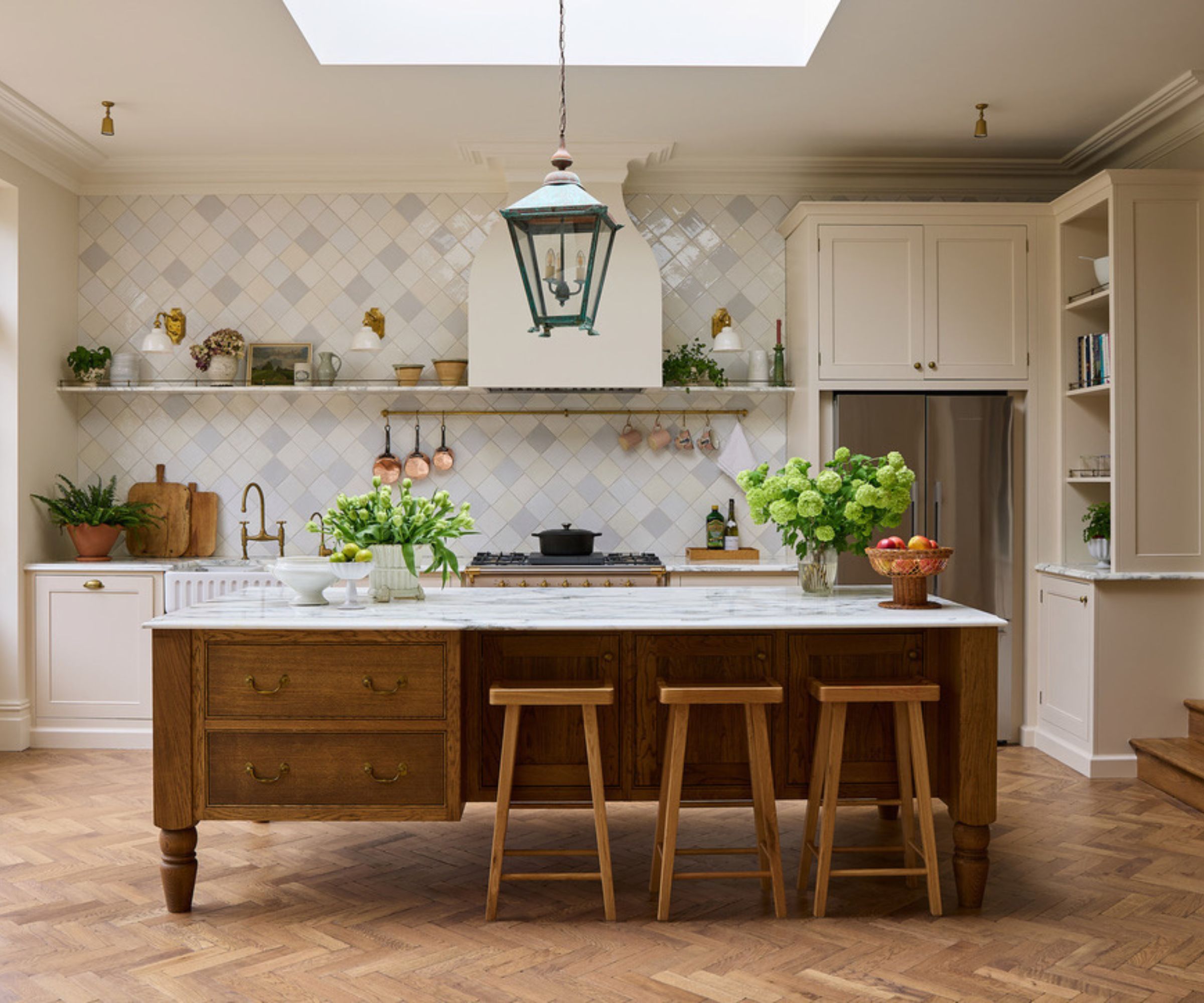
This kitchen island layout proves storage and seating can be accommodated stylishly.
(Image credit: Laura Stephens)
Seating is a great addition to an island, creating a multi-functional space to cook, dine, and use as a workspace. But the measurements are key to ensuring it's comfortable and sized appropriately.
The overhang needs to be long enough to be comfortable, yet not too long that you are wasting valuable storage space. To ensure there is enough leg room, opt for an overhang of 15 to 18 inches.
You also need to make sure each kitchen island seating space is big enough so people aren't knocking elbows. Aim for a length of 24 inches per seat, or a little bit extra if you have chosen stools with chunkier armrests.
Kitchen Island Size and Proportions
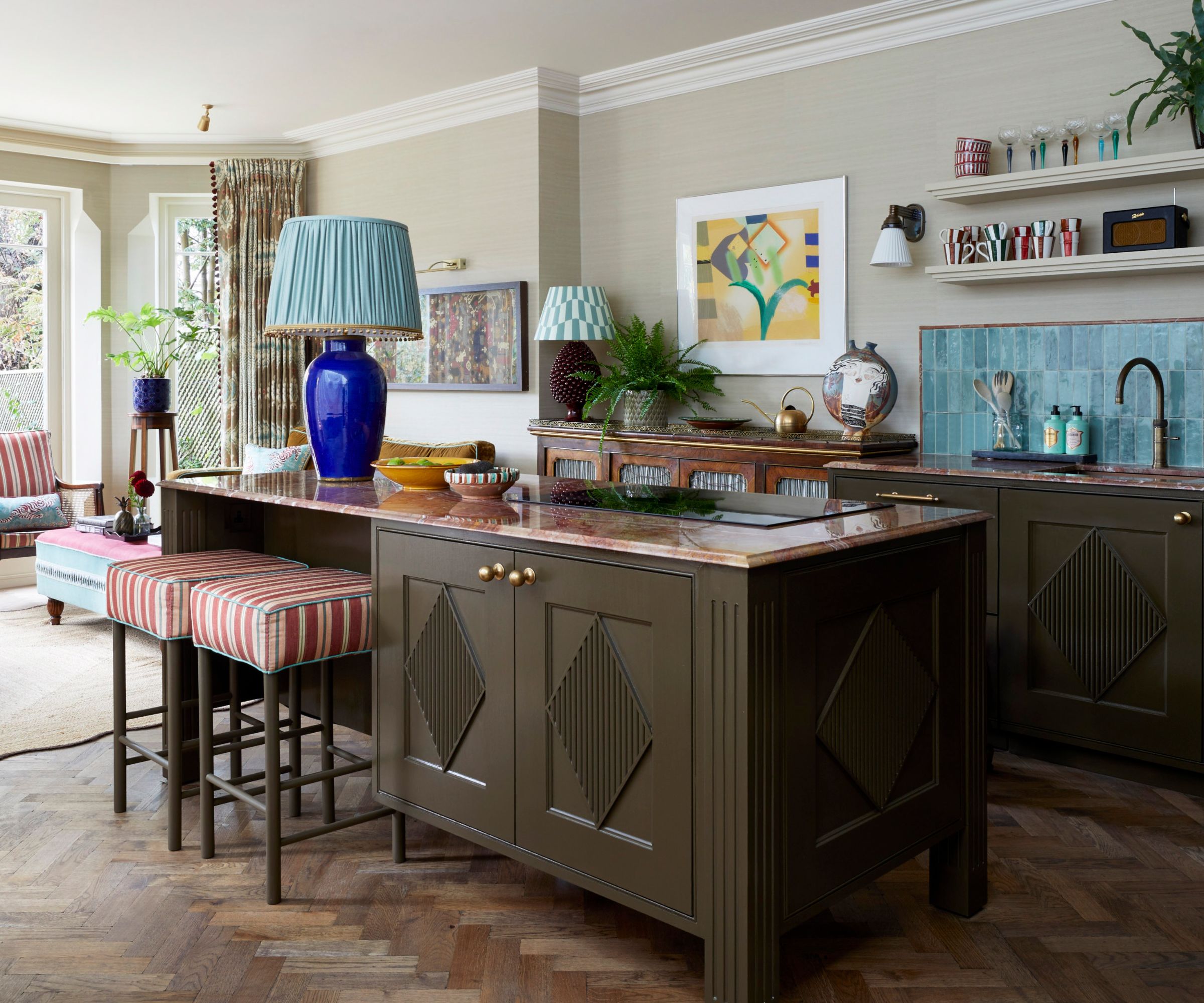
The cabinets facing away from this kitchen have a charming etched detail to create a more characterful finish.
(Image credit: Laura Stephens)
When you are deciding whether or not you can fit an island in your kitchen, it's worth bearing in mind the general proportions required for the island to actually be a functional feature.
The average width for a kitchen island is anywhere between 30 and 48 inches – any smaller than 30 inches feels a bit squashed and too small to add a lot of function to your space. There really is no maximum size, however. Just make sure you are taking proportion into account, as demonstrated beautifully in Shea McGee's Arizona Project.
Depth is equally important. A standard cabinet size is 24 inches, so your island needs to be at least that deep for functional storage – anywhere between 24 and 36 inches is ideal for an island prioritizing storage.
If you want to add appliances or seating, you want to accommodate a depth of 40 to 48 inches to ensure everything fits nicely and to factor in electrics and plumbing, depending on the appliances you introduce.
Kitchen Island Layout Mistakes
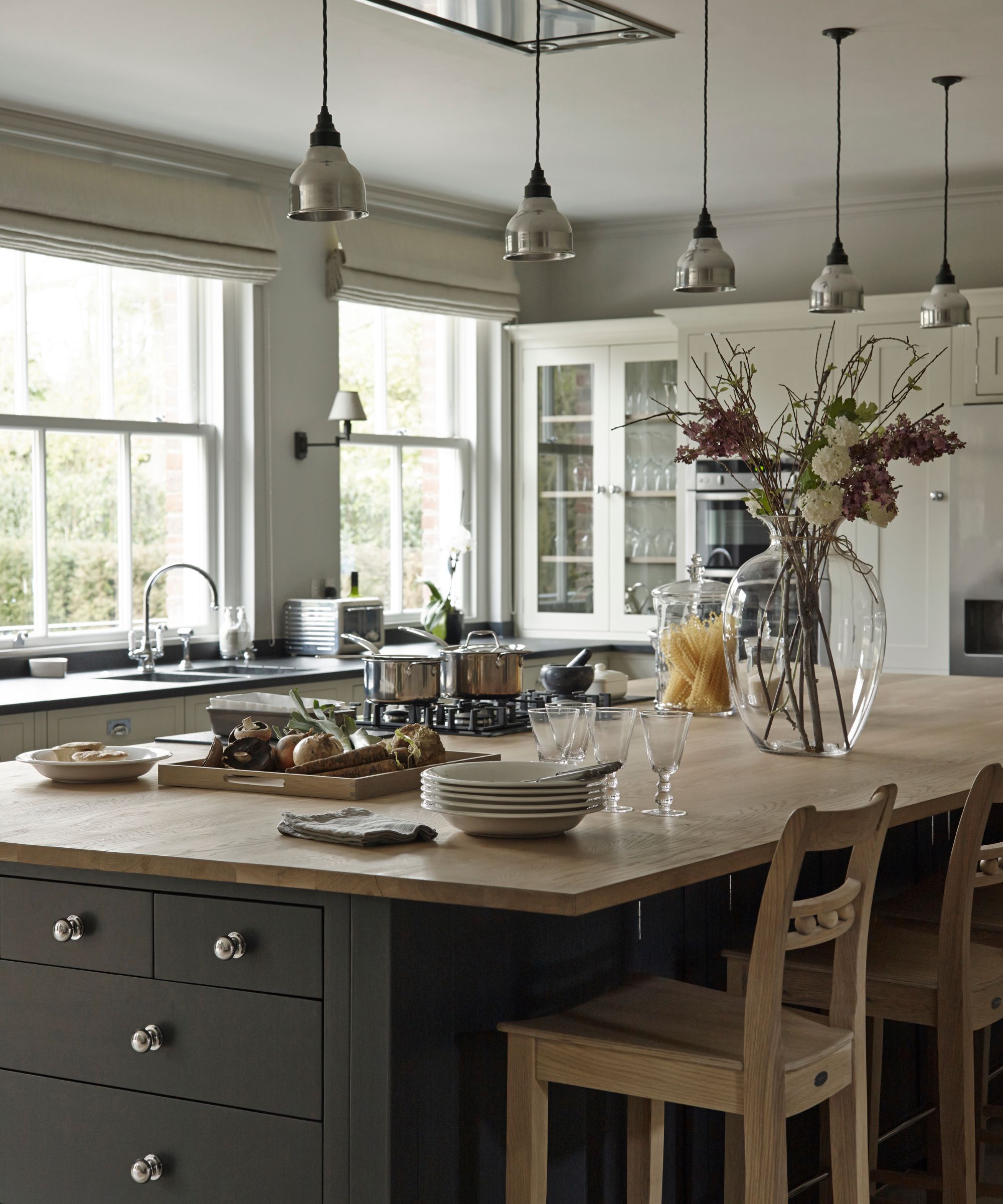
In this design, plenty of overhang space has been factored in to ensure the seating space is comfortable.
(Image credit: Future)
When you are making layout decisions for your island, avoid these common kitchen island mistakes that can take your island from hardworking to a functional nightmare. And if you're finding it too hard to avoid them, it's probably a sign you don't have enough space for a well-designed kitchen island.
1. Blocking WalkwaysOne of the biggest mistakes you can make with your island layout is blocking walkways. The one-meter clearance really is crucial here so that you can access appliances and storage without causing a blockage around the walkway.
'As a minimum, I’d allow around a meter of clearance on all sides. If you have the space, a little more is always better, particularly in busy family kitchens where multiple people are moving around at once,' says Laura.
'You need to be able to move comfortably around the island, so circulation is key. It’s important to think about how doors and appliances open, too, making sure there’s enough room behind a dishwasher or oven so everything can function easily without feeling cramped.'
2. Oversizing the IslandJust as going too small with the island can lack functionality, so can going too large. You have the opposite problem here, where the depth means that not only can some storage space feel unreachable, but surface space can be too deep to use, clean, and access.
'There aren’t really any hard and fast rules; it completely depends on the space. In narrower kitchens, a long, slim island can work beautifully. I would avoid going too deep, though; anything over a meter can become impractical, as you don’t want to be reaching (or effectively throwing!) things across it,' says Laura.
'A well-designed island is defined less by fixed dimensions and more by proportion and balance within the room. It should feel generous enough to be useful, but not so large that it dominates the space. Ultimately, it should sit naturally within the architecture of the kitchen,' adds Sophie
3. Too Many FunctionsAn island is a hardworking feature, but it can't be everything. Filling it with every appliance and storage option under the sun will create an awkward layout that doesn't flow or function the way you need it to.
'Overloading the island with appliances can make it feel heavy and overworked. It should be beautiful while supporting the kitchen without dominating it,' explains Anthony.
Decide on what you need your island to provide in your kitchen. Is it a social space, a food prep area, or a hardworking storage spot? Once you have decided on its function, it will become clear on the appliances or features you need to add, and which to place alongside the perimeter cabinets.
4. Bad Seating LayoutAdding seating to an island is a good idea, but layout is key, especially as it's easy to get wrong. For one, you need to ensure you give each seat enough linear space as well as enough leg space to be comfortable.
But the side of the island to which the seating space is added is also really important. You absolutely want to avoid sitting along the edge of the island that faces the oven, as it will instantly impede the functional workspace. The same applies to any side of the island with appliances like dishwashers and appliance garages.
Ideally, seating should be added to the side of the island that isn't flanked by appliances or cabinetry around the perimeter of the kitchen, even if this means the island seating is along a narrower edge. Seating should never impede the flow of the room or access to storage and appliances.
5. Installing the Main Sink on the IslandIt can be tempting to install your main sink on your island, but if this is where all of your food prep and dishwashing is done, you will quickly have dirty plates and cookware piling up, creating an unsightly focal point.
'Perhaps the most frequent misstep is placing the main sink or washing-up area on the island. While seemingly practical, it tends to disrupt the working rhythm of the kitchen,' says Anthony.
'It draws clutter into the centre of the room, interrupts prep and serving, and creates unnecessary overlap between cooking and socialising.' Instead, the main kitchen sink should be placed either on the perimeter cabinets or in a back kitchen, out of sight.
Kitchen Island Layout FAQs
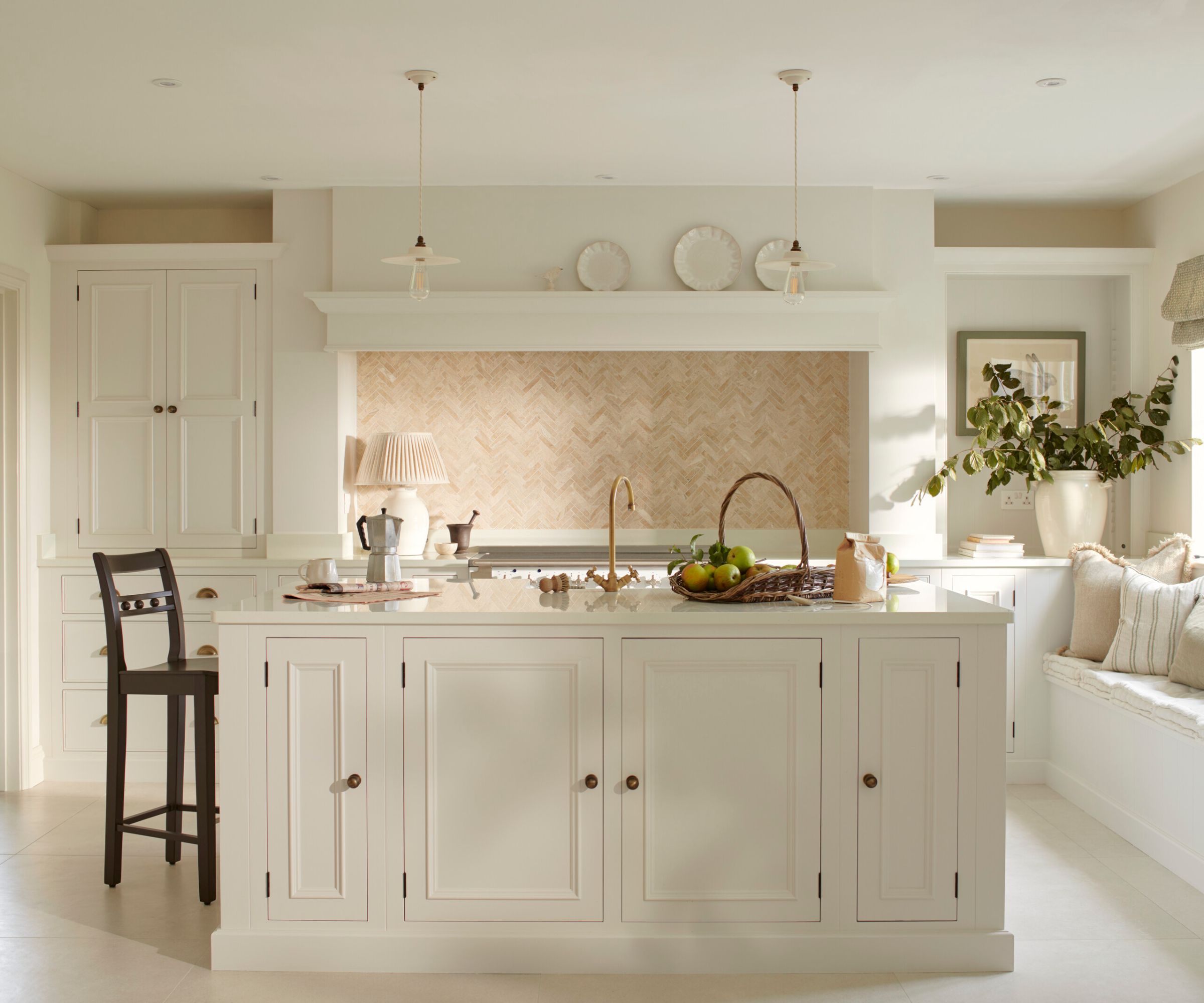
The island in this white kitchen is the main storage space, so cabinets of varying sizes have been carefully added to store items appropriately.
(Image credit: Neptune)
What is the Best Layout For a Kitchen Island?There is no one single kitchen island layout that works best – it's more about the size and shape of the kitchen, how the island works in the space, and how it functions for the needs of the homeowner.
'The layout should always support the natural flow of the kitchen. Positioning key elements thoughtfully ensures that movement between cooking, prep, and storage areas feels intuitive. An island should enhance how the space functions day-to-day, rather than becoming an obstacle within it,' says Sophie.
'There are moments where an island, however desirable, simply isn’t the right solution due to space or layout. A well-designed kitchen should feel like it has always been there, as though it could not have been arranged any other way. If an island has to be squeezed into place, it is usually worth considering another design approach,' adds Anthony.
How Much Space Do You Need Around an IslandSpacing is so important when you are designing your kitchen island layout, as it can make or break the entire room. Enough space needs to be left for walkway flow and easy access to appliances and storage.
'Generosity of space is what allows a kitchen to feel calm and effortless. As a guide, we recommend allowing 1100–1250mm clearance around an island so that the room can be comfortably used by more than one person at a time,' says Anthony.
'In tighter settings, 900mm is the absolute minimum, though anything below this tends to feel constrained over time. A well-proportioned kitchen should invite movement, not restrict it.'
Is an Island Better Than a Peninsula?In a kitchen with enough space to accommodate an island, it's usually preferable over a peninsula; however, in the smallest spaces or more awkward room shapes, a peninsula can be the better option.
'If space allows, an island often creates a more open and fluid layout, allowing the kitchen to connect more naturally with the surrounding room. A peninsula can still work beautifully, particularly in more compact spaces, but an island tends to feel lighter and more sociable in its use,' says Sophie.
'It really depends on the layout,' adds Laura. 'A peninsula can be a great way to zone a larger space or provide additional storage without needing as much clearance. An island, however, tends to feel more relaxed and flexible, and can create a more open, less fitted look, which I often prefer.'
The best kitchen island layout is one that works with the proportions and architecture of your space. Make sure you really think about how you want your island to function, and then make informed decisions about the priorities, whether it's prep space, casual dining, or hard-working appliances.
Love beautiful design ideas, expert advice, and inspiring decor trends? Sign up for our newsletter and get the latest features delivered straight to your inbox.
Comments (0)