
Remember me







It’s very fair to say that Milan Design Week has outgrown design in its most traditional sense.
What was once a furniture fair orbiting the Salone del Mobile has evolved into a city-wide convergence of fashion, architecture, and design in all its formats. Overall, it can only be a good thing that more eyes are on the design industry, but year on year, there’s definitely more to sift through in order to find the gems.
Luckily for you, we’ve done the hard work to find the stuff you can’t miss. As always, we’ll be on the grounds scouting out the very best in show, but for now, feel free to copy our hit list.
Reference Library, Jil Sander
The trend for reading (performative or not, you decide) continues over at Jil Sander with Reference Library, a mirrored, chrome-lined environment. Visitors enter in controlled intervals, wearing white gloves while interacting with a tightly curated selection of books. The installation slows everything down, transforming attention and touch into the central experience.
Via Luca Beltrami 5, 20121 Milan
Triannale, Eames Pavilions and Fredericia
This year’s Triennale programme is anchored by three exhibitions: The Eames Houses, an immersive exploration of Charles and Ray Eames’ architectural thinking, complete with full-scale structures; Alphabet, a sweeping retrospective of Edward Barber and Jay Osgerby that traces their influence across furniture and industrial design; and A Chronicle of Danish Design by Fredericia, mapping a century of Scandinavian craftsmanship from Børge Mogensen to Cecilie Manz. Together, they capture the Triennale’s strength: connecting design history with contemporary practice in a way that feels both rigorous and quietly inspiring.
Viale Emilio Alemagna 6, 20121 Milan
Alcova
Alcova continues to anchor the underground scene, expanding into both a modernist villa and a disused hospital on the outskirts of Milan. Installations respond directly to these raw environments, making architecture an active participant in the work, while the atmosphere gradually shifts into something more social as the day progresses.
Baggio Military Hospital: Via Giovanni Labus, 10, 20147 Milan/Villa Pestarini: Via Mogadiscio, 2/4, 20146 Milan
Convey
We were huge fans of Convey last year, and this year is no exception. For 2026, the show turns a residential building into a dense, multi-room exhibition, where each space introduces a different designer or brand. Moving through it feels like navigating a physical feed, with distinct aesthetics unfolding room by room and reinforcing a collective, multi-author approach to design.
Via San Senatore, 1020122, Milan
Dropcity
Beneath the city, Dropcity reframes design through infrastructure. Its tunnel-based program foregrounds process over product, exposing prototypes, materials, and systems, and shifting focus toward how design is made rather than how it is presented.
Via Sammartini 38-60 20125 Milano
Nilufar Depot
At Nilufar Gallery’s Depot, the space is reimagined as a fictional hotel. Each room operates as its own environment, staged with collectible design pieces that function as part of a larger narrative, collapsing interior design into scenography.
Viale Vincenzo Lancetti 34, 20158 Milan
Deoron
Deoron introduces a more fluid format, combining exhibition, sound system, and social space. Objects are designed to be touched and used, while a central audio installation shapes the atmosphere, turning the project into a continuously evolving gathering point.
Via Padova 11, 20127 Milan
Bunch of Knobs
“Bunch of Knobs” narrows the focus to hardware, isolating handles and fixtures and presenting them with an almost obsessive level of attention. The result elevates utilitarian components into objects of design significance, reflecting a growing emphasis on detail as a marker of luxury.
Various addresses
Memoria, Gucci
Rather than presenting a chronological archive, Memoria is set to unfold as a fragmented sequence of rooms where past and present overlap. The experience leans heavily on scenography, turning brand history into something cinematic and immersive, with memory itself treated as a spatial medium.
Piazza San Simpliciano 7, 20121 Milan
Polish Modernism
Explorations of Polish modernism revisit regional design histories that have often been overlooked, contributing to a broader shift toward decentralizing the global design canon and expanding the narrative beyond its traditional centers.
Corso Venezia 48, 20121 Milan
Bottega Veneta x Kwangho LeeThe collaboration between Bottega Veneta and Kwangho Lee centers on material experimentation and craft, translating fashion’s focus on technique into a tactile, spatial experience.
Torre Velasca, Piazza Velasca 3-5, 20122 Milan
Marsèll x Odd Matter
Marsèll’s collaboration with Odd Matter continues the convergence between fashion and collectible design, positioning footwear within an installation context and dissolving the boundary between product and object.
Via della Spiga 42, 20121 Milano
Range Rover x Storey Studio
Range Rover’s installation, developed with Storey Studio, approaches automotive design through an architectural lens, emphasizing materials, surfaces, and spatial composition over performance.
Galleria Meravigli, Via Meravigli 5, 20123 Milano
Salone Raritas
At Salone del Mobile, we’re excited to see the introduction of more tightly curated sections focused on collectible and limited-edition work signals a shift within the industry itself, aligning the fair with the broader movement toward narrative and authorship.
Fiera Milano, Rho, Strada Statale Sempione 28, 20017 Rho
Silhouettes, Muller van Severen
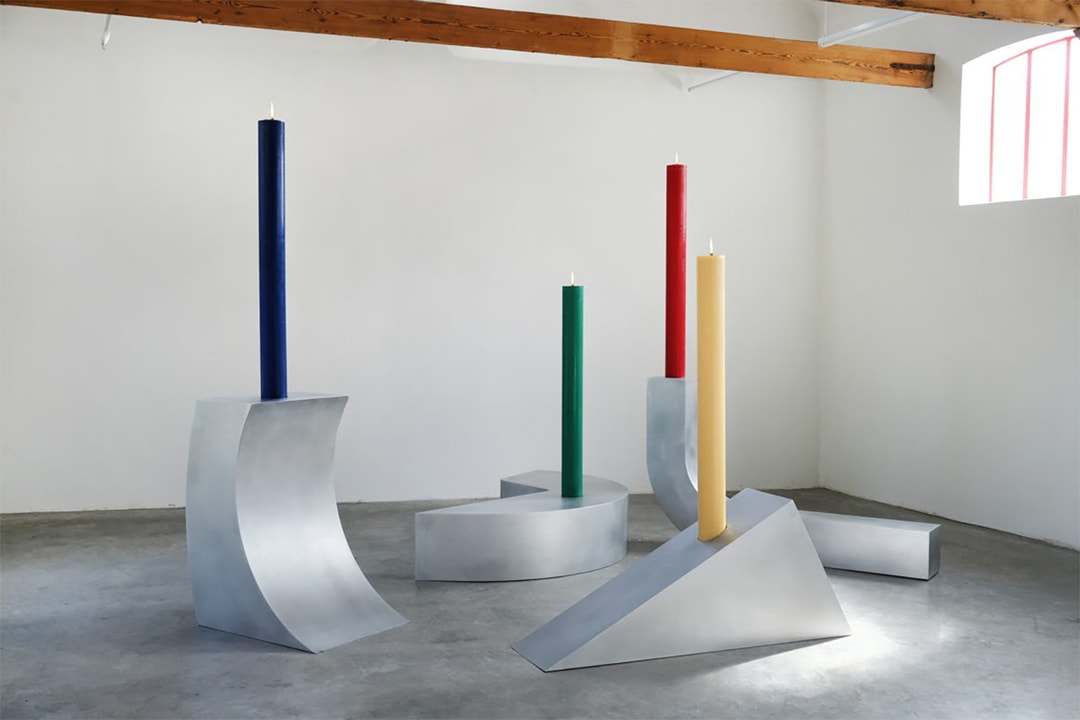
In collaboration with Apartamento and Tim Van Laere Gallery, colorful duo Muller Van Severen will celebrate 15 years in business at Salone. Rather than a retrospective in the traditional sense, the duo distills their archive into a series of 15 life-size aluminium candleholders, each abstracting forms from past works across seating, lighting, and objects. As the candles burn throughout the week, the pieces gradually transform, introducing time as a material and turning the installation into a slow, evolving reflection on their practice.
Ordet, Via Filippino Lippi 4, 20131 Milan
Ghost Kitchen, Uppercut x Soft Baroque
Belgian gallery Uppercut brings “Ghost Kitchen” to Milan alongside Soft Baroque. At the show, new works and an installation will reflect on contemporary systems of circulation and the increasingly intangible nature of material culture.
Via Leone Pancaldo 12, 20129 Milano
Chopsticks, S—3
This show is set to connect “East Asian design with global ideas and practices”. Curated by Yoko Choy, it brings together 16 creatives from China, Japan, South Korea, each who have been tasked with creating a set of limited-edition chopsticks.
Via Pietro Giannone 3, 20154 Milano
(META)FISICA, CC Tapis x Fornasetti
Curator Dan Thawley and exhibition designer Pablo Molezún come together to contextualise a collection of CC-Tapis new rugs designed in collaboration with Fornasetti. Each takes on a selection of archival motifs by Piero and Barnaba Fornasetti, and will be presented in a “labyrinth” thoughout the brand’s showroom.
Piazza Santo Stefano, 10, 20122 Milano
Renaissance of the Real, USM X Snøhetta
Set to unfold as a multisensory, anti-digital environment built around the USM Haller system, this cocoon-like structure will be wrapped in responsive textile layers scent, sound, and touch into a choreographed experience, shifting focus from objects to perception itself.
Fondazione Luigi Rovati, Corso Venezia 52, 20121 Milan
Food for Thought, IKEA
IKEA’s Food for Thought transforms its presence into a working food environment, with spatial design led by Charlotte Taylor. Combining exhibition with a live kitchen, market, and café, the project explores how cooking and gathering shape domestic space, evolving throughout the day into a social hub.
Spazio Maiocchi, Via Achille Maiocchi 7, 20129 Milan
The Romance of Fragility, Delvis Unlimited
The Romance of Fragility show uses glass to explore impermanence and perception, with objects ranging from erosion-like tables to imprint-based panels. The material extends into the architecture itself, framing fragility as a defining condition of how design is experienced.
Piazza Guglielmo Oberdan 2A, 20129 Milan
Objects that Speak, Rosewood
A pitstop to see pieces of Italian design history, Curator Deyan Sudjic brings together later works by architect and designer Andrea Branzi, including 15 of his iconic domed lamps.
Via Carlo de Cristoforis 1
Comments (0)