
Remember me



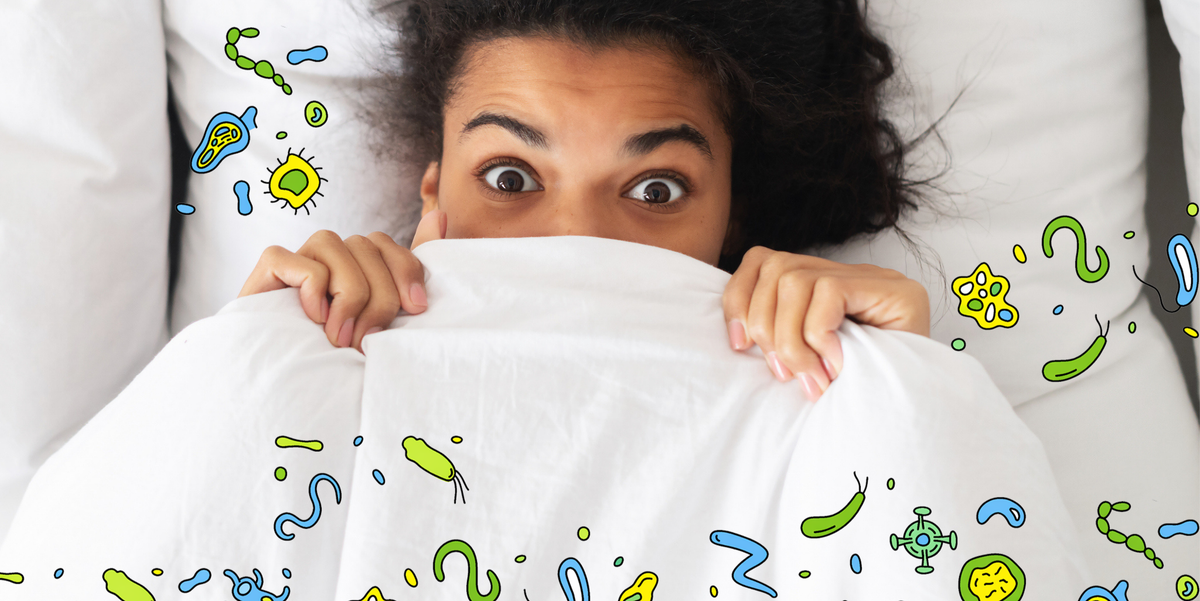

As a fiber scientist and bedding expert in the Good Housekeeping Institute Textiles Lab, nothing grosses me out more than not washing bedding weekly (every other week is the longest I'd go at the most!). It’s natural to sweat and shed skin at night, so washing your bedding regularly is a must—after all you're spending around eight hours a night/seven days in a row in those bed sheets! That's why I wanted to shed some light on the newest trend in bedding: “self-cleaning” sheets. Also marketed as “antimicrobial” or "silver-infused" sheets, these products claim that they can be washed less often or even that they can fight against bacteria or viruses.
Long story short: Sheets advertised as “self-cleaning” require the same amount of washing as all other sheets. Let me break down the science behind it.
Why “self-cleaning” and “antimicrobial” sheets are not what they sound likeWhen shopping for new sheets, you may notice some brands tout that their sheets require less frequent washings or that the material kills bacteria and viruses. These types of claims can rarely be backed up by third-party testing—just because the fabric uses a technology that can help inhibit bacterial growth in a Lab doesn’t mean it’ll work the same way in your home.
Some sheets’ fabric may be infused with silver nanoparticles to help inhibit bacterial growth. Silver is used for a variety of medical purposes to help prevent the spread of germs, but it won't clean dirt, dead skin cells, or sweat. Therefore, silver-infused bedding should not be washed less! The silver can sometimes wash out of the material too, proving less effective over time.
Here are a few claims from brands that I don't advise buying into and what you should look for instead:
❌ “Self-cleaning: Stays fresh 3x longer. 3x less laundry needed.” No matter what the material is infused with, the fabric will never wash itself. In our extensive research, we found no independent studies reporting that sheets infused with silver particles have less dead skin cells, body oil, sweat, dirt, or dust mites than traditional sheets—that’s because antimicrobial treatments are not designed to clean bedding.
❌ “…designed for hypoallergenic sleep while our silver-infused fabrics help prevent up to 99.7% of bacteria growth, helping you wake up breathing clearly.” Product claims regarding improved health benefits should be supported by studies and substantiation to back up those promises. Most claims like these lack this type of support.
❌ “We’ve chosen bamboo fabric for our [sheets] because it wicks away moisture and prevents overheating, helping to promote clean, sweat-free, truly calm sleep.” Sheets labeled as “bamboo” are usually mislabeled and are actually made of rayon. Rayon is the umbrella term for fibers manufactured from plant cellulose. The process starts with bamboo wood pulp, but the heavily chemical process results in a material with no trace of the original plant. Plus, these sheets are overpromising that you’ll never sweat with them and sleep "cleaner"—no bedding can eliminate night sweats entirely.
What you should buy insteadIn lieu of sheets that are advertised as “self-cleaning,” I would look for breathable fabrics or moisture-wicking materials. Cooling sheets can wick away sweat to help keep you drier and more comfortable all night. We've found in our sleep testing that most of our consumer testers like the natural feel of cotton, so 100% cotton percale sheets are another great choice because of the airy nature of the weave.
Related StoryWhy you must wash your sheets regularlyCleaning bedding weekly isn’t just to kill bacteria and viruses, but it's also to wash away dead skin cells, body oils, sweat, dirt, dust mites, and more. Dirty bedding creates the perfect environment for bacteria to multiply and it can even lead to mold growth over time. Unclean bedding can also cause skin irritation or acne.
How to wash sheets to ensure a quality cleanFirst and foremost, you should always follow your bed sheets’ care label. This will be attached to each piece of a sheet set. Washing them in warm or hot water will help the sheets achieve a superior clean, but note that it will be tougher on the material.
Why trust Good Housekeeping?Emma Seymour is the associate director of the Good Housekeeping Institute Textiles Lab. She is a fiber scientist with a degree in Fiber Science from Cornell University and extensive research experience. She has been testing bedding for Good Housekeepingsince 2018 and regularly appears as an expert on media segments.
Textiles, Paper & Apparel Lab Associate Director
Emma Seymour (she/her) is the associate director of the Good Housekeeping Institute's Textiles, Paper and Apparel Lab, where she has led testing for luggage, pillows, towels, tampons and more since 2018. She graduated from Cornell University with a bachelor of science in fiber science and apparel design and a minor in gerontology, completing research in the Body Scanner Lab on optimizing activewear for athletic performance.