
Remember me





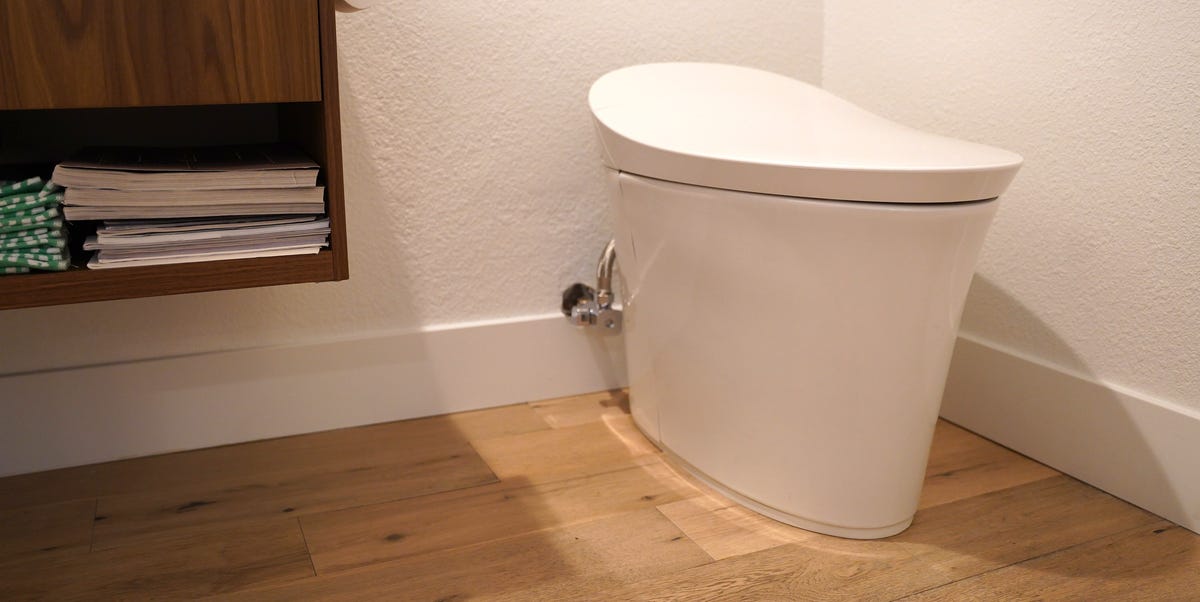



You read that right. The $6,000 Kohler Veil smart toilet costs more than my first car. On paper, that sounds ridiculous for a toilet. But after living with smart toilets for the past few years and testing Kohler’s high-end model in my own home, I came away understanding where that money goes.

The surprising part is that it does not all show up on the spec sheet.
According to a 2022 YouGov survey, only 6% of American households have a bidet-style toilet at home. That number feels low if you have spent any time around newer luxury builds or high-end remodels where smart toilets are starting to feel less like a novelty and more like a serious upgrade. They are still far more common in parts of Asia and Europe, but in the U.S., they are slowly moving from a splurge item to an aspirational purchase.
Why I started using smart toilets in the first place
When our family moved into our current home four years ago, not much had been updated since 1986, when it was built. The original Kohler tub and toilets were still in good shape after nearly 40 years, which says a lot about the brand. But we were ready for an upgrade, so we installed two ANZZI smart toilets, one in our primary bathroom and one in the half-bath.
At first, they felt like a major step-up. Heated seats, adjustable bidet functions, automatic flushing, and built-in lighting have a way of making a standard toilet feel dated pretty quickly. Once you get used to those features, it is hard to imagine going back.
But the honeymoon did not last. About three years in, one of the ANZZI units developed a leak. I replaced multiple hoses, but the problem never fully went away, and the leak eventually damaged the wood floor and baseboards in our half-bath. The second toilet has held up fine so far, but for an $800 fixture, I was hoping for a longer trouble-free run.
That experience made me more skeptical about investing in another smart toilet, especially an even more expensive one. Still, the chance to test Kohler’s Veil was too interesting to pass up. It also raised the obvious question: What do you really get when you spend several thousand dollars more on a toilet that, at least on paper, does many of the same things?
My first impressions start with the installation
Right away, the Veil’s hardware felt like a step-above what I had dealt with on less expensive smart toilets. The angle stop is polished stainless steel and beautifully designed. The included hoses are braided stainless steel instead of nylon, which may not sound like a headline feature but makes a real difference when you start thinking about durability, longevity, and the cost of even a small leak.
 Good Housekeeping / Timothy Dahl
Make sure to use the included Kohler hardware for best results.
That attention to materials set the tone. The components felt substantial, well-finished, and thoughtfully matched. It gave the impression of a premium fixture rather than a feature-packed appliance trying to imitate one. My plumber, who assisted me on the install, says that's what he sees with premium Kohler fixtures he installs. He often mentioned, "You get what you pay for and there are no shortcuts. Pay more upfront for higher quality or pay more down the road for expensive repairs."
And that is really the first clue to what separates the Veil from cheaper smart toilets. It is not that the Kohler suddenly unlocks an entirely different category of features. It's that from the very beginning, it feels like a more serious product.
The one installation issue I ran into was clearance. The included angle stop, which is the piece of hardware that connects the water line from your house to the supply line to the toilet, protrudes farther than the existing one, and once everything was in place, there was only about a millimeter of space between it and the toilet. It fit, but just barely. Aside from that tight squeeze, everything came together beautifully. It's worth noting that the Veil is designed to function at its best using the the included hardware and supply lines.
On paper, the feature gap is smaller than the price gap
This is what makes the Veil such an interesting product to review.
If you compare it to a much cheaper smart toilet like the ANZZI I already had at home, the two are closer than you might expect. Both offer the features most shoppers are looking for in this category: a heated seat, bidet functions, adjustable water temperature and pressure, drying, automatic flushing, night lighting, and the kind of hands-free convenience that makes traditional toilets feel strangely low tech.
That is why the Veil can be hard to justify if you are looking strictly at a checklist. You can get about 90% of the smart toilet experience from a lower-priced model and save thousands of dollars in the process.
But the remaining 10% is where the Veil makes its case.
More smart toiletsWhere the Veil feels different every day
After living with the Veil for a month, what stood out most was not one flashy feature or one setting I could not live without. It was the overall sense of quality.
The materials feel better. The seat and lid look more substantial. The components are top notch and solid. Everything operates with a smoother, more polished feel. The Veil does not come across as a collection of smart features bolted onto a toilet. It feels like a premium bathroom fixture that was designed that way from the start.
 Good Housekeeping / Timothy Dahl
The easy-to-use Kohler Veil remote
That difference shows up in everyday use. The flush is powerful in both eco and full-flush mode, and it has been consistently effective. Our family also appreciated the adjustability of the wand settings, along with the ability to dial in water temperature and pressure. Those are the features that matter most over time, and the Veil delivers them in a way that feels easy and refined.
The auto-open and auto-close lid is another example. It is not something that changes your life, but it is one of those conveniences that starts to feel normal very quickly. Once you get used to it, you notice when it is gone.
This is the part that spec charts do a poor job of explaining. The Veil does not necessarily win by doing dramatically more. It stands out in the way everything comes together. The operation feels smoother, the materials feel more premium, and the overall experience feels more considered.
The drawbacks are worth considering
The biggest tradeoff in daily use is noise. The Veil’s flush is powerful, but that power comes with a louder sound signature. The ANZZI measured 70 decibels, which is closer to the sound of a standard toilet, while the Veil came in at 77 decibels. That is not excessive, but it is noticeable and can be somewhat startling. If your bathroom shares a wall with the bedroom, it is something to keep in mind.
There are a couple of smaller issues worth noting, too. The manual control panel is on the left side of the toilet which in our case faces the wall, so you cannot see it while using the toilet. In practice, that means flushing is done with the remote. Once you get used to it, it is fine, but it may be a little awkward for guests who have never used a remote-controlled toilet before.
 Good Housekeeping / Timothy Dahl
The Kohler Veil toilet night light
I also wish the night light was adjustable. The Veil uses a deep blue light, which some people may prefer, but I would rather have the option of a white light like the one on the ANZZI. It is a small detail, but one you notice at night.
Is the Kohler Veil worth $6,000?
That depends on what you value.
If your goal is to get the core smart toilet experience for the least amount of money, the answer is probably no. A lower-priced smart toilet can get you most of the way there. You can still enjoy the heated seat, bidet functions, drying, lighting, and auto flush without spending luxury-fixture money.
But that is not really what the Veil is selling.
What you are paying for here is the part that does not show up neatly in a bulleted list. Better materials. More polished hardware. A more substantial feel. A stronger sense that this product was built to be lived with for the long haul.
After testing it against a much cheaper smart toilet, I do not think the Veil makes lower-priced models look obsolete. In fact, that is part of what makes this category so interesting right now. The value options have gotten good enough that the premium case is harder to make on features alone.
Still, the Veil made its argument over time. Not with gimmicks or extra settings, but with the steady confidence of a product that feels more thoughtfully made every time you use it.
That is a hard thing to quantify, and an even harder thing to justify at $6,000. But after spending time with it, I get it. You are not paying for a completely different experience. You are paying for a more refined version of one that many cheaper toilets already offer.
Why trust Good HousekeepingI’ve spent nearly 20 years covering home improvement, DIY, and lifestyle topics, with a strong emphasis on hands-on testing and real-world product performance. Over the course of my career, I’ve reviewed and worked with hundreds of tools, appliances, fixtures, and home innovations, giving me a practical understanding of what makes a product worth bringing into your home.
When I evaluate a product like the Kohler Veil toilet, I look beyond standout design and smart features to focus on the details that matter most in everyday use.
Dan DiClerico, who runs the Home Improvement & Outdoor Lab at the Good Housekeeping Institute, advised on this project. DiClerico has tested and written about bathroom fixtures, including toilets and bidets, for more than 25 years. Dan also oversees toilet testing in the Lab, as well as the in-home, survey-based consumer testing that allows us to evaluate these devices under real-world conditions.
Timothy Dahl is an experienced writer and editor covering home improvement, DIY, and lifestyle topics for nearly 20 years. With a deep background in hands-on testing and reporting, he has reviewed and worked with hundreds of tools, products, and home innovations. Timothy's work has appeared in The New York Times, Wired, and Popular Mechanics, and he's the founder of Charles & Hudson. He specializes in making complex projects accessible and is passionate about empowering homeowners with clear, actionable guidance.
Having written thousands of product reviews and how-to articles on all aspects of home ownership, from routine maintenance to major renovations, Dan (he/him) brings more than 20 years of industry experience to his role as the director of the Home Improvement & Outdoor Lab at the Good Housekeeping Institute. A one-time roofer and a serial remodeler, Dan can often be found keeping house at his restored Brooklyn brownstone, where he lives with his wife and kids.