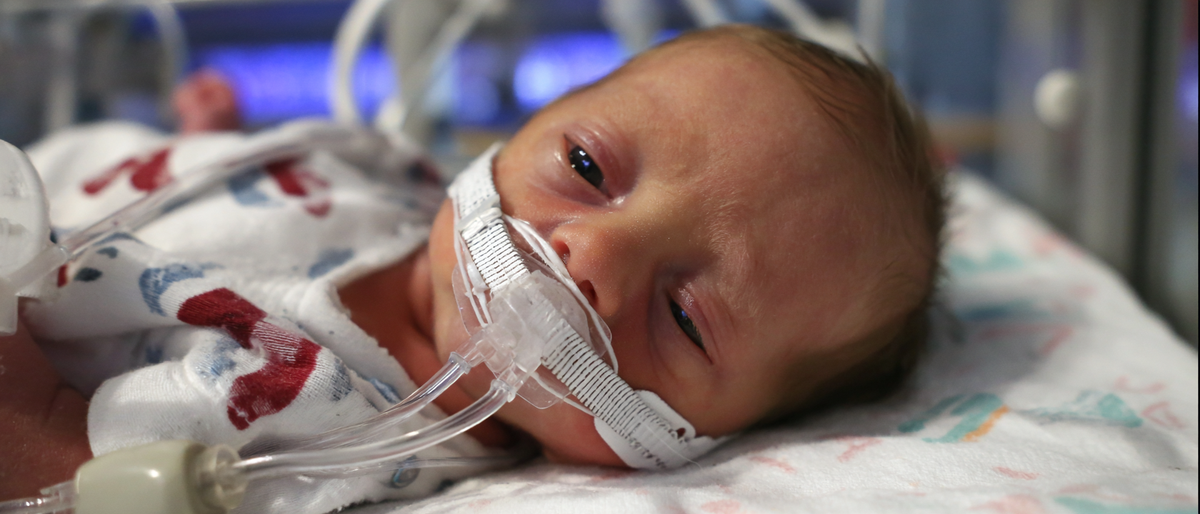
A few months ago, I was supposed to meet with the House and Senate Safe Food Caucus in Washington, D.C. Instead, the night before I was scheduled to speak, I had a heart attack. I'm fine. Great care at Howard University Hospital, a few lifestyle adjustments, and I'm back. But lying in that hospital bed, I kept thinking about the infants who weren't as lucky — the babies hospitalized across this country because the formula their parents trusted to keep them alive was contaminated with a deadly pathogen that could have killed them and sometimes does.
I have spent more than three decades suing the food industry. I've sat across the table from parents who watched their children die from E. coli, Salmonella or Listeria. I've seen what happens when the system fails the most vulnerable people among us. And I am here to tell you, plainly and without equivocation: the infant formula industry has a catastrophic safety problem, and the federal government has been too slow, too timid, and too deferential to industry to fix it.
Let's be honest about what has happened.
In 2022, the country faced an infant formula crisis that exposed something deeply disturbing: Abbott Nutrition's Sturgis, Michigan, facility had internal records documenting the destruction of product contaminated with Cronobacter sakazakii— and the company hadn't told anyone. The FDA hadn't inspected the plant in two years. Four infants became ill with Cronobacter. Two died. One child was sick with Salmonella. Abbott acknowledged finding evidence of Cronobacter in non-product-contact areas of the plant while publicly denying contaminated formula had reached consumers. The FDA received the first complaint in September 2021. The recall didn't come until February 2022. Five months. Five months while sick babies piled up.
I said at the time that the first Cronobacter case — a pathogen so rare and so strongly associated with powdered infant formula that any good epidemiologist should have treated it as a four-alarm fire — should have been enough for the FDA to move immediately. It wasn't.
We apparently learned nothing.
In the fall of 2025, the country witnessed a multistate outbreak of infant botulism linked to ByHeart Whole Nutrition infant formula. By the time the outbreak was declared over by the CDC in February 2026, 48 infants had been hospitalized across 17 states. All 48 required treatment with BabyBIG, the only antitoxin for infant botulism, which exists solely because California had the foresight to develop and maintain it. No child died — and that fact owes more to the existence of that antitoxin and the vigilance of California public health officials than to anything the FDA or the formula industry did to prevent the contamination in the first place. I represent over one half of the infants.
Here is what we know: Clostridium botulinum was detected in opened and unopened cans of ByHeart formula and in a powdered milk ingredient. FDA inspectors had visited ByHeart's Iowa facility in 2022 and found Cronobacter sakazakiinear the milk dryer. They noted microcracks in equipment that could harbor bacteria. The company had a prior Cronobacter recall in 2022 and received an FDA warning letter in 2023. Yet the formula remained on the market. Infants kept getting sick with botulism — with cases tracing back, after case-definition expansion, as far as December 2023.
Let me be direct: we have a systemic failure. It is not a single company's failure, though companies bear enormous responsibility. It is a failure of an entire regulatory architecture that treats powdered infant formula — a product fed to the most immunologically vulnerable human beings on earth, often from the day they are born — as something less than the sterile, rigorously tested, and relentlessly inspected product it must be and parents assume it is.
Powdered infant formula is not crackers. It is not cereal. For many babies, it is the only food they consume. A parent who opens a can of formula and mixes it with water for their newborn is placing absolute trust in the company that made it and the government that allowed it to be sold. That trust has been broken, repeatedly, by the same pathogens, in the same vulnerable population, in ways that were entirely predictable and often preventable.
In March of this year Congresswoman Rosa DeLauro (CT-03) introduced the Infant Formula Safety Modernization Act, which is comprehensive bipartisan legislation to modernize federal oversight of the nation’s infant formula supply and close longstanding gaps in testing, transparency, and regulatory enforcement.
Building on the Congressmember’s work, here is what I believe we must do — and I am not being radical; I am being reasonable:
Like liquid infant formula, powdered infant formula should be commercially sterile. Full stop. The technology exists. We require it for other products. The argument that sterility is technically or commercially challenging does not impress me when the alternative is babies on ventilators and feeding tubes. If a company cannot produce a sterile product for infants, it should not be producing infant formula. Leave it to the industry to figure out how to achieve this — retort processing, reformulation, whatever works — but set the standard and enforce it.
Mandatory pre-market testing must be required. Before a single can of powdered infant formula reaches a store shelf, its ingredients must be tested — not by the company alone, but verified by independent, accredited laboratories — for C. botulinum, Cronobacter sakazakii, Salmonella, Bacillus cereus, and other relevant pathogens. The testing, both in the products and the environment should be statically robust. The current voluntary and largely self-reported system is inadequate. It has failed. It will fail again.
Routine, unannounced FDA inspections must occur, and we need to fully fund Food Safety. A two-year gap in inspections at the Abbott Sturgis facility while infants were being sickened is unconscionable. The FDA must inspect every infant formula manufacturing facility on a regular, mandatory schedule. When inspectors find microcracks in milk dryers where Cronobacter is detected — as they did at ByHeart in 2022 — there must be immediate, mandatory follow-up to confirm remediation, not a warning letter and a hope that the company follows through. We also need a dedicated funding stream for food safety and get the DOGE Bros out of public safety.
We need a real risk assessment and updated regulations. The FDA's existing framework for powdered infant formula was not designed with C. botulinum as a primary threat. Hopefully, the ByHeart outbreak changed that calculus. We need a comprehensive, well-funded risk assessment of C. botulinum spores, Cronobacter sakazakii, Salmonella, and Bacillus cereus in infant formula and its constituent ingredients — raw milk, pasteurized milk, dairy powders. We need to understand contamination pathways, evaluate whether current detection methods are sensitive enough, and determine where in the supply chain spores are entering the product.
I have been told, repeatedly, that more regulation will harm innovation, burden small producers, and raise costs for families. I have heard these arguments in every industry I have ever litigated against. They are the same arguments the beef industry made before USDA declared E. coli O157:H7 an adulterant. The industry adjusts. It innovates. It finds a way to meet the standard when the standard is enforced. And, guess what, today we seldom see an E. coli outbreak linked to beef.
In conclusion, forty-eight infants were hospitalized in the ByHeart outbreak. Every single one of them was fed formula their parents believed was safe because the company and the government said it was safe. Every single one of the babies was between 16 days and 264 days old. Several were neonates — newborns, days into their lives, fighting for those lives in intensive care units.
We are the wealthiest nation in the history of human civilization. We spend countless billions on wars, artificial intelligence, ballrooms and arches. We can make infant formula safe. We have chosen, thus far, not to do the hard regulatory work required to ensure it.
I am asking us — finally — to choose differently.
The babies in those hospital beds cannot advocate for themselves. Their parents, exhausted and terrified, can barely advocate for themselves. That is why the rest of us have to.
William “Bill” Marler has been a food safety lawyer and advocate since the 1993 Jack-in-the-Box E. coli Outbreak which was chronicled in the book, “Poisoned” and in the recent Emmy Award winning Netflix documentary by the same name. Bill work has been profiled in the New Yorker, “A Bug in the System;” the Seattle Times, “30 years after the deadly E. coli outbreak, A Seattle attorney still fights for food safety;” the Washington Post, “He helped make burgers safer, Now he is fighting food poisoning again;” and several others.




Comments (0)