
Remember me
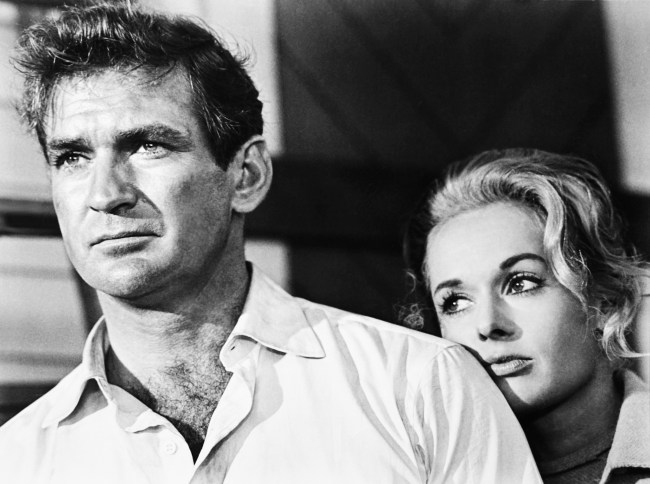

In March 1962, Alfred Hitchcock arrived in Northern California to make what he hoped would surpass “Psycho.” The rugged landscape of Bodega Bay and Bodega formed the backdrop of his new film and would become cinematic history. 120 cast and crew members had relocated from Hollywood to begin six arduous weeks of location filming on “The Birds.” While the coastal communities provided the setting, the production stayed in nearby Santa Rosa, the nearest town large enough to accommodate everyone. The shoot brought together a company that included Rod Taylor, Tippi Hedren, Suzanne Pleshette and a large supporting crew, all working under Hitchcock’s typically meticulous direction.


Away from the controlled studio environment, however, the rhythms of location life introduced a different dynamic. While Hitchcock stayed at the Fairmont in San Francisco, cast and crew were housed at the El Rancho Tropicana motel, socialising together after long days of filming, and the boundaries between professional discipline and personal behaviour began to blur. At the centre of it was Australian actor Rod Taylor: charismatic, handsome, and increasingly unpredictable. Then one evening, the production teetered on the brink — an arrest, a cover-up, and a crisis that could have shut the film down entirely.
Rod Taylor’s love of alcohol and carousing was evident during the filming of “The Birds.” He would start drinking at the motel bar every night and was often joined by [hairdresser] Virginia Darcy. They were kindred spirits; they both liked their liquor and a good time. One night, according to Darcy, they ended up in bed together. Darcy also recalled one incident when “Rod was driving drunk, up and down the streets of Santa Rosa, yelling and screaming.” This put Darcy in an awkward position, as she was dating a local police officer at the time.
To relieve the monotony of dining at El Rancho, the cast and crew often went out for dinner, but the options were limited. There was the Casino Bar, run by Evelyn Casini, and the Tides Blue Room, which subsequently burned down. The cast and crew also went to the Topaz Room in Santa Rosa — a restaurant that attracted celebrities such as Jayne Mansfield and Sid Caesar. Sometimes the crew also enjoyed a trip to Chateau Ingeborg, run by Ingeborg, a war bride married to Robert Boyd. The restaurant was billed as offering “sophisticated dining for particular people,” boasting the only private home with a public dining room in Sonoma County. It featured international cuisine, with a menu described as a “miniature United Nations with as many as six countries represented each week.” The crew sometimes drove the seven miles south of Santa Rosa to Chateau Ingeborg after a long day’s filming when they were in the mood for fine dining.
 ‘The Birds’Courtesy Everett Collection
A few weeks into location filming, Taylor and a few crew members, including [stuntwoman] Rosemary Johnston and an assistant hairdresser, had a late dinner at a restaurant a few miles from their motel. “I remember the incident so well because Rod was so funny,” said Johnston. “Some of us ordered prime rib, but Rod wanted his rare. When it arrived, Rod picked up the big steak with his fork and showed it to the crew, saying, ‘I’ve seen cows sicker than that go home!’”
Taylor drove the crew back to the motel that evening, and he was pulled over for drunk driving. In 1962, there were thirty-three officers in the Santa Rosa police department run by Chief Dutch Flohr, “a big guy from Virginia, very well known in the community. He was the toughest guy in town,” according to resident Rod Sverko. Flohr was “very Catholic, as was his wife, went to church. He became police chief in 1940 and ran a very disciplined department.” Wally Stevens, Lee Gleason, Carl Meister, Walt Gesak, and George Scinto were also on the force, along with Homer Lee, a motorcycle cop. The locals called Lee “Rat Face” because he was adept at hiding on the side of the road and gave out a lot of speeding tickets.
Taylor was ordered out of the car and slammed against the door with his hands behind his back. Everyone was stunned, and as Taylor was arrested, he said, “Don’t you girls get involved. I don’t want you to get hurt or anything.” He was taken to the local police station. Johnston went back to the motel and tried to find production manager Norman Deming, but, she said, “We didn’t know what room to go to find him, so we scooted back to ours and went to bed.”
The next day Taylor was late for work, and those who knew why tried to keep it quiet. Virginia Darcy happened to be dating the booking officer, Homer Lee, so she persuaded him to let Taylor off with a caution and a citation. “He didn’t end up in jail because Homer saw to it. If he had been charged, that could have closed down production,” said Darcy, because the hearing judge visited only once a month. The next day, [Hitchcock’s assistant] Peggy Robertson expressed her gratitude and said, “Thank God for you, Virginia. . . . You saved our company.”
The press didn’t hear about the incident, but word quickly got around town. “Rod Taylor was put in jail in Santa Rosa for being drunk and disorderly at a bar over there. I remember that one well,” said Bodega Bay resident Donna Freeman.
Did Hitchcock find out about the incident? It’s very likely that Peggy Robertson told him, but according to Marco Lopez [Taylor’s stand-in], “They must have hushed that really quick because I didn’t know anything about that. I knew most things that went on with [Rod], but not everything. There were some things he didn’t want me to know, though he knew that he could trust me.”
 ‘The Birds’Courtesy Everett Collection
Leonard South’s [the cameraman] daughter, Anne-Marie, affirmed that sobriety “must have been important, because I know on one of Dad’s letters of recommendation, it says that he is not a drunkard. So it must have been a really big deal back then. If [Taylor] drank, I’m sure it must have been a big deal for Hitch if someone got inebriated and got in an accident.”
In any case, relations between Hitchcock and Taylor did not improve. Script supervisor Lois Thurman said, “I remember Rod Taylor almost socked Hitchcock in the jaw once because Hitch said something to him. When Rod queried or asked him something, Hitch [would say], ‘That’s what you’re paid to do.’”
Incidents like this, preserved in the memories of those on location who, years later, spoke to this author, are absent from official accounts of the making of the film (including my previous book “The Making of Hitchcock’s The Birds“), and point to a more complex reality behind the production of many of Hitchcock’s films. The atmosphere on location was shaped not only by the director’s control, but by the personalities, pressures and private behaviours of those around him, factors that rarely make it into the simplified narratives that later take hold — particularly from those who say Hitchcock was a controlling tyrant. In reality, Hitchcock confided he had problems sleeping during the making of “The Birds,” not only because he was trying to teach a novice actress how to act, but also because of the trouble he was having with his leading man, as well as the challenges of bringing to life what he felt was an insufficient script from screenwriter Evan Hunter.
Returning to these first-hand recollections reveals how easily nuance can be lost as truths are distorted or reshaped over time. What emerges is not a single, settled version of events, but a more layered picture of Hitchcock and his working methods. These hidden histories – and what they reveal about his films — are explored in greater depth in my new book “A Century of Hitchcock: The Man, the Myths, the Legacy” published by University Press of Kentucky, June 9, 2026.
Moral, Tony Lee. A Century of Hitchcock: The Man, the Myths, the Legacy. pp. 88-90. © 2026 The University Press of Kentucky. Used by permission.