
Remember me

The 61st International Art Exhibition of the Venice Biennale (La Biennale di Venezia) will run from 9 May to 22 November 2026. Held biennially in Venice since 1895, the biennale is one of the world’s oldest and most prestigious international contemporary art and architecture exhibitions.
Curated by the late Swiss-Cameroonian curator Koyo Kouoh, this year’s theme is In Minor Keys and highlights 110 artists alongside 100 national participations and 31 collateral events. According to Koyo’s team, “If, in music, the minor keys are often associated with strangeness, melancholy and sorrow, here their joy, solace, hope, and transcendence manifest as well.”
[See more: Macao selects ‘Jacone’s Polyphony’ for Venice Biennale showcase]
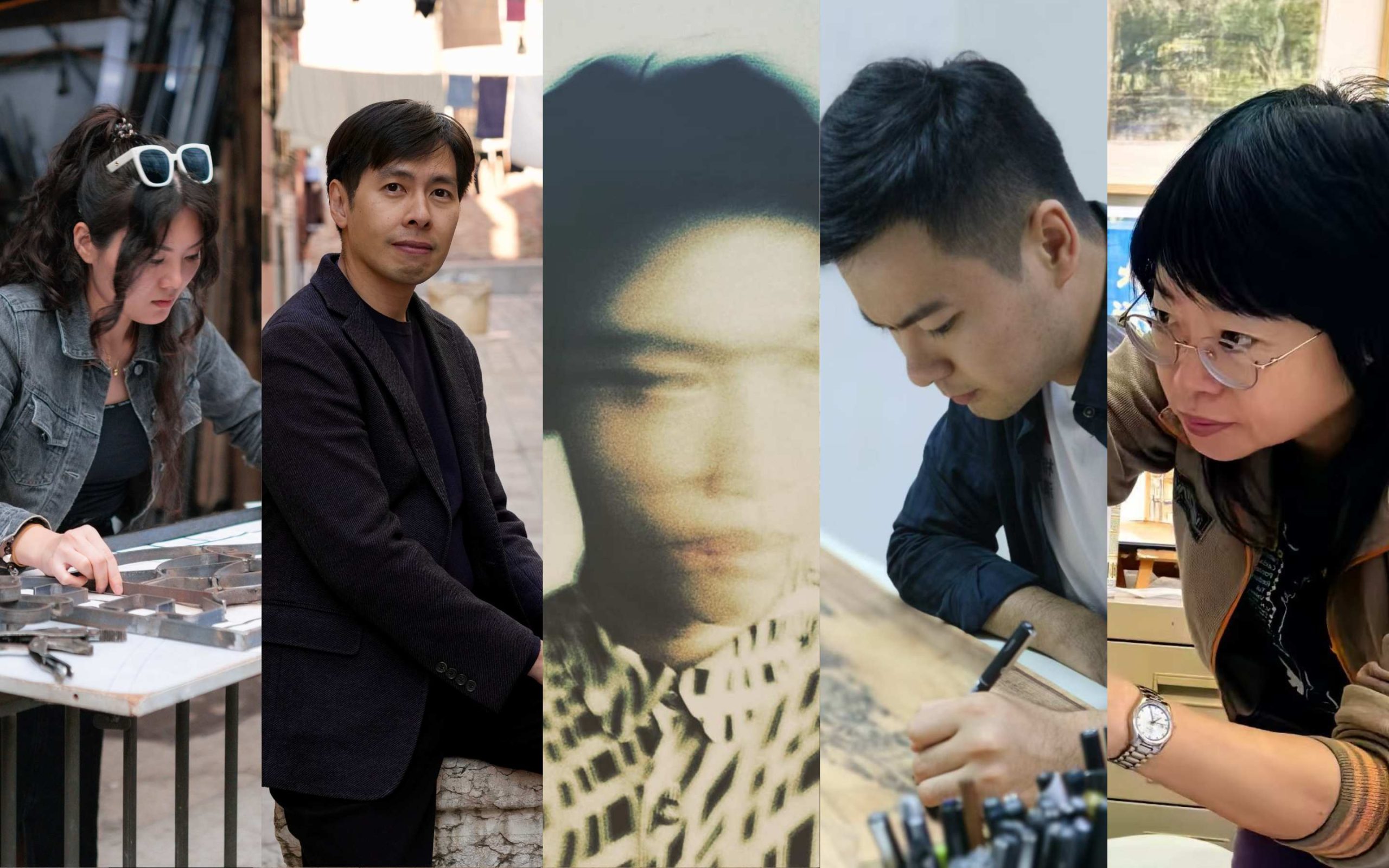
The Greater Bay Area is represented this year by Hong Kong artists Angel Hui and Kingsley Ng and Macao artists Eric Fok Hoi Seng, Veronica Lei Fong Ieng, and O Chi Wai through the exhibitions Fermata: Hong Kong in Venice and Jacone’s Polyphony respectively.
Hong Kong: Fermata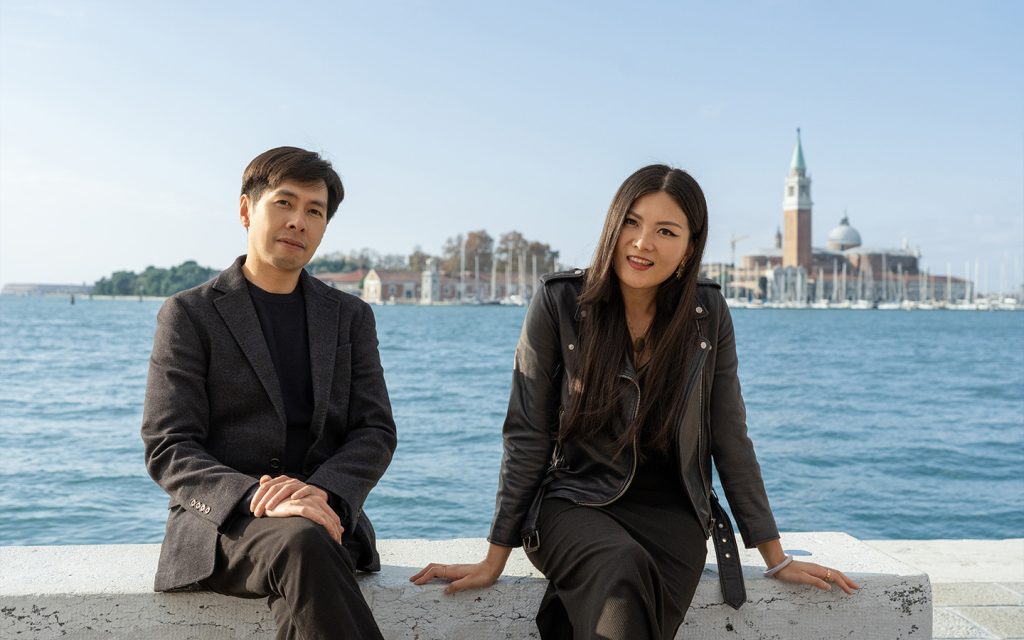 Hong Kong moves away from a solo to duo format for the first time for the Venice Biennale – Photos courtesy of Hong Kong’s Leisure and Cultural Services Department
How does one convey a moment of pause? Hong Kong artists Angel Hui and Kingsley Ng present their works with the Hong Kong Museum of Art (HKMoA) under the theme Fermata – after the symbol that signals musicians to pause, or to hold a prolonged note.
This year Hong Kong departs from tradition, with HKMoA co-organising and curating the Hong Kong exhibition for the first time and shifting from a solo to duo format. Dr. Maria Mok, HKMoA’s museum director, tells The Bay that while both artists work differently, “both are keen observers deeply rooted in Hong Kong. Together, they embody the kind of dialogue we want to bring to Venice.”
[See more: Between policy and belonging: Can a Greater Bay Area identity truly exist?]
Both artists draw inspiration from ordinary yet subtly distinctive symbols from Hong Kong to create site-specific installation works that invite visitors to slow down, pause and take in the essence of the renowned Fragrant Harbour.
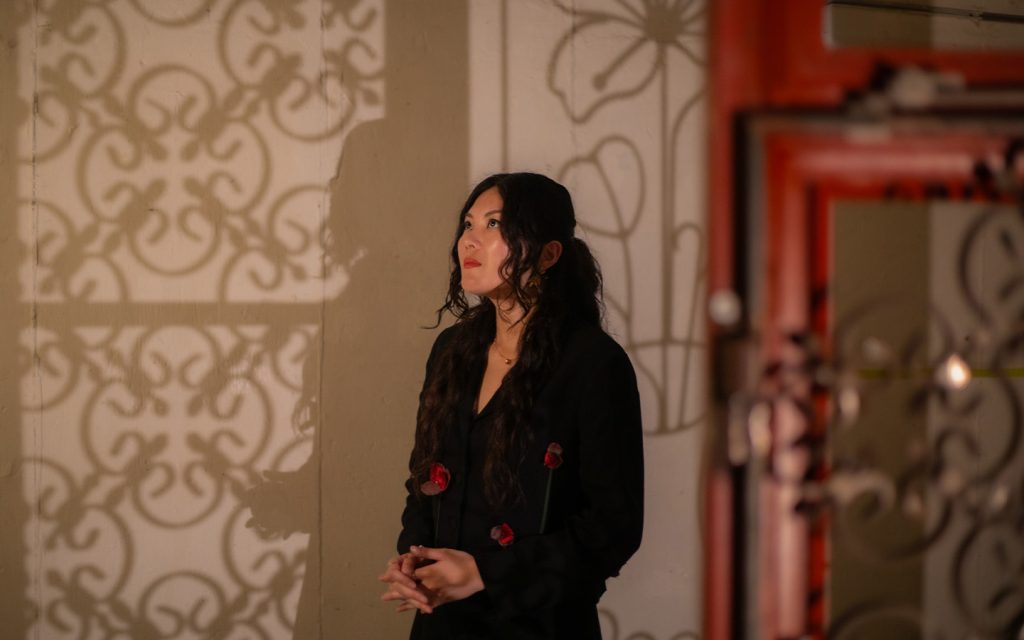 Angel Hui is known for her contemporary approach to traditional Chinese art
Known for her contemporary approach to traditional Chinese art, and according to Dr Mok, an artistic practice committed to “material experimentation and physical process,” Hui presents two installations. The first are Hui’s signature plastic bags which serve as a bold and thought-provoking medium for the embroidery of beautiful goldfish, stitched meticulously by Suzhou embroiderers, a direct nod to the emblematic sight of goldfish sold in plastic bags in Hong Kong’s Mong Kok district and its many pet stores.
Hui’s second installation is composed of aluminium flower-inspired window grilles, used ubiquitously in the city’s old tenement buildings. Hui invited the collaboration, skill and expertise of Hong Kong workmen to celebrate and honour this local craft on the international stage. The grilles will be installed in such a way that casts shadows of beautiful patterns on the walls of the Campo della Tana.
[See more: Meet JinJin Xu: The interdisciplinary artist drifting between New York, Shanghai and Macao]
The biggest challenges, she tells The Bay, lay in “finding the right balance between delicacy and scale. I wanted the work to feel light and poetic, but at the same time it needed to withstand a very different environment and speak to a wide international audience. That meant thinking carefully about materials, installation, movement, and how the work would inhabit the space.”
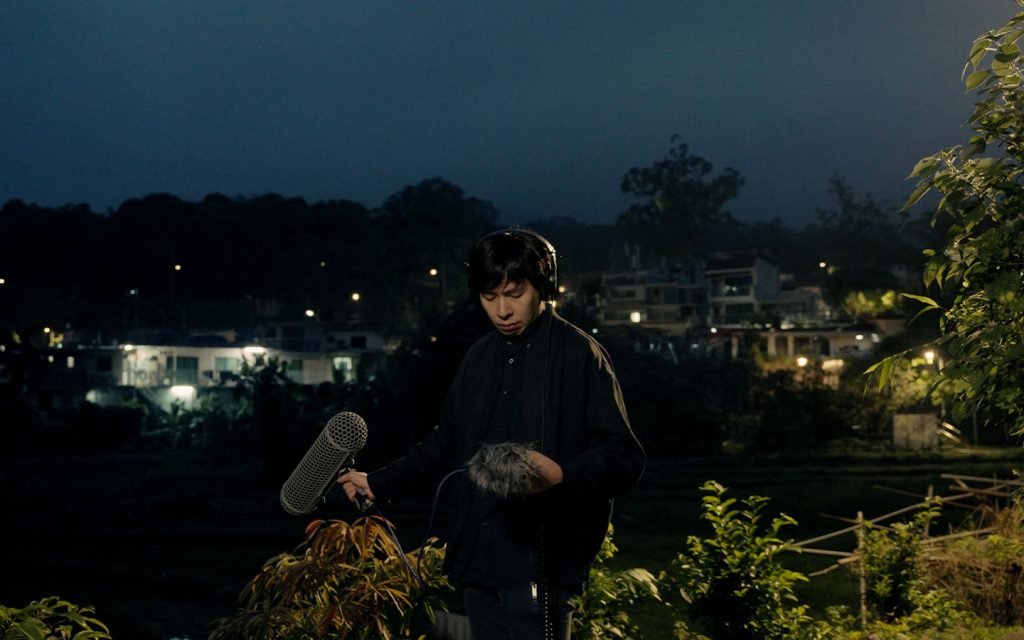 Kingsley Ng is a media artist known for his site-specific installations
Meanwhile Kingsley Ng, an associate professor at Hong Kong Baptist University’s Academy of Visual Arts, with his practice described by Dr Mok as tending “toward the immaterial and the experiential,” takes inspiration from the common sight of hanging laundry across Venice and Hong Kong. “It’s like an accidental collective art installation that happens 365 days a year,” Ng tells a local media publication. For the biennale, he has created an installation of hanging clothes and fabric which incorporates field recordings of Hong Kong’s nighttime sounds played through radios.
[See more: “My life changed completely in Hong Kong”: In conversation with comedian Jordan Leung]
“Technically, there were many challenges with works involving moving parts, electronics, water, and both indoor and outdoor conditions,” Ng tells The Bay, “But the single biggest challenge is making sure the entire team got enough rest and, most importantly, truly enjoyed the process, no matter how difficult it became. It’s a tremendous honour to represent Hong Kong.”
Macao: Jacone’s Polyphony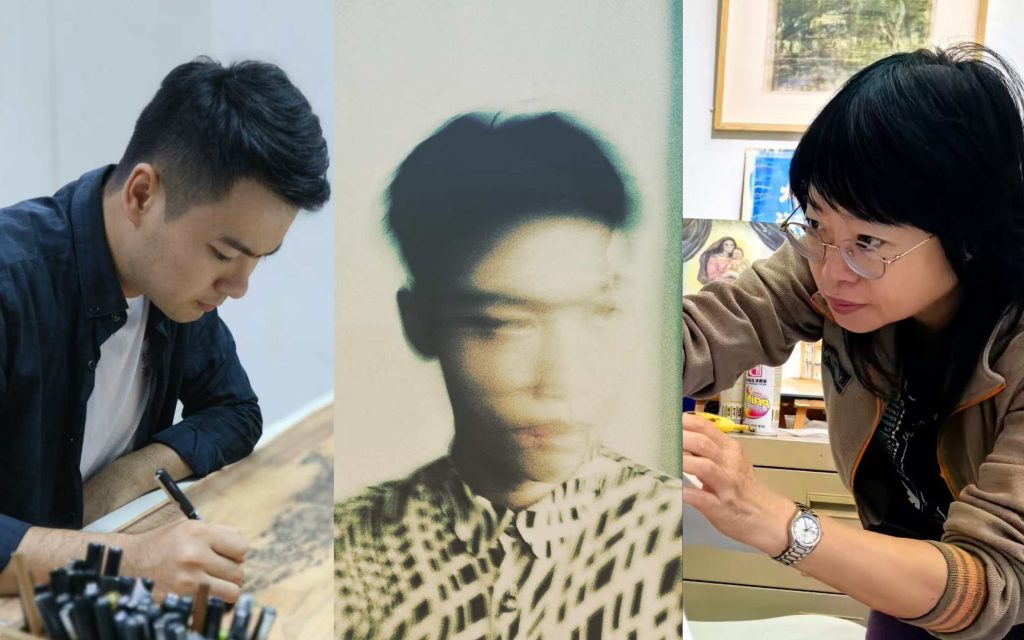 Eric Fok Hoi Seng, O Chi Wai, and Veronica Lei Fong Ieng represent Macao at the Venice Biennale – All photos below courtesy of MAM and the artists
The Macao exhibition, organised by the Macao Museum of Art (MAM), ambitiously endeavours to complete the unfinished journey of one of the “Six Great Masters of the Early Qing Dynasty” from 300 years ago. Wu Li (1632–1718), known in Portuguese as Jacone, was a Jiangnan painter, poet, and Catholic convert whose life embodied Macao’s perfectly complicated cross-cultural identity. “Macao has never been a simple meeting point between East and West,” curators Feng Yan and Ng Sio Ieng tell The Bay, “Rather, it is a laboratory for cultural translation, religious flow, and overlapping identities.”
[See more: ‘Enjoy being yourself.’ Meet Jay Sun, founder of the Macao International Queer Film Festival]
Wu aspired to study in Rome but was stranded in Macao, where he joined the Jesuit order instead. For the curators, Wu is a symbolic bridge between 17th-century and contemporary Macao. “We are using the language of contemporary art to help him ‘arrive’ [in Europe]… His regret is precisely the starting point of our exhibition.” Jacone’s Polyphony’s linear narrative and cyclical layout symbolically complete Wu’s journey, inviting visitors to walk the path he never could.
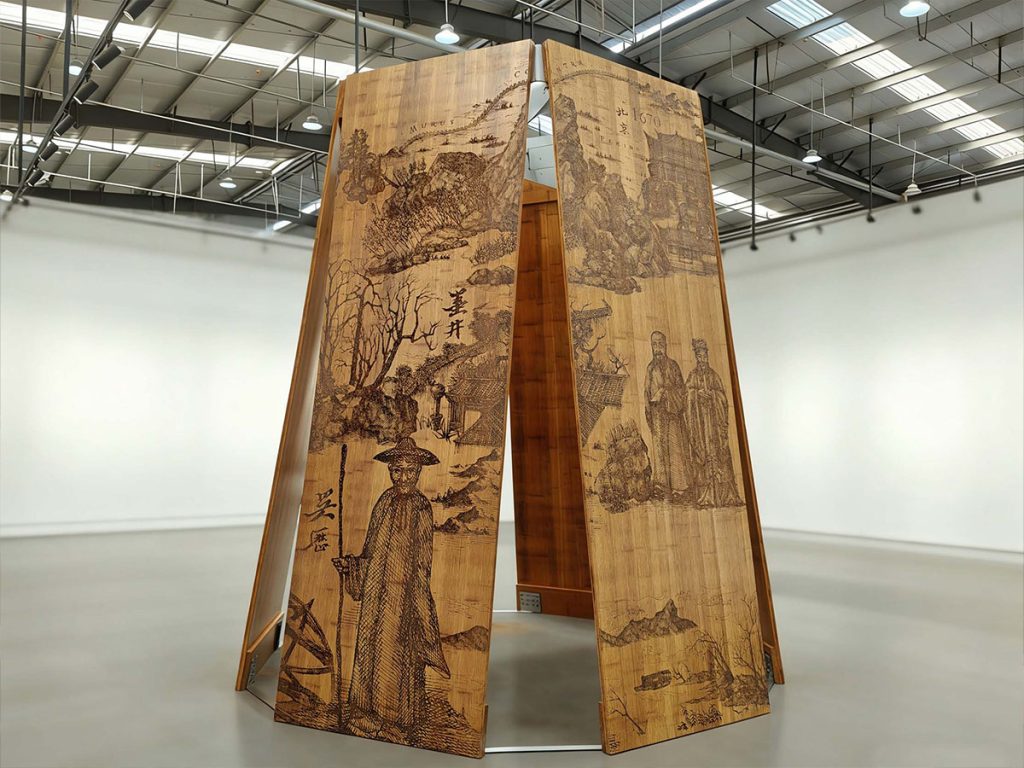 Layers of Time by Eric Fok Hoi Seng – Photo courtesy of MAM
Eric Fok Hoi Seng presents three artworks that “span hundreds of years… attempting to connect region with the world, and history with the present through culture.” Fok’s Layers of Time, composed of six engraved panels made from bamboo steel, metal, laser engraving, and digital screens, references a legendary well at Wu’s former residence before he moved to Macao, which inspired his pseudonym “Practitioner of the Ink Well.” Fok’s second installation Distant Views feature bidirectional telescopes connecting historic Macao to Rome, with the latter pointing towards the entrance of the Venice Biennale itself, echoing Wu’s lifelong dream of travelling to Europe and the path he never completed.
[See more: Indie forever: Chris B’s lifelong devotion to Hong Kong’s live music scene]
Finally, Fok speculates the route that Wu would have taken by drawing on the travels of Michael Shen Fu-Tsung, a Chinese Jesuit who successfully reached Europe through Silent Travelogues – an installation with laser-engraved imagery and AI-generated moving images on a bamboo steel screen.
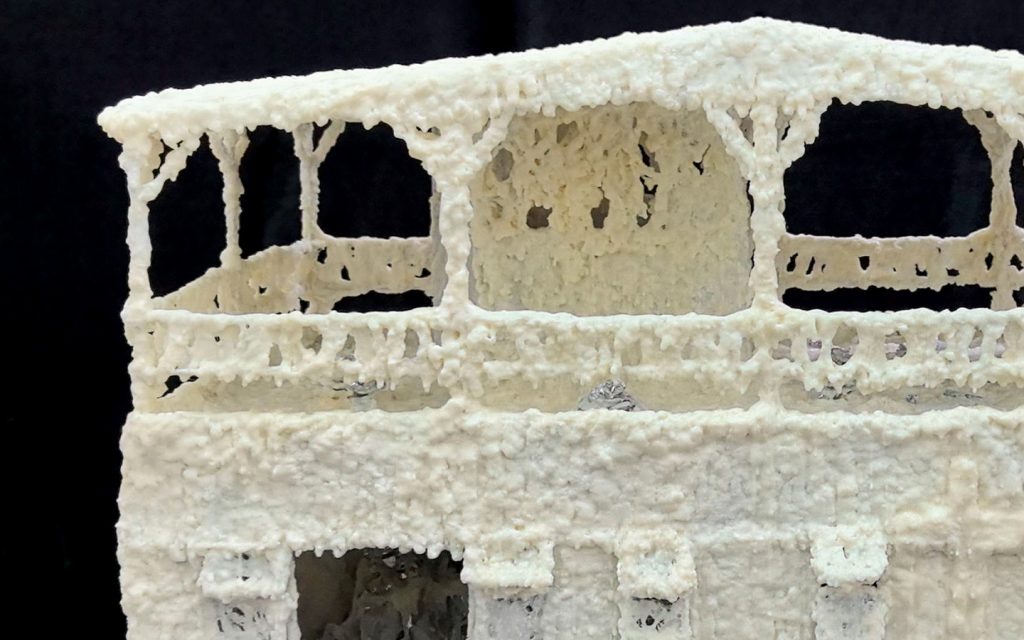 Sigh of Migration by Veronica Lei Fong Ieng – Photo courtesy of MAM
A Catholic artist like Wu Li, Veronica Lei Fong Ieng draws inspiration from Liangshuijing Village (now Rua dos Curtidores) which is believed to be where Wu’s first Macao residence was. By using wire frames and aluminium foil to create the structure of the buildings and dripping candle wax onto them, Lei creates a piece of art that integrates elements of sculpture, installation, and painting in Sigh of Migration. “I hope the audience in Venice can feel a quiet yet powerful emotion through my work – the melancholy of migration, the anticipation of waiting, and the tenderness that settles through time,’ Lei tells The Bay.
[See more: An oasis of sound: How Shenzhen’s Oil Club is fuelling China’s underground club scene]
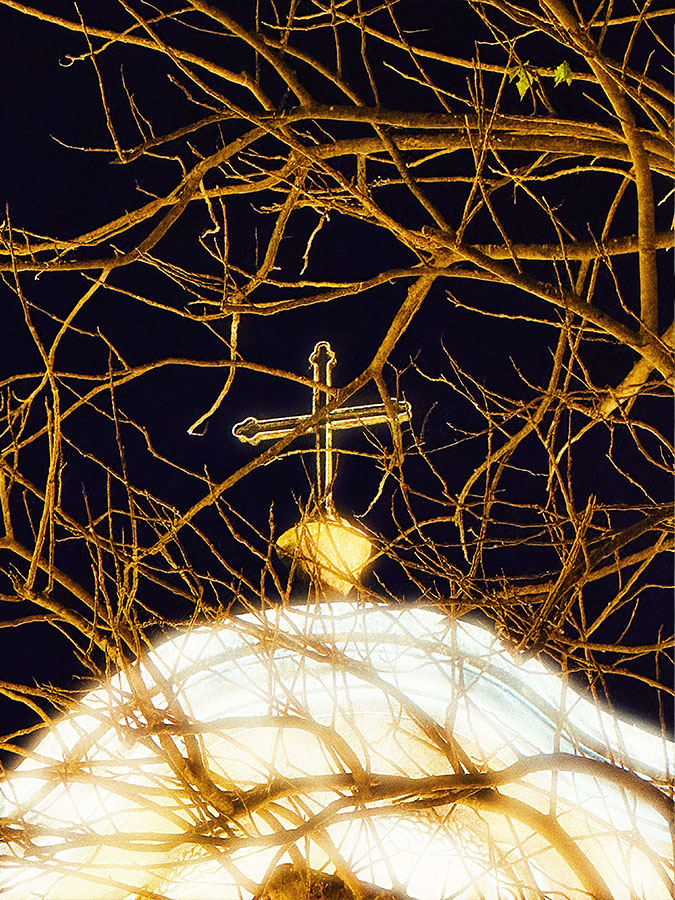 Sanqu (A Cappella Reverie) by O Chi Wai – Photo courtesy of MAM
Meanwhile, O Chi Wai presents Sanqu (A Cappella Reverie), a 5-minute video triptych made in collaboration with Macao-based music group Water Singers. O reinterprets Wu Li’s Tianyue Zhengyin Pu through a contemporary sanqu, a classic form of Chinese lyric poetry, and uses the form of a triptych as a homage to Wu Li’s religious background. Describing the work as beginning from “a connection starting from myself,” O discovers many spiritual similarities with the late Wu, and reflects that the creative process became one of “self-understanding and healing.” Using 3D scanning, animation, and photographs, the installation allows audiences to witness “the artist’s past, present, and future inner states.”
[See more: For the love of ink: Meet Zhuhai tattoo artists Beibei and Qiqi]
All three artists recognise the weight of the honour to represent Macao at the biennale. As Lei puts it, this exhibition was a chance for them all to share “Macao’s stories, its art, and its humanistic warmth to the world, letting people see the real Macao.”
If you find yourself in Venice over the next six months, both exhibitions are located at Campo della Tana in Venice’s Castello district: Fermata: Hong Kong in Venice at Castello 2126 and Jacone’s Polyphony located within the Arsenale venue complex at Castello 2126/A, running from 9 May to 22 November 2026.
Comments (0)