
Remember me


‘Quiet and deep.’ This is how architect Kengo Kuma describes Miyagawa-cho, a Kyoto neighbourhood famed for its community ties, traditional wooden architecture and rich geisha culture. The same words reflect the essence of its newest arrival: Capella Kyoto.
The long-awaited Japan debut for the luxury Singapore brand, the new hotel recently opened in the heart of the district. Rebuilt on the site of a former elementary school, it’s one of a trio of new Kuma-designed structures – including a historic geisha theatre and community centre – together creating a connective hub between past and present, tradition and innovation.
Wallpaper* checks in at Capella KyotoWhat’s on your doorstep?Capella Kyoto is very close to tourist-packed Gion, also famed for its time-etched streets and layered geiko (Kyoto geisha) culture. However, the hotel is in fact in nearby Miyagawa-cho, which is a little quieter and has a more local atmosphere. Capella Kyoto sits directly opposite a low-key side entrance to Kenninji, the city’s oldest Zen temple complex, a soul-soothing sanctuary of stone walkways and historic structures. Along the same street are generations-old family stores, from wooden bucket artisans to sandal makers.
(Image credit: Courtesy of Capella)
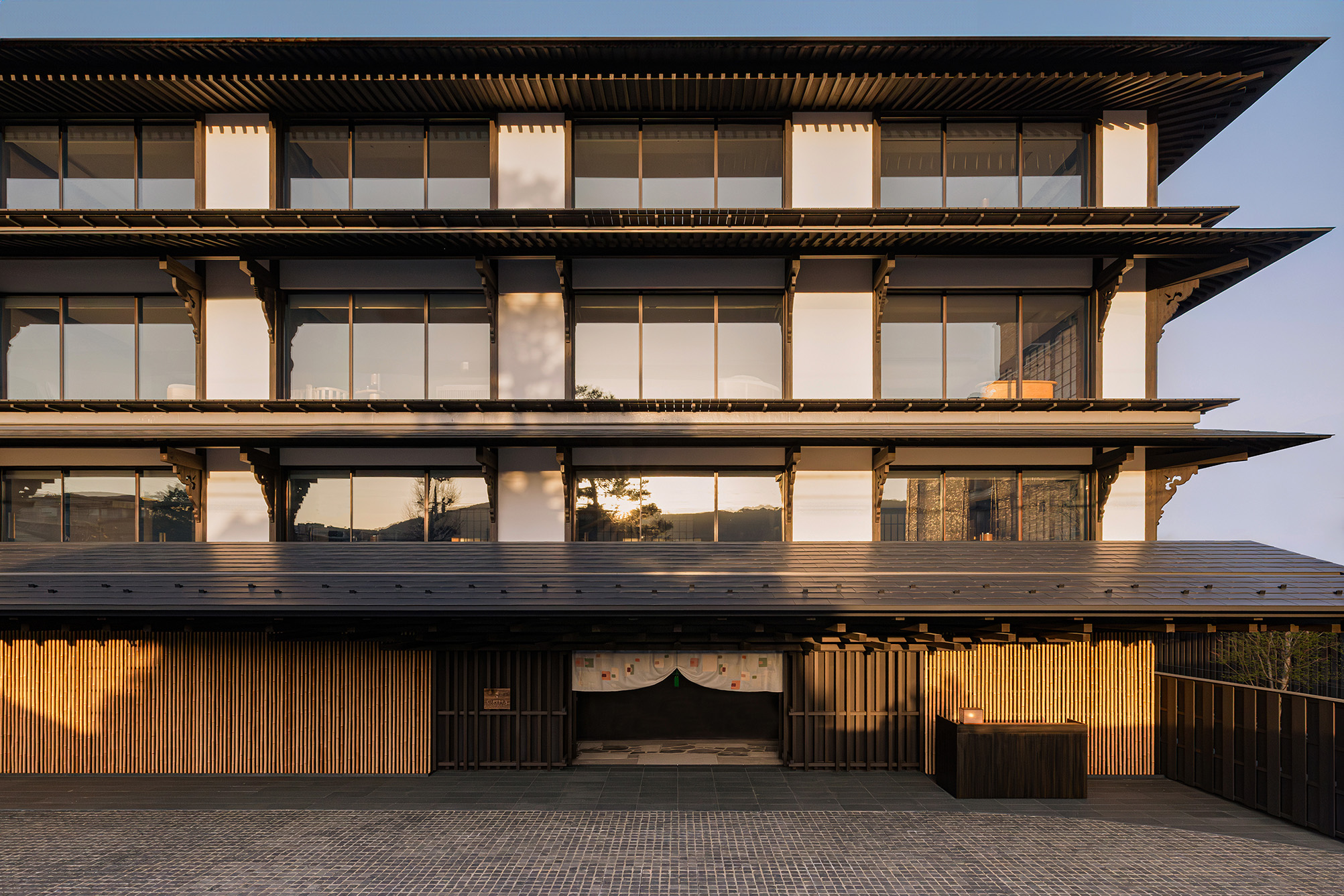
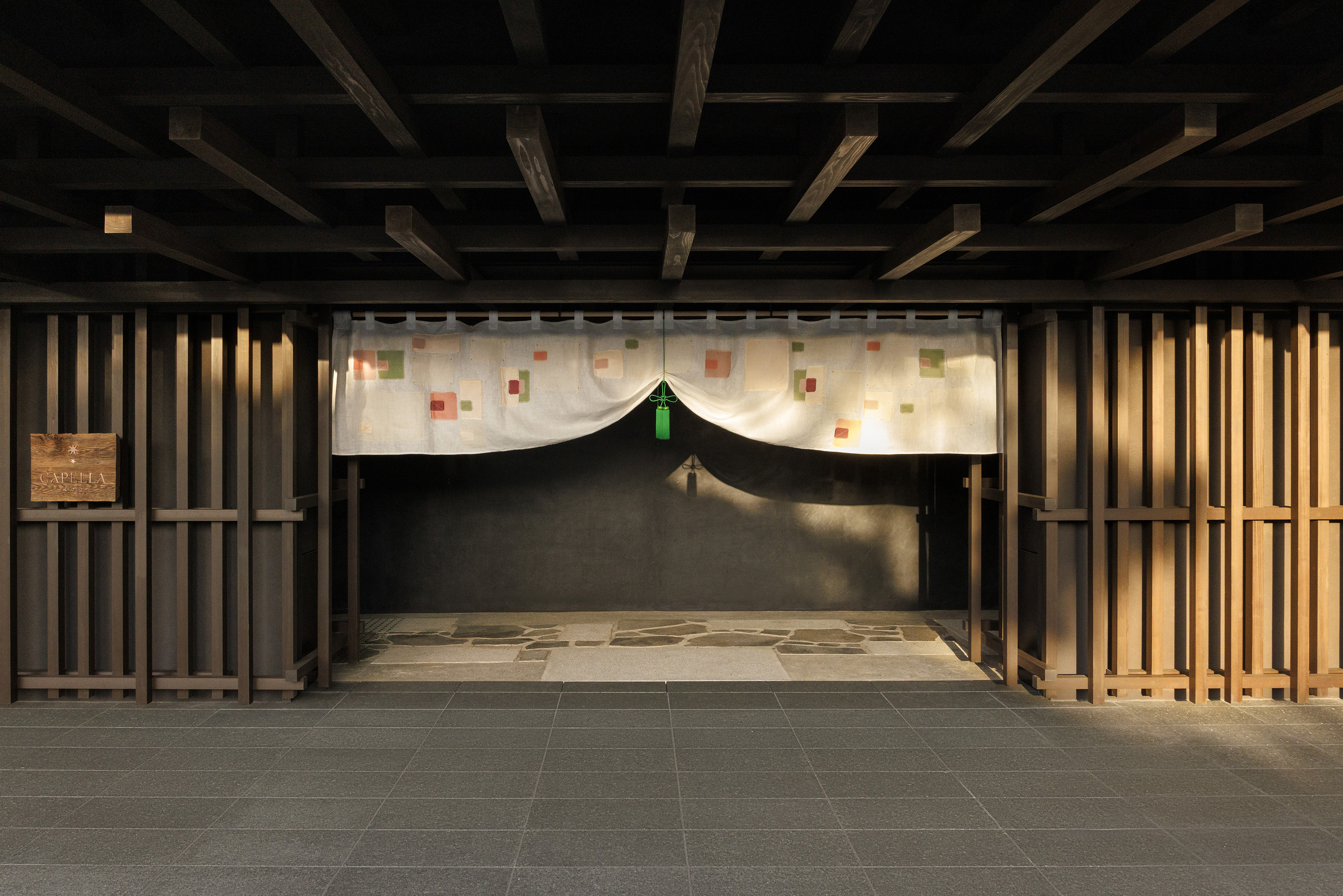
Softly mirroring its surroundings, the hotel rises from the site of a former elementary school (whose vintage lighting and trodden floorboards are reborn in restaurant Yoi). Intimate and low-rise, the four-storey building has layers of roofs, dark wood frames, gently curved roof brackets and lattices of bamboo – a modern riff on the low curved inuyarai fencing that lines local houses, marking a boundary between home and street. The crafted beauty of noren curtains in dusty sakura pinks, by Kyoto-based textile artist Mae Engelgeer, marks the entrances (these will change with the seasons).
(Image credit: Courtesy of Capella)
‘We applied the wisdom of the machiya to the hotel design,’ explains Kuma. ‘I wanted to evoke the image of smallness, local materials, tiered roofs, hidden inner gardens, layered internal spaces – just like a Japanese home.’
(Image credit: Courtesy of Brewin Design Office)
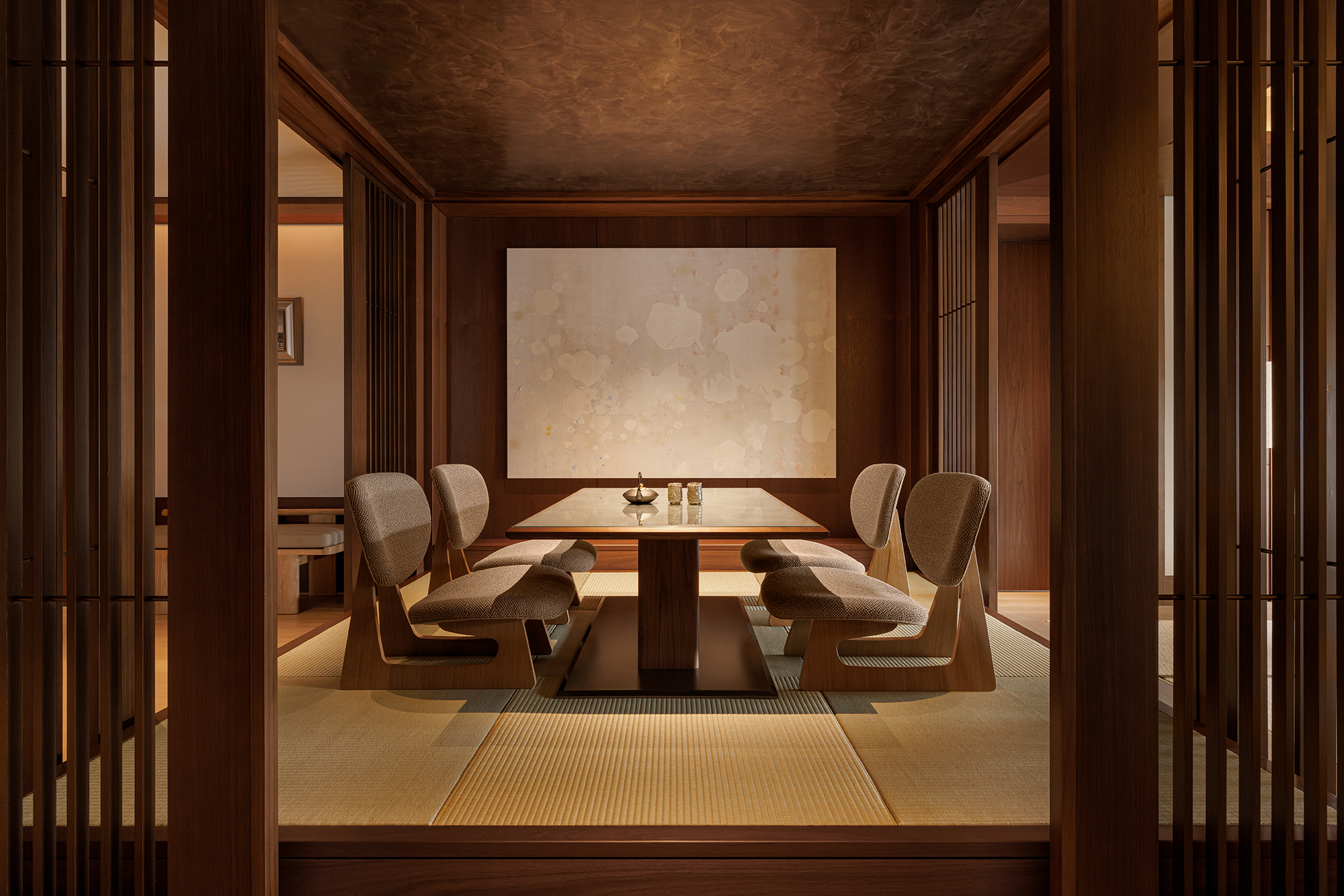
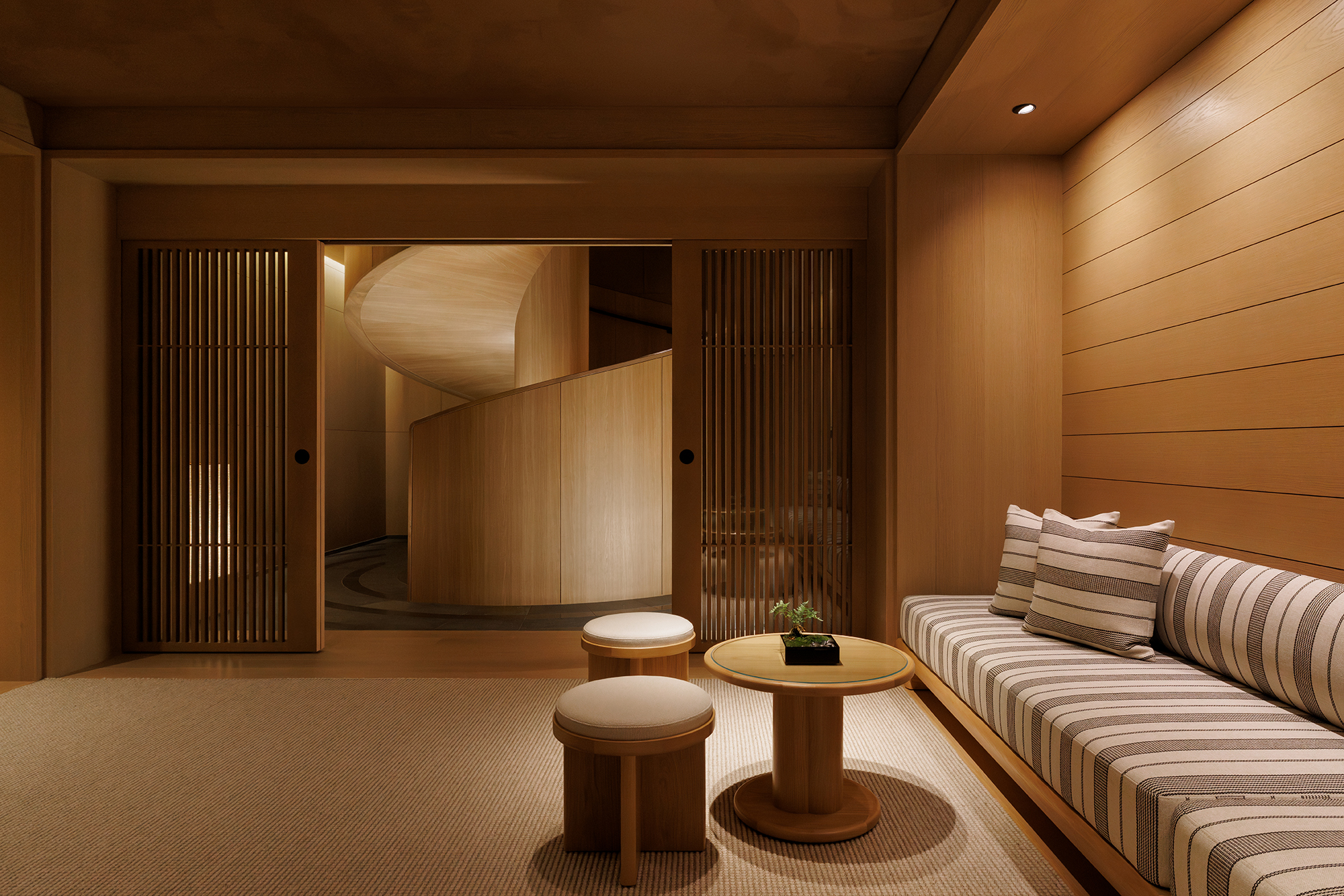
Who is behind the design?Inspired by the intimacy of the traditional machiya townhouses on surrounding streets, the 89-room hotel is rooted in a pared-back serenity and crafted Kyoto touches, with architecture by Kengo Kuma & Associates and interiors by Brewin Design Office. Picture a deepening journey through sliding screens, an inner garden mirroring the micro-seasons, contemporary artworks and an elemental material palette (wood, stone, bamboo, paper) – harmonised with the effortless sense of modern luxury that goes hand in hand with the Capella brand.
(Image credit: Courtesy of Brewin Design Office)
‘This area is very connected to traditional house design,’ says Kuma, taking Wallpaper* on an exclusive tour of the hotel ahead of opening. ‘The uniqueness of a machiya lies in its layering, creating small spaces with multiple atmospheres. I wanted to show the quiet depth of this neighbourhood in the design of the hotel.’
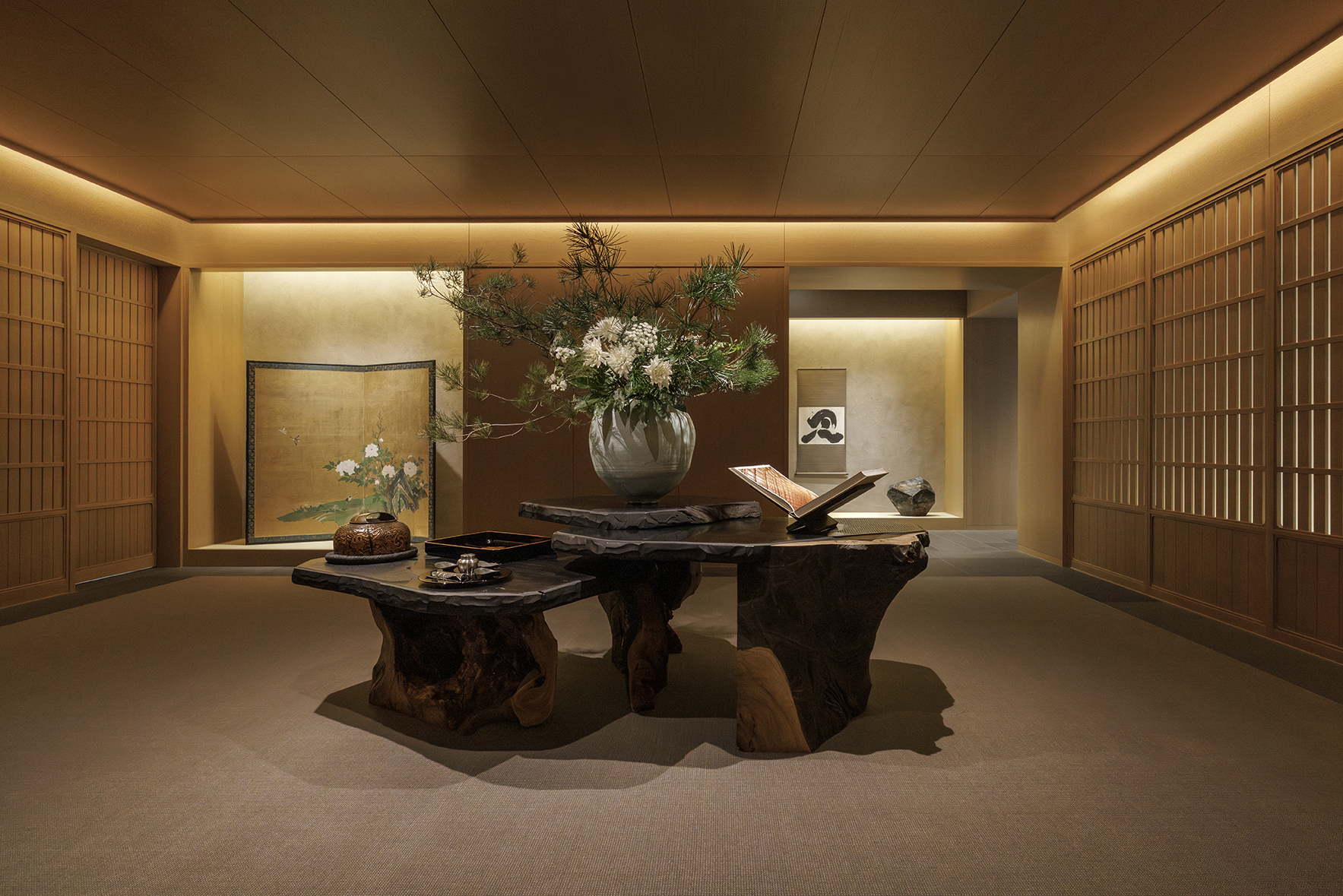
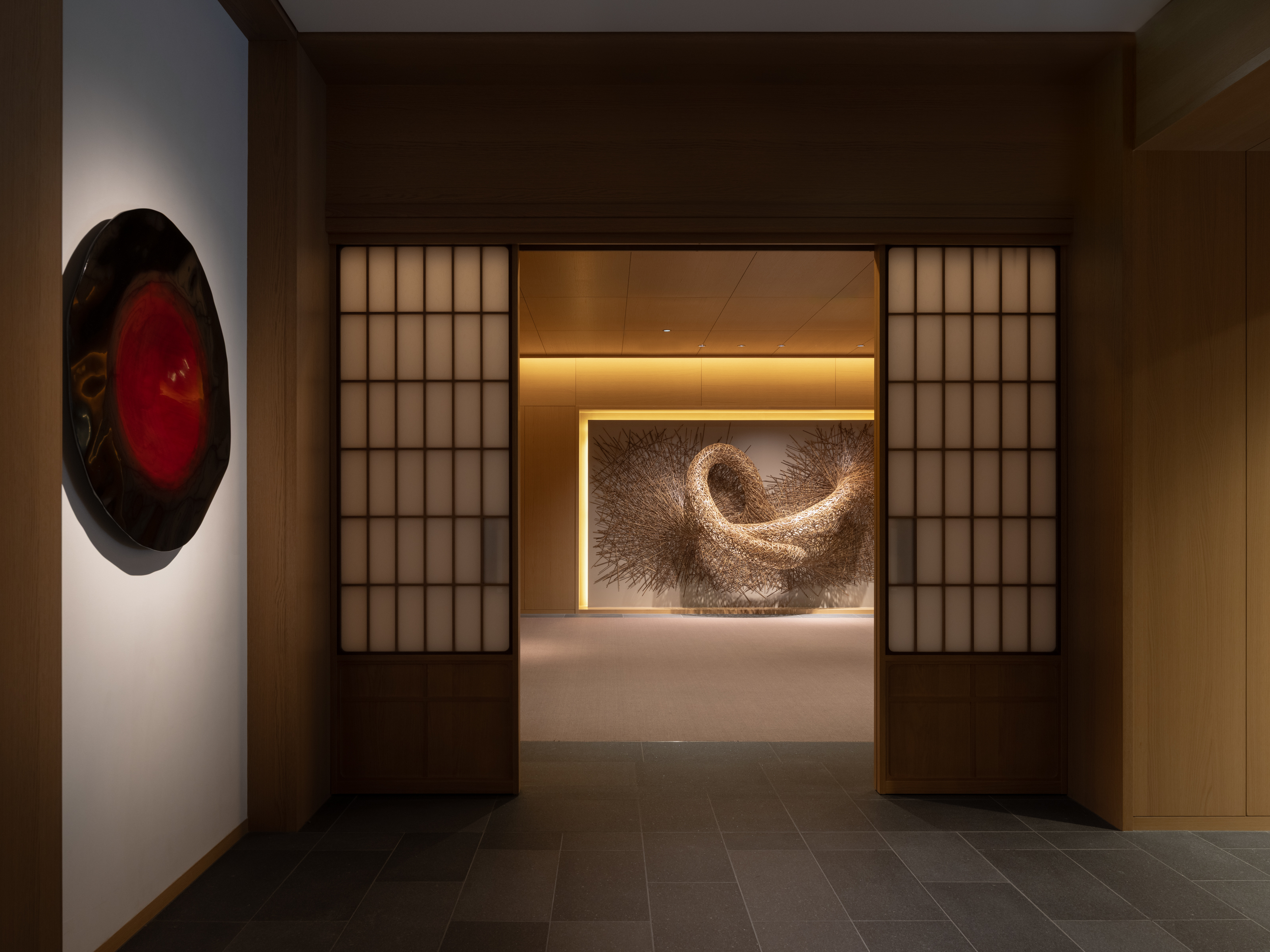
When arriving, it’s all about transitioning: from street to home, outside world to inner sanctum. Rather than entering directly, sloped pathways of natural stone gently guide visitors inside. Along the way is a curved installation of earthy straw by artist Momoko Fuji, leading into the stillness of an intimate inner space. Here, floral arrangements in ceramic vases rest on sculptural wood tables, while timeless gold panels and calligraphic artworks hang in earthen-walled alcoves.
(Image credit: Courtesy of Capella)
(Image credit: Courtesy of Brewin Design Office)
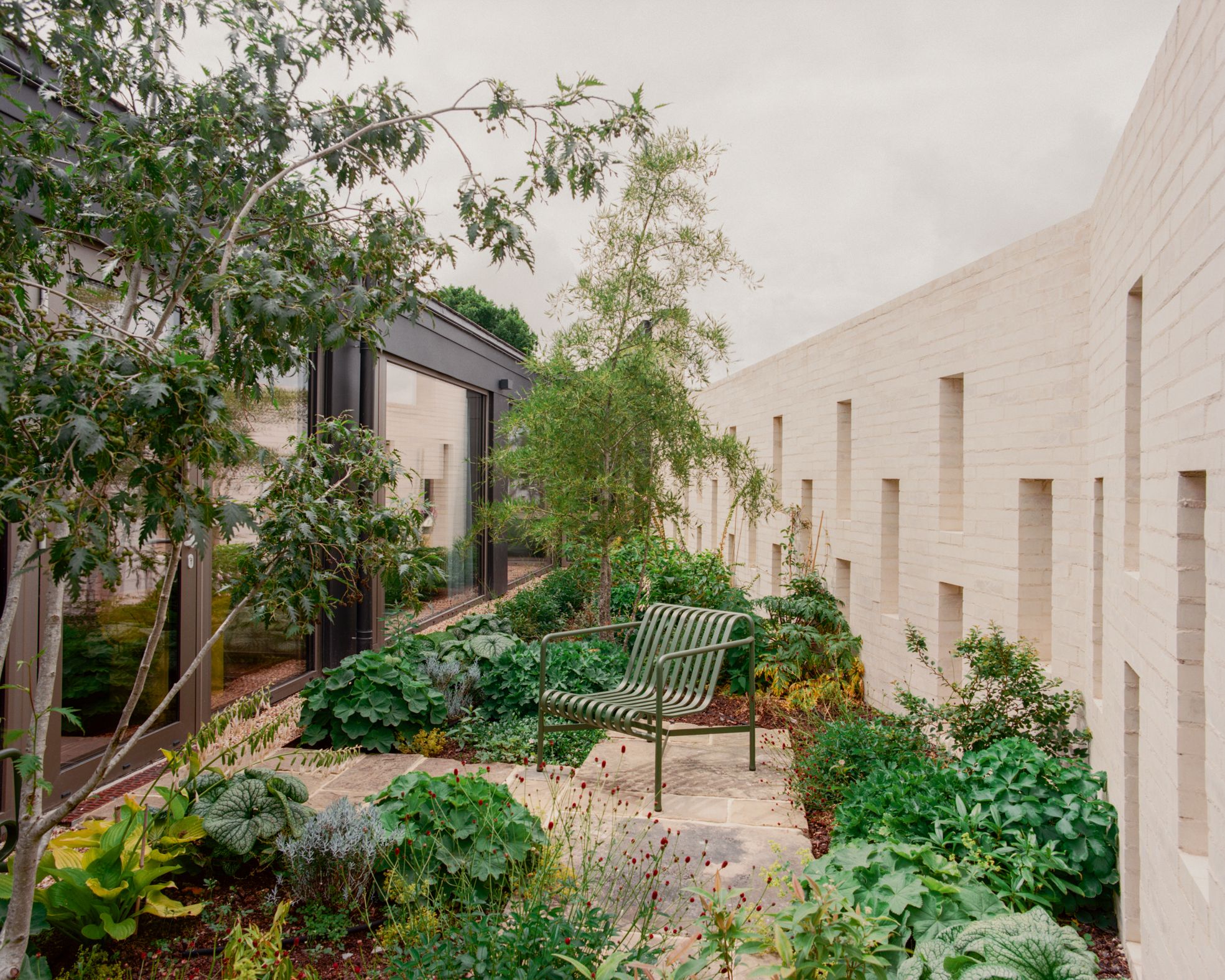
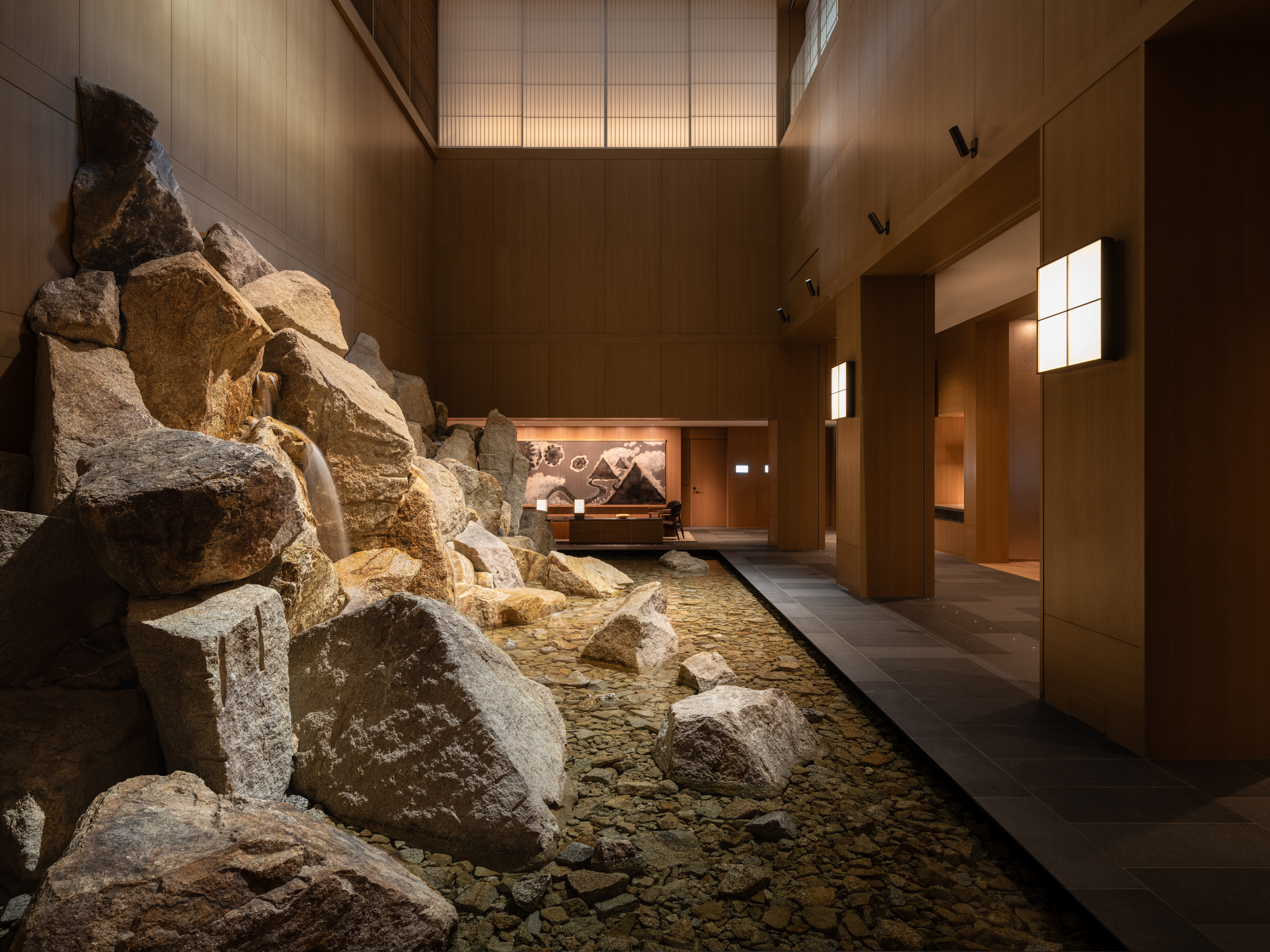
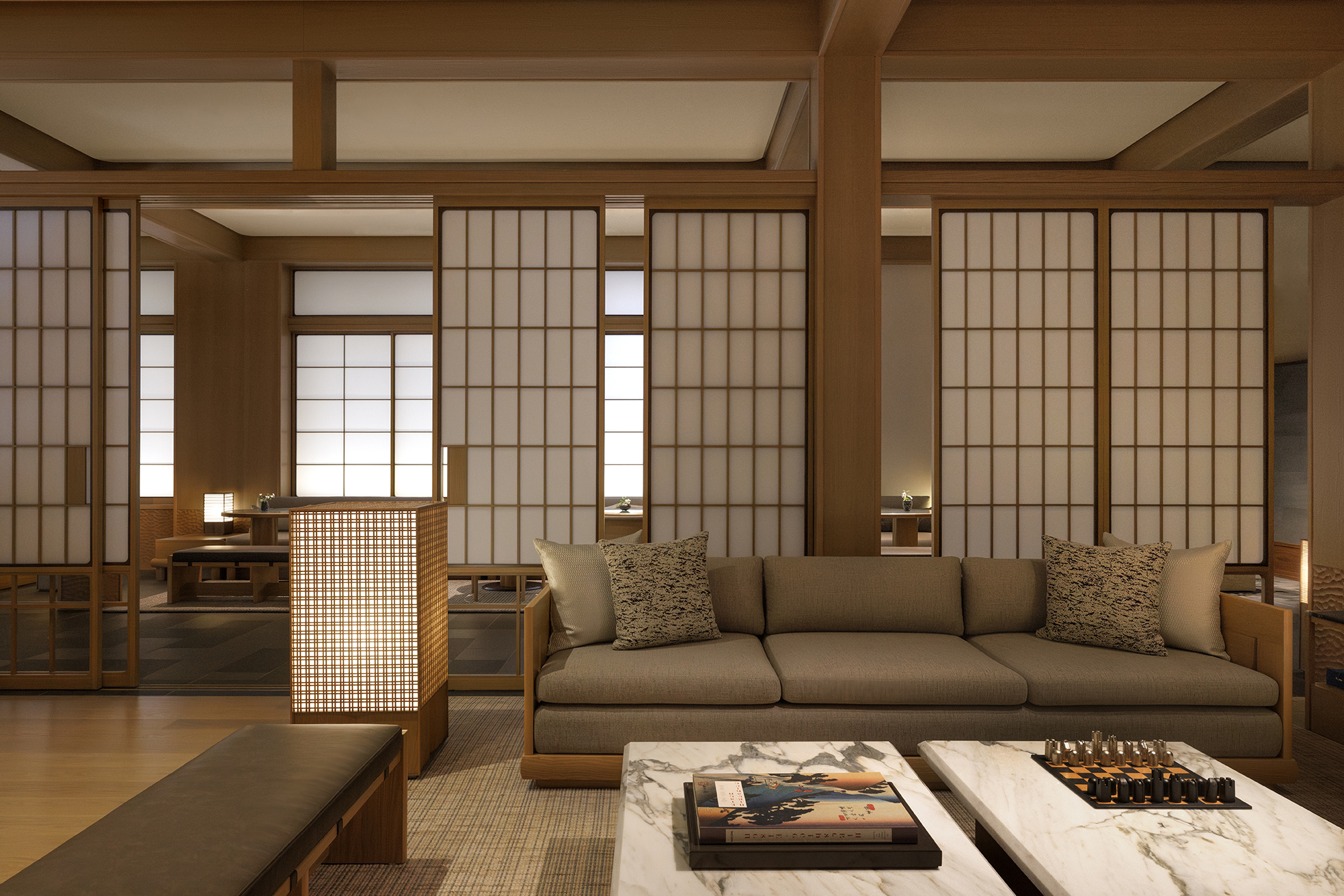
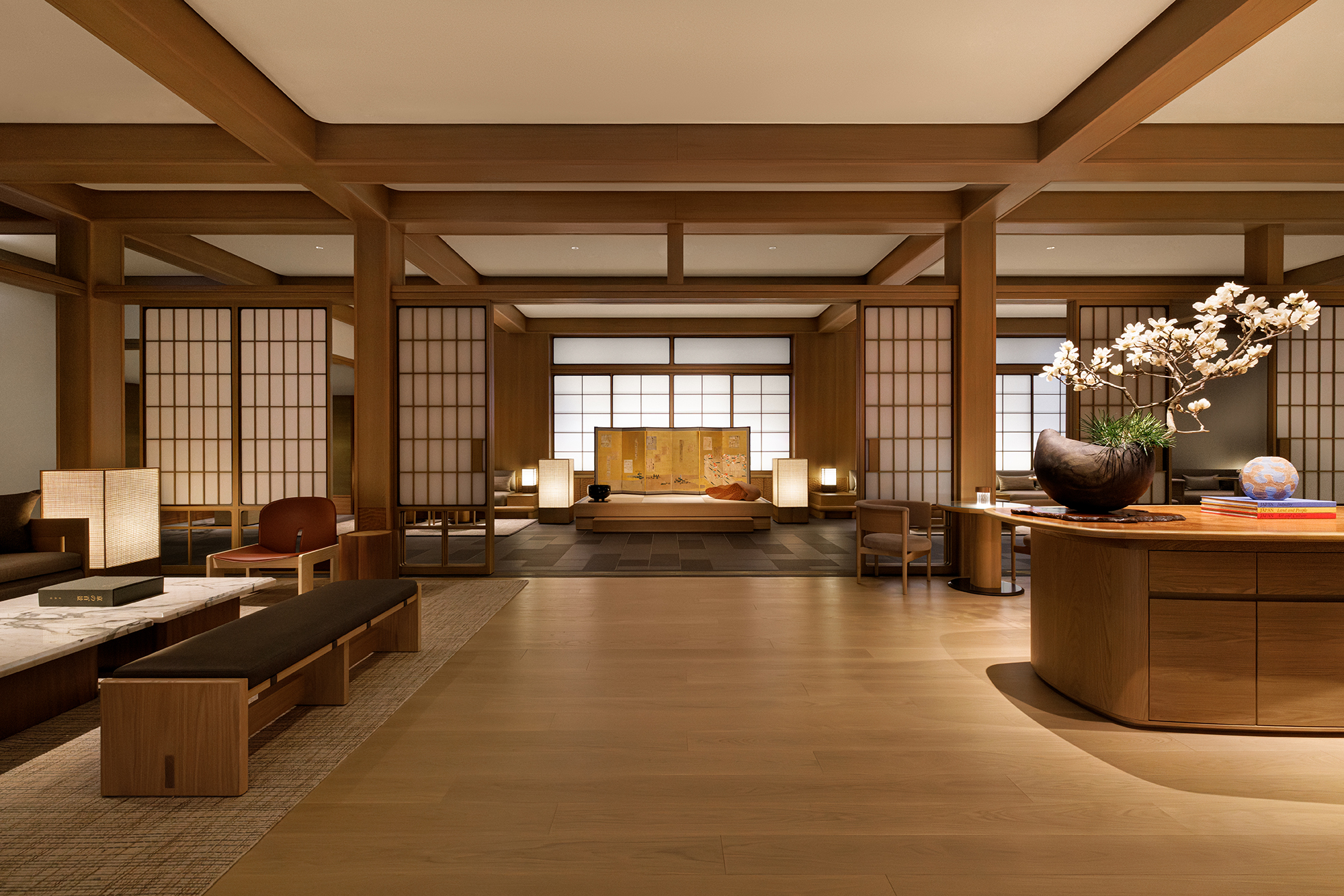
The journey continues along a light-flooded corridor, an internal tsuboniwa courtyard garden on the left – a serene composition of cherry blossoms, camellias, rocks, stones and cloud-reflecting pond; while on the right, paper screens filter the sound of flowing water from a basement fountain composed of large rocks from Gifu (‘to bring inside the sounds of nature,’ says Kuma). A sense of intimacy arises in the unwrapping of the hotel’s layers: ‘We used many sliding shoji screens to control privacy and soften natural light. These screens are the most important architectural vocabulary for a machiya.’
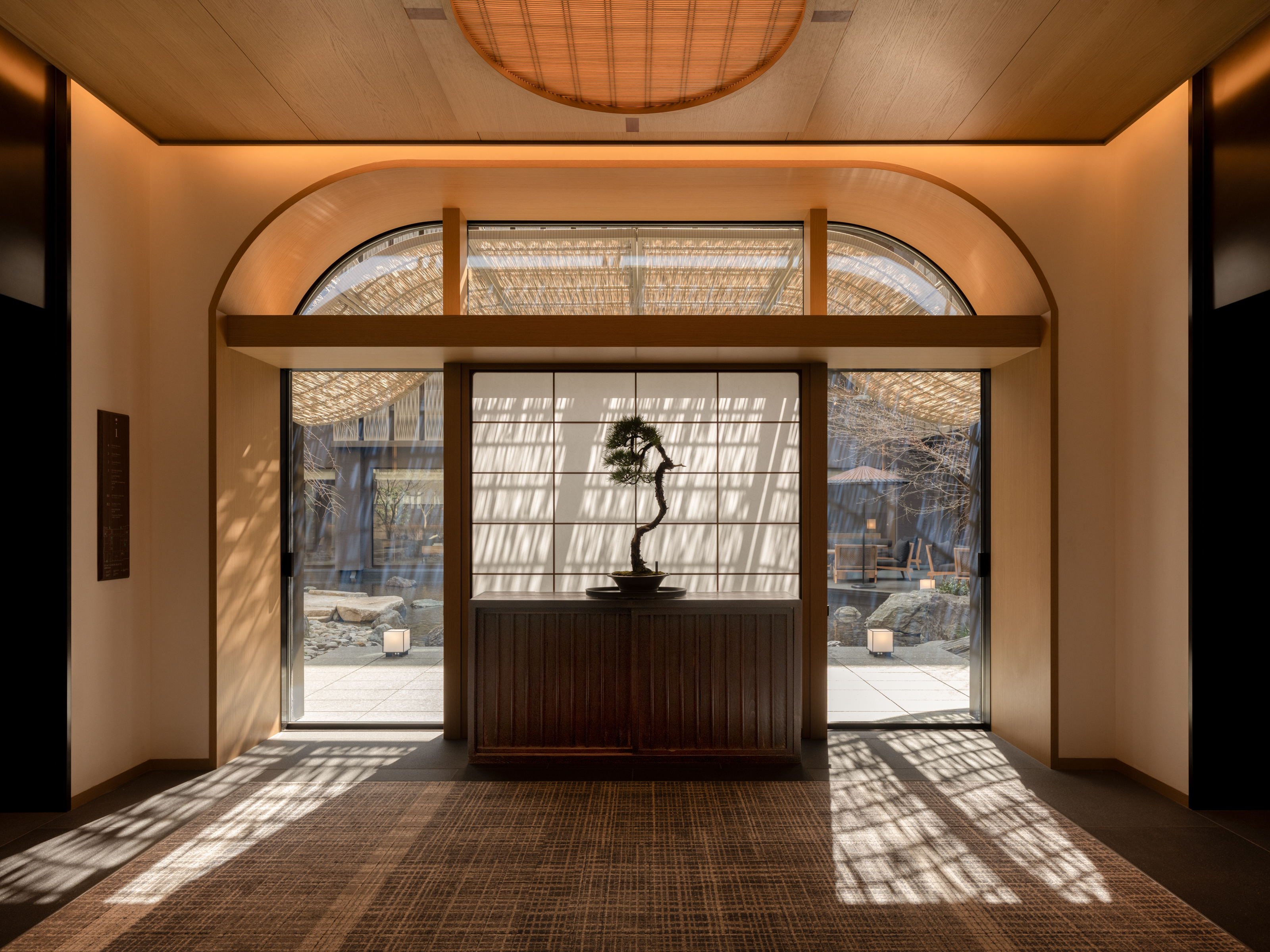
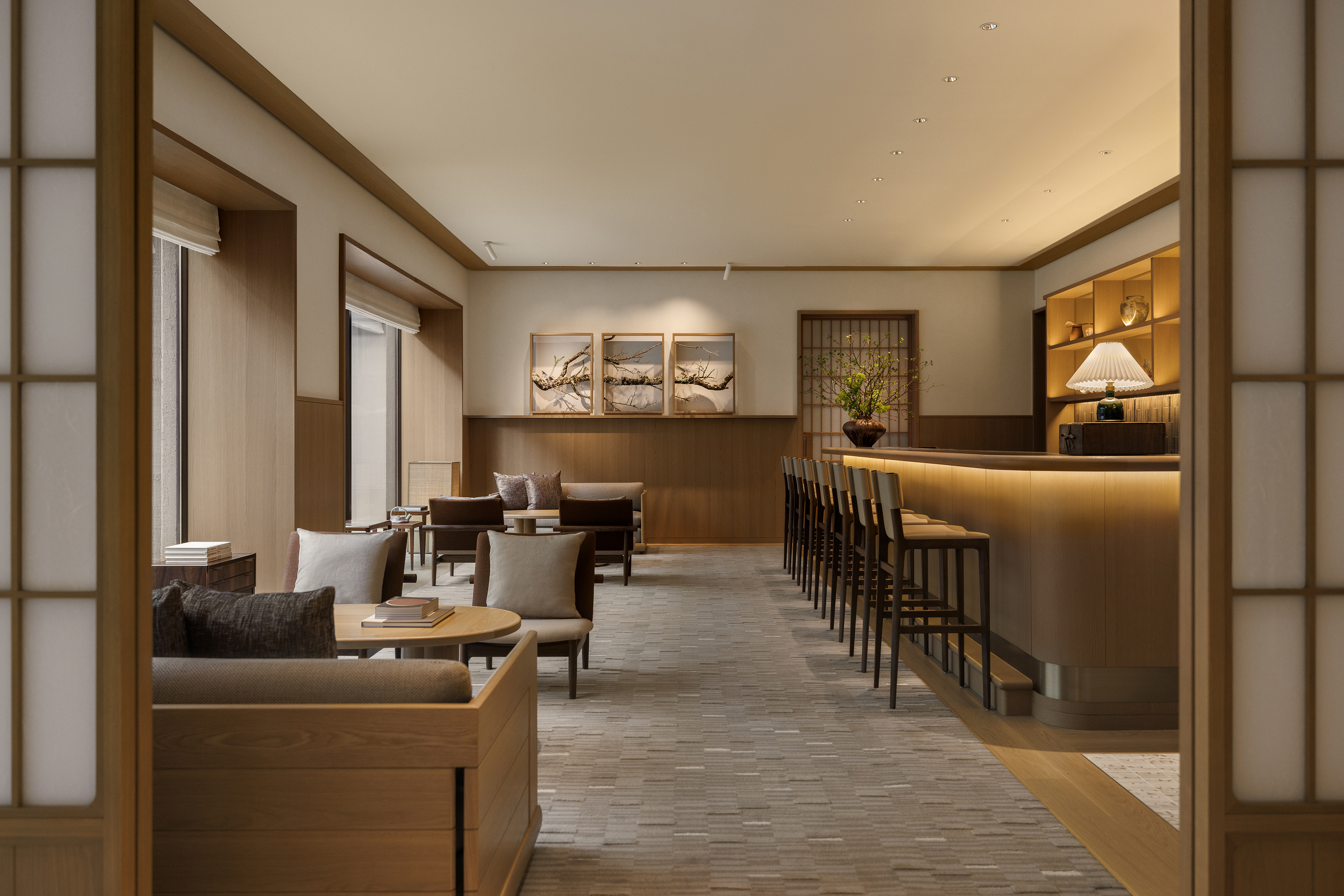
The light-shifting walkways lead into the Living Room – a screen-wrapped sanctuary. Here, staff in contemporary outfits fastened with Kyoto obi sashes sit at desks. Sunlight flickers on a paper screen behind a delicately gnarled bonsai. Historical books sit among flower arrangements and artworks, which range from the rhythmic paper folds of a hanging work crafted from geisha books to monochromatic Kyoto photography. It is here, every day before dinner, that a geiko or trainee maiko performs – a moment balancing intimacy with connection (guests are encouraged to chat at the end).
(Image credit: Courtesy of Capella)
(Image credit: Courtesy of Capella)
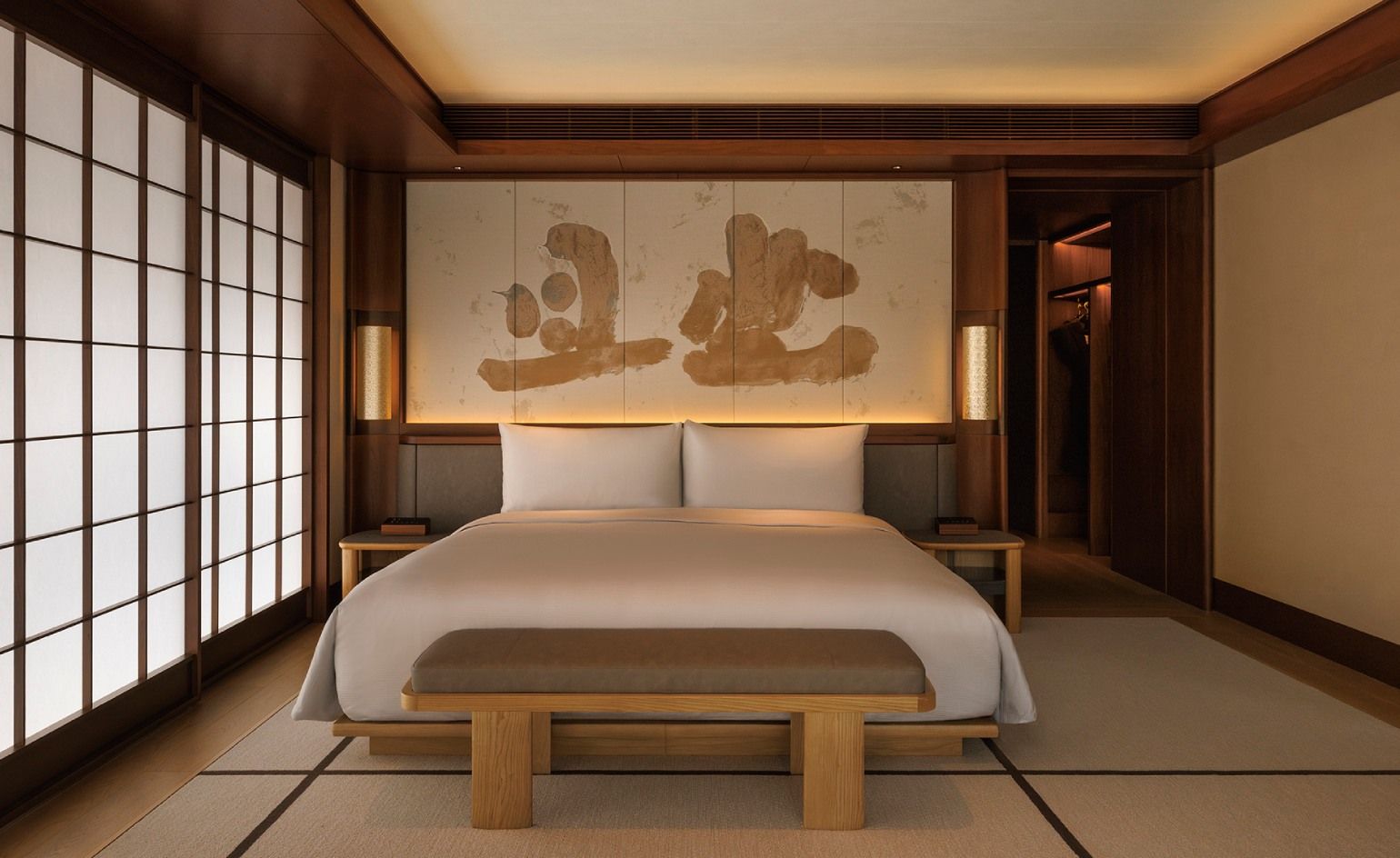
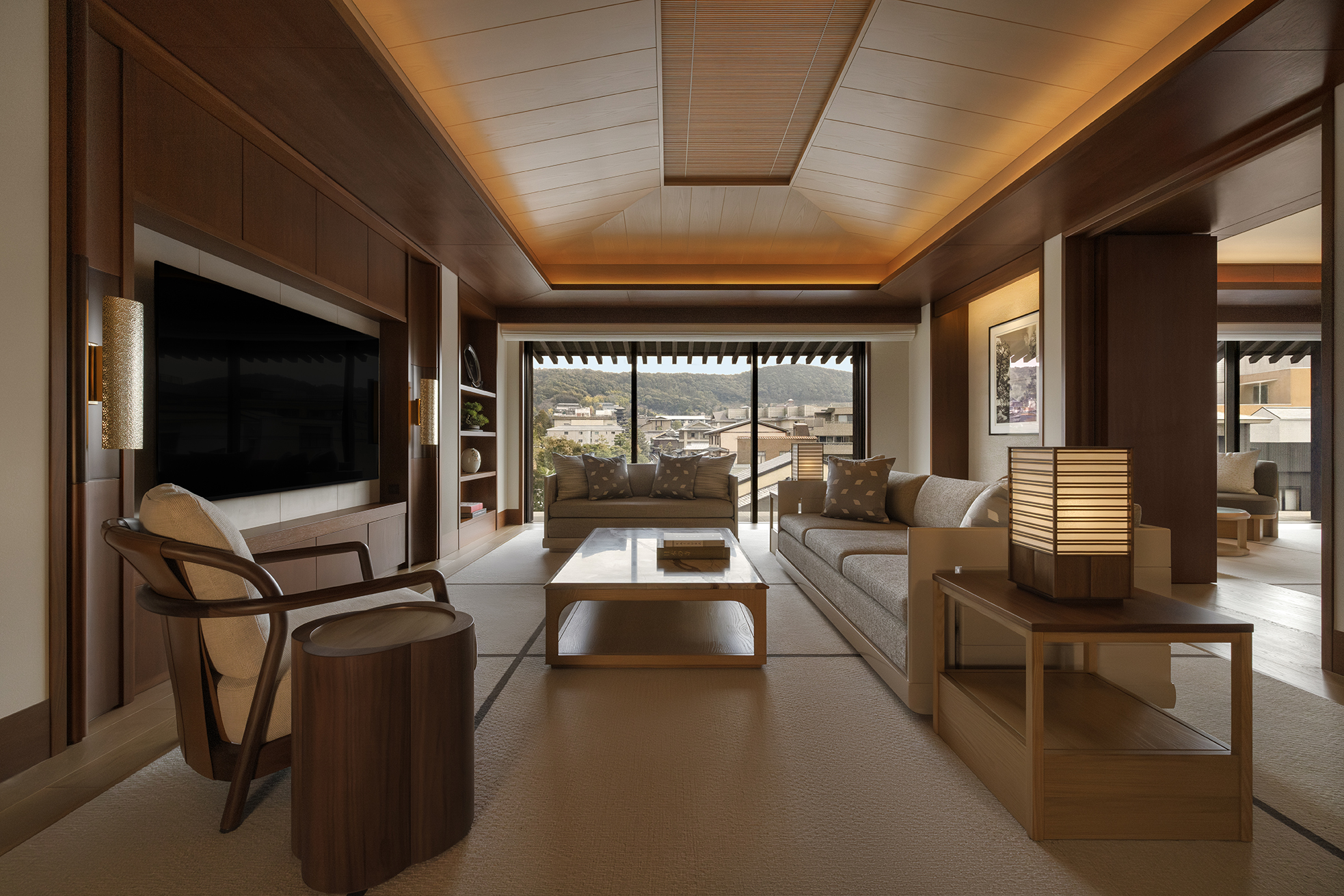
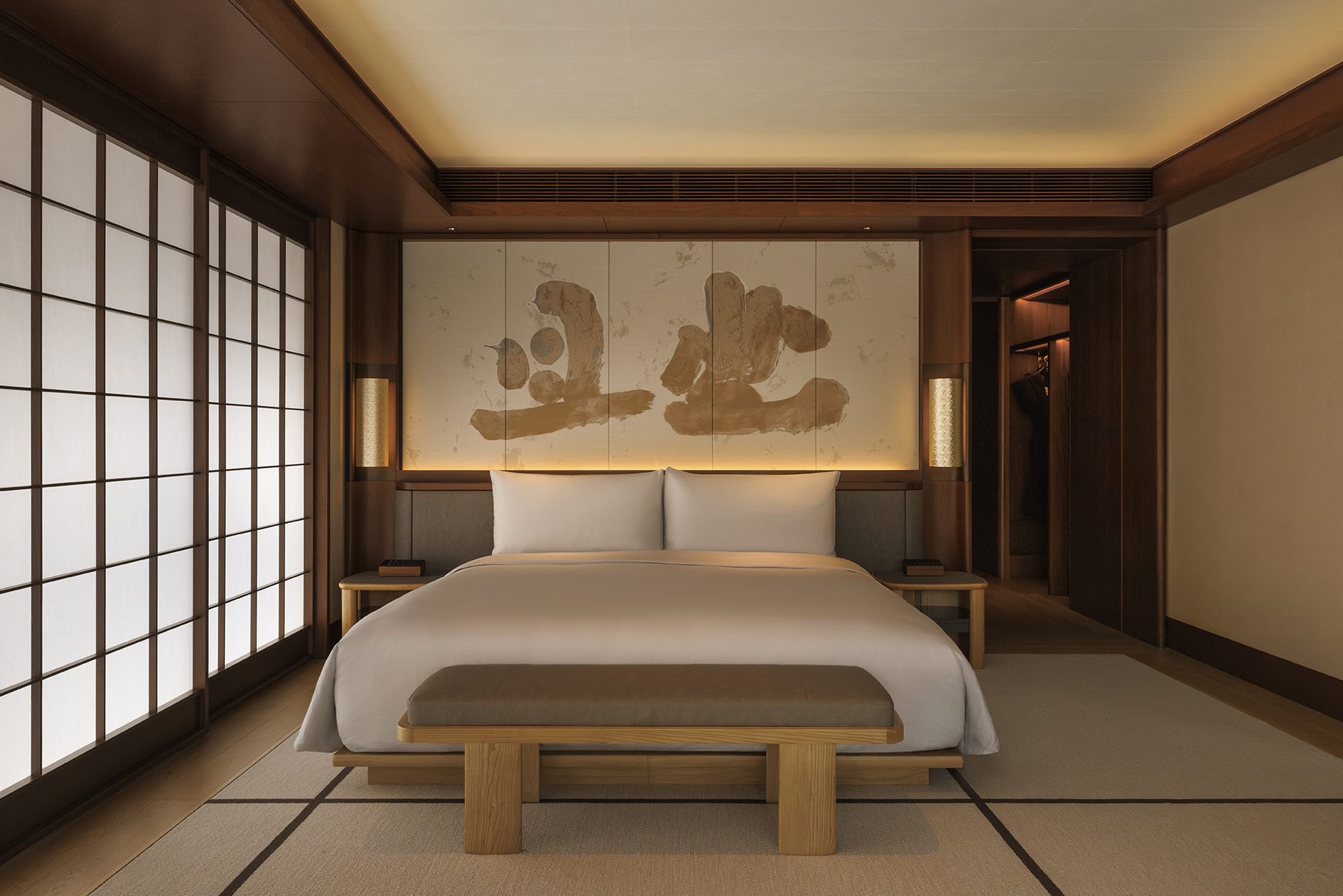
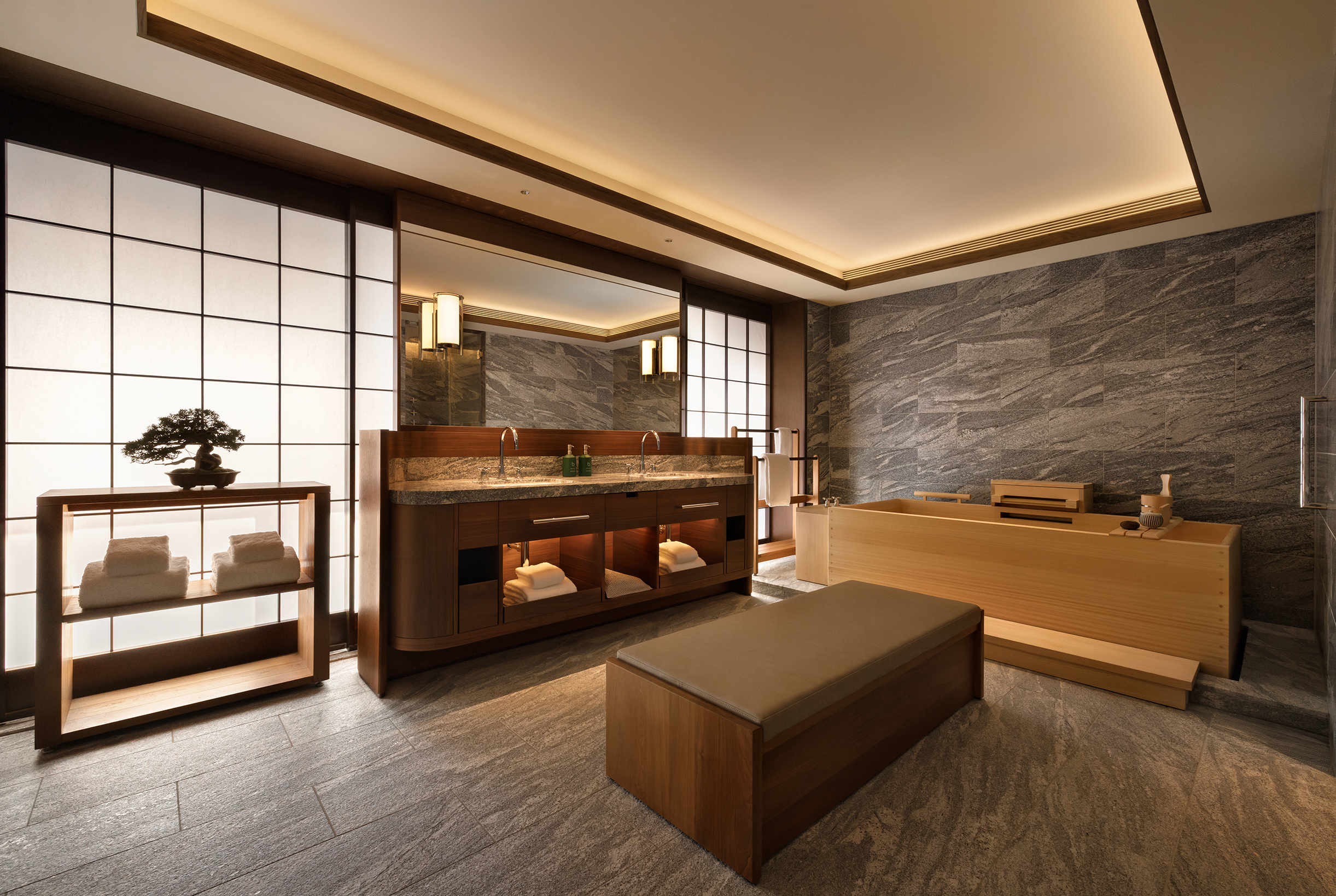
The room to bookSerene, spacious and soft in palette, the 89 rooms are elegant showcases of craftsmanship. Light filters through screens, alongside carpets marked with tatami mat lines, gently curved oak furniture, minimalist artworks by Kyoto creatives, including paper artist Kamisoe, textured tubular lighting and deep black bathtubs in granite bathrooms (or hinoki cypresswood tubs in suites). A highlight is curved sweeps of calligraphy on woven panels above the bed – a collaboration between avant-garde Okinawan calligraphy artist Daichiro Shinjo and Kyoto’s 17th-century kimono textile innovators Hosoo.
(Image credit: Courtesy of Capella)
(Image credit: Courtesy of Capella)
Views are firmly rooted in the surroundings – be it temples, old streets, or distant mountains. Six onsen suites are intimately fitted with private hot spring bathing and Zen gardens. ‘Our approach was to create spaces that felt grounded in the city’s architectural traditions while interpreting them in a contemporary way,’ Robert Chen, founder of Brewin Design Office, tells Wallpaper*. ‘Rather than referencing history directly, we looked at underlying qualities such as proportion, materiality and atmosphere. We drew inspiration from the warm timber tones of a traditional Kyoto machiya to create spaces that feel more enveloping.’
(Image credit: Courtesy of Capella)
(Image credit: Courtesy of Capella)
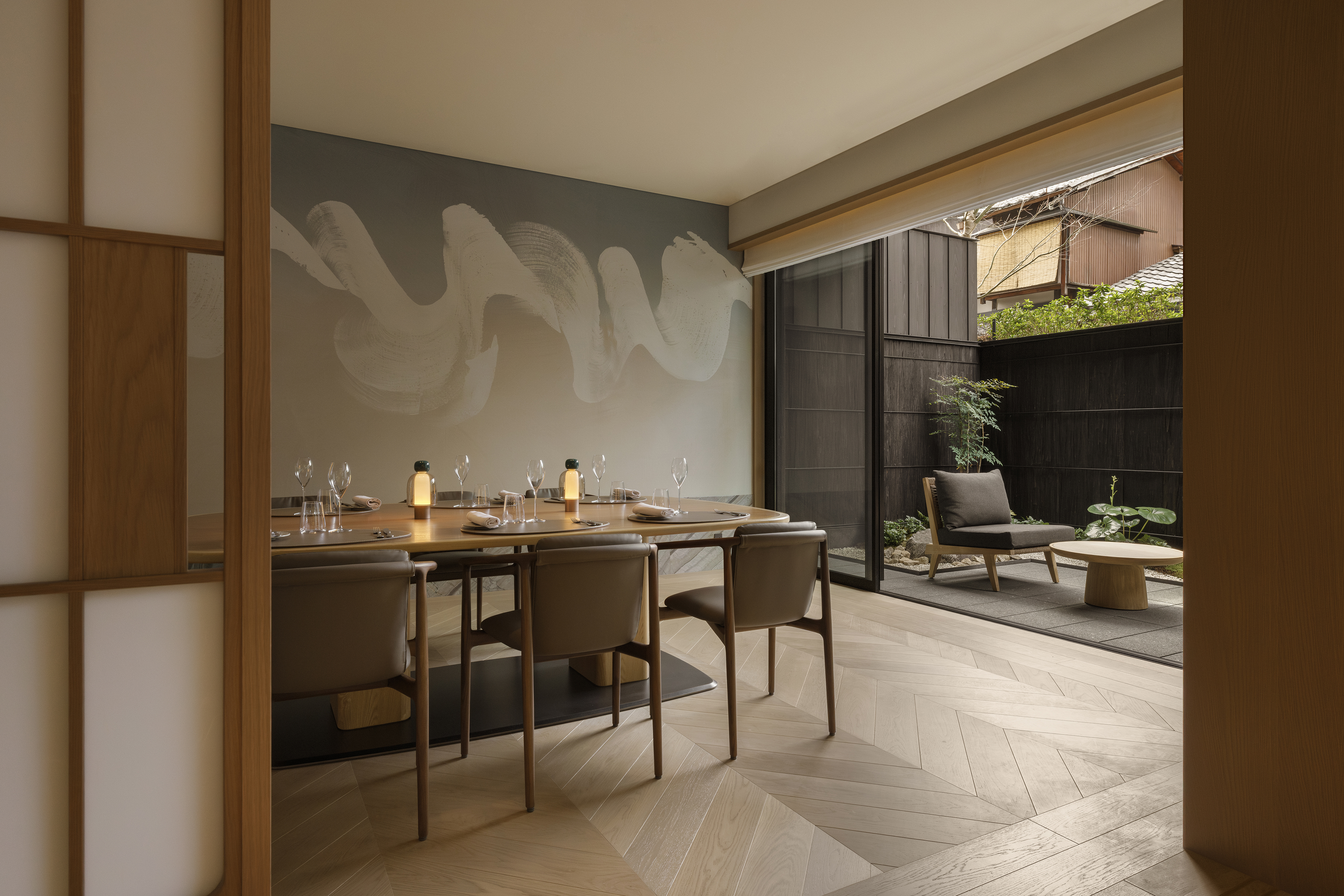
Staying for drinks and dinner?Behind a white noren curtain is scene-stealing SoNoMa restaurant by SingleThread. Created by Kyle and Katina Connaughton of wildly acclaimed SingleThread in California, the new outpost is the sensory culmination of decades spent exploring Japan’s culinary heritage, farming practices and earthy Iga ceramics. ‘It’s about the story of the day,’ says Kyle, highlighting its microseasonality. Inspired by an ochaya teahouse, the 12-seat counter restaurant – helmed by chef Keita Tominaga – serves up an omakase journey that is surprising and sensory, modern and creative, balancing Japan’s crafted flavours with a touch of California – from a forest-wrapped medley of early spring treats (fava beans, Hokkaido sea urchin, lily bulbs with sakura) to Kyoto duck sprinkled with fennel pollen from their Sonoma farm. ‘We use mainly Japanese ingredients but like to include an expression of California, even if it’s hidden,’ explains the chef.
(Image credit: Courtesy of Capella)
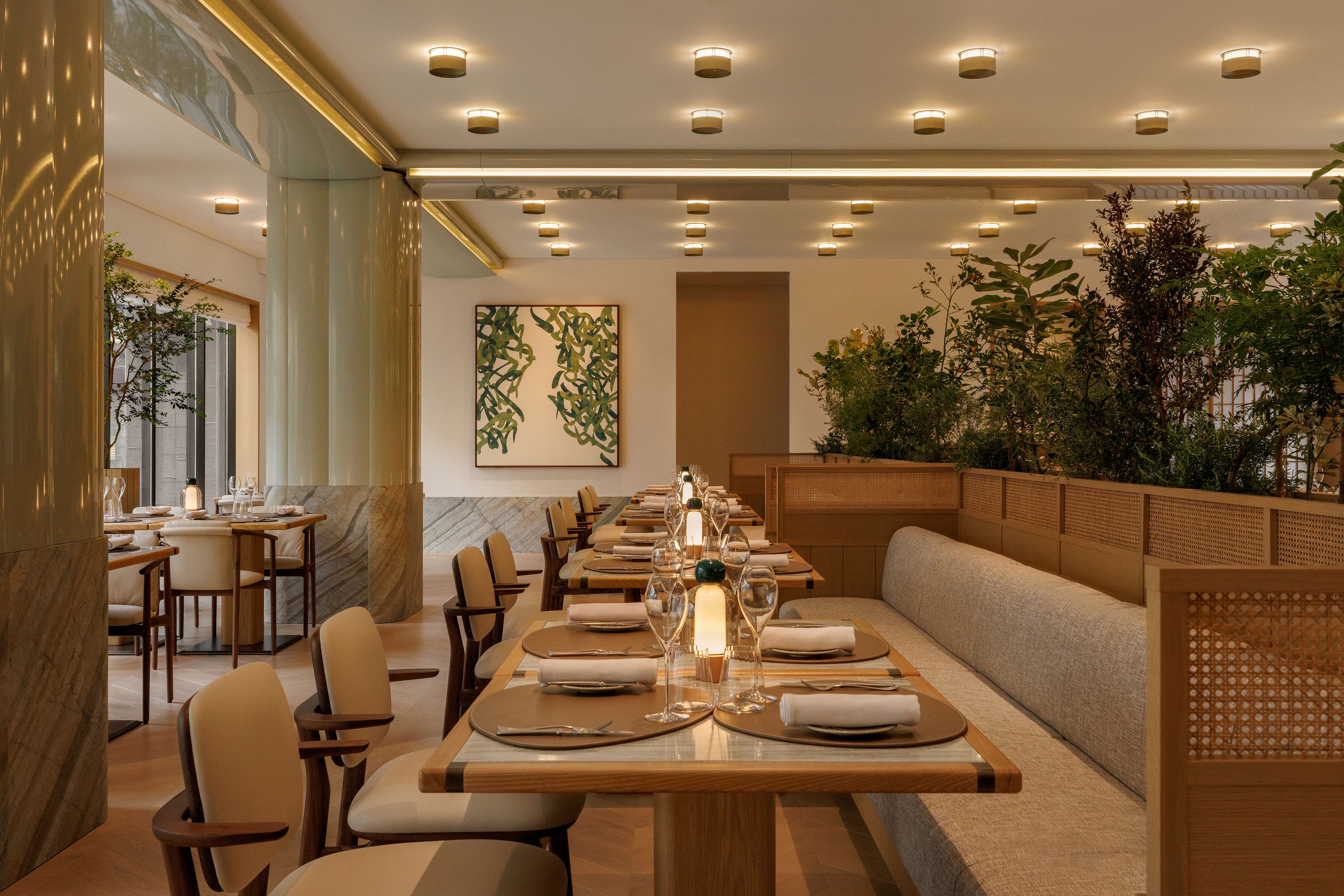
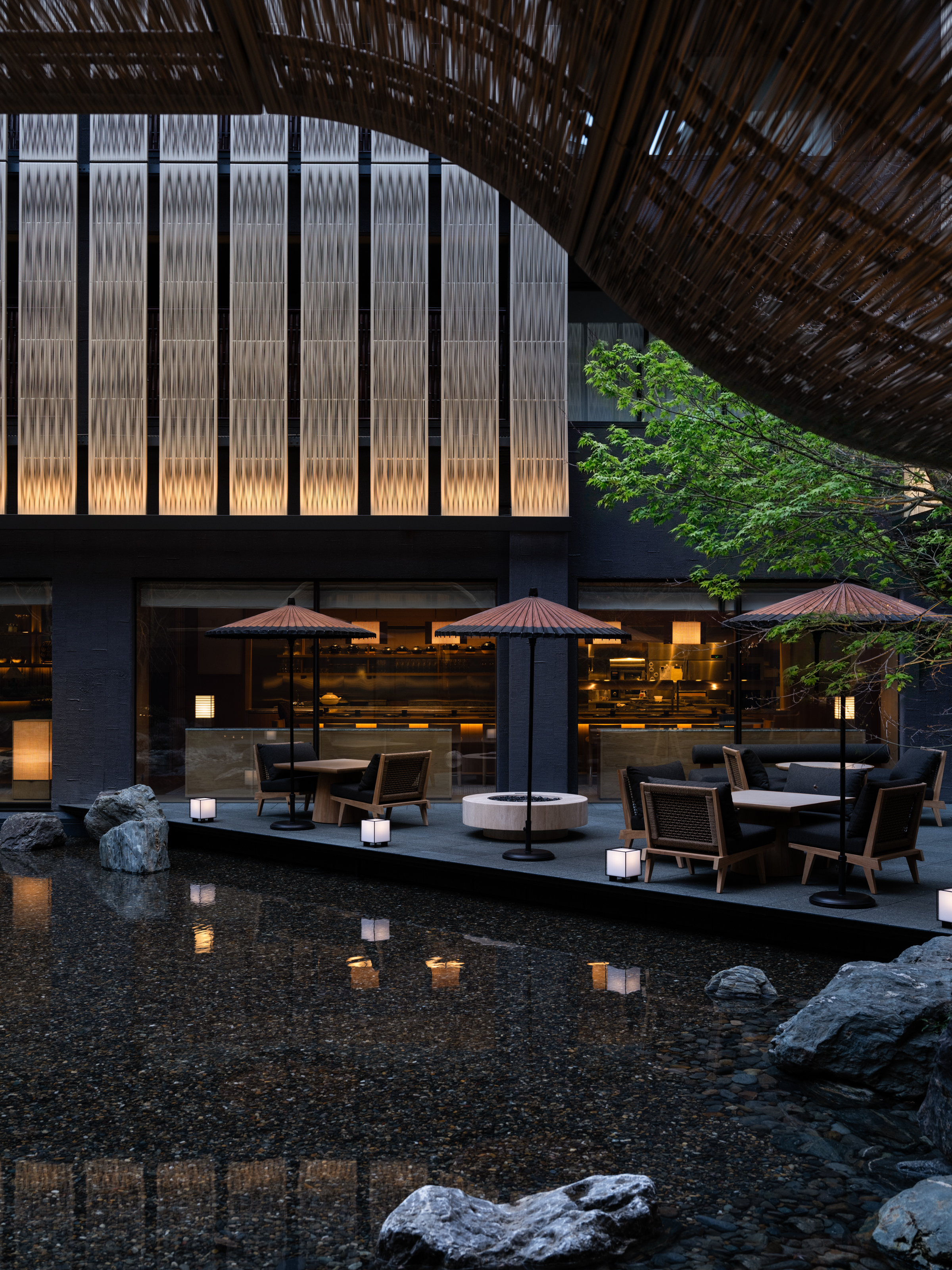
Shaping the hotel’s daily rhythm is Lanterne – a light-flooded all-day restaurant with elegant sweeps of marble, herringbone floors and garden views. French cuisine with Japanese imprints is on the menu (a favourite is King Crab pain perdu with zesty kinkan kumquat and bisque); plus a fresh, buzzy breakfast (opt for an outdoor table when it’s warm). At the threshold is The Patisserie, serving SingleThread Entremets – otherworldly sweet treats displayed among foliage and flowers.
(Image credit: Courtesy of Capella)
(Image credit: Courtesy of Capella)
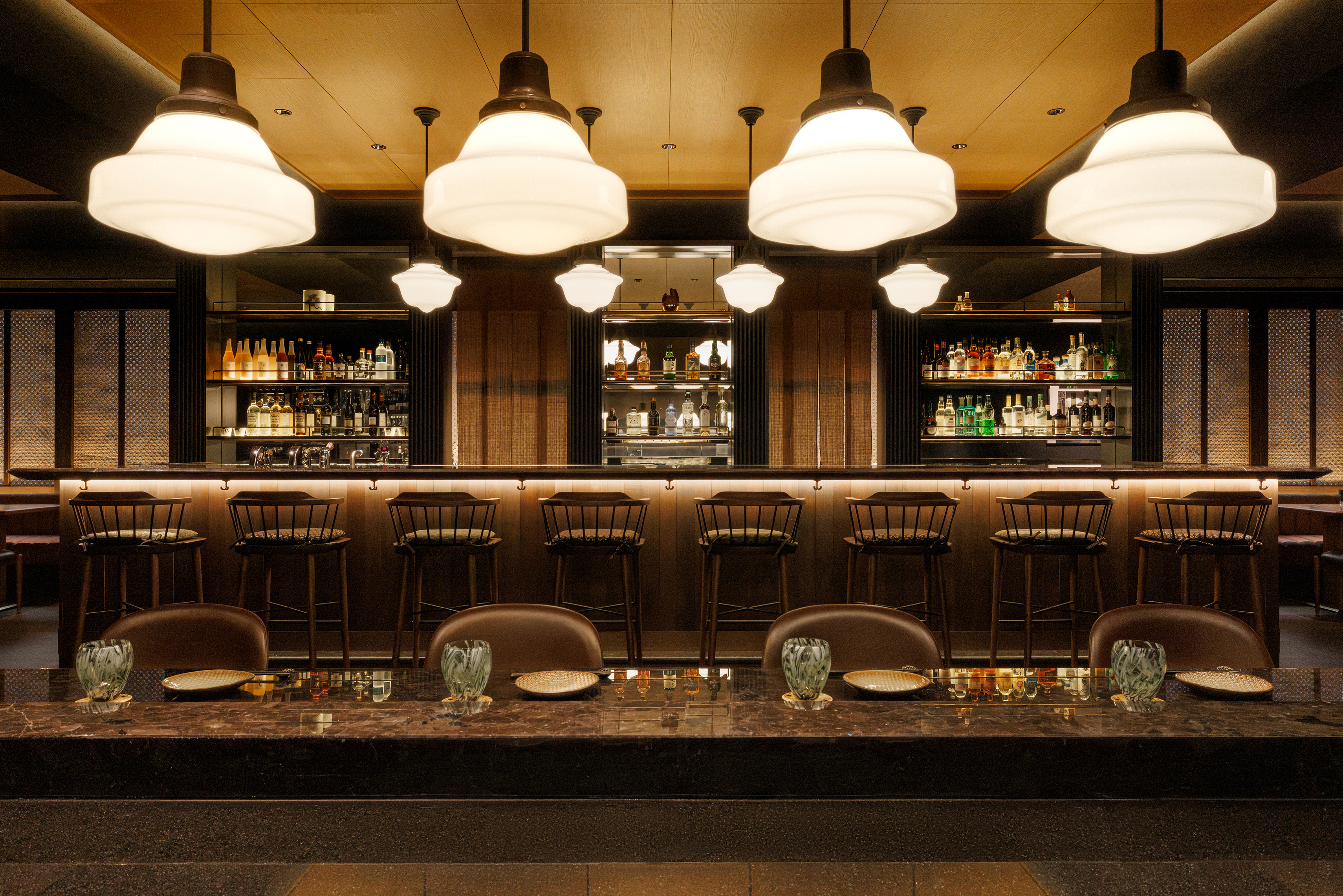
Yoi is a refreshingly laid-back spot for modern Japanese cuisine. Sit at the counter and enjoy a relaxed mix of treats – from sashimi platters served in a cloud of mist to chrysanthemum, spinach and young bamboo shoots in sesame dressing – alongside crafted cocktails such as Japanese Loafer (midori, bergamot, Kyoto craft gin and yuzu citrus).
(Image credit: Courtesy of Capella)
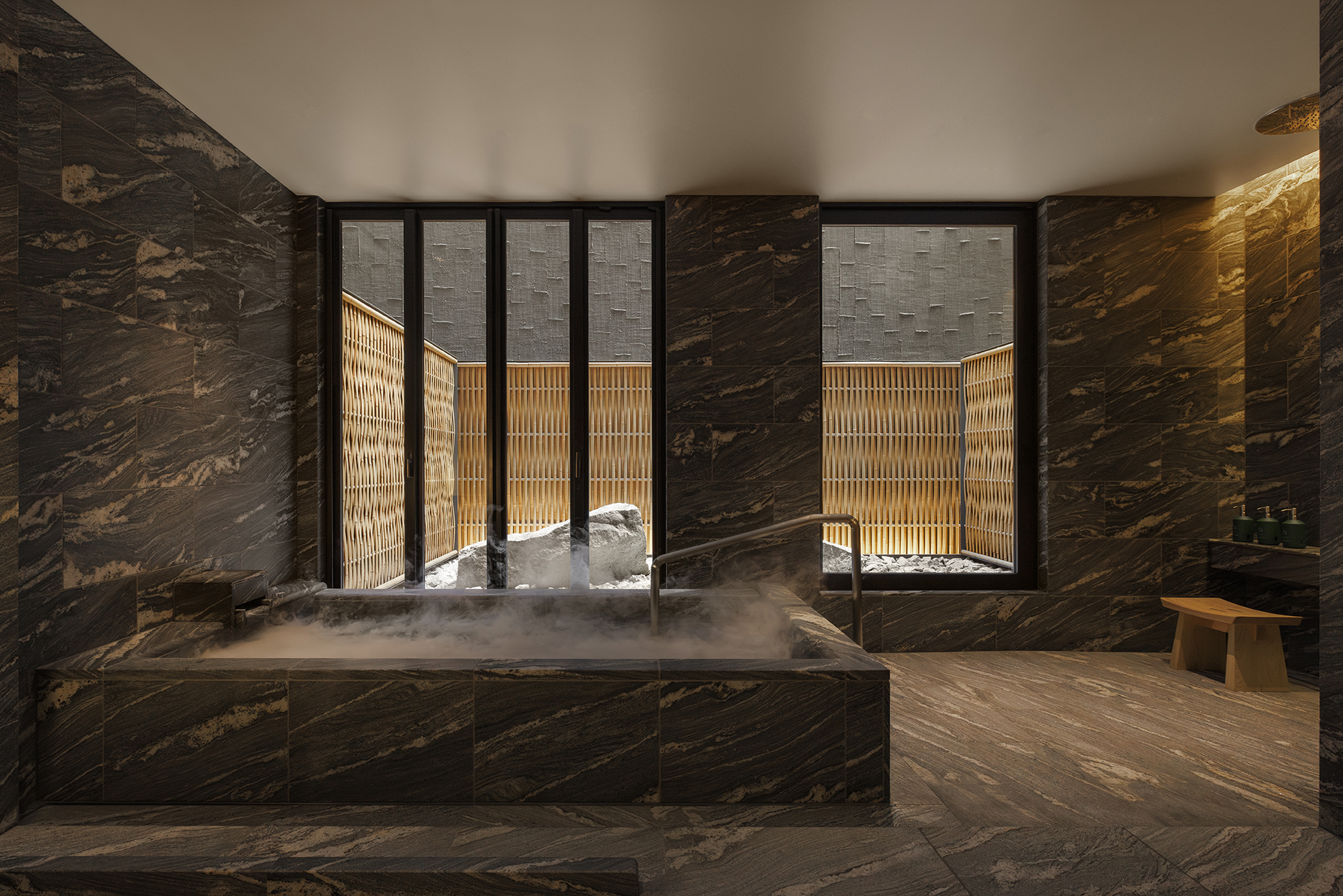
Where to switch offThe basement is a temple to wellness. Start the day with gentle stretches and singing bowls by the fountain. The Ofuro Suites offer private onsen soaks overlooking a Zen-style garden. Auriga Spa has a menu inspired by the moon cycles, unfolding in four treatment rooms – where massages are perfectly executed in an aromatic cloud of curated oils and herbs – plus saunas and steam rooms in changing areas.
(Image credit: Courtesy of Capella)
In addition, the hotel shines particularly brightly with its Capella Curates programmes. Inventive experiences tap into Kyoto’s layered culture – with a playful twist. I lost track of time with charismatic Seiji Naito, who helms Gion Naito, a century-old family-run wooden sandal company, a few minutes from the hotel, talking about the meaning of life, nature and the universe, while playing board games (yes, really) and trying on shoes. Other experiences include visiting a surf-loving lacquerware artisan and kintsugi workshops. The friendly staff are also accomplished at bespoke experiences.
(Image credit: Courtesy of Capella)
The verdictA smooth mesh of Kyoto culture and contemporary warmth, intimacy and connection, nature and city, tradition and innovation – all threaded together with a luxurious dose of Capella’s signature hospitality.
(Image credit: Courtesy of Brewin Design Office)
Capella Kyoto is located at 130 Komatsucho, Higashiyama Ward, Kyoto, 605-0811, Japan
Comments (0)