
Remember me







Parents should avoid giving young children oat and soya milks because they risk causing obesity, tooth decay and malnutrition, medics have warned.
Doctors, dentists and dietitians have issued new joint guidance advising parents not to give children under five plant-based milk alternatives, which can be high in sugar and low in vital nutrients.
It is the first time UK health professionals have explicitly advised parents to avoid sweetened dairy-free milks, particularly those aimed at young children.
The products can be expensive and misleadingly marketed as healthy options, with organic versions the least likely to be fortified with the nutrients children need, experts warned.
Instead, they recommended parents of young non-breastfed children who avoid dairy to choose unsweetened, fortified soya, oat or pea milks, which are available in supermarkets.
The new advice to parents, to be issued next week, said any products marketed as ‘growing-up’ or ‘toddler’ milks were ‘not recommended’ and that plant-based versions should be avoided.
In a statement, the health professionals said: ‘We recommend that families choose unsweetened (without free sugars or non-sugar sweeteners) and fortified plant-based drinks, to prevent these products from adding unnecessary free sugars to the diets of children aged one year and over and to provide a source of micronutrients.’
The guidance also advises healthcare professionals to ‘proactively ask what plant-based drinks are being offered to children, and educate parents and carers on choosing the best option’.

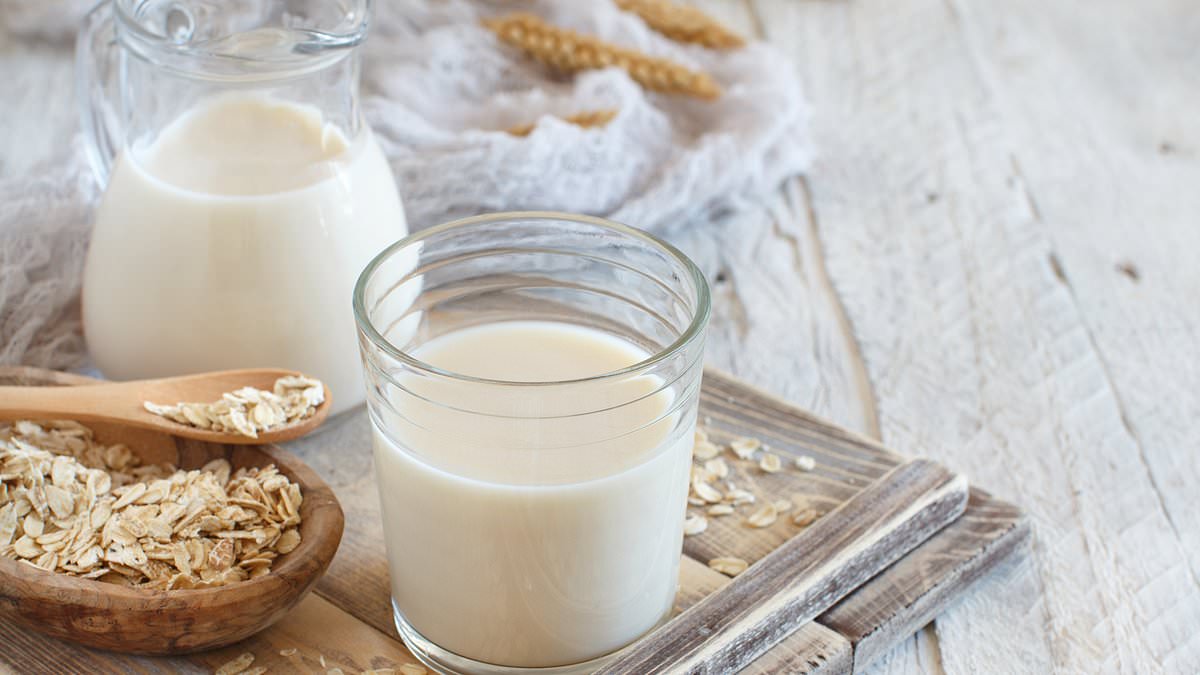
Doctors, dentists and dietitians have issued new joint guidance advising parents not to give children under five plant-based milk alternatives, which can be high in sugar and low in vital nutrients

Experts recommended parents of young non-breastfed children who avoid dairy to choose unsweetened, fortified soya, oat or pea milks, which are available in supermarkets
The recommendations were issued by the British Society for Allergy & Clinical Immunology (BSACI) and backed by the British Dental Association (BDA) and the Food Allergy Specialist Group of the British Dietetic Association (FASG).
Professor Robert Boyle, an NHS consultant paediatric allergist and co-author of the paper, said he regularly saw children in his clinics who drank plant-based ‘growing-up’ milks and needed teeth extractions due to their high sugar intake.
‘I see struggling families in my clinics who are spending money on these products, thinking they are doing the best for their child, because they have been led to believe they are good for them – it makes me so upset to see it,’ he said. ‘These plant-based milks are unregulated ultra-processed products, which are expensive and unhealthy. They are not appropriate for young children.’
In a linked editorial, in the Journal of the BSACI, Prof Boyle and colleagues said parents were being misled by the health claims on the packaging of plant-based drinks.
‘Plant-based drinks are widely marketed as nutritionally comparable alternatives to cow’s milk; however, this equivalence is not supported by current evidence,’ the authors wrote.
‘“Growing-up“ and “toddler“ milks are frequently promoted as supporting optimal growth and development beyond infancy… [But] most plant-based toddler drinks contain free or added sugars such as glucose syrup, maltodextrin, sucrose, fructose or other refined carbohydrates.’
They said research suggested children may struggled to absorb added nutrients like calcium and vitamin B12 from plant-based drinks, even where they have been included in the ingredients.
One large 350ml glass of a typical ‘growing-up’ soya milk drink can contain up to 30g of added sugars, while an oat-based drink can contain 21g – far exceeding the recommendation that two to three-year-olds consume less than 14g of added sugars per day.
In 2024, research by the children’s health charity First Steps Nutrition Trust found children who drunk toddler or growing up milks every day consumed more than 1lb (480g) of extra added sugars a month, on average.
Commenting on the new guidance, the charity’s director Dr Vicky Sibson said the Government needed to ‘step up’ to regulate the contents and marketing of drinks aimed at children over one year old, which are currently exempt from the strict rules governing milks for under-ones.
‘Unchecked marketing is misleading parents into believing that these expensive products are a healthy and appropriate choice for their young children – with claims emphasising all the added vitamins and minerals and how they support growth and even cognitive development – when more often than not they are full of sugar. The health halo around the plant-based options is especially misplaced, given they have the highest sugar content of all.’
In response, Natasha Bye, chief executive of the industry representative body the British Specialist Nutrition Association (BSNA), said: ’It is important that families have access to a range of options that meet the nutritional needs of their children, including those who follow a plant-based diet or have a lactose intolerance.
’These products play an important role in supporting the healthy development of young children and include key nutrients that young children are often at risk of not consuming enough of, including iron, omega 3 fatty acid and vitamin D.’
Comments (0)