Enabling & Support
28/04/2026
1188 views
7 likes
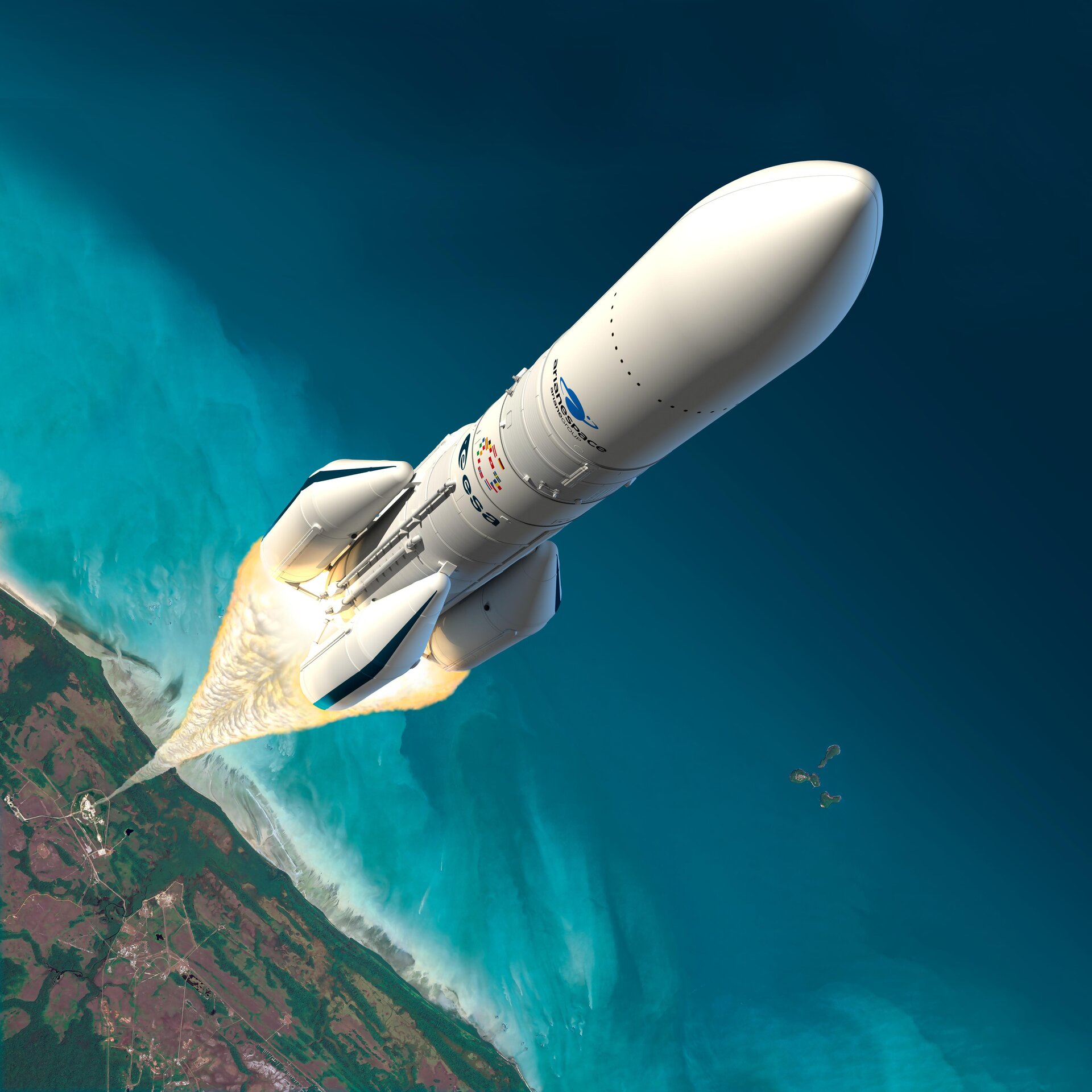
Get ready to witness Europe’s most powerful rocket, Ariane 6, fly with four boosters, once again. Carrying 32 Amazon Leo satellites to low Earth orbit, flight VA268 is set to liftoff on 30 April 2026 between 9:08-09:57 BST (10:08-10:57 CEST, 5:08-05:57 local time).
Follow the launch live
Watch the launch live starting half an hour before liftoff on Arianespace’s broadcast. The flight will take 114 minutes from liftoff to separation of the last satellites.
Time in CEST
Time after liftoff (hours:minutes)
Event
09:40
Programme begins
10:08
00:00
Liftoff
10:11
00:02
Boosters separation
10:12
00:03
Fairing jettison
10:16
00:07
Vulcain 2.1 engine shuts off
10:16
00:07
Core stage separation
10:17
00:08
First Vinci ignition – first boost starts
10:28
00:19
End of first boost
10:30 - 11:15
00:21 - 01:06
Programme break
11:20
01:11
Second Vinci ignition – second boost starts
11:21
01:12
End of second boost
11:22 - 11:47
01:13 - 01:38
Programme break
11:49
01:40
Payload separation starts
12:09
02:01
End of broadcast
Full scale and full power
Ariane 6 blueprint
This is the seventh flight of Ariane 6, the second one with four boosters.
Having four boosters instead of two give the rocket even more power, enabling it to take around 21.6 tonnes to low Earth orbit, more than double the 10.3 tonnes it could bring to orbit with just two boosters.
The P120C boosters used by Ariane 6 are one of the most powerful one-piece motors in production in the world.
Just like in the first flight with four boosters, Ariane 6 will be using the long fairing on flight VA268. This 20-metres tall fairing houses the 32 Amazon Leo satellites inside, but could probably fit a humpback whale!
For the Ariane 6 programme, the European Space Agency works with an industrial network across 13 European countries, led by prime contractor and design authority ArianeGroup, with Arianespace as the launch service provider. In addition to development activities, ESA supports and monitors Ariane 6 exploitation to ensure a reliable and available launch system for its Member States, including risk oversight, resolution of anomalies and continuous performance improvement through dedicated support programmes.
For more information download the media kit.
Like
Thank you for liking
You have already liked this page, you can only like it once!