Is this the real face of Anne Boleyn? Author believes AI facial recognition technology has uncovered lost sketch of Henry VIII's wife
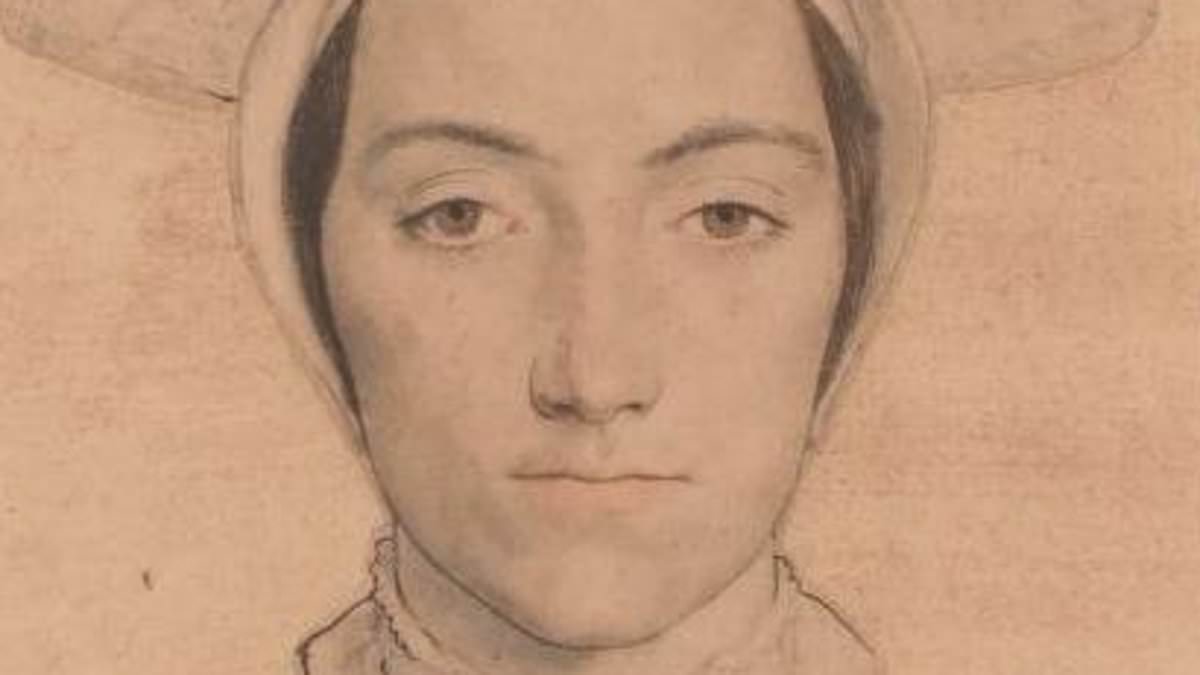
An independent historian believes AI recognition technology has uncovered a long-lost sketch of Henry VIII's beheaded wife, Anne Boleyn. Despite having won the heart of the ill-tempered Tudor king and given birth to one of the most renowned monarchs in history, her true appearance remains unknown. And after Boleyn was sent to the scaffold to be beheaded, accused of adultery, incest and treason, no known paintings of hers survived.But a computer science research team, led by the University of Bradford, believe they have found a new sketch of Henry's second wife using facial recognition. They have described the discovery as 'exciting', saying it could be applied to future art detective work. Karen Davies, the lead author of the research, explained that the team compared the drawings to Boleyn's daughter Elizabeth I, as well as her cousins, to determine familial similarity, which she says 'cluster' together. 'We've used drawings that we absolutely know are non-relations and they don't cluster,' she said. The facial recognition 'clusters' together faces which have a higher percentage of facial resemblance. The numbers could then suggest that someone could be a relative or the same person, when interpreted. Meanwhile, Ms Davies and Prof Hassan Ugail, whom she met thanks one of her cleaning clients, believe the facial recognition system could be used to construct a visual family tree by assessing similarities between certain portraits. A computer science team from the University of Bradford believe this unidentified woman could in fact be Anne Boleyn after using facial recognition to analyse a collection of Tudor portraits Karen Davies, the lead author of the research, explained that the team compared the drawings to Boleyn's daughter Elizabeth I, as well as her cousins, to determine familial similarity (Pictured: Natalie Portman portaying Anne Boleyn in The Other Boleyn Girl)Ms Davies, who worked as a cleaner to fund her passion for historical research, told the BBC: 'The result has shocked us completely.'But despite their glee, a degree of doubt surrounds the methodology which used facial recognition on a famous collection of Tudor portraits. Dr Charlotte Bolland, a senior curator for 16th-Century collections at the National Portrait Gallery, explained there was no lifetime painted portrait that could be used as a 'reference point' for Henry VIII's second wife. She also explained that Boleyn did not reign for a lengthy enough period for there to be established iconography of the former Queen, also noting suggestions that some images were 'deliberately destroyed' after her death. And although a handful of lifelike sketched depictions of Boleyn survived, including one with her name on it, drawn by artist Hans Holbein the Younger and stored in the Royal Collection Trust, there are arguments that it has been mislabelled. However, some believed the name was written as evidence, as Holbein's collection does include a depiction of Henry VIII's second wife. This, coupled with facial recognition, inspired the team at the University of Bradford to assess the masterful artist's collection and compare each one in a bid to find key facial features related to Boleyn in the hopes of finding an accurate drawing. The Royal Collection Trust, who store the collection, did not participate in the research and while it welcomes the study of its artworks, it does not endorse the findings of the research. And while Prof Ugail from the University of Bradford believes the methodology can be repeated in future, another art historian described the study as 'a load of rubbish'. Boleyn was sent to be beheaded by her husband Henry VIII, accused of adultery, incest and treason, no known paintings of hers survived Ms Davies (pictured), who worked as a cleaner to fund her passion for historical research, told the BBC: 'The result has shocked us completely.'Dr Bendor Grosvenor said he was 'suspicious' that five centuries of art history was being questioned by what he labelled as 'flawed methodology', adding: 'I think, academically, I would describe it as a load of old phooey.'He was also left shocked that the research passed the peer review, as the study continues to face criticism from the world of art history. Dr Grosvenor also continues to believe Holbein's sketch labelled with Boleyn's name is genuine. However, Karen Davies has poked holes in her own research by stating she believes the opposite about the alleged Boleyn sketch. But in response to criticism of the research, she said: 'If evidence can be tested, then it should be tested.'



Comments (0)