
Remember me




This investigation was reported in collaboration between Inside Climate News and Columbia Journalism Investigations.
BLACK HILLS, S.D.—Trina Lone Hill wasn’t surprised that mining companies had found lithium in South Dakota’s Black Hills. Gold and uranium had drawn drillers to the Lakota Sioux tribe’s hallowed ground in these western highlands years ago. Now, with this new mineral powering the global green-energy transition, the tribe’s historic preservation officer had one thought: “Here we go again.”
About 1,000 miles away in southwest Nevada, Joe Kennedy, of the Timbisha Shoshone tribe, watched a sacred stream fade after a lithium-mining company began drilling in search of the mineral—all while his tribe fought to prevent a second company from boring into the aquifer beneath its reservation.
And in western Arizona, Brandon Siewiyumptewa, of the Hualapai Tribe, witnessed fissures crack open the earth and drain a spring sacred to his people after another mining company had drilled into land they warned would be too fragile to touch.
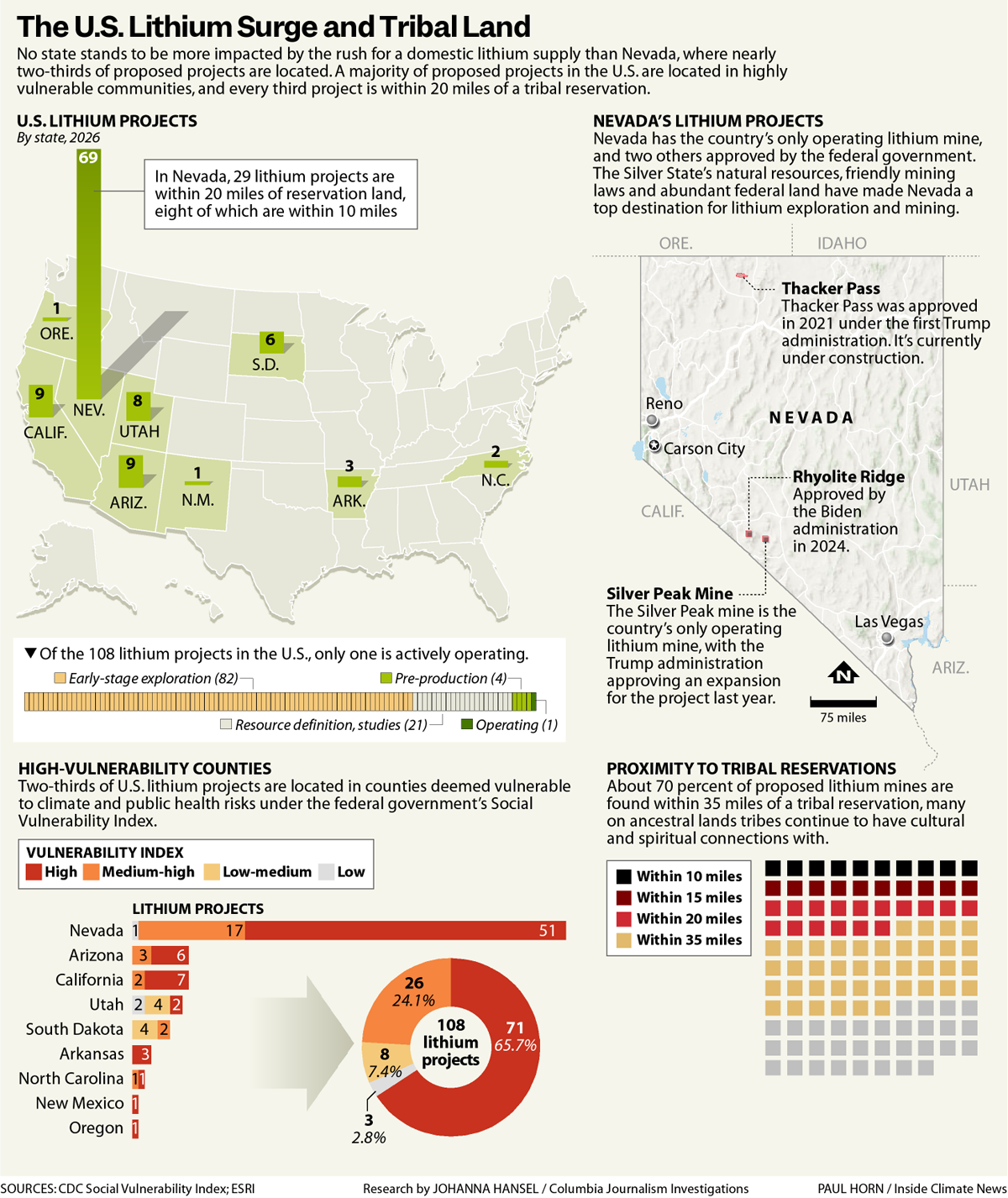
Scenes like these have played out across the country as the U.S. ramps up production of lithium—a key metal for electric vehicle batteries. By 2030, at least six new mining projects are projected to extract lithium from American soil and another 13 will soon follow—mostly in the dry Southwest. That’s a huge jump from the single one currently in operation. And it’s just a fifth of the more than 100 projects to which companies have staked claims, according to a unique database compiled by Columbia Journalism Investigations (CJI) and Inside Climate News (ICN).
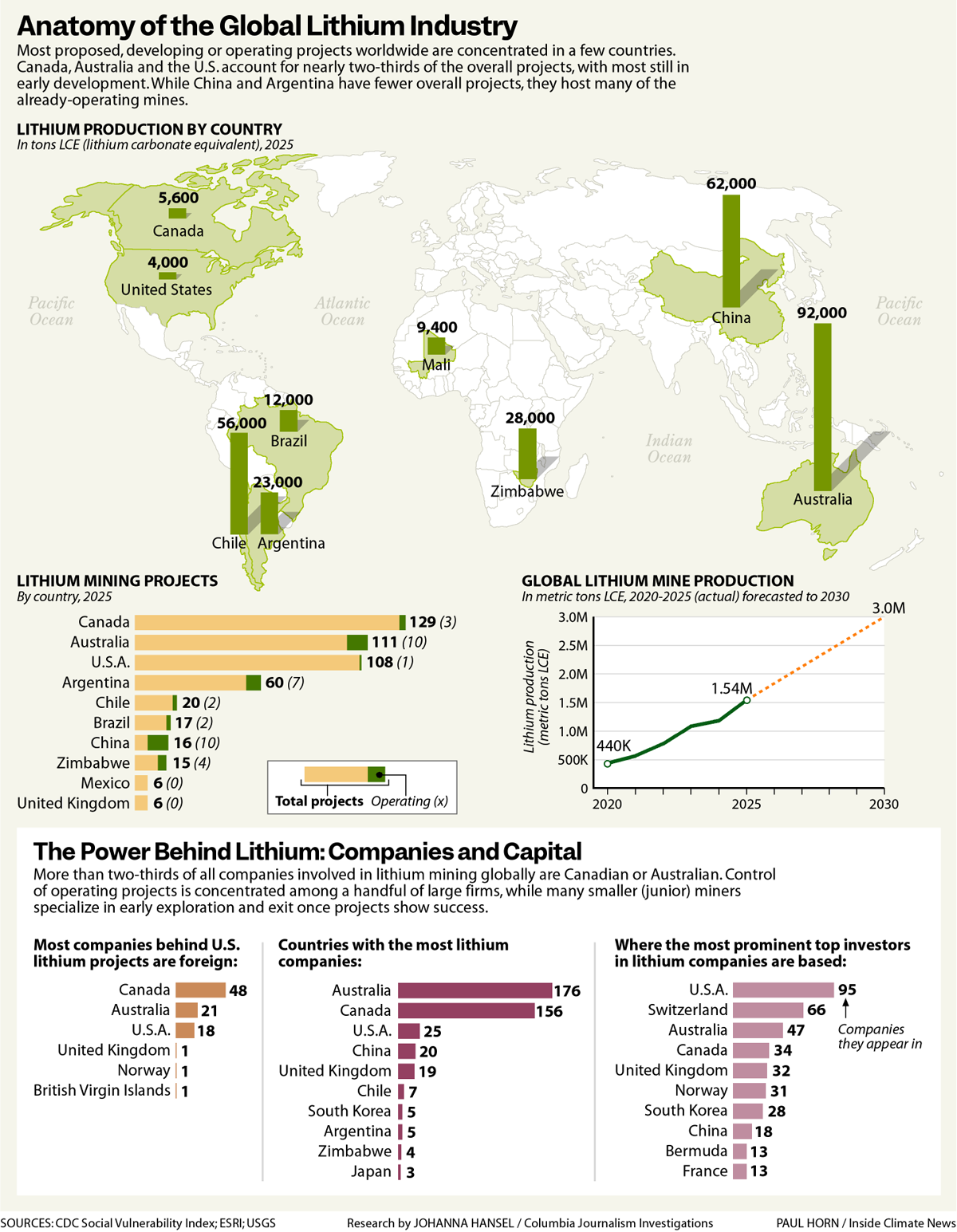
Using public records and corporate filings accessed through the financial firm S&P Global, CJI and ICN have identified roughly 540 proposed lithium mines worldwide, as well as operators and shareholders behind them. The original dataset underscores how quickly the U.S. is becoming a player in the global lithium market: An analysis of the data shows U.S. lithium’s global market share rising from less than 1 percent today to as high as 8 percent in the next five years alone.
 How We Tracked the Lithium Rush
By Johanna Hansel, Carla Samon Ros, Wyatt Myskow
How We Tracked the Lithium Rush
By Johanna Hansel, Carla Samon Ros, Wyatt Myskow
Touted as a way to strengthen U.S. energy independence, the rush for lithium gained momentum during the Biden administration. But under the banner of “Drill, Baby, Drill,” President Donald Trump has supercharged it. Records and interviews show mounting pressure on federal officials to fast-track permits and greenlight lithium projects in a fraction of the standard timeline. To push projects forward, the Trump administration has taken the unprecedented step of buying shares in lithium mines to guarantee federal loans.
On the ground, dozens of proposed mines manifest as wooden stakes marking land claims or massive drills boring into rock or brine. Yet as mining companies seek permits and lure investors, frontline communities must grapple with the fallout of the so-called “white gold.”
Socially and economically vulnerable communities are bearing the brunt of this boom, according to an analysis by CJI and ICN. The newsrooms mapped lithium mines with tribal lands and county demographic measures, such as income and race. Nearly two-thirds of all lithium projects are located in vulnerable counties—many of them places where people in poverty and people of color disproportionately live.
 Trina Lone Hill, historic preservation officer for the Oglala Lakota, wears beaded earrings passed down from her great-great-grandmother, who fought at the Battle of Little Bighorn (Greasy Grass), where Lakota and allied tribes defeated U.S. Army forces in 1876. She brings her children to the site each year to mark the anniversary and teach them that their heritage is not only defined by loss. Credit: Carla Samon Ros/CJI
Indigenous communities are hard hit: Roughly one in 10 proposed mines sits within 10 miles of a tribal reservation, even though reservations comprise 2 percent of U.S. land overall. And that doesn’t take into account the millions of acres of lost tribal territory.
Many Native Americans, like Lone Hill, fear getting caught up in yet another mineral’s development for what the extraction industry calls the “greater good,” they say. Tribes forced off ancestral territory by past mining activities say their cultural and historical sites remain at risk today. Federal regulators’ inability to protect tribal interests—coupled with an outdated mining law that lacks safeguards—has given companies near-total freedom to exploit public land, according to one 2023 government report assessing the mine-permitting process.
The combination paves the way for history to repeat itself.
“All those minerals … are right in our sacred sites,” Lone Hill said. The pattern of sidelining tribal voices and dispossession, she added, “has always been oppressive.”
Red dots show lithium projects from our dataset, including proposed, developing and operating mines. Blue dots show sites detected by an algorithm trained to identify features that resemble lithium operations. These detections can help identify discrepancies with public records or uncover unreported activity, but it’s imperfect, so use with caution. Hit the “i” button for more information about this Lithium Atlas.The U.S. Department of the Interior did not respond to multiple requests for an interview for this story, or to a list of written questions. In a statement, the department said it “is taking urgent action to strengthen America’s supply of critical minerals and domestic energy to protect national and economic security and reduce reliance on foreign sources.”
While it has streamlined permitting, the department said it will continue to comply with the law, including for environmental review and tribal consultation.
“Honoring our trust and treaty responsibilities to tribes and engaging communities early and meaningfully remain core to our mission,” the statement said.
Kate Finn, who founded the California-based nonprofit Tallgrass Institute—formerly known as First Peoples Worldwide, which works to create equitable partnerships between Indigenous peoples and the private sector—said there’s still time for federal officials to consult tribes on new lithium projects. But with so many mines in development and officials scaling back practices meant to include tribal perspectives, she believes the U.S. government is facing a critical moment in its relationship with Indigenous nations.
“There are incredible risks that are not being viewed in total,” said Finn, noting potential legal battles and other conflicts with Indigenous peoples. “To skip over those [risks] is detrimental and really shows that the green transition may not live up to its promise.”
“A Very Aggressive Schedule”The move to accelerate domestic lithium production dates to the first Trump administration. In 2017, the Interior Department ordered faster reviews of proposed projects on public land. Within three years, Interior’s Bureau of Land Management, which oversees the permitting process, reduced environmental assessments from four years to 15 months, on average, BLM told a congressional committee at the time.
“In addition to the faster review time, this reform has resulted in enhanced coordination with elected officials, tribes, other federal agencies and the public,” said William Perry Pendley, then chief of the BLM, in written testimony.
But the sole lithium mine approved by the BLM during Trump’s first term suggests otherwise. Developed by the Canadian company Lithium Americas, Thacker Pass sits near the Oregon–Nevada border. In 1865, U.S. soldiers massacred several dozen Paiute people around here. Every year, tribes gather on this land—which the Paiute call Peehee Mu’huh, or “rotten moon”—for a prayer horse ride to honor the victims.
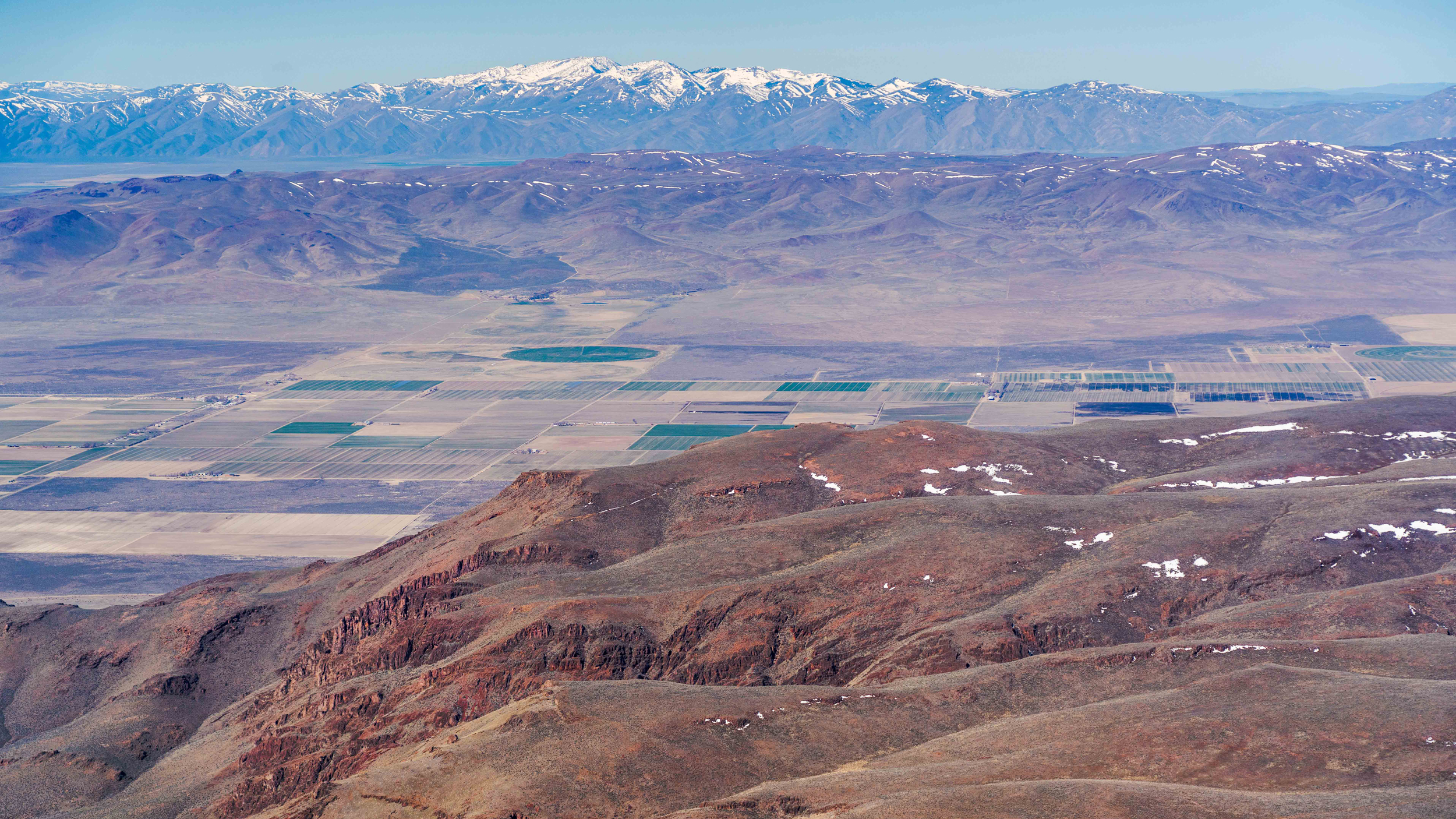 An aerial view of Thacker Pass near the Oregon–Nevada border. Credit: EcoFlight
Agency emails uncovered in a lawsuit later filed by the Reno-Sparks Indian Colony against BLM show staff scrambling to meet a one-year deadline to issue Thacker Pass a permit.
“I’m thoroughly frustrated trying to keep this process moving given the complexities of this proposal,” one employee wrote in an April 2020 email to BLM’s Nevada office, explaining a draft of the unfinished environmental study was due in a day.
Employees ended up approving the project five days before Trump left office in January 2021—at the expense of this historic tribal site, critics say.
Tribal and local parties, as well as environmental groups, sued the BLM that year, alleging the agency hadn’t properly consulted federally recognized tribes affected by the project, among other claims. A judge ruled there was “no question BLM could have done more” to contact tribes, according to a 2021 ruling, but found the agency had made a “reasonable” decision about who it should consult.
The Biden administration fueled the lithium rush further by funneling billions of public dollars into clean-energy projects—including $2.26 billion for Thacker Pass.
In a statement provided to CJI and ICN, Tim Crowley, Lithium Americas’ senior vice president for government and external affairs, notes the company “has worked extensively with the local community and tribes,” and is proud of the community benefits agreement it has signed with the Fort McDermitt Tribe.
“The Thacker Pass project complies with all applicable state and federal laws and has undergone rigorous environmental review,” Crowley said. “Any assertion to the contrary is baseless.”
Another beneficiary of this windfall was the Australian company Ioneer, which is planning a lithium mine on Nevada’s Rhyolite Ridge, home to a rare, endangered wildflower. Environmental and tribal groups have argued the Rhyolite Ridge mine—which is expected to produce enough lithium to power 370,000 electric vehicles annually—could drive the flower to extinction and threaten a spring sacred to the Western Shoshone.
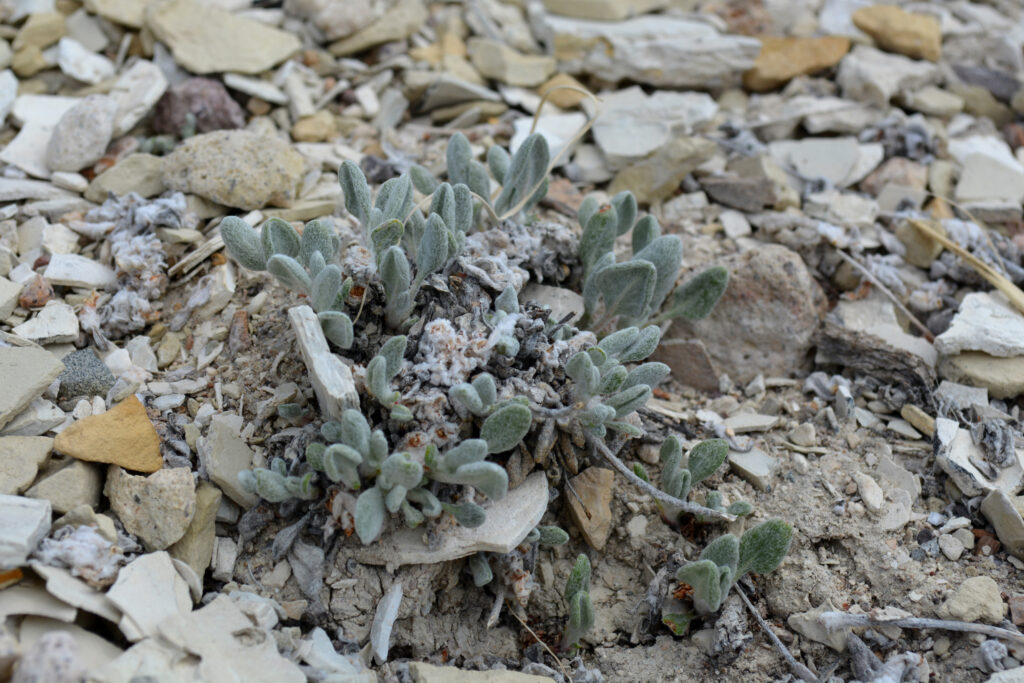 Tiehm’s buckwheat is a rare wildflower found only at the site of the proposed Rhyolite Ridge mine, thanks in part to the soil being rich in the minerals the mine seeks to extract. Credit: Wyatt Myskow/Inside Climate News
While Biden’s Interior Department replaced his predecessor’s rule on fast-tracked reviews, internal emails show BLM employees remained under pressure to advance Ioneer’s project. In a December 2023 email to Ioneer, one BLM employee noted the company’s groundwater model would have to be approved “without any edits or comments” to meet the agency’s deadline.
“This is a very aggressive schedule that deviates from other project schedules on similar projects completed recently,” the employee said.
Ten months later, BLM greenlit the Rhyolite Ridge Lithium Boron Project—the only lithium mine authorized during Biden’s presidency. In January 2025, three days before Biden left the White House, his administration gave Ioneer a $996 million loan guarantee to break ground on the mine.
The Western Shoshone Defense Project and other groups filed a 2024 lawsuit over the mine’s approval. In March, a judge upheld the BLM’s action. The Indigenous rights and environmental groups appealed.
Bernard Rowe, Ioneer’s managing director, told CJI and ICN that the volatile lithium market and funding issues have delayed the project, but it’s only a matter of time before the mine gets built. At the site, Rowe has examined the lithium-rich clay abundant in the area.
“There isn’t another lithium deposit like that that we know of anywhere in the world,” he said.
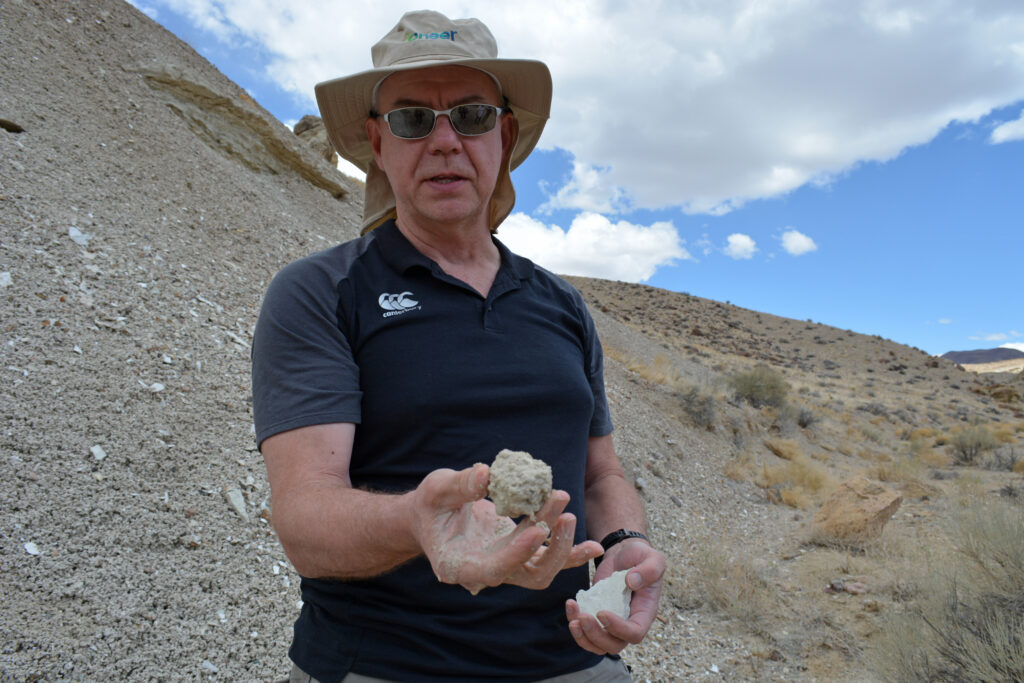
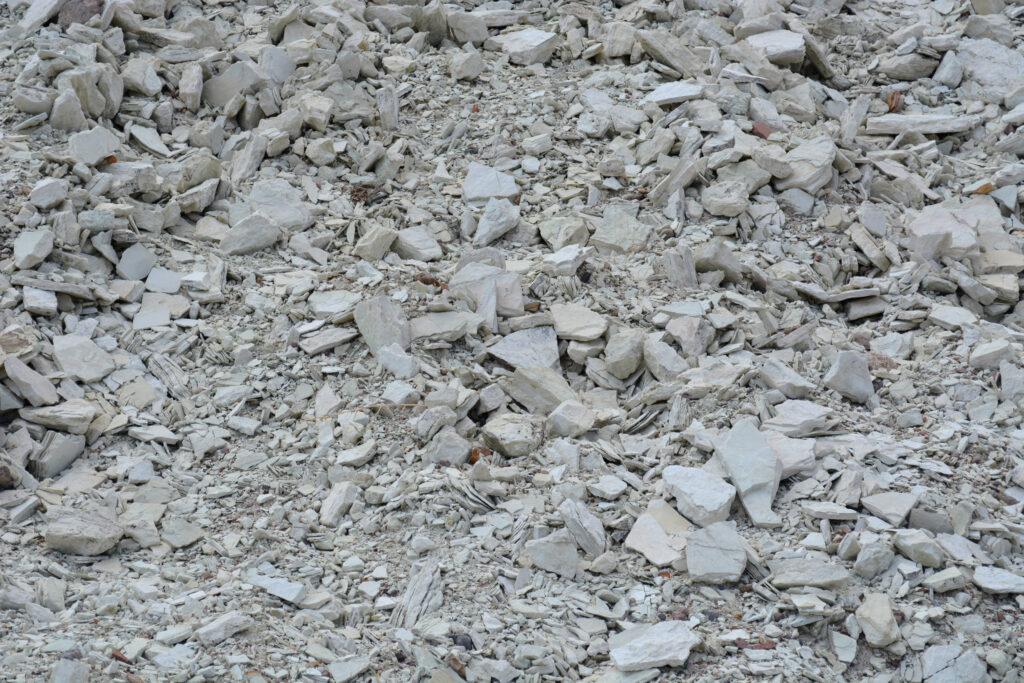
Bernard Rowe, Ioneer’s managing director, holds a piece of clay filled with lithium near the site of the Rhyolite Ridge Mine. Credit: Wyatt Myskow/Inside Climate News
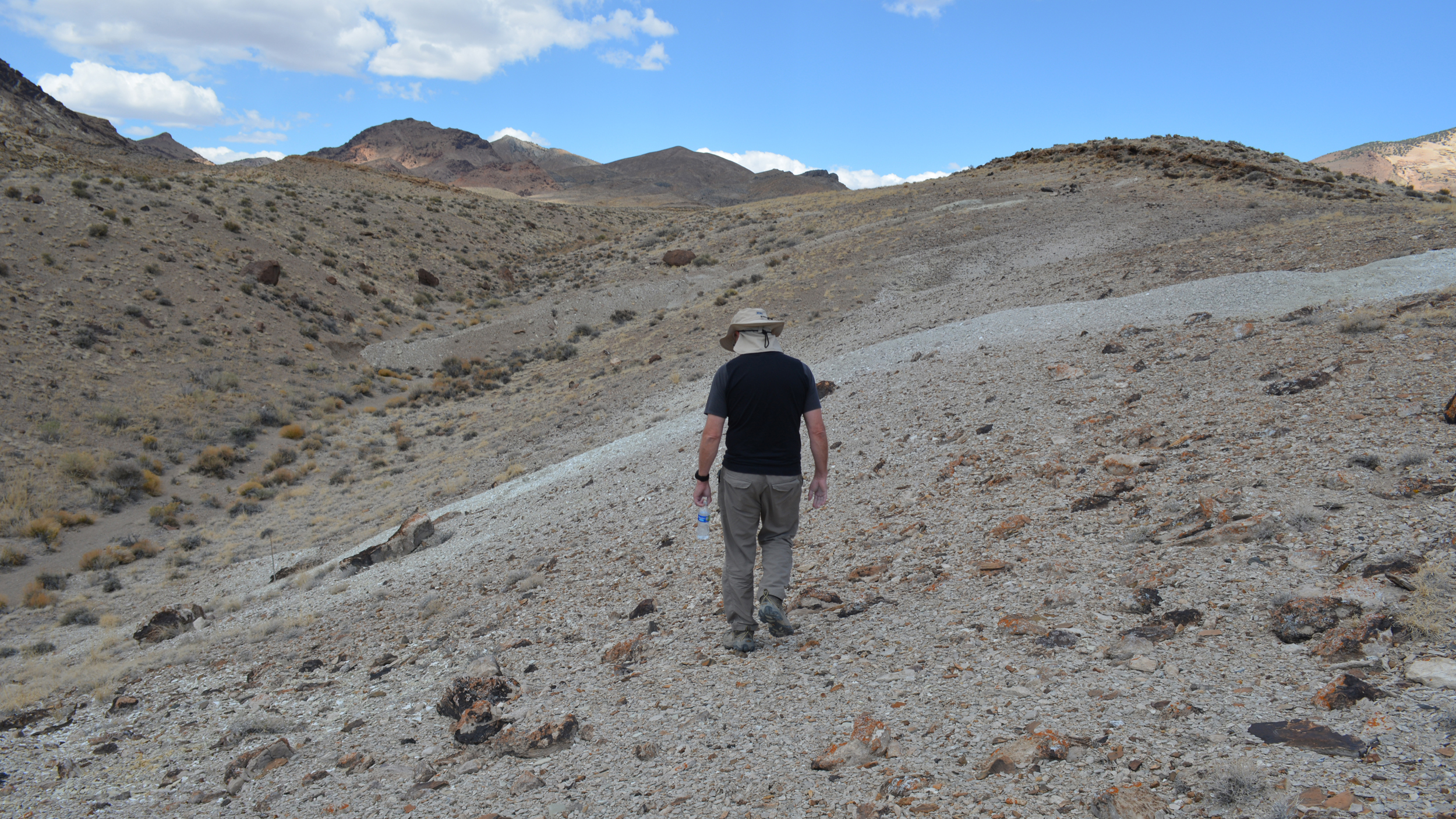 Rowe examines the site of the Rhyolite Ridge mine in an area where a rare wildflower found nowhere else in the world grows. Credit: Wyatt Myskow/Inside Climate News
Steve Feldgus, Interior’s deputy assistant secretary for land and minerals management from 2021 to 2024, said his team aimed to prevent permit approvals that later could be delayed by legal challenges.
“We wanted things to be done right,” he said. “But it’s totally possible that individual staff felt there was pressure to move faster than they wanted.”
Now more than a year into Trump’s second term, the accelerated reviews proliferate. In March 2025, the president signed an executive order to speed up permits for new lithium mines and other critical-minerals projects that can be “immediately approved.” The order makes no mention of BLM’s longstanding practice of consulting Native American tribes affected by proposed mines on public land.
One month later, Interior Secretary Doug Burgum, the former North Dakota governor and an oil industry ally, introduced a radical change: Regulators will get roughly 28 days to review and comment on projects’ environmental impacts. Indigenous tribes? Seven days to respond.
Under these guidelines, BLM announced it would give the public just five days to comment on a proposed lithium drilling site on the Oregon side of the McDermitt Caldera, a volcanic depression containing one of the world’s largest known lithium deposits and home to the Thacker Pass mine on the Nevada side. A subsidiary of the Australian mining company Jindalee Lithium, HiTech Minerals Inc., plans to drill 168 exploratory holes in this biodiverse region, affecting the same tribes as Thacker Pass. Tribal members have long hunted and gathered traditional medicines in the area.
Public outrage ultimately prompted BLM to extend the public comment period to 30 days. But by then, the agency had added Jindalee’s project to a new federal effort meant to streamline development, the Fixing America’s Surface Transportation Act, known as “FAST-41.” To date, the Trump administration has flagged nine lithium mines for the program. It approved Jindalee’s drilling in December; three environmental groups have since sued.
Jindalee CEO Ian Rodger said in a statement to CJI and ICN that the company was not aware in advance of the BLM’s decision to shorten the public comment period for the proposed drilling. Jindalee supported BLM extending the deadline, he said, and the company will join the agency in its defense of the project approval.
The project is only for exploratory drilling, not yet a full-scale mine, Rodger added. He said the company is committed to continued community and tribal consultation. In April, Jindalee’s HiTech Minerals merged with Constellation Acquisition Corp. to form US Elemental Inc. and announced plans to go public.
“It’s my backyard there,” said Myron Smart, an elder in the Fort McDermitt Paiute-Shoshone tribe who has advocated for the region’s protection. “It really bothers me. But what can I do? I’m just at the bottom of the totem pole. I don’t have no say over anything. The only thing that I rely on is my prayer.”
Despite Smart’s prayers, mining developments at nearby Thacker Pass march forward. In September, the Trump administration renegotiated the Biden-era loan with Lithium Americas, giving the U.S. Department of Energy a 5 percent stake in both company and project.
In a statement on the deal, Energy Secretary Chris Wright thanked the president for his “bold leadership.”
“American lithium production is going to skyrocket,” Wright said.
 “The Last Checkbox”
The legal framework for BLM’s permitting process dates back more than 150 years, when, following California’s Gold Rush, Congress passed the General Mining Act of 1872. The act allows American citizens and companies to stake mining claims on public land—using literal wooden stakes. Federal officials will grant exclusive mining rights to any entity if it shows the ground beneath has minerals. Established mining claims are treated much like private property—almost impossible to revoke even for conservation purposes.
“It’s like, ‘Here, go [prospect for minerals]. If you find anything, it’s all yours,’” said Feldgus, the former Interior official.
Regulators can intervene if environmental damage exceeds what’s considered “necessary” for extraction, a subjective threshold that’s rarely met. Unlike other federal laws, the act doesn’t require the U.S. government to consult with tribes about how mining might affect their health, environment and heritage on ancestral territory outside reservation boundaries, a safeguard enshrined in international law.
The BLM has issued a patchwork of policy manuals instructing staff on how to carry out the environmental reviews and limited tribal consultations required by modern laws. These policy documents stipulate that such consultations should be “meaningful,” reflect a “government-to-government relationship” and involve a “reasonable and good-faith effort” to consider tribal concerns.
In practice, the agency rarely enforces its own policies, Indigenous leaders say. Typically, tribal consultations occur too late to make a difference, if they happen at all.
“It’s insufficient,” said Finn, of the Tallgrass Institute. Better consultation would help, she said, but even more than that, “we need consent.”
At the tribal headquarters on Pine Ridge Reservation in South Dakota—home to the Lakota people, who are part of the Sioux Nation—Lone Hill serves as the key liaison between the tribe and the federal agencies. On a visit to her office last spring, her desk brimmed with documents. None involved the lithium activities occurring in the Black Hills, which are on private land located within the tribe’s ancestral territory.
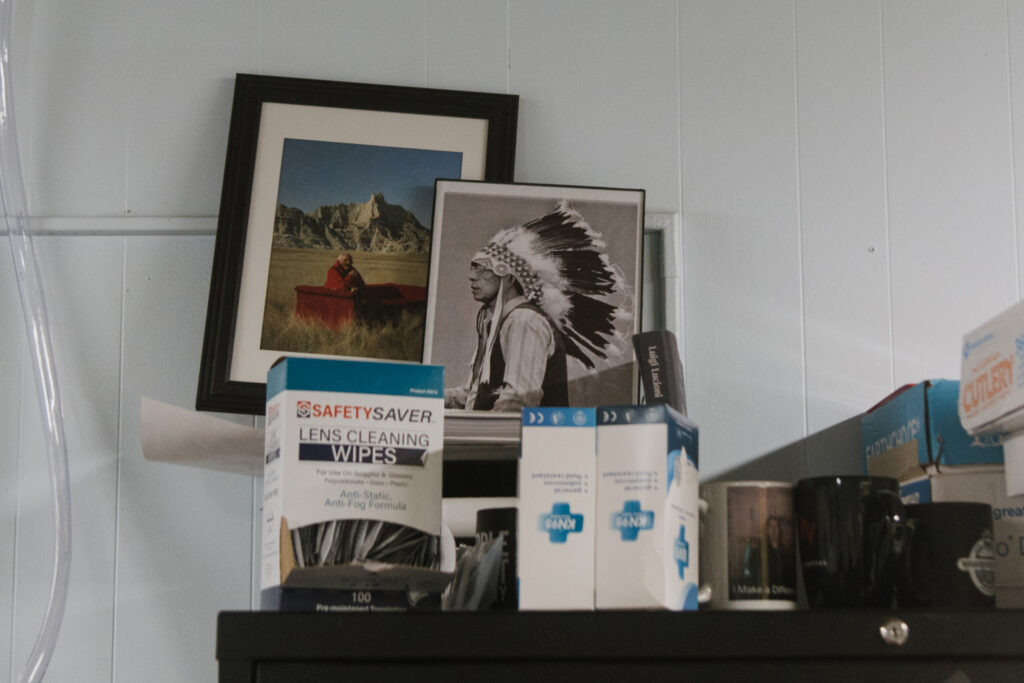 Framed photos in Trina Lone Hill’s office show her father, Mel Lone Hill, a former tribal vice-president and cultural leader, and her great-grandfather, Chief Frank Fools Crow, a prominent Lakota spiritual leader and fierce advocate for treaty rights. Credit: Carla Samon Ros/CJI
On public land, federal agencies should notify tribes about proposed lithium projects that might affect them and give tribal members at least 30 days to comment. But official notice doesn’t always arrive. And when it does, tribes may not have the resources or expertise to respond.
When Lone Hill gets a call, she said, she’s learned to remind regulators: “This [phone call] isn’t a formal consultation.” Regulators must reach out to the tribal councils to kick off the official process.
“They just want to say, ‘We sent you the notice, so you know about it …we’re done,’” said Lone Hill, who calls tribal consultation “the last checkbox.”
“It’s just all a play,” she added.
Some foreign firms have tried to change that. Take Integra Resources, a Canadian company developing a gold and silver mine on several tribes’ ancestral homeland, including the Shoshone-Paiute, in Idaho. Several years ago, Integra sought to initiate a tribal consultation much like it would have in Canada, said Mark Stockton, its vice president for external affairs and sustainability. Unable to obtain a comprehensive list of tribal contacts from the local BLM office, Integra did its own research, relying on old maps and asking tribal councils for help.
BLM employees “just don’t know, and they don’t have contacts,” Stockton said. “They don’t know who to call.”
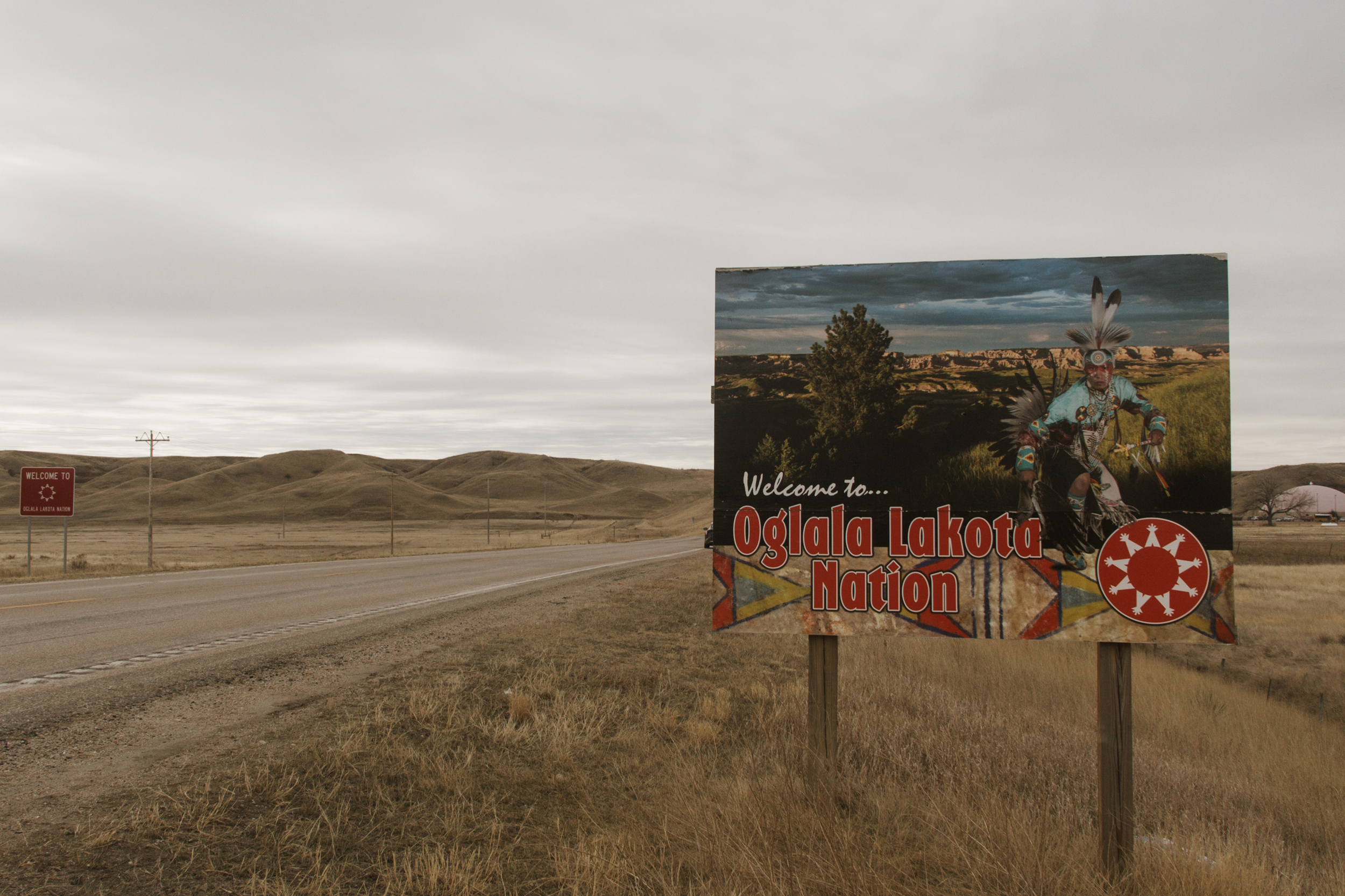 A roadside sign marks the entrance to the Oglala Lakota Nation on South Dakota’s Pine Ridge Reservation, southeast of the Black Hills. Credit: Carla Samon Ros/CJI
Despite an executive order issued in 2000 and subsequent White House directives calling for more consistent tribal consultation standards and annual training, former BLM employees note that the agency’s policy standards remain vague, with little guidance on what tribal consultations should entail. As a result, interpretations can vary among district offices; often, tribal engagement falls to staff archaeologists rather than chief administrators. A universal training standard doesn’t exist, Feldgus confirmed.
In 2022, Feldgus headed an interagency working group that examined how to improve the permitting process for mines on public land. A year later, the group released a report outlining broad reforms, such as establishing training policies and providing tribes with resources to ensure they can participate. The report concluded these efforts would fall short without a fundamental overhaul of the country’s 1872 mining act.
Feldgus said the act is “so unfathomably beneficial” to the mining industries that they “fight to the death to keep it, and they have enough supporters in Congress who really care [to preserve it].”
During his tenure, he said, the BLM worked to expand informal tribal consultations before the official permitting process started and to hire additional BLM tribal liaisons. But the agency was still recovering from the hollowing out of its workforce during the first Trump administration. The COVID-19 pandemic and complex federal hiring procedures made rebuilding harder.
The second Trump administration’s push to streamline permitting threatens to undo it all. “Now the situation is going to be that much worse,” Feldgus said.
Never Trading Land for LithiumAs lithium development accelerates, new mining claims can appear and vanish so quickly that residents struggle to keep track. In the Black Hills, longtime Custer resident Meg King monitors locations where companies drill for lithium, piecing together what information she can. The forested mountains, central to the Sioux Nation’s ancestral territory, consist of a hodgepodge of public and private land that enables exploration to remain largely hidden. As her car crept along a gravel road near the town of Custer in the southern Black Hills, she looked for the place where she’d spotted the latest drilling site.
“Down there between the trees—you can see the delivery trucks!” King said, motioning toward a clearing where snow remnants clung to the hills.
Inching toward a tangle of trees, she found a path blocked by signs that read “Private Property,” alongside others bearing the name “IRIS Metals,” an Australian lithium mining company that has turned a Custer storage unit into its field office.
 A mural on a military recruiting facility in the historic mining town of Custer, in the center of the Black Hills, features imagery that echoes and celebrates narratives of American expansion, patriotism and military power. Credit: Carla Samon Ros/CJI
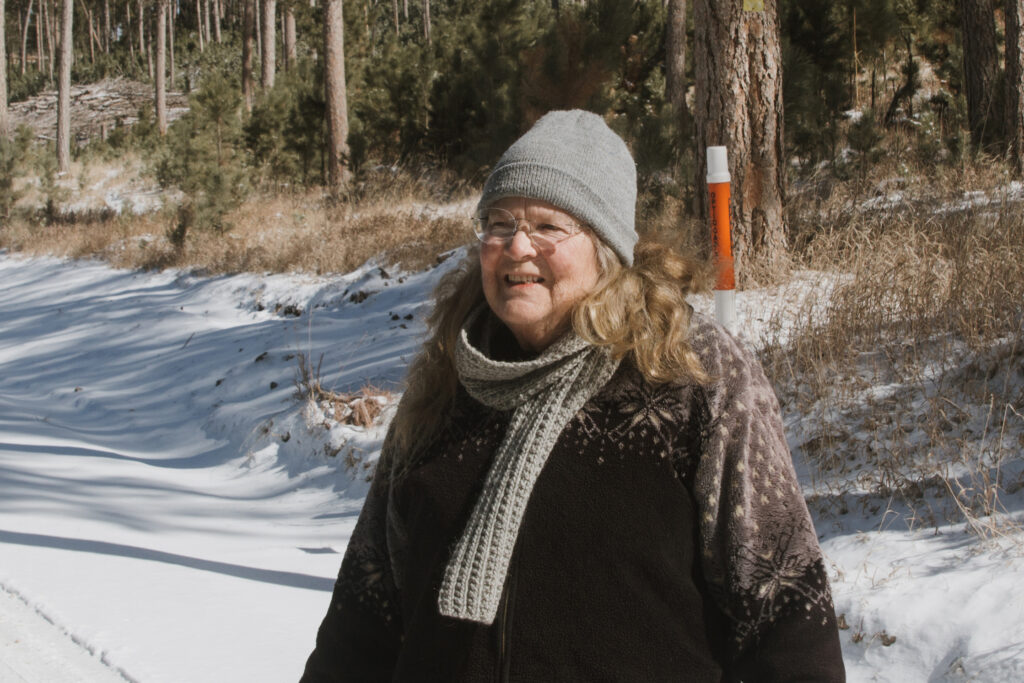 Meg King walks along a snow-covered forest road in the Black Hills of South Dakota, retracing her steps to locate a lithium exploration site. Credit: Carla Samon Ros/CJI
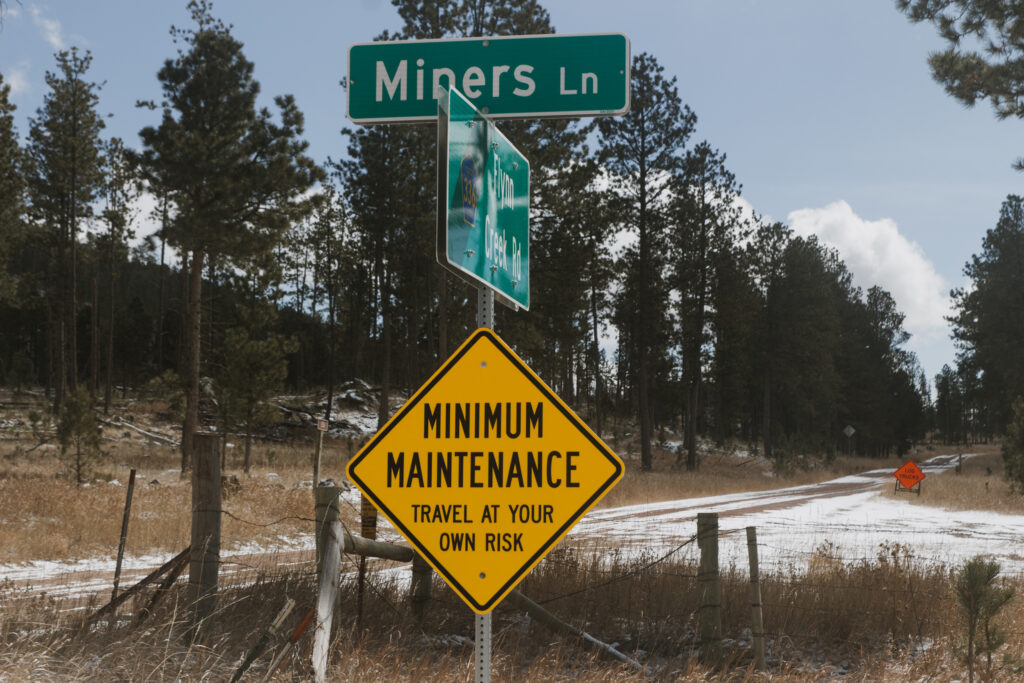 A road sign reading “Miners Ln” stands near a forest track in the Black Hills, close to a lithium exploration site. Credit: Carla Samon Ros/CJI
Understanding why this land matters to the Lakota Sioux requires confronting the history of land ownership in the Black Hills, King says. She’s learned about it through her work as a tribal lawyer and from spending time on the tribe’s Pine Ridge Reservation, immersing herself in its heritage.
From 1778 to 1871, the U.S. government signed more than 350 treaties with Native American tribes to formalize relations between sovereign nations. The treaties assigned distinct borders to tribal territory in exchange for peace, but did little to protect tribal interests once settlers moved west. Many treaties were rewritten without tribal consent. Others shattered when military troops seized tribal land, killing and displacing thousands of Indigenous people.
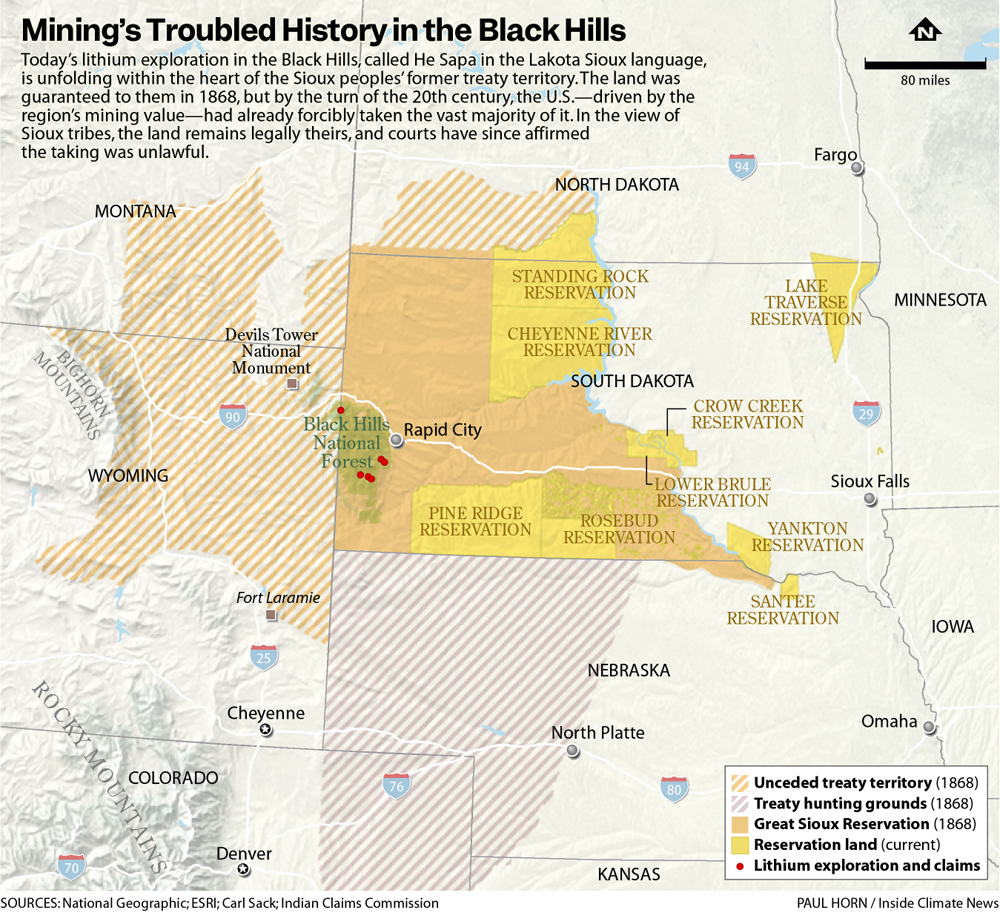
When federal officials signed the treaty with the Sioux Nation in 1868, they promised to set aside land encompassing the Black Hills for the tribe’s “absolute and undisturbed use and occupation.” But gold seekers soon trespassed on this territory; in 1875, officials tried to purchase land to settle conflicts. Lakota Sioux’s chiefs vowed to sell the Black Hills only for a price high enough to provide for their tribe’s women and children in perpetuity.
In response, U.S. soldiers stormed the Black Hills and blocked the tribe from hunting on its land. They forced starving tribal members to sign a new agreement that would nullify the Sioux Treaty of 1868. As a result, the Sioux, including the Lakota, lost roughly two-thirds of their treaty land, including the revered Black Hills.
“Once they found that gold, they didn’t care,” said Lone Hill. “They gave us those lands, and then they said, ‘We’ll take it back now.’”
Tribes lost additional territory when federal legislators passed a law dividing all reservation land into farm plots for individual Native American families. Land deemed “surplus” became a real estate free-for-all, sold or leased to white settlers, cattle ranchers and miners. Many Indigenous people, often assigned the low-quality plots, struggled to grow crops on their farms and had to sell, tribal historians explain. By 1934, Native land holdings had shrunk from 138 million acres to 48 million.
At the Indigenous-led nonprofit organization NDN Collective’s headquarters in Rapid City, South Dakota, which borders the eastern Black Hills, Lakota Sioux member Taylor Gunhammer presses for Indigenous empowerment. He notes that this chapter of American history is rarely recognized in the mythology of westward expansion.
“At a certain point, operating these mines and establishing these settlements stopped being about pure capitalism, pure greed, and it started to be about harming Indians,” he said. “The wealth accumulated from all that extraction was a self-awarded prize for harming Indians, which was at the time, and possibly still is, the most American patriotic thing.”
About 50 miles southeast of Custer—named after George Armstrong Custer, the Army general who led the first mineral expedition into Sioux territory—what remains of the tribe’s land emerges on the horizon: Pine Ridge Reservation. The 2.2 million acres stretch across open and sparsely settled grasslands, punctuated by deteriorating housing, clusters of abandoned vehicles and potholed roads. Nearly 30,000 Lakota Sioux people live here—more than half under 18, according to Lone Hill, sitting in her office flanked by portraits of her great-grandfather.
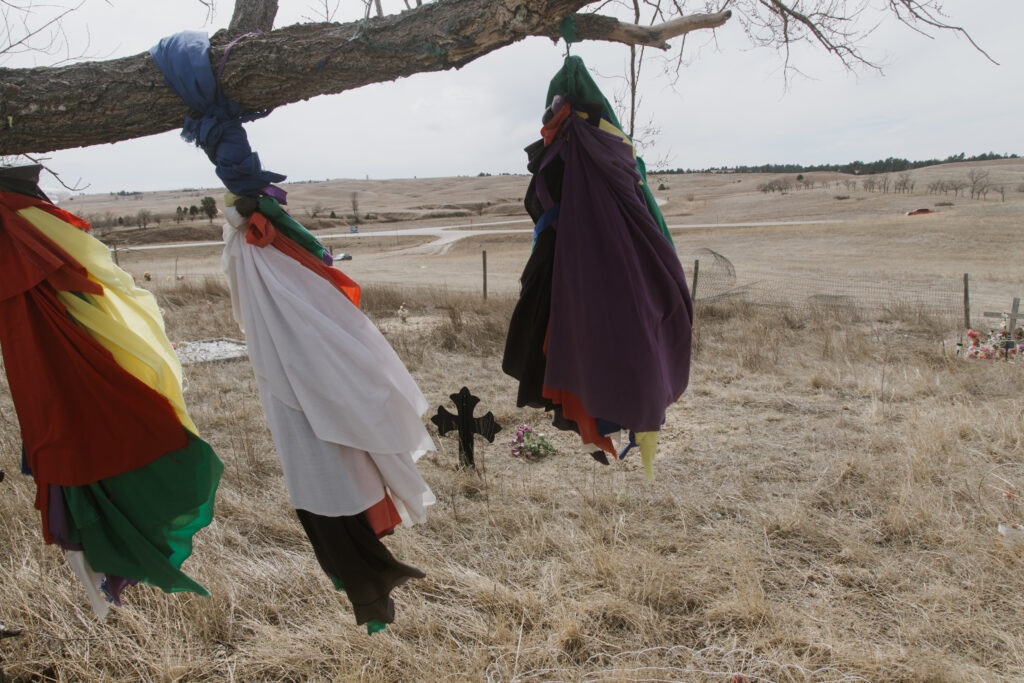 Trina Lone Hill, who has ancestors who were killed at Wounded Knee in 1890, recalls driving by the memorial site (pictured) with her 10-year-old son after he kept asking why the killings happened. “They wanted our land,” she told him. “It was politics.” Credit: Carla Samon Ros/CJI
She considers her historic preservation officer job to be a sacred responsibility, guided by her ancestors’ voices to protect their land from mining. But she says it’s hard to rally community members when daily life is shaped by poverty. According to the U.S. Census, only a third of working-age adults on the reservation are employed.
“Food, general welfare, health,” said Lone Hill, ticking off issues that loom large for tribal members. The environment often comes last, she said, because people are too busy trying to survive.
Lone Hill remembers a time when the Lakota people moved with the seasons: spring brought the tribe out of the Black Hills after sheltering in its trees all winter; summer meant traveling back to sacred sites like Devils Tower in Wyoming. Families came together on summer solstices for sun dances and spiritual renewal. The Black Hills was their “little sanctuary,” she recalled—open for hunting, fishing, prayer gatherings.
Now, because of national monument and forestry designations, tribal members say federal regulations have limited those ceremonial practices. Often, they need permits to leave traditional offerings like prayer bundles full of tobacco and herbs.
Reflecting on all that past mining has taken from the tribe without giving back, she said they would never trade their land for lithium development. “This is our tribal footprint—we’re still fighting for these lands to be left untouched.”
Other Indigenous communities share this conviction. Near Wikieup, Arizona, Brandon Siewiyumptewa, the Hualapai tribesman, worked for about a month overseeing the tribe’s sacred spring and the ranch before noticing something strange: Water stopped flowing. Eventually, the spring dried up, and the earth cracked open. The only other change he could detect? An Australian mining company had begun drilling for lithium.
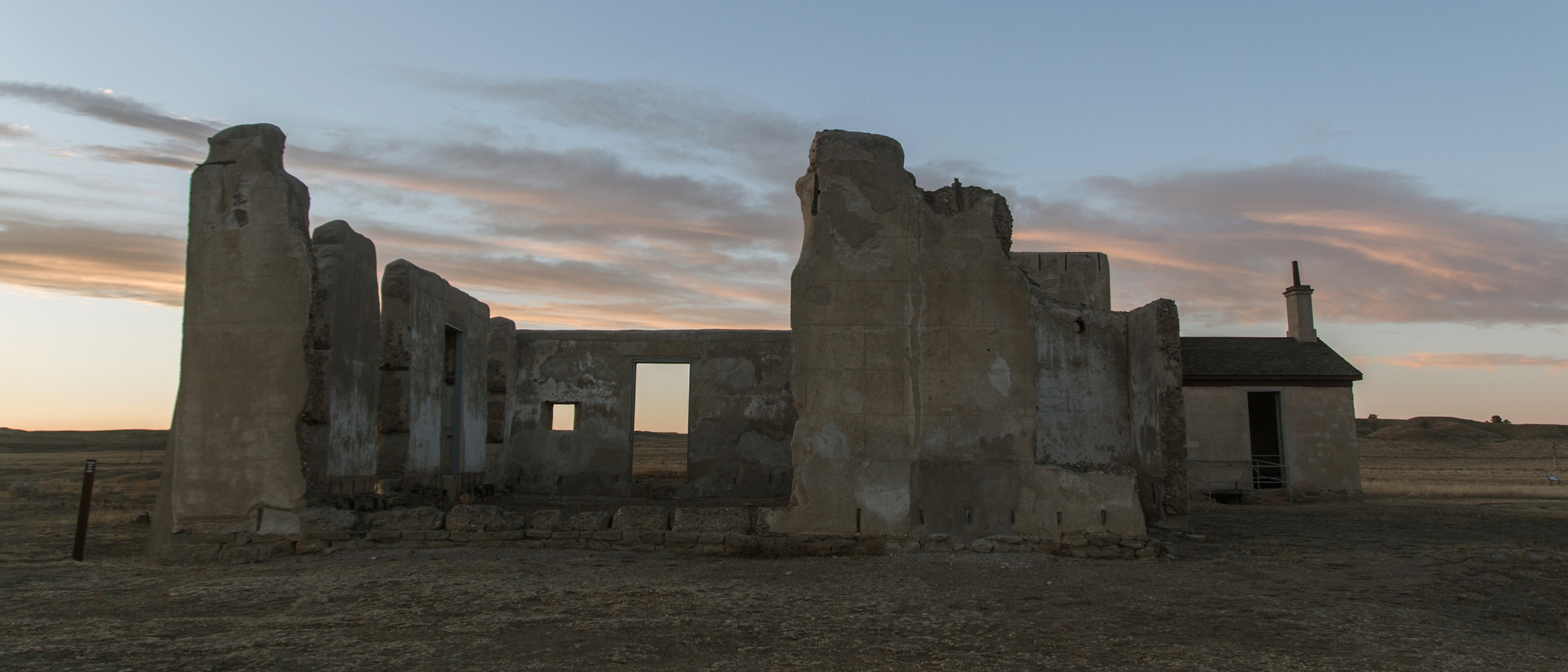 The remains of Fort Laramie in Wyoming, a key site on the frontier of U.S. expansion, where treaties with the Sioux Nation were signed in 1851 and 1868. Credit: Carla Samon Ros/CJI
For years, the Hualapai Nation warned that Arizona Lithium’s Big Sandy Lithium Project could impact their cherished spring. The tribe called attention to the site’s status as a cultural property eligible for listing on the National Register of Historic Places and hired a hydrologist to study how the drilling could affect it. An expert federal panel later urged the BLM to consider “the clear potential for effects on the Ha’Kamwe’ historic property.”
The agency approved the mining project’s third-largest drilling phase in June 2024, relying on a 24-year-old study to conclude the drilling would not harm the spring.
That same year, the tribe sued the BLM over Big Sandy’s approval and won a temporary restraining order pausing the drilling. In February 2025, Arizona Lithium rescinded its plan, returning to the drawing board.
It’s a rare win for a tribe, largely due to its location and the judge’s determination that the BLM had not properly studied the project’s impacts to groundwater and a protected historical site, said Roger Flynn, director of the legal nonprofit Western Mining Action Project, who represented the Hualapai.
This story is funded by readers like you.Our nonprofit newsroom provides award-winning climate coverage free of charge and advertising. We rely on donations from readers like you to keep going. Please donate now to support our work.
Arizona Lithium has since been purchased by the Navajo Transitional Energy Co., which owns the project. It did not respond to requests for comment.
The Hualapai continue to face threats from other mines. Ka-Voka Jackson, the tribe’s historic preservation officer, said keeping up with developments has taken much of her time—time she’d rather spend building the tribe’s language, arts and ethno-botany classes.
“We have a lot of responsibility to our people [and] the land,” Jackson said, but the barrage of mining projects “doesn’t seem to ever stop or slow down.”
U.S. Laws “Don’t Give Us Any Rights”Sioux Nation members, including the Lakota people from Pine Ridge, have spent decades in court fighting to reclaim their traditional territory. As far back as 1923, the tribe sued the federal government, arguing their treaty rights were invalidated illegally—and the U.S. Supreme Court partly agreed. In a landmark 1980 decision, the court ruled the government had violated the original Sioux Treaty of 1868 and essentially stolen tribal land.
Of the breach, a lower court—quoted in the Supreme Court’s decision—ruled that a “more ripe and rank case of dishonorable dealings will never, in all probability, be found in our history.”
But the justices stopped short of deeming the land’s seizure itself illegal and instead ordered Congress to pay about $105 million for it as “just compensation,” including interest accrued since the 1877 taking.
Lakota Sioux members have refused to accept the money. Left in a federal trust account, the award has since grown to about $2 billion.
“We want the land back. We don’t want money,” said NDN Collective’s Gunhammer.
 Taylor Gunhammer stands outside the headquarters of NDN Collective in Rapid City, S.D. Credit: Carla Samon Ros/CJI
Several Native American tribes have brought similar territorial claims in federal court, often citing the Sioux case. Some ended in financial settlements; others were dismissed or stretched into protracted legal battles. Many cases never restored tribal control over land.
In Nevada, ground zero for America’s lithium rush, Western Shoshone members, much like their Sioux counterparts, have maintained that they never ceded their ancestral land. The roughly 80 million acres stretches across multiple states in the West, encompassing the contentious Rhyolite Ridge and Thacker Pass lithium projects. Today, many of the state’s 69 proposed mines are sited in or near the tribe’s traditional territory.
Like the Sioux, the Shoshone have sued the federal government over its land loss, arguing before the U.S. Supreme Court twice—first in 1984 and again in 2007. But the court dismissed the claims. The government classified money the tribe had accepted as compensation for past damages to the land as payment for the land itself, arguing the tribe had relinquished it, said Fermina Stevens, a Western Shoshone member who heads the Western Shoshone Defense Project, a nonprofit advocating for land and treaty rights. Now, she said, tribal members fear they have little recourse to stop the adverse impacts from projects planned across their ancestral territory.
“The [American] laws don’t give us any rights,” Stevens said.
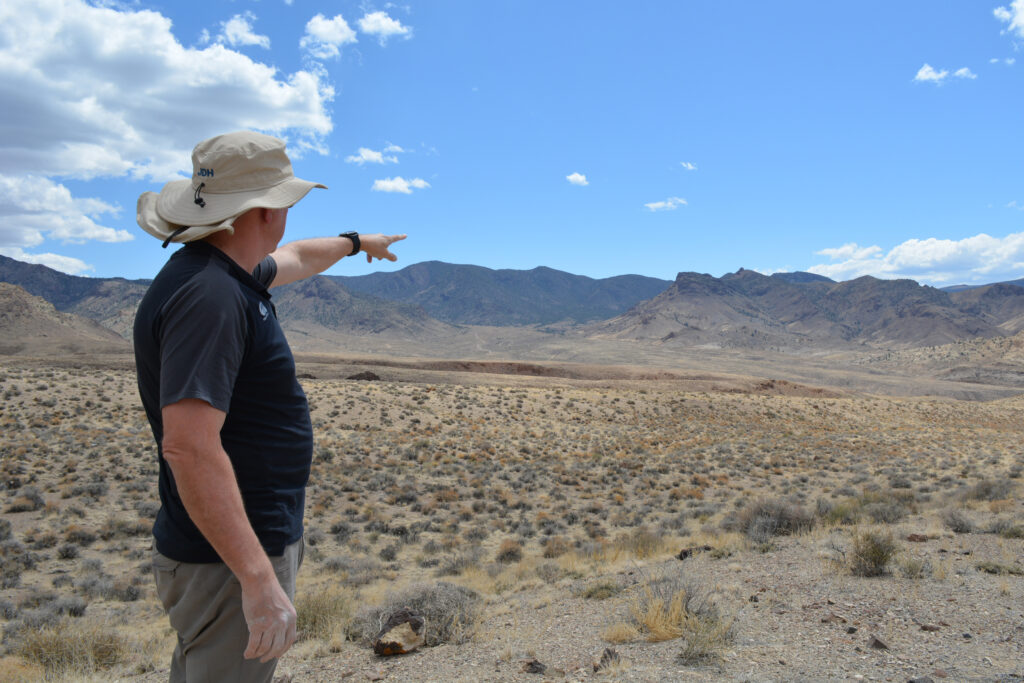
Joe Kennedy, Timbisha Shoshone tribe’s former chairman, has spent his life exploring the terrain where construction for the Rhyolite Ridge mine is scheduled to begin later this year. The 58-year-old, who has hunted and gathered pine nuts here since he was a child, has seen dramatic changes. Now, he says, much of what was once there is gone, as drought intensifies and mining companies drill in the region.
“A Convenient Legal Fiction”The Sioux Nation’s precedent-setting case involving traditional tribal territory hinges on the 1831 legal classification of Native American tribes as “domestic dependent nations,” says Akim Reinhardt, a Towson University history professor who studies Indigenous communities in North America. Rather than treat tribes as fully sovereign nations, the doctrine treats them as subject to American laws—self-governing, but ultimately under U.S. authority in a guardian-ward relationship. Reinhardt describes the classification as “a convenient legal fiction” designed by U.S. courts to justify an unequal power relationship.
Building on this, the courts have ruled over time that the U.S. holds ultimate title to tribal lands and that Congress can unilaterally change or override constitutionally recognized treaties made with tribes—unlike those between independent nations under international law.
This legal framework helps explain why the U.S. Supreme Court would recognize the Black Hills seizure as wrongful but not order it returned to the Sioux peoples. Under U.S. law, Congress can take tribal land for public use in exchange for fair compensation. The court ruled that the taking was unlawful only because it failed to pay for the land at the time. Paradoxically, U.S. law treats mining claims as highly protected property rights, which makes them more secure than an Indigenous land right recognized by treaty.
Soon after the mine installed monitoring wells in 2019, Cave Spring, a sacred site where Shoshone members gather for cultural teachings and harvest pine nuts known for their golden shells, went dry, Kennedy says.
While groundwater-monitoring wells don’t remove water, they can affect hydrologic flow. But Chad Yeftich, Ioneer’s vice president for corporate development and external affairs, said in a statement that the project is not affecting the site.
“Independently verified hydrological analysis … and the BLM’s Environmental Impact Statement conclude that the availability of water at Cave Springs is affected by the precipitation cycle in the Silver Peak Range and not by Ioneer’s past, current or future activity,” he said.
Years before the Rhyolite Ridge project was approved, international human rights bodies sided with the Western Shoshone concerning their land loss claims. In 2002, the Inter-American Commission on Human Rights, which investigates and reports on human rights abuses across North and South America, found that the U.S. government hadn’t adequately compensated the tribe for its lost property, or ensured its access to spiritually and culturally significant land. And in a warning letter four years later, a United Nations committee urged the government to cease actions taken against the Western Shoshone people.
 What the US Could Learn About Mining on Indigenous Peoples’ Ancestral Lands
By Johanna Hansel, Carla Samon Ros, Wyatt Myskow
What the US Could Learn About Mining on Indigenous Peoples’ Ancestral Lands
By Johanna Hansel, Carla Samon Ros, Wyatt Myskow
Federal officials ignored these rulings. And the U.S. government has refused to ratify international agreements meant to protect Indigenous sovereignty and rights. That includes the 2007 United Nations Declaration on the Rights of Indigenous Peoples resolution that calls on officials to obtain the “informed consent” of Indigenous communities before approving development projects that affect them directly.
“Our religion doesn’t seem to matter to the United States or these mining companies,” Kennedy said. “That’s the hurtful part: We have to witness the destruction of these areas that are important to us.”
Alysha Khambay, who researches business and human rights in energy transition projects for Amnesty International, said governments and companies alike are using the race for clean energy to sidestep due process.
“The pattern that we’re seeing,” she said, “is the creation of what we call sacrifice zones for the energy transition. And while the transition is critical in the face of the climate crisis, it can’t come at the cost of human rights.”
Fast-Tracking Could BackfireStudies and interviews with lawmakers and experts suggest that cutting down on environmental reviews or tribal consultations won’t significantly speed up the build-out of a domestic lithium industry, as Burgum has claimed. Delays come, for instance, from companies not following permitting rules and submitting incomplete information, or from swings in mineral prices that affect company financing. Bringing a mine into operation consequently takes 15 to 20 years on average, so shaving off a year during permitting can only marginally speed up the process. Instead, many experts warn that fast-tracking mines could backfire.
“Failing to involve these communities early and equitably can result in project delays, litigation or complete shutdowns,” said Tom Moerenhout of Columbia University’s Center on Global Energy Policy.
Interviews and research indicate that understaffed agencies struggling to process applications are also a key source of delays. Last year, more than 100 federal lawmakers sent a letter urging the Trump administration to reverse executive orders that would slash funding, eliminate jobs essential to tribal programs and, they warned, ultimately “undermine” tribal sovereignty, violating treaty obligations and the Constitution. The White House moved forward anyway, cutting about 11,000 Interior Department jobs as part of massive layoffs and resignations across the government.
“I don’t know if the administration really understands … [who] could be critical for some permits,” Feldgus said. “I think they lost a lot of people who can do that.”
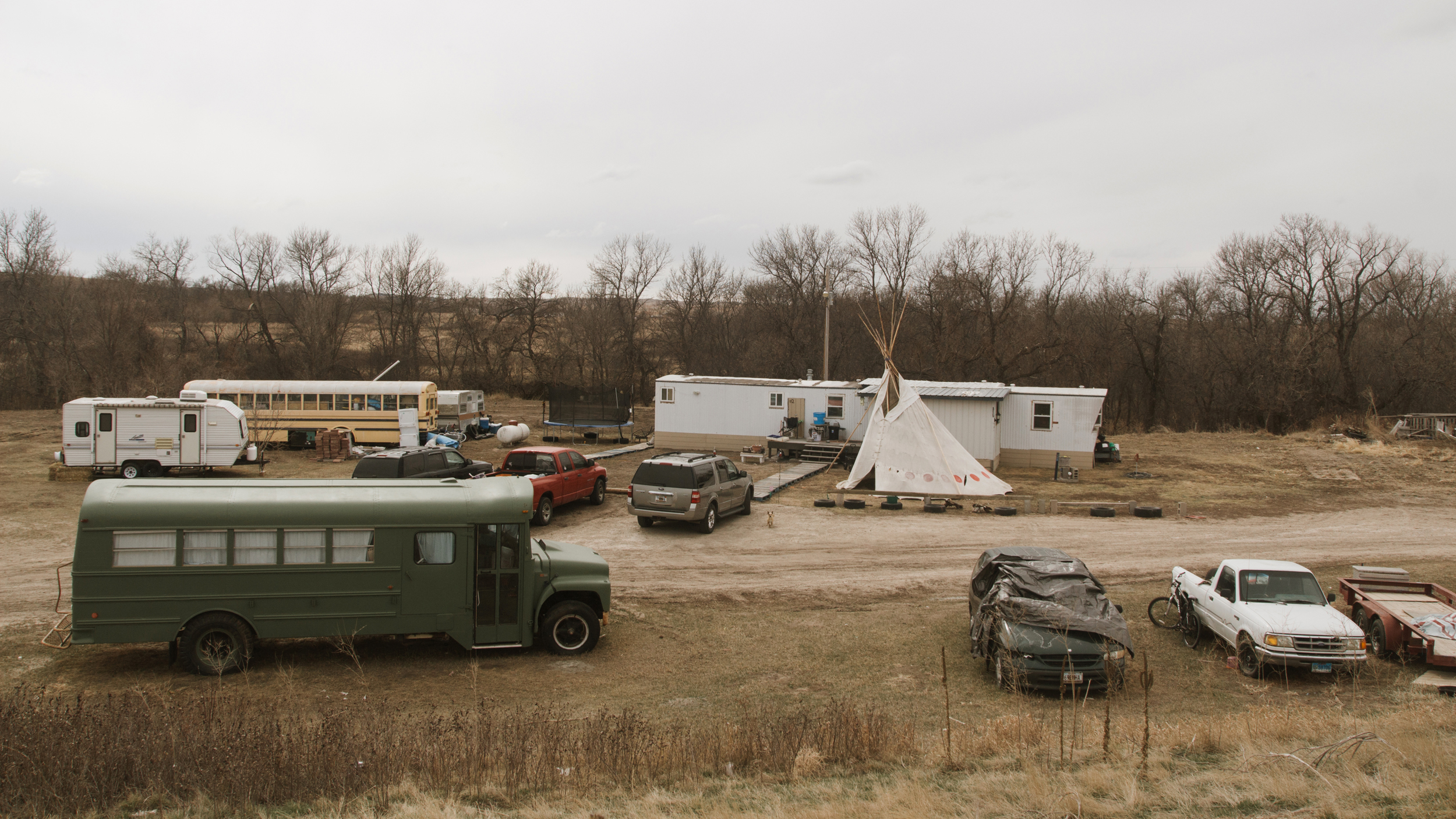 A home on the Pine Ridge Reservation in South Dakota, where a tipi stands alongside trailers and parked vehicles—a blend of tradition and modern life in a region shaped by decades of underinvestment. Credit: Carla Samon Ros/CJI
One former BLM archaeologist and tribal liaison, who asked not to be named for fear of retaliation, said he accepted the administration’s second resignation offer after burning out from trying to cover multiple roles at once amid staffing shortages, and because he saw little chance that situation would improve under Trump. While the first offer placed no restrictions on who could leave, the second wasn’t available to employees involved in the permitting process—including archaeologists. By then, he says, he had stepped into a project manager role while backfilling as an archaeologist, and officials didn’t realize he should have been ineligible to leave.
Lone Hill has seen an immediate impact. Federal employees with whom she has worked on tribal consultations have lost their jobs, sometimes in the middle of the process. One of them handed her an envelope with a promised report, she told CJI and ICN in March 2025, then was fired a few days later.
Though the price of lithium has been down in recent years, plans to mine are still moving forward in the Black Hills area. Under U.S. mining law, companies can hold claims, get their permits and wait years until the price is right to begin extraction.
Gunhammer, the NDN Collective organizer, isn’t waiting for that day to come. He and fellow activists are drafting state legislation to return all public lands in the Black Hills to tribal stewardship, which would prohibit any kind of mining.
“People [here]now understand that treaties are laws, not little poems, not suggestions,” Gunhammer said of support for the bill.
The proposed state legislation has sparked difficult conversations among the tribe. Some worry it could undermine the tribe’s claim to remaining ancestral lands beyond the Black Hills if it were to pass. Others wonder who would maintain the land if it were returned. Activists are also fighting a common narrative, pushed by mining companies, that presents the proposed lithium mines as the area’s only economic opportunity.
Lone Hill still holds out hope that the Black Hills might one day return to tribal stewardship—and that, for once, history will stop repeating itself. Her biggest dream “is for all of our tribes to come together” on summer solstice at Mato Tipila at Devils Tower “and have our annual sun dance,” referring to a rock formation sacred for many Native nations that in 1906 became the first U.S. national monument. Too often, she said, Native children grow up hearing only about the tribe’s painful past at least in part because they have lost access to places where they might learn something different.
The cycle of mining, land loss and broken promises has stolen so much, she said. And every new lithium mine, she fears, puts that dream further out of reach.
Wyatt Myskow reported this story for Inside Climate News. Johanna Hansel and Carla Samon Ros were fellows at Columbia Journalism Investigations, the investigative-reporting unit at the Columbia Journalism School. Inside Climate News and CJI provided editing, fact checking, data analysis, photography, graphic illustration and other support.
Additional support was provided by the National Press Foundation and the National Press Club Journalism Institute.
About This StoryPerhaps you noticed: This story, like all the news we publish, is free to read. That’s because Inside Climate News is a 501c3 nonprofit organization. We do not charge a subscription fee, lock our news behind a paywall, or clutter our website with ads. We make our news on climate and the environment freely available to you and anyone who wants it.
That’s not all. We also share our news for free with scores of other media organizations around the country. Many of them can’t afford to do environmental journalism of their own. We’ve built bureaus from coast to coast to report local stories, collaborate with local newsrooms and co-publish articles so that this vital work is shared as widely as possible.
Two of us launched ICN in 2007. Six years later we earned a Pulitzer Prize for National Reporting, and now we run the oldest and largest dedicated climate newsroom in the nation. We tell the story in all its complexity. We hold polluters accountable. We expose environmental injustice. We debunk misinformation. We scrutinize solutions and inspire action.
Donations from readers like you fund every aspect of what we do. If you don’t already, will you support our ongoing work, our reporting on the biggest crisis facing our planet, and help us reach even more readers in more places?
Please take a moment to make a tax-deductible donation. Every one of them makes a difference.
Thank you,