Welcome back to World Brief, where we’re looking at the collapse of Romania’s government, competing claims over the Strait of Hormuz, and Armenia shifting closer to the European Union.
Strange Bedfellows
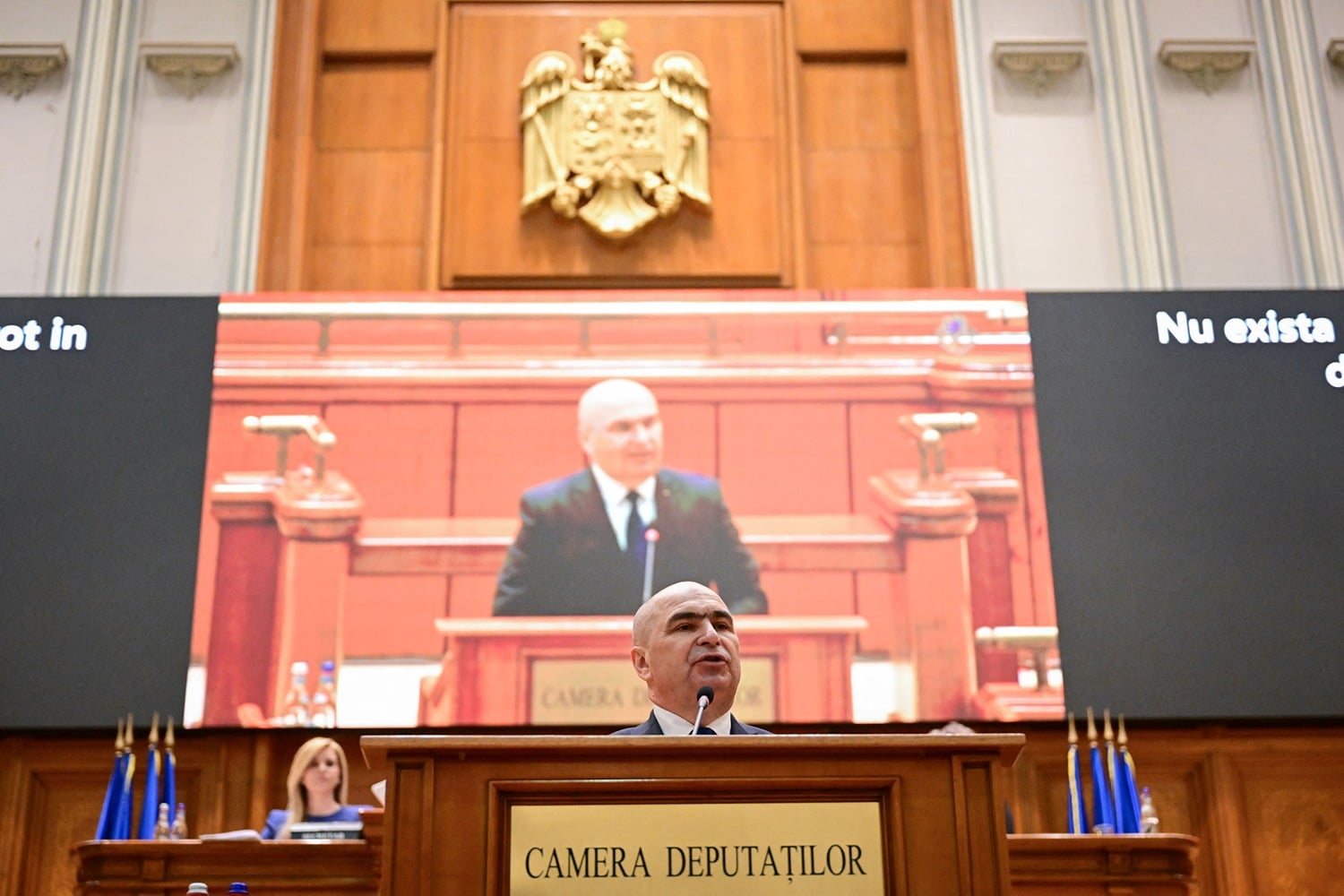
Opposing Romanian lawmakers joined together on Tuesday to oust center-right Prime Minister Ilie Bolojan in a no-confidence motion. Passed with 281 votes in favor, far above the 233 needed for his removal, the motion triggers fresh turmoil in one of Europe’s most economically vulnerable nations.
Welcome back to World Brief, where we’re looking at the collapse of Romania’s government, competing claims over the Strait of Hormuz, and Armenia shifting closer to the European Union.
Strange Bedfellows
Opposing Romanian lawmakers joined together on Tuesday to oust center-right Prime Minister Ilie Bolojan in a no-confidence motion. Passed with 281 votes in favor, far above the 233 needed for his removal, the motion triggers fresh turmoil in one of Europe’s most economically vulnerable nations.
Romania is no stranger to political instability. In December 2024, authorities annulled the country’s far-right presidential election victory, citing allegations of Russian interference and campaign fraud. Since then, Bucharest has struggled to curtail rampant inflation, one of the European Union’s highest budget deficits, and rising hard-right nationalism.
Bolojan’s four-party coalition vowed to address Romania’s deficit crisis upon taking power in June. However, one of his party’s key allies, the leftist Social Democratic Party (PSD), quickly became disenchanted with Bolojan’s unpopular austerity measures. In response, the left-wing party abandoned the coalition last month to jointly submit a no-confidence motion with the hard-right opposition Alliance for the Unity of Romanians (AUR).
Romania needs a leader who is “capable of collaboration,” the PSD argued last week, accusing Bolojan of “failing to implement any genuine reform” during his 10 months in office.
Bolojan’s party hit back, accusing the PSD and AUR of playing “political theater.” “You cannot overthrow a government and then run away from accountability,” Dan Motreanu, the secretary-general of Bolojan’s party, wrote on Facebook. Bolojan, himself, condemned the no-confidence motion as “cynical because it does not take into account the context in which we find ourselves.” And European officials condemned the unlikely PSD-AUR pairing, arguing that any leftist party that chooses to work with far-right lawmakers risks normalizing extremism.
Bolojan will stay on as interim premier with limited powers for up to 45 days, during which Romanian President Nicusor Dan must nominate a new prime minister. On Tuesday, the centrist president said that the formation of a new government will occur within a “reasonable time,” and he excluded the possibility of calling early elections. Romania’s next parliamentary elections aren’t scheduled until 2028.
Securing a new government is vital for Romania’s economic stability. Bucharest has until Aug. 31 to shrink its deficit and implement reforms to secure the release of almost 10 billion euros ($11.7 billion) in suspended EU pandemic recovery funds. But upheaval in parliament risks Romania falling short of this pledge. Ahead of Tuesday’s no-confidence vote, Romania’s leu currency fell to a record low against the euro.
“At the end of these procedures, we will have a pro-Western government—we will calmly get through this,” Dan said on Tuesday. However, the president’s desired deadline may be difficult to achieve. Bolojan’s party leaders stressed on Tuesday that they will no longer work with the PSD; Save Romania Union, a junior coalition partner, also ruled out allying with the left-wing group.
Today’s Most Read
What We’re Following
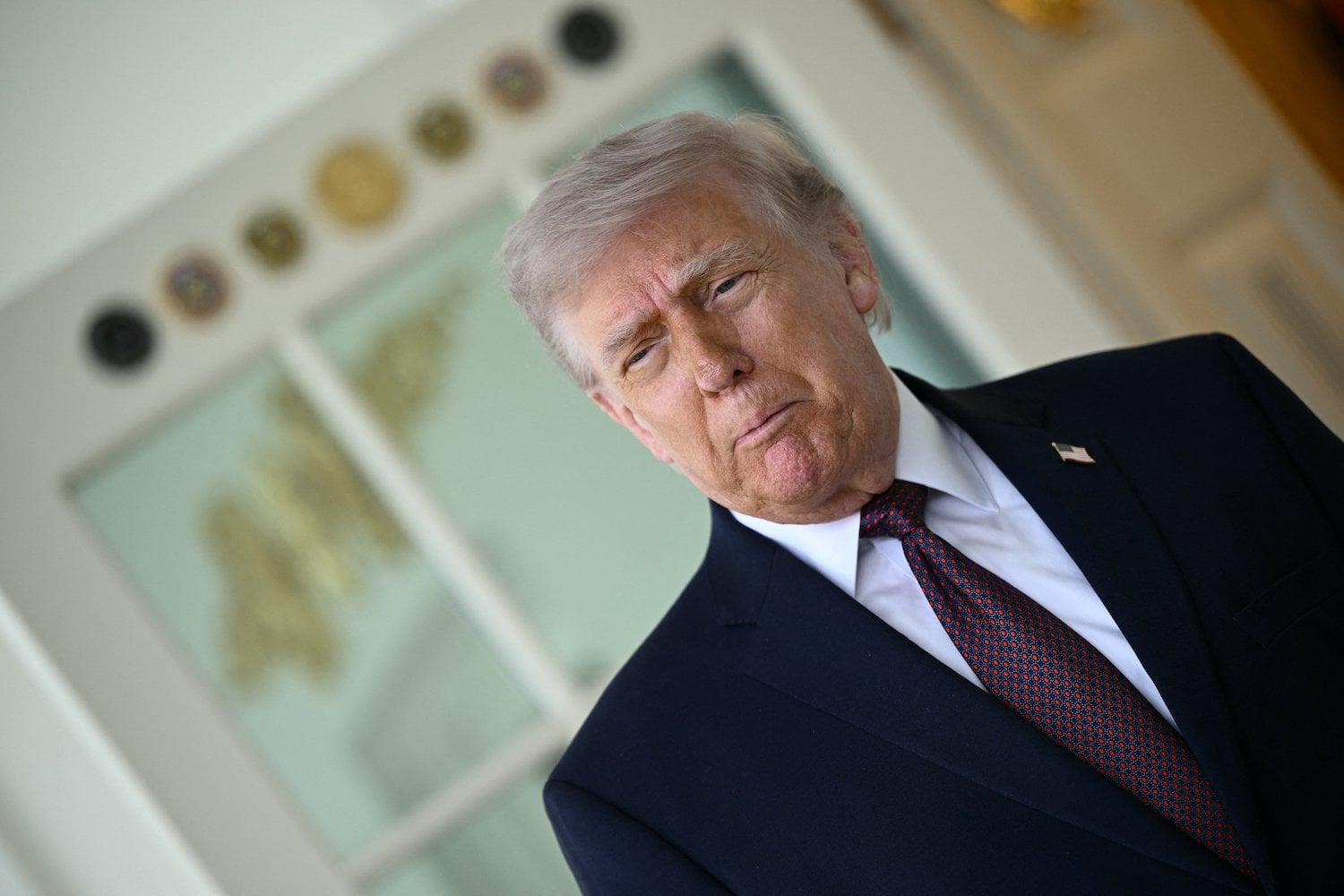
Threats to U.S.-Iran truce. The Trump administration insisted on Tuesday that the U.S.-Iran cease-fire was “not over” despite competing claims about who controls the Strait of Hormuz. Speaking to reporters on Tuesday, U.S. President Donald Trump did not specify what would count as a violation of the truce deal, saying, “Well, you’ll find out, because I’ll let you know.” However, he stressed that Iranian officials “know what to do,” and “they know what not to do, more importantly.” He also championed the U.S. blockade on Iranian ports as “amazing” while claiming that “Iran wants to make a deal.”
Yet Iranian strikes on U.S. and Emirati targets beg to differ. For a second consecutive day, Abu Dhabi accused Iranian forces on Tuesday of firing at the United Arab Emirates; Tehran did not confirm or deny these attacks. U.S. Central Command has also accused Iran of launching cruise missiles and drones at U.S. naval and commercial vessels.
Meanwhile, Iran has accused the United States of violating the cease-fire after two merchant vessels following two U.S. destroyers successfully transited the Strait of Hormuz on Monday. Since Trump’s “Project Freedom” went into effect this week, only two ships have reportedly passed through the strategic waterway; the U.S. military insists that Project Freedom is a “defensive mission” aimed at restoring freedom of navigation through Hormuz.
Shedding Russia’s influence. Armenia hosted its first bilateral summit with the European Union on Tuesday, during which the two agreed to bolster economic and security cooperation as part of Yerevan’s long-running bid to join the bloc. The meeting came one day after foreign leaders gathered in Armenia’s capital for the eighth gathering of the European Political Community, which aims to address European defense concerns.
Both conferences marked a significant diplomatic achievement for Armenia in its ongoing efforts to shed Russia’s influence and shift closer to the West. Relations between Yerevan and Moscow grew fraught in 2023, when Armenia accused Russian peacekeepers deployed to its disputed Nagorno-Karabakh region of failing to stop Azerbaijan’s lightning offensive, during which Baku seized the entire Karabakh territory. The Kremlin denied these allegations, arguing that its limited mandate prohibited it from intervening, but Russia’s ties to Armenia remained irrevocably changed.
In response, Yerevan has prioritized other friendships—to the cheers of the EU. In 2024, Armenia froze its participation in the Russia-led Collective Security Treaty Organization, and the following year, the country passed a law formally declaring its intention to seek EU membership.
“Today’s EU-Armenia summit sends a clear signal of the EU’s firm commitment to deepen our relations with Armenia, and to strengthen cooperation across many new areas,” European Council President António Costa said. In a joint statement on Tuesday, both sides announced that EU investments in Armenia are expected to hit $2.9 billion under a new infrastructure program.
Secessionist agenda. Alberta separatists secured enough signatures on Monday to trigger a referendum on the province leaving Canada. With almost 302,000 signatures, nearly double the 178,000 names needed, Alberta Premier Danielle Smith will now be forced to put the question of formal separation on a provincewide ballot as early as Oct. 19. If a “yes” vote is passed, Alberta will enter into negotiations with Canada’s federal government to discuss secession.
The oil-rich region has long pushed for independence from Canada. For years, Alberta separatists have accused Ottawa of overlooking the province’s needs, arguing that Canada’s ruling Liberal Party has prioritized pro-climate legislation over the desires of local oil and gas industries. Such concerns have popularized a separatist-backed conspiracy theory that the West is orchestrating a big-money plot to destroy Alberta’s natural resources.
Yet public opinion suggests that the majority of Albertans would vote against secession. According to local polling in February, only around 25 percent of residents would back the referendum. Meanwhile, Smith has made it clear that she does not support Alberta leaving Canada, and Indigenous groups in the province have argued that separation would violate their treaty rights.
Odds and Ends
Diet Coke has become a hot commodity across India in recent weeks, as supply chain disruptions caused by the Iran war have led to a shortage of aluminum cans. But New Delhi isn’t willing to lose the fizz that easily. Restaurants are now hosting Diet Coke parties to take advantage of the soda scarcity. For an entry fee of up to $16, attendees dressed in Diet Coke-inspired costumes can drink the beverage (oftentimes mixed with alcohol to make “Coke-tails”) while dancing to music or decorating T-shirts. “It’s a love letter to the cult of Diet Coke,” said Sankalp Kathuria, the CEO of Broadway, a brand-promotion company in India.

Comments (0)