AI promised to change everything about how enterprises work — and human-AI collaboration was supposed to be the easy part. But what happens when the technology is ready and the organization isn’t?
That context shaped the conversations at Atlassian Inc.’s annual Team event, where theCUBE’s analysts spent two days in Anaheim with the company’s product and engineering leaders. The collaboration software company used the event to announce a new product collection, launch the Teamwork Graph as an open standard, and introduce agentic capabilities across Jira, Confluence and Rovo — a coordinated push to establish the platform as the infrastructure that binds people, work and AI into a single coherent system.
The through-line across every announcement was the same: Enterprises are past the point of experimentation, and the ones that will pull ahead are those that have built the organizational foundation to make AI actually work, according to Christophe Bertrand, principal analyst at theCUBE Research.
“AI is here to stay. It is accelerating. We are now past the sandbox type of projects and now you need to make this work,” he said. “The play for Atlassian is to really provide that connective tissue between what was and what will be — between the people and AI — and really do that in a way that’s also very open.”
Bertrand, alongside theCUBE’s Alison Kosik, spoke with leaders across product, engineering, HR, design and strategy at the Atlassian Team event, during an exclusive broadcast on theCUBE, SiliconANGLE Media’s livestreaming studio. The conversations spanned everything from how Atlassian is using a Formula One team as a live blueprint for enterprise transformation, to the future of agentic Jira, to why the human resources department beat engineering to building the company’s first production AI agent. (* Disclosure below.)
Here are 15 signals from the future of human-AI collaboration:
1. For human-AI collaboration, the sandbox era is closing.
Atlassian Chief Executive Officer Mike Cannon-Brookes used the keynote to draw a sharp line between where enterprises have been and where they must go, suggesting that AI should amplify human capability without replacing human collaboration, according to Kosik. Atlassian’s platform is designed not to sanitize the chaos of transformation, but to give organizations a nervous system that can handle it, Bertrand added.
Check out theCUBE’s complete analysis.
2. AI simply can’t help if the knowledge isn’t there.
The pit wall at an F1 race is one of the highest-pressure decision environments on earth — and it turns out, it has the same knowledge management problem as every other enterprise. Atlassian is working with Williams Grand Prix Engineering Ltd. to consolidate organizational knowledge into a single repository, replacing the fragmented emails, spreadsheets and tribal knowledge that make AI effectively useless. When information isn’t documented and accessible, AI will only return generic answers without any of the context that actually matters, according to Andrew Boyagi, customer chief technology officer of Atlassian.
Watch theCUBE’s full sit-down.
3. Coding is the easy part — the other 84% is where AI has to go next.
Developers spend just 16% of their time actually writing code, meaning the real drag on productivity lives everywhere else — in misaligned requirements, scattered context and endless review cycles, according to Ming Wu, head of engineering for developer AI at Atlassian. Atlassian believes that solving that hidden majority of wasted time, through shared context and intelligent orchestration, is what separates genuine productivity gains in human-AI collaboration from just more busywork, she added.
Watch the full interview from theCUBE.
4. The biggest barrier to going AI-native isn’t the technology — it’s the people.
Enterprises in automotive, utilities and healthcare are leading the charge into AI adoption — not because of their technical readiness, but because unpredictable markets have forced them to compress planning cycles that once stretched years into months. The technology is the easy part, according to Sarah Cooper, general manager of AI native at Amazon Web Services Inc. In reality, the hard work is the people and process change that has to happen alongside it.
TheCUBE has the full exclusive.
5. Only 11% of enterprises have work linked to strategy.
Most organizations know their priorities but operate in a structural disconnect, where decisions still require someone to cook up a spreadsheet or assemble slides before a leader can answer a basic question, according to Asha Thurthi, head of Strategy Collection and strategy and business operations at Atlassian. Strategy Collection addresses what Thurthi calls the “mean time to pivot” — compressing the time it takes organizations to respond to new challenges from months down to a single day.
Dive into the full conversation on theCUBE.
6. Ready or not, everyone is becoming an orchestrator.
The individual contributor role is transforming as human-AI collaboration proliferates. Where people once worked alone, they will increasingly direct a fleet of agents to get work done, explained Alicia Lenart, vice president of HR business partners at Atlassian. Notably, hiring decisions and performance reviews remain firmly off-limits for AI at Atlassian — those are judgments that require human accountability that no model can replicate, Lenart added.
Don’t miss the full interview on theCUBE.
7. Treating AI as a thought partner changes what human-AI collaboration can actually accomplish.
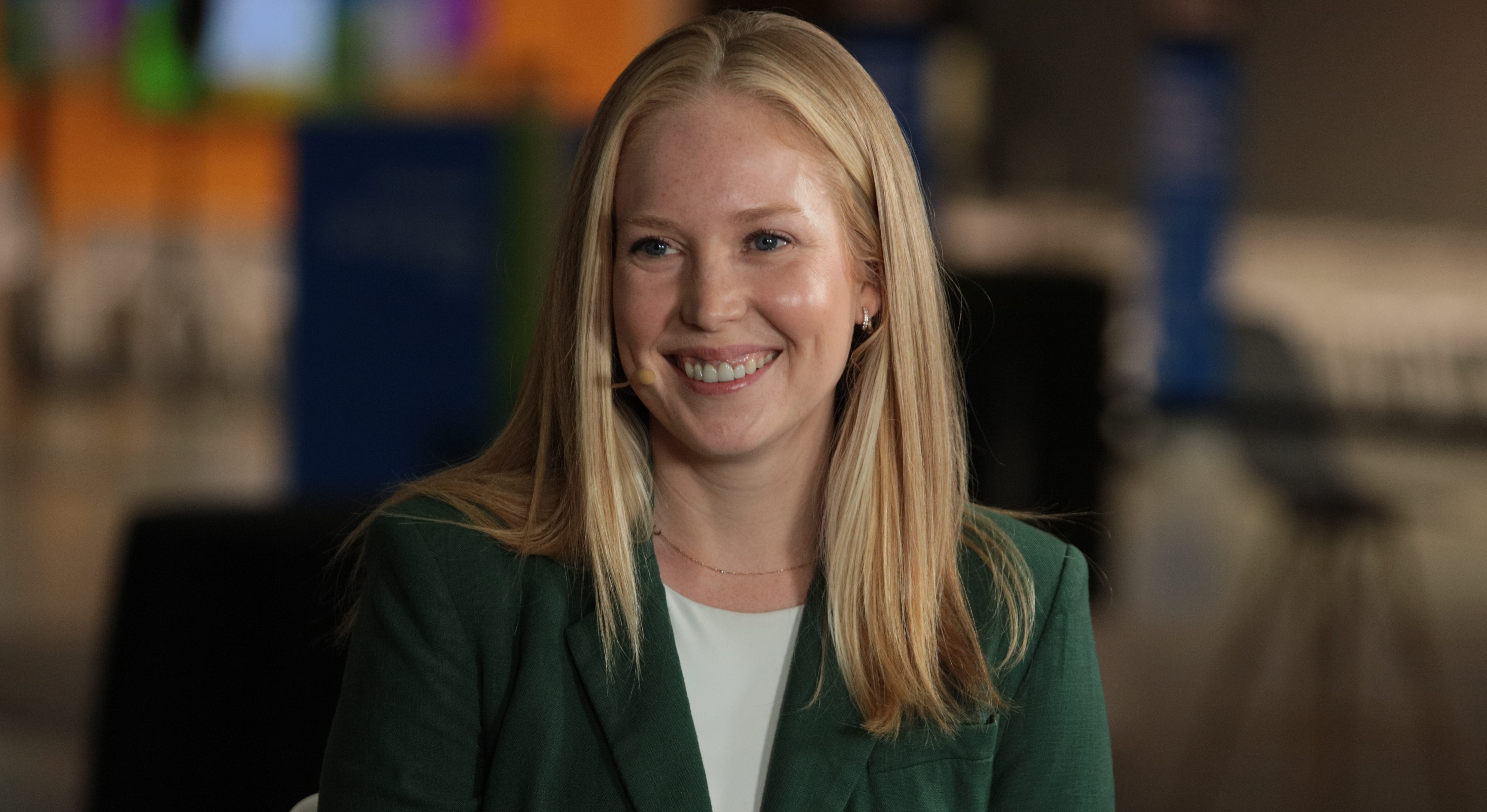
The teams seeing the most value from AI aren’t using it as a task shortcut, but as a genuine sparring partner for thinking through problems and expanding what any individual can know, explained Molly Sands (pictured), head of the Teamwork Lab at Atlassian. Getting there requires psychological safety, leaders willing to ask basic questions out loud, and a shared team approach to redesigning workflows rather than every person rebuilding their own.
Hear the complete conversation on theCUBE.
8. Gut instinct is still valid; shipping on gut instinct alone is not.
Roughly half of all product features fail regardless of how much upfront validation went into them, making the real discipline not ideation but progressive testing with real customers before appetite and investment grow, according to Tanguy Crusson, product lead for Jira Product Discovery at Atlassian. The product teams winning in an AI era are the ones treating early signals as a starting point rather than a green light.
Watch the full interview from theCUBE.
9. Jira is turning from a recording surface into an orchestration surface.
The core problem Jira has always solved hasn’t changed, but the way it solves it is undergoing the most transformative year in the product’s 25-year history, noted Dave Meyer, head of product for Jira at Atlassian. Agents are moving front and center throughout the product not as a trend, but as a direct response to how engineering teams are actually working now, he added.
Check out theCUBE’s complete interview.
10. What’s good for developers turns out to be good for AI agents too.
Good documentation, modular code and basic engineering hygiene — the things teams have neglected for years — are now directly driving better AI outputs and lower token costs, according to Justin Reock, deputy chief technology officer of DX, now an Atlassian company. A 16-month longitudinal study found a median 7.76% improvement in pull request throughput, modest gains that signal augmentation rather than replacement.
Watch the full interview from theCUBE.
11. Managing a fleet of agents is becoming its own coordination problem.
As agent invocations at Atlassian already reach 5 million a month, the challenge is shifting from deploying agents to keeping track of what they’re all doing — and Trello’s visual board structure is being positioned as the orchestration layer that keeps humans oriented, explained Gaurav Kataria, vice president of product for Trello and Loom at Atlassian. The trade-off between accuracy, speed and cost is now a deliberate decision that Rovo is designed to help teams make intelligently rather than defaulting to a single model for everything.
Catch theCUBE’s exclusive sit-down.
12. The goal of AI-powered service management is to become invisible.
The future of service operations isn’t faster ticket resolution — it’s reporting to leadership on how many issues were prevented before anyone had to file a ticket, according to MaSonya Scott, AI and service management evangelist at Atlassian. Getting there requires breaking down the silos between IT ops, security ops and development teams so AI has the full organizational context to spot patterns before they become problems.
See the full interview from theCUBE.
13. For startups, the hardest human-AI collaboration skill is knowing what not to build.
Early-stage teams consistently struggle more with deprioritization than prioritization, spreading effort across too many logical-sounding directions before nailing even one use case well enough to surprise and delight a customer, explained Philip Braddock, head of Atlassian for Startups.
Check out theCUBE’s complete interview.
14. For AI success, context is the only differentiator that matters.
When everyone can query the same intelligence, the quality of the output comes entirely from the organizational knowledge and decisions that get layered on top of it — making context the only real differentiator in human-AI collaboration at scale. That reality is exactly why Atlassian launched Teamwork Graph to let customers take their context graph to any tool they use, not just Atlassian products, explained Sherif Mansour, head of AI at Atlassian.
Watch the complete conversation on theCUBE.
15. When the floor moves up, so does the ceiling — and that’s where designers are focused.
AI has made a reasonable prototype accessible to almost anyone, but that rising baseline only raises expectations for what great looks like, pushing the craft of design toward higher specialization rather than obsolescence, noted Atlassian Chief Design Officer Charlie Sutton. The companies that will stand out are the ones observing the implicit rhythms of how people actually work, not just responding to what they explicitly ask for, he added.
Explore the full conversation on theCUBE.
Here’s the complete video playlist, part of SiliconANGLE’s and theCUBE’s coverage of the Atlassian Team event:
(* Disclosure: TheCUBE is a paid media partner for the Atlassian Team event. Neither Atlassian, the sponsor of theCUBE’s event coverage, nor other sponsors have editorial control over content on theCUBE or SiliconANGLE.)
Photo: SiliconANGLE
Support our mission to keep content open and free by engaging with theCUBE community. Join theCUBE’s Alumni Trust Network, where technology leaders connect, share intelligence and create opportunities.
15M+ viewers of theCUBE videos, powering conversations across AI, cloud, cybersecurity and more
11.4k+ theCUBE alumni — Connect with more than 11,400 tech and business leaders shaping the future through a unique trusted-based network.
About SiliconANGLE Media
SiliconANGLE Media is a recognized leader in digital media innovation, uniting breakthrough technology, strategic insights and real-time audience engagement. As the parent company of
SiliconANGLE,
theCUBE Network,
theCUBE Research,
CUBE365,
theCUBE AI and theCUBE SuperStudios — with flagship locations in Silicon Valley and the New York Stock Exchange — SiliconANGLE Media operates at the intersection of media, technology and AI.
Founded by tech visionaries John Furrier and Dave Vellante, SiliconANGLE Media has built a dynamic ecosystem of industry-leading digital media brands that reach 15+ million elite tech professionals. Our new proprietary theCUBE AI Video Cloud is breaking ground in audience interaction, leveraging theCUBEai.com neural network to help technology companies make data-driven decisions and stay at the forefront of industry conversations.







Comments (0)