Hantavirus—How It’s Different From COVID-19 And The U.S. Response
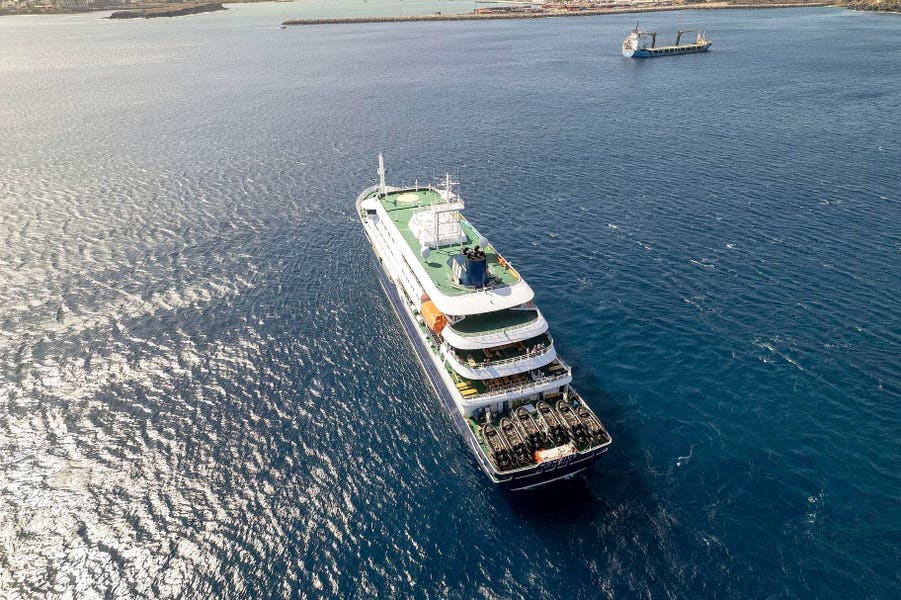
TOPSHOT - This aerial picture shows a general view of the cruise ship MV Hondius stationary off the port of Praia, the capital of Cape Verde, on May 3, 2026. An outbreak of "severe acute respiratory illness" on board a cruise ship in the Atlantic has left two people dead and a third in intensive care in Johannesburg, South Africa's health ministry told AFP on May 3, 2026.The outbreak occurred on the MV Hondius, travelling from Ushuaia in Argentina to Cape Verde. The patient being treated in Johannesburg tested positive for a hantavirus, a family of viruses that can cause hemorrhagic fever, South African spokesperson Foster Mohale said. (Photo by AFP via Getty Images)AFP via Getty ImagesA hantavirus outbreak from a cruise ship in the Atlantic ocean has already resulted in three deaths, with eight cases identified (five confirmed and three suspected). This outbreak continues to make headlines given the deadly nature of the disease as well as its rarity. The current strain responsible for the outbreak, known as the Andes strain, is rare and is the only type of hantavirus known to spread person-to-person. The majority of hantavirus cases occur through direct contact with infected rodents and do not spread person-to-person.The World Health Organization has been coordinating a global response to help contain the virus and minimize risk. The risk to the global population from this outbreak is low, according to the World Health Organization. Current State Of PassengersMore than 100 passengers who are currently on the ship will disembark this weekend in the Canary Islands and will be medically assessed. They will be tested and monitored for symptoms, and some may need to isolate and quarantine depending on if they have symptoms. The U.S. passengers will be evacuated on a U.S. government flight coordinated by the State Department and transported to a quarantine center in Nebraska for further testing and possible isolation. More than two dozen passengers already disembarked on the island of Saint Helena on April 24, and then traveled to a dozen different countries, including several passengers to the United States. Within the U.S., several state departments are helping monitor the patients to track symptoms and whether the passengers will need further medical care. Some of this monitoring is through self-monitoring from the passengers themselves.How Hantavirus Differs From COVID-19COVID-19 resulted in a pandemic, which caused worldwide spread of a new disease to a large number of people. This occurred because it was extremely transmissible, as it was an airborne illness where the virus spread through tiny aerosol particles that could travel across rooms and ventilation systems. Hantavirus, on the other hand, spreads only through prolonged, sustained contact and cannot spread as effectively and efficiently as COVID-19, making it much less transmissible.In addition, there is no evidence currently to suggest that the Andes variant of the Hantavirus can mutate or change rapidly to evade the immune system, which gives it much less potential to cause a pandemic. COVID-19, on the other hand, was able to mutate and change rapidly allowing it to infect human cells much more efficiently. Finally, COVID-19 was a novel virus in 2020 and humans did not have a high level of immunity to the virus, allowing for rapid infection and spread. The Andes variant of hantavirus has been around since 1995, allowing for some level of immunity among the broad global population. The U.S. Response To HantavirusThe United States has plans in place to send all remaining U.S passengers on board the cruise to Nebraska to a quarantine center. The CDC, on X, posted, “Dr. Jay Bhattacharya: I want to assure the American public that CDC is diligently working to keep you safe and informed about #Hantavirus. We continue to work with international partners and have delivered guidance to impacted states regarding returning passengers. Additionally, CDC held a call with all 50 state health officials to provide recommendations and ensure preparedness”.Despite the coordinated efforts from the CDC and the federal government, no major press briefing or press conference has occurred to educate and inform the general public about the hantavirus and what to expect for the Americans that will eventually come to Nebraska. In addition, just last month, all full-time federal employees tasked with preventing and responding to public health outbreaks on cruise ships were laid off by the department of Health and Human Services, leaving just 12 employees to handle all ship inspections. The United States also withdrew officially from the World Health Organization earlier this year, resulting in less visibility and influence in coordinating global health issues.Public health depends on international coordination, as well as investments in science, technology and innovation. If the COVID-19 pandemic taught us anything, it is that trust and transparent communication is absolutely necessary for people to make the most informed decisions about their health and well-being.






Comments (0)