
Remember me
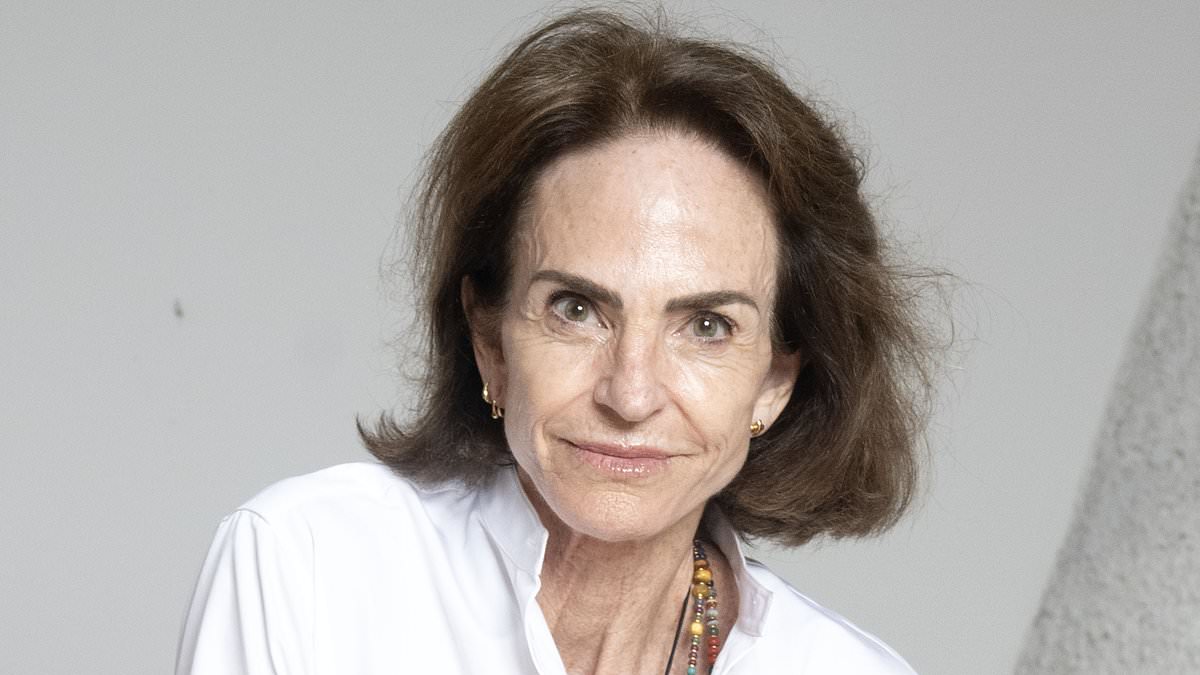



You wouldn't guess, watching Sandy Hill and her companion Domino, a Jack Russell, wander the dusty footpaths of their pomegranate farm in rural Ibiza, that she was once one of New York's great movers and shakers.
Back in the 1990s, when Hill worked at Vogue magazine and was married to Bob Pittman, the ultra-wealthy founder of MTV, she was hailed by USA Today as 'a fashion editor and cable TV executive who looks like a model and talks like a downhill racer'.
Sandy and Bob were fast-living friends with everyone from the Clintons to Martha Stewart to Bob Geldof, for whom they produced the US version of Fashion Aid, a catwalk spin-off of Live Aid which raised millions of dollars for famine relief.
In 1990, when Sandy was 35, they graced the cover of New York magazine under the headline, The Couple of the Minute.
Dubbed a 'princess of Manhattan' by The Times, which credited her with 'the looks of Jackie Onassis', Sandy wasn't just famed for her red-carpet existence – she was perhaps the world's most talked-about amateur mountaineer.
As a keen outdoorswoman, who'd grown up in rural California, she would frequently leave her luxury 29th floor apartment overlooking Central Park to mount high-profile expeditions.
They culminated in a bid to conquer the highest peak on each of the world's continents, a challenge known as the 'Seven Summits'.
On May 10, 1996, she finally completed that lifelong dream, by reaching the top of Mount Everest.

Low profile: Mountaineer Sandy Hill now leads a quiet life in Ibiza - but she was once one of New York's great movers and shakers

Sandy and her team reached the top of Mount Everest on May 10, 1996

Mount Everest's official height is 29,031.7 feet above sea level, the highest point on Earth
The achievement, which Sandy had been contracted to write about for Vogue and for the broadcaster NBC, as well as via a book for which she'd negotiated a hefty advance, would in theory have cemented her lofty social status.
Before leaving New York, she had hosted a farewell bash at the modish nightclub Nell's at which guests included Bianca Jagger and Calvin Klein.
To the delight of photographers, she showed up wearing mountaineering garb over her cocktail dress, complete with boots, crampons and an ice axe.
Yet when Sandy returned from the Himalayas she did not receive a hero's welcome. Quite the opposite, in fact.
'My life was ravaged,' is how she puts it today. 'I lost my job . . . Professionally I was trashed. Socially, I was ostracised.'
In the months that followed, her marriage collapsed, friendships fractured and she was doorstepped by hostile TV crews. NBC failed to pay her and the book was never written (she handed back the advance).
Eventually, she fled New York.
To blame was one of the most notorious disasters in the history of mountaineering.
It occurred when an intense storm blew in while Sandy and her fellow climbers were attempting to descend from the 'Roof of the World', leaving many of them stranded in the open.
The wind reached hurricane force and temperatures dropped to minus 40. Visibility was so poor that Sandy compares it to being 'in a whirlpool of milk'.
Eight climbers died, including Sandy's team leader, Scott Fischer.
As the (then) deadliest day in Everest's history, it prompted significant public debate about the alleged over-commercialisation of the 29,028 ft summit.
Critics argued that amateur climbers, such as Sandy, were endangering themselves and others by attempting to conquer the peak.
All of which brings us to a freelance journalist named Jon Krakauer. He had also climbed Everest on May 10, and would become by far the noisiest of those critics. What's more, he was particularly scornful of Sandy.
After giving various interviews and writing a lengthy magazine article about the tragedy, he published a book titled Into Thin Air.

Pictured: Sandy camping out while on her way up Mount Everest

The 1996 Mount Everest disaster saw eight climbers caught in a blizzard and die on Mount Everest while attempting to descend from the summit i(Pictured: Sandy on Mount Everest)

Sandy became 34th woman to reach the Mount Everest summit and the second American woman to climb the Seven Summits.
It became a huge bestseller, shifting four million copies and inspiring two films – 1997's Death On Everest and 2015's Everest, starring Jake Gyllenhaal.
'The print media went berserk,' is how the American Alpine Journal described its reception.
Krakauer had written 'the perfect story . . . Practically every major magazine featured the Everest story on its cover . . . Not an airplane or terminal in America lacked someone engrossed in the book.'
Today, on the eve of the 30th anniversary of the tragedy, Into Thin Air remains a popular literary phenomenon.
A special anniversary documentary, by the team behind the 2018 rock climbing film Free Solo, is currently in the works, and believed to be coming to Netflix soon. Sandy was recently asked to co-produce it, alongside Krakauer, but politely declined.
It's not hard to understand why. For his book cast Sandy (whose married surname was Pittman) as Everest's equivalent of a pantomime villain.
'Pittman epitomised all that was reprehensible about . . . the debasement of the world's highest mountain,' is how Krakauer introduces her in Into Thin Air.
'Insulated by her money, a staff of attendants and unwavering self-absorption, Pittman was heedless of the resentment and scorn she inspired in others.'
His account continues in this vein for more than 300 pages.
It brands the 'millionaire socialite-come-climber' arrogant and aloof, claiming she paid a team of Sherpas (the Nepalese guides) to carry various unnecessary items into the Himalayas for her, including a coffee machine (with beans from her favourite New York restaurant), plus 'a stack of Press clippings about herself to be handed out to the other denizens of Base Camp'.
While the Sandy Hill I met this week was warm and hospitable, the version who features in Into Thin Air was the exact opposite.
'A great many people were offended by her ostentatious displays of wealth and by the shameless way she chased the limelight,' Krakauer claims.
She is portrayed not as the experienced conqueror of all of the 'seven summits' but as a weak and incompetent woman who required extraordinary levels of help to conquer Everest. This, the book suggests, came at a terrible cost.
As 33 people attempted to negotiate the narrow route to the summit that day, the book blames her for contributing to traffic jams and other delays which meant fellow climbers ended up being caught in the open during the subsequent storm.
To put things another way, Krakauer comes close to suggesting Sandy had blood on her hands.
After the book was published, the New York magazine, Salon, went so far as to blame Sandy 'for killing all those people on Everest'.
It added: 'Even Pittman's friends who weren't on the trip have been keeping their distance.'
Perhaps Krakauer's most damaging (and certainly most widely repeated) claim, comes in a chapter alleging that Sandy spent 'five or six hours' of her final ascent being effectively dragged up the mountain on a three-foot piece of rope by a 'much smaller' Sherpa named Lopsang.

Pictured: Sandy and her team while climbing up Mount Everest

Pictured: Sandy and Anatoli Boukreev on Mount Everest in 1996
'The Sherpa, not wearing an oxygen mask, huffing loudly, was hauling his partner up the slope like a horse pulling a plough,' he writes.
'The arrangement – a technique for assisting a weak or injured climber known as short-roping – appeared hazardous and extremely uncomfortable for both parties.'
It also prevented Lopsang from fixing climbing ropes to a different section of the final climb, Krakauer writes.
This alleged episode has entered mountaineering folklore, with the 1997 movie showing Sandy, played by Pamela Gien, screaming: 'I don't want to die!' at Lopsang.
In the 2015 film, in which she is portrayed by British actress Vanessa Kirby, she throws a tantrum when it's gently suggested she should abandon the summit push to avoid delaying fellow climbers.
'I'm not going down,' she barks, her eyes flashing angrily.
Yet there is a big problem. For in an exclusive interview with the Daily Mail, Sandy today makes an extraordinary claim: the entire 'short-roping' incident never actually occurred.
The whole account was 'completely untrue' and a product of Jon Krakauer's febrile imagination, she tells me.
What actually happened on that day in 1996 was that Lopsang temporarily affixed himself to her via a longer rope, which was used as a 'belay', a common safety arrangement which involves two climbers attaching themselves to each other in case one falls.
'There was no tension on the rope ever, and I certainly wasn't being pulled like a horse behind a plough,' says Sandy.
'The cord was six to seven feet long, a courteous distance, not the three feet he claims. I wasn't being assisted. And the whole arrangement only happened for an hour and a half, not the six hours that he says.'
Sandy also points out that it would be physically impossible for any climber to effectively carry another uphill any significant distance in the so-called 'dead zone' near the summit of Everest, where a lack of oxygen makes physical exertion extremely difficult. 'It simply never occurred.'
Indeed, one contemporary witness who appears to disagree that Sandy was 'hauled' up the mountain turns out to Krakauer himself.
Just two weeks after the 1996 disaster, he gave an interview to the US radio network NPR. It was recently unearthed by a lawyer and investigative YouTuber named Michael Tracy.
Near the beginning of the conversation, Krakauer declares: 'Anyone who got to the summit deserved to get there. No one hauled them up.' That's, of course, the exact opposite of what his book would later claim.
Sandy has barely spoken about the incident in the past 30 years, out of respect, she says, for the climbers who lost their lives.
Yet the discovery of that radio interview, along with the possibility that Krakauer's upcoming documentary will reignite the public anger that accompanied the book's publication, lies behind her decision to set the record straight in the Daily Mail.
This isn't the only headline-grabbing claim from Into Thin Air that she vigorously disputes, either. Take, for example, the passage in which she is introduced.
Discussing a previous climbing expedition she'd undertaken to Antarctica, Krakauer tells readers Sandy 'brought this humungous duffel bag full of gourmet food that took about four people to even lift.
She also brought a portable television and video player so that she could watch movies in her tent'.
Not true, Sandy insists. 'In Antarctica, I carried all my own stuff,' she says. 'There are no Sherpas in Antarctica, last time I checked.'

Sandy previously attempted to climb the mountain in 1993, reaching 23,500 feet (Pictured: Sandy climbing Mount Everest in 1996)

Pictured: Sandy pictured during the deadly 1996 Mount Everest climb that killed eight people during a deadly blizzard
Sandy describes Into Thin Air's aforementioned claim that she brought Press clippings about herself to Base Camp to distribute to other climbers as 'complete nonsense' and also vigorously disputes the book's suggestion that, during the trek to Base Camp, a young Sherpa named Pemba was hired to roll up her sleeping bag and pack her rucksack.
Then there's the notorious coffee machine. While she did indeed brew espresso on her way up Everest, Pittman says she used a tiny stove-top device.
'It was portrayed in the movie as what they might have in a restaurant – a five-cup Gaggia, with a couple of Sherpas humping it up the mountain and the imperious character playing me saying: 'No, no, not there!'
On and on the apparent inaccuracies go. While it's unclear what exactly lies behind Krakauer's unflattering portrayal – he did not respond this week to a detailed request for comment – Sandy suspects he was motivated by two factors. The first was the need for any good tale to have a convincing villain.
'What he said about me was factually incorrect, but it makes for a great story which sells books,' she says, pointing out that in a recent interview with the New York Post, to mark the 30th anniversary, he admitted: 'I got f****** rich off this tragedy.'
Possibly the second motivation for Krakauer's unflattering portrayal was professional jealousy.
At the time, he was a jobbing freelance journalist who specialised in writing about adventure sports, while she had begun winning high-profile commissions in the same field.
'There were not a lot of outdoor magazines and they were looking for fresh voices and particularly a female voice,' she recalls.
Krakauer's animosity certainly can't have been caused by a clash of personalities, Sandy says, since they never actually met until May 12, two days after the tragedy.
'We were a mile and a half apart on the glacier for most of the climb. The only time I ever spoke to him was back at Base Camp afterwards when everybody came to one place. We had a memorial, and people spoke off the cuff about friends they had lost.
'He struck up a conversation, because he knew I had a book deal, and said something snide like, 'Well, I bet you've really got a story now!' I responded, 'Well, actually no because I wrote about happy, inspirational things and don't know how to write about this.' And, unlike him, when I got back to New York, I gave back my advance and refused to write about it.'
A final possibility, Sandy suggests, involves a minor sex scandal. At the time of the expedition, she was separated from husband Bob. On Everest, she fell into a relationship with a fellow climber.
Into Thin Air does not name-and-shame her for this episode. But it does contain a passage in which Krakauer alleges the Sherpas became upset that two climbers (he calls them X and Y) were conducting romantic liaisons in their tent, in the belief that behaviour they considered sacrilegious might have caused the storm.
'Whenever the weather would turn nasty, one or another Sherpa was apt to point up to the clouds boiling heavenward and earnestly declare, 'Somebody has been sauce-making. Make bad luck. Now storm is coming,' reads the book.
Sandy now reveals: 'That was me. I am Madam X. Was Krakauer jealous about not getting some? Is he such a puritan? I don't know. But I am a human, and when you put human beings together for two and a half months stuff like this happens. That's what humans do.'
Whatever motivated her portrayal, the shadow it cast has never truly lifted. When the book was published, she recalls her son (who was then 14) being 'tormented' at school. 'Mothers were saying things to him like, 'It must be terrible having a mother who's responsible for all these people dying.'
He was in school brawls because of it. That was the beginning of a fracture in the relationship with my son that persists to this day.'
They remain estranged. As does Sandy from her former husband. 'I don't know to what extent the whole thing accelerated my husband's decision to go through with our divorce, but it certainly destabilised me.'
Sandy thought about suing but decided not to, given America's relatively relaxed libel laws.
She also decided not to give interviews because her Everest team had agreed, days after the incident, that they wouldn't speak to the Press to protect their late team leader Scott Fischer's young children from having to read about their father's death.
Instead, she quit New York, and her once glamorous social circle, to seek anonymity in London.
She has since pursued a low-profile existence in a variety of homes, including a vineyard in California and her current base, a farm in Ibiza and, at 71, enjoys occasional outings to the island's famous nightclubs.
Events on Everest 30 years ago still intrude on her life, however. 'When I meet somebody new they will say, 'I've heard your name before. Oh, you're that person,' ' she says.
'Whenever I make an Instagram post which is anything other than architecture or landscape, like at my birthday party or whatever, I will invariably get a message from somebody saying, 'How dare you, given all the people you've injured, how could you have a good time?' '
By speaking out, she now hopes finally to put that criticism to bed. And if push comes to shove, she retains hours of tape-recorded interviews, conducted with members of her Everest team days after the disaster, which offer a more rounded version of events.
Were they to see the light of day, perhaps it would be the reputation of Jon Krakauer that disappears into thin air after all these years.