The Department of Defense has released a fresh batch of images and transcripts relating to reports of unidentified anomalous phenomena, formerly known as UFOs, including pictures and descriptions from NASA's Apollo missions to the moon.
Today's release on the War.gov website was the first in a series planned by the Trump administration's Presidential Unsealing and Reporting System for UAP Encounters, or PURSUE. "Additional files will be released by the Department of War on a rolling basis," the Pentagon said in a news release.
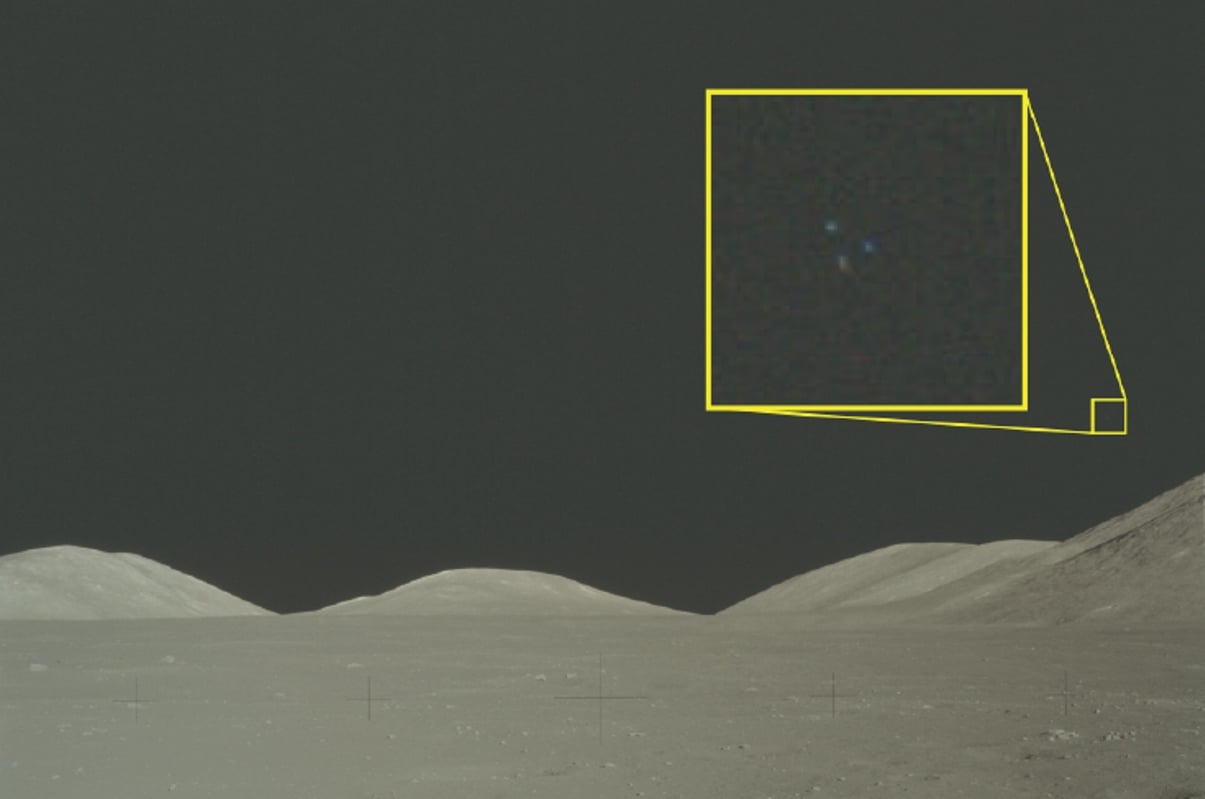
The batch includes pictures taken by astronauts on the moon during Apollo 12 in 1969 and Apollo 17 in 1972, with enlarged sections highlighting what appear to be bright spots or streaks in the sky. There's even a transcript from the Gemini 7 mission in 1965, in which astronaut Frank Borman describes a "bogey" and a debris field consisting of "hundreds of little particles."
Borman's bogey has been the subject of discussion in UFO circles for decades. Space historian James Oberg has said the likeliest explanation is that the debris field consisted of fragments coming off Gemini 7's booster. "The 'bogey' was evidently just a brighter-than-average piece of booster-associated debris since it was in an orbit similar to the other booster-generated particles and fragments," he wrote 30 years ago.
Most of the 161 files consist of reports, photos and videos relating to UAP sightings from military missions, going back to the 1940s. In one report, from 2020, a U.S. military operator reports observing "a line of dots followed by a trailing dot." You'll also find State Department cables, as well as photos and case files from the FBI.
President Donald Trump hailed today's release on his Truth Social platform. "Whereas previous Administrations have failed to be transparent on this subject, with these new Documents and Videos, the people can decide for themselves, 'WHAT THE HELL IS GOING ON?' ” he wrote. (In fact, the Pentagon began increasing transparency on the UAP issue in 2020, and Congress ordered the Pentagon to step up its release of UAP files in 2022.)
Defense Secretary Pete Hegseth said his department was "in lockstep with President Trump" to heighten access to the federal government's UAP archive. "It's time the American people see it for themselves," he said in a statement.
U.S. Sen. Kirsten Gillibrand, D-N.Y., hailed the release as well. "For years, I have fought to declassify and release UAP files, including by successfully passing legislation requiring government disclosure of UAP records," she said in a post to X/Twitter. "I am encouraged that the administration has finally heard my call and the call of millions of Americans to begin unsealing these files."
Mick West, a retired engineer who specializes in analyzing UAP reports, said today's release combined "a lot of old documents, some fairly new pilot reports and some new videos." He posted more than two dozen of the videos to his Metabunk website for discussion.




Comments (0)