
Remember me




Given my career, I had heard of hantavirus – which spreads from rodents to humans via faeces, saliva and urine – before. When I moved to Colorado, friends asked: “Aren’t you afraid of bears?”
And I’d say “no, I’m afraid of hantavirus [the state has the second-highest number of cases in the US]”.
I knew it could be fatal, and capable of causing hantavirus pulmonary syndrome, where fluid fills the lungs. Other strains cause haemorrhagic fever with renal syndrome, which triggers acute kidney failure and internal bleeding.
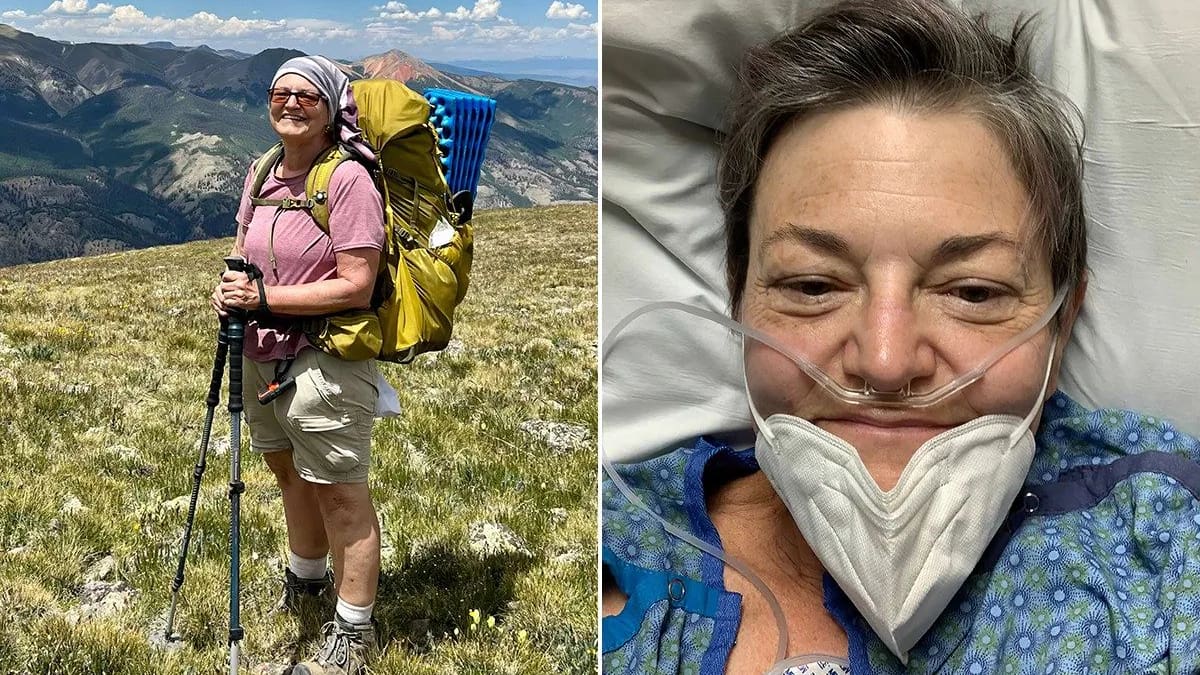
But as my sickness hit during the height of Covid, I assumed I had a bad case of that, or flu. I was admitted to a Covid unit at the hospital, put on oxygen and given a KN95 mask to wear, and told I could have no visitors because of the transmissibility of the virus.
My husband wasn’t even allowed to accompany me to the emergency department. He could only get me out of the car and to the door of the unit.
It was dicey there for a few days. I tested negative for Covid three times and flu three times. Yet CT scans and X-rays showed that there was fluid around my lungs (known as pleural effusions) and heart (cardiac effusions). The situation was ominous, and the doctors were planning to put a tube in my chest to drain the fluid so I could breathe easier.
It was baffling, as there was no apparent reason for this sudden turn when, at 61, I had until then been in very good health, and hiking across the Colorado Trail all that summer.
 Sue Ryan on the Colorado Trail. Photo / Sue Ryan, Telegraph
A pulmonologist was consulted, who started asking me questions about my hiking. My symptoms had begun after a camping and hiking trip.
I had a flat tyre at one point, and when I went to change it, I noticed a nest of mice inside where I keep my spare. I cleaned it out, didn’t think anything of it, and then went on my way.
When I relayed this to the pulmonologist, he said he wanted to test me for hantavirus. It came back positive, making me one of about 100,000 people in the world to have been affected by this rare disease.
In Europe and Asia, the death rate can be up to 15% but in the Americas, there’s up to a 50% chance of death.
My family was very worried, particularly as they couldn’t visit. All they could do was talk to me now and again and hope for the best. I knew there was a chance that I could die. It was a scary time.
But instead of fear, my work in hospitals gave me a kind of morbid fascination with my diagnosis. I was strangely intrigued by what was happening to me, wondering what the heck was going on.
After five days in hospital, I was sent home with oxygen, which I needed to help me breathe for around a week. Gradually, the fluid around my heart and lungs went away as the body absorbed it during recuperation.
An interesting thing about this virus is if you don’t die, you will recover completely, and within a month I felt fine, and finished hiking the section of the Colorado Trail I’d started in 2020, the following year.
 Sue made a full recovery within a month and finished hiking the section of the Colorado Trail she’d started in 2020. Photo / Sue Ryan, Telegraph
There have been no lasting effects, and I continue to hike regularly and go on cruises – including getting back from one across the Caribbean last week, just before news of the hantavirus outbreak came out.
It felt like a crazy coincidence. I was horrified that this was happening on a ship, but also wondering why they wouldn’t let people off, because usually it’s not transmitted between people, and it’s unusual for so many people to contract it at once.
The Andes hantavirus, which has circulated on the ship, may be transmissible between humans. Sin Nombre, the strain I had, is thought not to be, but the problem is that the disease is so rare, it’s really hard to track and study it.
I’ve taken a lot more precautions since I had hantavirus. Having a rural property, we do have mice. Deer mice are the biggest carriers of the disease in the US, and they’re endemic to the state of Colorado. You can’t be too careful.
If I see any signs of mouse presence – nesting materials, or droppings – I wear a mask and gloves to clean it out, using bleach or disinfectant that states on the container it kills viruses.
I leave the area wet for about 10 minutes before finishing cleaning, because breathing in the dry dust particles that are often too small to see is how you get hantavirus in the first place.
I now believe that I got hantavirus from my own property – and not safely cleaning droppings – rather than from my hiking trip.
Despite my shock at being diagnosed with hantavirus when I thought I had Covid, I was blown away that, given its survival rate, I didn’t die. At 67, healthy and well, I feel lucky to be alive.
As told to Charlotte Lytton
Sign up to Herald Premium Editor’s Picks, delivered straight to your inbox every Friday. Editor-in-Chief Murray Kirkness picks the week’s best features, interviews and investigations. Sign up for Herald Premium here.