
Remember me




What prompts a Labour challenge?
The centre-right Conservative Party has frequently replaced unpopular prime ministers, but it has rules different from those of the Labour Party, which has done this rarely. The last time was in 2007, when Tony Blair was forced out, but that was after he had been 10 years in Downing Street, and he ultimately agreed to step aside.
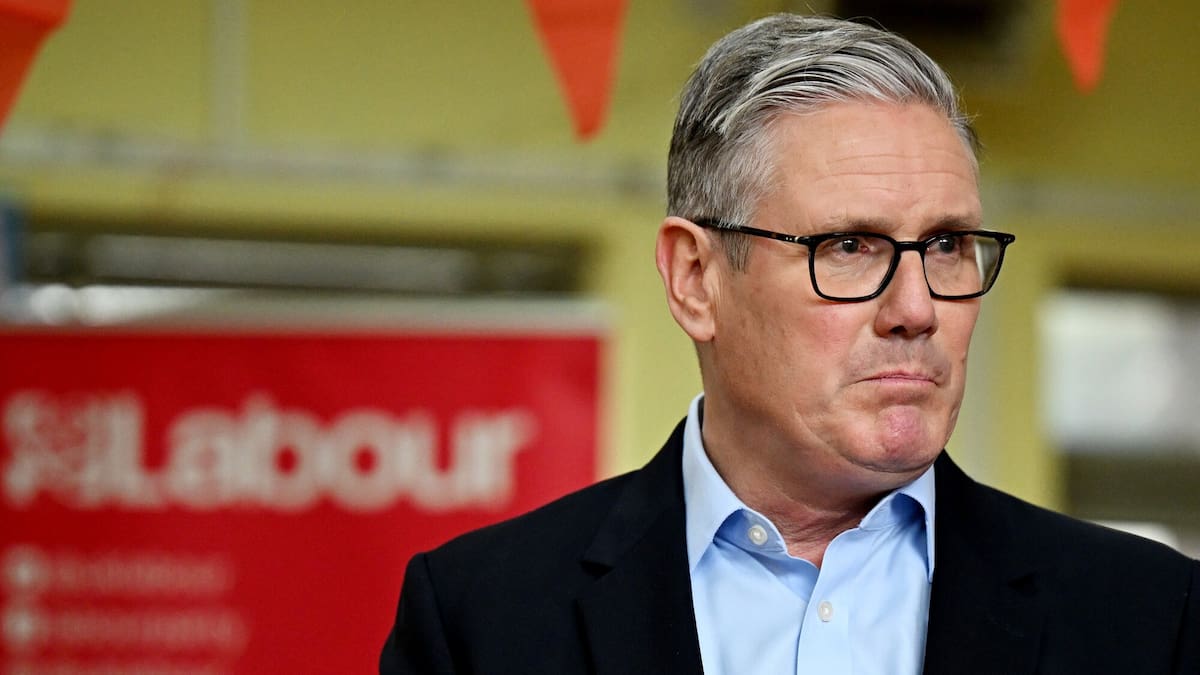
To trigger an election to replace the prime minister under Labour’s rules, a challenger would need the support of 81 Labour lawmakers, 20% of the total. Starmer would automatically be on the ballot, and the final decision would be taken by party members.
West does not so far seem to have the numbers in Parliament and is not presenting herself as a credible alternative prime minister. Her idea appears to be to force the pace of change, either by prompting a Cabinet rebellion or by flushing out other potential successors to Starmer and forcing them to make a run against him.
But if neither of those things happen, she seems willing to run as a so-called stalking horse candidate – if she can get enough support.
Starmer is scheduled to make a speech on Monday (Tuesday NZT), and West says that if what he says is a disappointment, she will approach other Labour lawmakers to ask for their backing.
Could Starmer survive?
If the contest were against West, the Cabinet remained loyal, and credible contenders did not break cover, Starmer could expect to thwart the challenge.
In 2016, Jeremy Corbyn, then-leader of the then-opposition Labour Party, survived a leadership contest with Owen Smith, who moved against him after his party’s lawmakers overwhelmingly backed a motion of no confidence in Corbyn.
Confronted with internal feuding, a Conservative prime minister, John Major, precipitated a leadership election himself, in 1995, and won it.
But facing any sort of contest risks denting a prime minister’s authority. In 1989, the Conservative prime minister, Margaret Thatcher, was challenged by Anthony Meyer, a political figure so little known that he was derided as a “stalking donkey”. Thatcher won, but one year later, she was forced out.
Who are the realistic contenders?
 Greater Manchester Mayor Andy Burnham talks with firefighters following an attack at Heaton Park Hebrew Congregation synagogue in October 2025. Photo / AFP
The political momentum is with Andy Burnham, the mayor of Greater Manchester, in northern England, and the only senior Labour figure who seems significantly more popular with voters than Starmer, according to opinion polls. The snag is that he would have to win a seat in Parliament before mounting a challenge.
In his absence, Angela Rayner, the former deputy leader, is probably the favoured candidate of the left of the party. She resigned last year, however, over a tax imbroglio, which is still unresolved.
On Sunday, Rayner increased the pressure on Starmer by issuing a statement criticising a “toxic culture of cronyism” within Labour, warning that the party may be on its “last chance”. She also described a decision by party bosses this year to prevent Burnham from trying to run in a special election for Parliament as “a mistake”. That could suggest that Rayner would prefer to support a bid by Burnham to take over, rather than to challenge Starmer herself.
Wes Streeting, the health secretary, has support on the right and is an effective communicator. But he has been damaged by links to Peter Mandelson, who was fired as Britain’s ambassador to Washington when the depth of his friendship with convicted sex offender Jeffrey Epstein was revealed.
Other possible contenders include Ed Miliband, the energy secretary; Shabana Mahmood, the home secretary; Yvette Cooper, the foreign secretary; and John Healey, the defence secretary.
Why do some favour a delay?
Most analysts say Starmer is so unpopular that he is unlikely to lead Labour into the next general election, which must take place by 2029. But whether now is the right time to make a change is a different question.
Burnham’s supporters want to delay any challenge to give the Manchester mayor time to win the Parliament seat he needs to become a contender. Even some neutrals say it would make little sense to have a contest to replace Starmer without Burnham.
Another reason for a delay could be the volatile global situation. While Starmer has made a succession of domestic policy errors, his handing of the Iran war has been popular with voters. The crisis in the Middle East has hit Britain’s economic prospects, giving any potential successor prime minister a difficult inheritance.
And while top opposition politicians have called on Starmer to quit, if he were to do so, they would point out that his successor had no mandate from the voters. Calls would grow for a snap general election, which Labour looks ill-prepared to fight right now.
This article originally appeared in The New York Times.
Written by: Stephen Castle
©2026 THE NEW YORK TIMES