


In the dense urban fabric of Toronto, demolition sends more than sound through the air—it sends energy through the ground, traveling as vibration that can be felt blocks away from the actual work. For residents and businesses near demolition sites, this vibration is often more disturbing than noise itself, manifesting as low-frequency rumbling, subtle shaking, and the unsettling sense that the ground beneath them is unstable. For a mammoth demolition contractor operating in this sensitive environment, vibration control is not merely a technical consideration but a fundamental responsibility. The techniques employed to measure, manage, and mitigate vibration determine whether demolition proceeds as a good neighbor or becomes a source of conflict and complaint. Understanding these techniques reveals the sophisticated engineering that lies beneath seemingly straightforward demolition work.
Understanding Vibration: Sources and Pathways
Effective vibration control begins with understanding how vibration is generated and how it travels through the urban environment. Different demolition activities produce different vibration signatures. Impact tools like breakers and jackhammers generate sharp, high-energy pulses that travel through structures. Heavy equipment moving across site generates continuous low-frequency vibration. The collapse of structural elements, even when carefully controlled, releases energy that radiates through the ground. These vibrations travel through soil and rock, their intensity diminishing with distance but their pathways complicated by geological layers, underground utilities, and building foundations. Understanding these dynamics allows engineers to predict which activities will generate vibration, how far it will travel, and which neighboring structures may be affected. This predictive capability is the foundation of all vibration control planning.
Pre-Demolition Condition Surveys
Before any vibration-generating activity begins, thorough condition surveys document the pre-existing state of all neighboring structures. Professional engineers inspect adjacent buildings, recording cracks, settlements, and other imperfections that exist before demolition starts. Photographs capture detailed images of facades, foundations, and interior spaces. Written descriptions document the location, size, and character of every visible defect. This baseline documentation serves multiple purposes: it identifies structures that may be particularly sensitive to vibration, it establishes a record that protects the demolition contractors Toronto from unjustified damage claims, and it provides data that informs vibration limits tailored to each building's specific condition. In some cases, surveys may reveal pre-existing instability that requires protection measures before demolition can proceed.
Establishing Safe Vibration Limits
Not all vibration is harmful, and establishing appropriate limits distinguishes between acceptable and damaging levels. Engineers reference established standards—such as those from the British Standards Institute or the German DIN 4150—that specify vibration limits based on building type, condition, and use. Historic structures, with their fragile materials and lack of reinforcement, receive stricter limits than modern steel-frame buildings. Structures with pre-existing damage receive limits that account for their reduced capacity. Residential uses, where occupants are sensitive to vibration, may receive stricter limits than commercial or industrial uses. These limits are not arbitrary but based on decades of research correlating vibration levels with structural damage, providing objective thresholds that guide all demolition activities.
Real-Time Vibration Monitoring
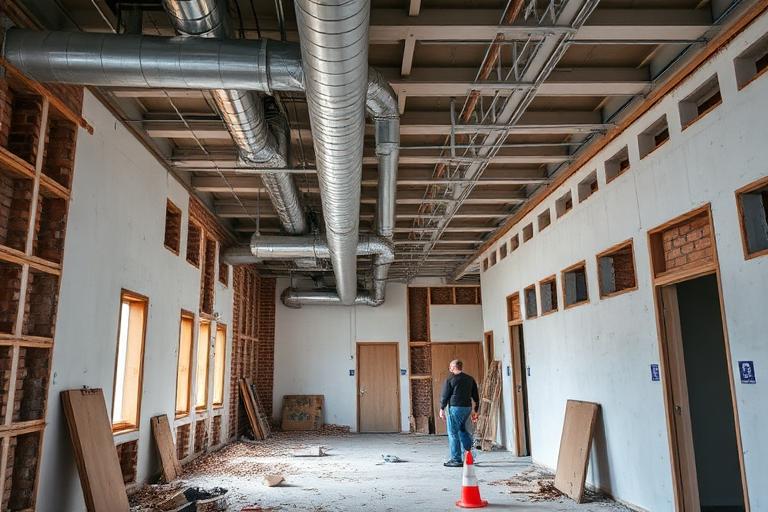
Once demolition begins, real-time vibration monitoring provides continuous verification that limits are being respected. Seismographs placed on neighboring structures and at key locations within the demolition site measure vibration in three dimensions, capturing data on every impact. These instruments transmit data wirelessly to project managers and engineers, who monitor readings in real time from office or mobile devices. When vibration approaches established thresholds, alerts trigger immediate investigation—is equipment operating as expected? Has ground conditions changed? Is an unexpected activity generating higher vibration? In some cases, automatic alarms may trigger work stoppages if vibration exceeds pre-set limits, ensuring that protection is not dependent on human vigilance alone. This monitoring creates a data trail that documents compliance and provides evidence should questions arise.
Equipment Selection and Operation Modifications
The equipment used on site significantly influences vibration generation, and thoughtful selection and operation can reduce impacts dramatically. Hydraulic breakers with larger chisels and lower operating frequencies often generate less vibration than smaller, high-frequency tools. Rotating demolition attachments that crush rather than impact material eliminate vibration altogether. Electric equipment, with its smoother power delivery, may generate less vibration than diesel-powered alternatives. Beyond equipment selection, operation techniques matter—starting impacts lightly before applying full power, maintaining sharp tools that cut rather than pound, and avoiding unnecessary impacts on massive structures. These operational choices, guided by continuous monitoring feedback, allow crews to adjust their techniques in real time to minimize vibration while maintaining productivity.
Isolation Techniques and Protective Measures
When particularly sensitive structures or activities require additional protection, isolation techniques can interrupt the vibration path before it reaches neighboring buildings. Trenches excavated between the demolition site and adjacent structures, known as vibration isolation trenches, can interrupt surface wave transmission. Barriers of air or foam injected into the ground can similarly disrupt vibration pathways. In extreme cases, entire building facades may be temporarily supported on isolated foundations that decouple them from ground vibration. These measures are costly and reserved for the most sensitive situations, but they demonstrate the lengths to which responsible contractors will go to protect neighbors from demolition impacts.
Communication with Affected Occupants
Finally, vibration control extends beyond technical measures to include communication with those who feel its effects. Occupants of neighboring buildings deserve to know that vibration will occur, what limits have been established, and how they will be protected. They need channels to report concerns and receive responses. When unusual vibration events occur—even when within safe limits—they deserve explanation and reassurance. This communication builds trust that technical measures alone cannot achieve, transforming potentially adversarial relationships into cooperative ones. In a city as dense as Toronto, where demolition occurs in close proximity to thousands of people, this human dimension of vibration control is as important as any engineering technique. It reflects the fundamental understanding that demolition is not merely a technical exercise but a human activity with human impacts, and that those impacts must be managed with respect, transparency, and care.
Comments (0)