The 2025 Financial Times and Schroders Business Book of the Year Award winner revealed
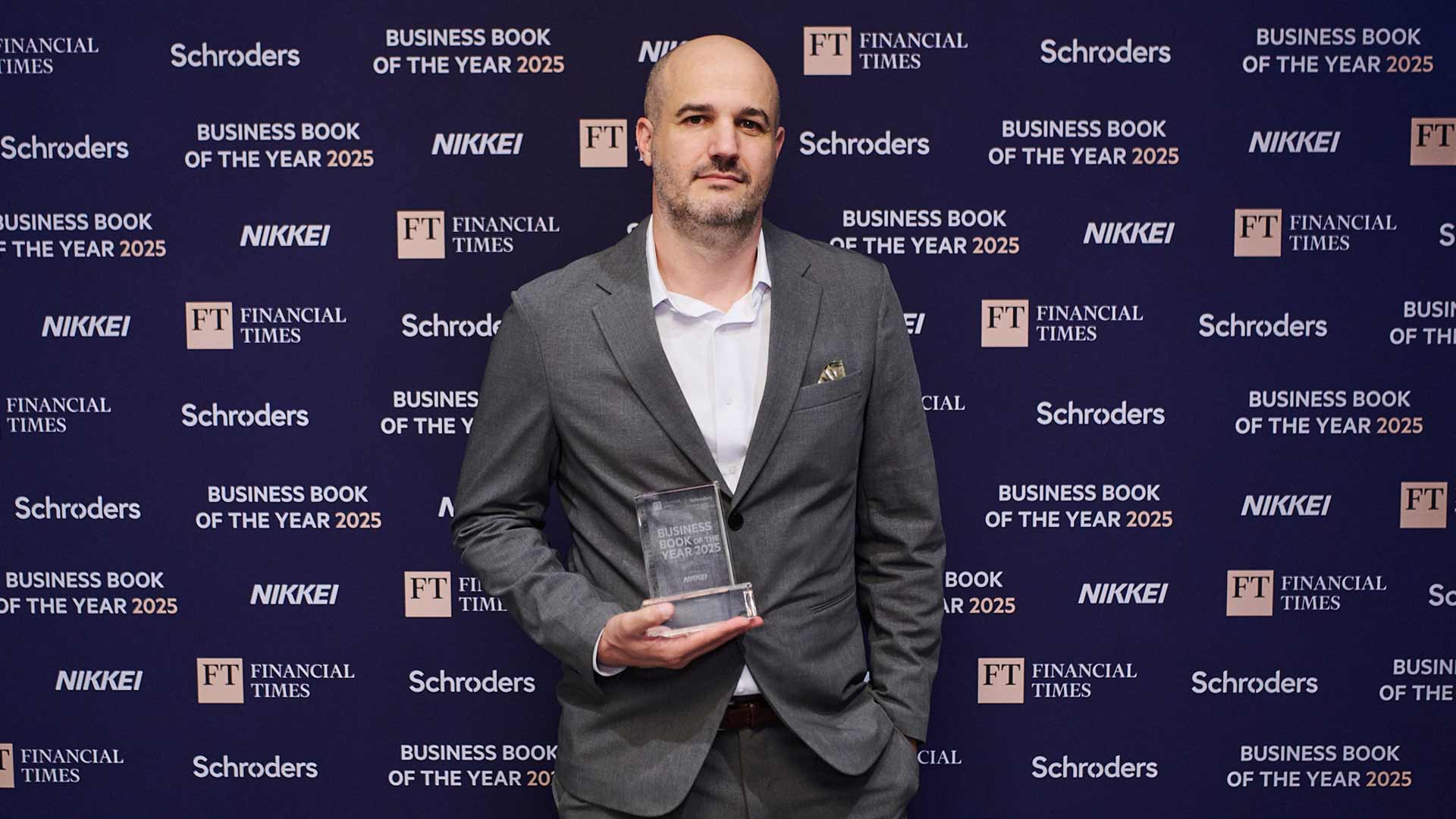
Stephen Witt’s book The Thinking Machine: Jensen Huang, NVIDIA, and the World’s Most Coveted Microchip (The Bodley Head) has been named the winner of the Financial Times and Schroders Business Book of the Year for 2025. The Thinking Machine is an investigation into the rise of Nvidia, the company at the heart of the AI boom, and its CEO Jensen Huang. Stephen Witt received a prize of £30,000, with £10,000 going to each of the five runners-up.
The award recognises a book that provides the "most compelling and enjoyable insight into modern business issues", and was awarded yesterday (3rd December) at a ceremony at InterContinental London Park Lane, hosted by Roula Khalaf, editor of the Financial Times and chair of the panel of judges, Richard Oldfield, group chief executive of Schroders, and Daisuke Arakawa, senior managing director of Nikkei. The keynote speaker at the event was Paschal Donohoe, managing director and chief knowledge officer of the World Bank and Ireland’s former minister for finance.
Khalaf said: “Stephen Witt has written a fascinating account of the making of one of the most consequential companies of our times. In The Thinking Machine, Witt explores brilliantly the motivation of Nvidia CEO Jensen Huang, the single-minded entrepreneur who has built one of the AI age’s most successful businesses.”
Oldfield said: “It’s an honour to celebrate the 21st year of this distinguished award alongside the Financial Times, and to recognise an exceptional shortlist of books. The judging panel had a formidable task, but in The Thinking Machine we have a winner that truly captures the spirit and challenges of our time. It stands out for its rigorous research, outstanding writing and relevance for anyone looking to understand the world around us. Each shortlisted book offers unique insights into the ways countries, businesses and technology are shaping our future. Collectively, they help us navigate an era defined by rapid change and increasing complexity.”