
Remember me


Welcome back to Foreign Policy’s Situation Report, where your co-authors are comparing their “Spotify Wrapped” revelations. John’s music tastes align with that of a 72-year-old, apparently (though, if you recall, he did go to a Chappell Roan concert during the United Nations General Assembly), while Rishi’s “listening age” of 30 is lower than his actual age thanks to his love of 2010s electronic dance music.
Alright, here’s what’s on tap for the day: U.S. Defense Secretary Pete Hegseth faces growing congressional backlash, Russian President Vladimir Putin visits New Delhi, and the New York Times sues the U.S. Defense Department.
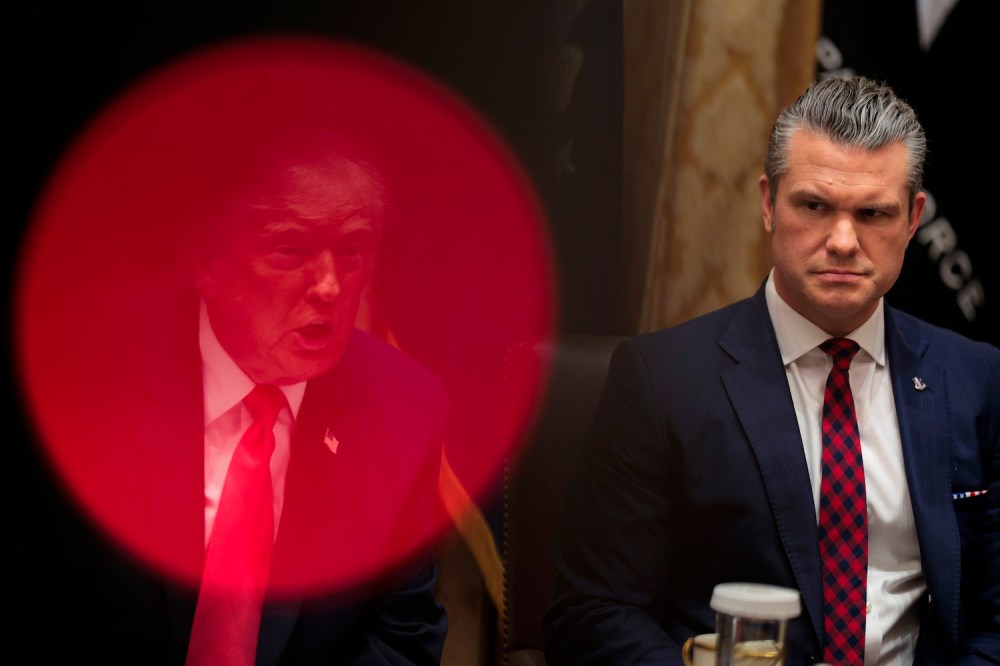
Pete Hegseth is probably eating a lot of one of his favorite comfort foods—bread and butter—this week.
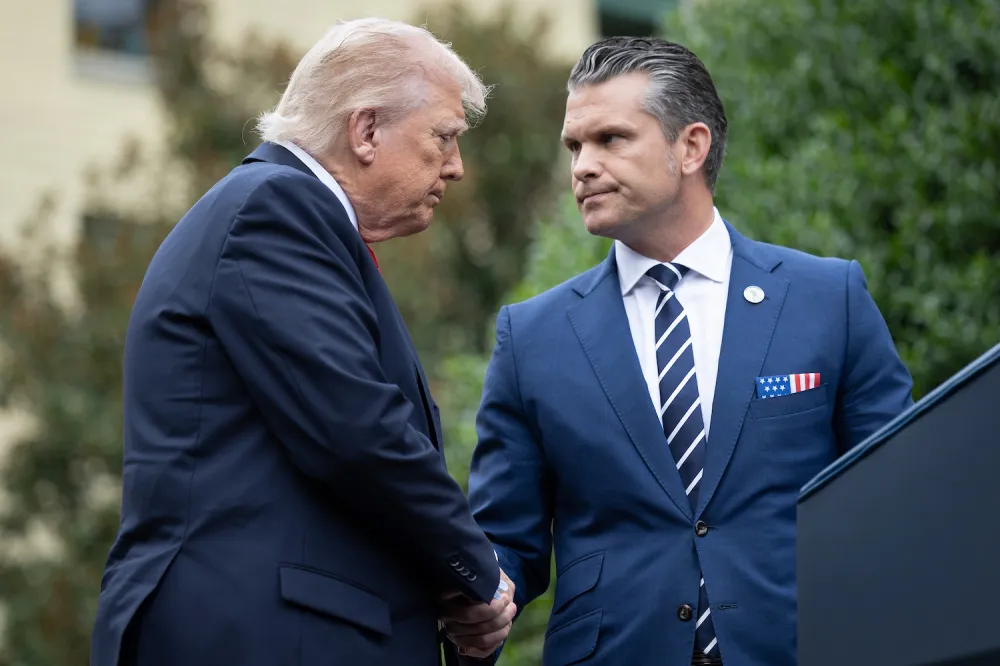
The U.S. defense secretary has become the prime target of lawmaker outrage from both sides of the aisle this week over multiple controversies, including a resurgence of his role in arguably this year’s most infamous one.
In a report released on Thursday, the Pentagon’s inspector general concluded that Hegseth’s sharing of information about U.S. military strikes on Houthi militants via Signal, a messaging app, violated department protocols on the use of personal devices and unclassified apps and that that the information he shared could have put U.S. forces in danger.
Hegseth has repeatedly insisted that the information he shared in what’s now known as the Signalgate group chat—which included specific strike times and weapons used—was not classified and did not put any troops in danger. The inspector general’s report acknowledged that the defense secretary has the authority to declassify information.
However, it also stated that “if this information [Hegseth shared] had fallen into the hands of U.S. adversaries, Houthi forces might have been able to counter U.S. forces or reposition personnel and assets to avoid planned U.S. strikes. Even though these events did not ultimately occur, the Secretary’s actions created a risk to operational security that could have resulted in failed U.S. mission objectives and potential harm to U.S. pilots.”
Hegseth dismissed the report even before it officially came out, posting on X on Wednesday night that it showed a “total exoneration” of his actions. “Case closed,” he added.
Double-tap debate. Hegseth is also in hot water over two U.S. strikes on an alleged drug boat in the Caribbean on Sept. 2, which marked the beginning of the controversial U.S. military operation near Latin America against so-called “narco-terrorists” that has killed more than 80 people.
This new scandal, which has prompted bipartisan criticism and investigations in Congress, emerged after a Washington Post report alleged that the Special Operations commander overseeing the operation, Adm. Frank M. Bradley, ordered a follow-up strike based on a directive from Hegseth after two survivors were spotted in the water following an initial strike that destroyed their boat.
Under the laws of war, combatants who are “hors de combat”—that is, who have been taken out of the fight and can no longer defend themselves—are supposed to be protected. Attacking shipwrecked combatants could therefore be a war crime. According to the report, Hegseth’s order was to “kill them all.”
The White House has acknowledged that a second strike occurred but maintained that it was lawful and was not directly ordered by Hegseth—instead stating that the Pentagon chief “authorized Admiral Bradley to conduct these kinetic strikes.”
Hegseth—who initially said he watched the Sept. 2 operation “live”—has since said that he wasn’t in the room for the second strike, which reportedly occurred roughly two hours after the first, and that he didn’t see any survivors from the initial strike due to the “fog of war.”
Bradley, who was on Capitol Hill on Thursday to brief senior lawmakers on the strikes, reportedly viewed the second strike as legitimate because the survivors were able to continue communicating with other drug traffickers and therefore still posed a threat. But Democratic Rep. Jim Himes, the ranking member on the House Intelligence Committee who was among those briefed by Bradley, said on Thursday that he was “deeply” troubled by a video of the strike. “The fact is that we killed two people who were in deep distress and had neither the means nor obviously the intent to continue their mission,” he said.
Meanwhile, the Republican chairs of the House and Senate Intelligence committees—Rep. Rick Crawford and Sen. Tom Cotton—who were also briefed, signaled that they viewed the strikes as justified and lawful. This suggests that the GOP will not be rushing to join any Democratic calls for Hegseth to be impeached or dismissed.
The bigger legal question. Legal experts have pointed out that the U.S. boat strikes were already widely viewed as illegal prior to this scandal, as alleged drug traffickers are not combatants in an armed conflict.
“It’s just extrajudicial killing, which is a murder under international law, under our domestic law. There is no authority to do this,” Daniel Maurer, a retired U.S. Army judge advocate who is now an associate professor at Ohio Northern University, told CNN.
The strikes are also seen as part of a broader effort to lay the groundwork for regime change in Venezuela. In recent days, U.S. President Donald Trump has signaled that the operation could soon expand to include land strikes in Venezuela, but it remains to be seen whether this fresh controversy might lead him to reconsider or delay any such actions.
New details have emerged about the sudden retirement in October of Adm. Alvin Holsey, who was the head of the U.S. military’s Southern Command tasked with overseeing the boat strikes in the Caribbean. According to a new report from the Wall Street Journal, Hegseth asked Holsey to step down after multiple disagreements with the military official—including Holsey’s misgivings about the legality and operational control of the strikes.
The State Department announced on Wednesday that the semi-independent United States Institute of Peace—which was forced to lay off most of its staff in March due to cuts made by the Elon Musk-led Department of Government Efficiency—will be renamed the Donald J. Trump Institute of Peace. The president’s name has already been added to the building’s facade.
What should be high on your radar, if it isn’t already.
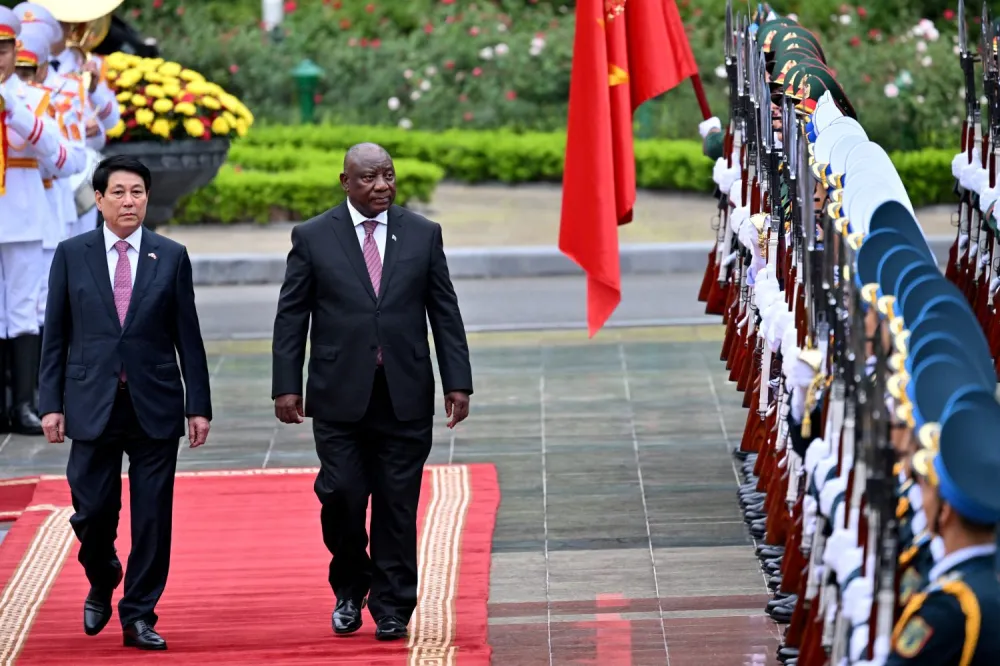
Putin’s Delhi welcome. Russian President Vladimir Putin touched down in New Delhi on Thursday to a red carpet welcome on the tarmac from Indian Prime Minister Narendra Modi, who described the friendship between the two countries as a “time tested” one that has “greatly benefitted our people.” Modi’s welcoming of Putin comes at a time of immense strain in India’s relationship with the United States—in part over India’s purchases of Russian oil, for which Trump imposed some of the world’s highest tariffs on New Delhi.
Although India has since reduced its Russian oil imports, the two countries could deepen their already significant defense ties, with Kremlin spokesperson Dmitry Peskov confirming that potential Indian purchases of new Russian fighter jets and ballistic missiles will be on the agenda this week.
Pentagon sued. The New York Times sued the Pentagon on Thursday, accusing the department of infringing on the constitutional rights of journalists with the press restrictions it imposed earlier this year. Those restrictions seek to “restrict journalists’ ability to do what journalists have always done—ask questions of government employees and gather information to report stories that take the public beyond official pronouncements,” the newspaper argued. Most of the Pentagon press corps turned in their badges and walked out two months ago instead of signing on to the new policy, which threatens to revoke the credentials of journalists who seek and report information not approved for public release by the department.
The Pentagon, meanwhile, held a press briefing on Tuesday with those who did agree to the restrictions—a group that included far-right influencer Laura Loomer and former Republican lawmaker Matt Gaetz, who withdrew his bid to become Trump’s attorney general last year over sexual misconduct allegations, which he has denied. Gaetz, who now hosts a show on the right-wing One America News Network, wore his old congressional jacket to the press briefing, which had his former title of “representative” stitched on the front above his name.
 Children play at the Nuseirat camp for displaced Palestinians in the central Gaza Strip on Dec. 2.
Children play at the Nuseirat camp for displaced Palestinians in the central Gaza Strip on Dec. 2.Eyad Baba/AFP via Getty Images
On Thursday, SitRep spoke with Democratic Sen. Tammy Duckworth, a combat veteran who sits on the Senate Armed Services and Foreign Relations committees. Duckworth is calling for more answers from the administration on the Sept. 2 strikes and access to video of the incident. Adm. Bradley briefed the chairs and ranking members of the Armed Services and Intelligence committees in each chamber, but Duckworth said that information needs to be made available to all members of Congress.
Based on what she’s learned so far, Duckworth said she believes that the Sept. 2 strike was “illegal.” The survivors of the initial strike were “in the water clinging to debris,” she said, dismissing the administration’s reported justification that they were continuing the mission.
That “goes against every international law of warfare” and “even the most basic ethics class you got as a young officer in the military,” Duckworth said.
When asked whether Hegseth was likely to be held accountable over this controversy and Signalgate, Duckworth said it depends on how Trump calculates this. “This is all about Donald Trump’s personal self-preservation—deciding whether or not this is now too much and Hegseth needs to go. But Hegseth is also supremely good at sucking up to Donald Trump and throwing other people under the bus, which is what he’s doing with the admiral [Bradley] at this point,” she said.
Saturday, Dec. 6 Doha Forum begins in Qatar. John will be on the ground, as will our editor in chief Ravi Agrawal, who is interviewing former U.S. Secretary of State Hillary Clinton onstage on Sunday.
Monday, Dec. 8 The United Nations Environment Assembly begins.
Wednesday, Dec. 10 Ukraine hosts ministers for European affairs to discuss Ukraine’s path to European Union membership.
The Nobel Prize award ceremony is held.
49—the percentage of Americans who expressed a “great deal of confidence” in the U.S. military, according to the latest annual Reagan National Defense Survey, which gathered responses from more than 2,500 people. Even at less than half, the military still fared better than other U.S. institutions such as law enforcement (32 percent), the presidency (26 percent), and Congress (11 percent).
“You take any country you want—if somebody sells drugs in that country, that doesn’t mean you arrest the president and put him in jail for the rest of his life.”
— Trump telling reporters why he pardoned former Honduran President Juan Orlando Hernandez, who was convicted of drug trafficking.
Comments (0)