
Remember me


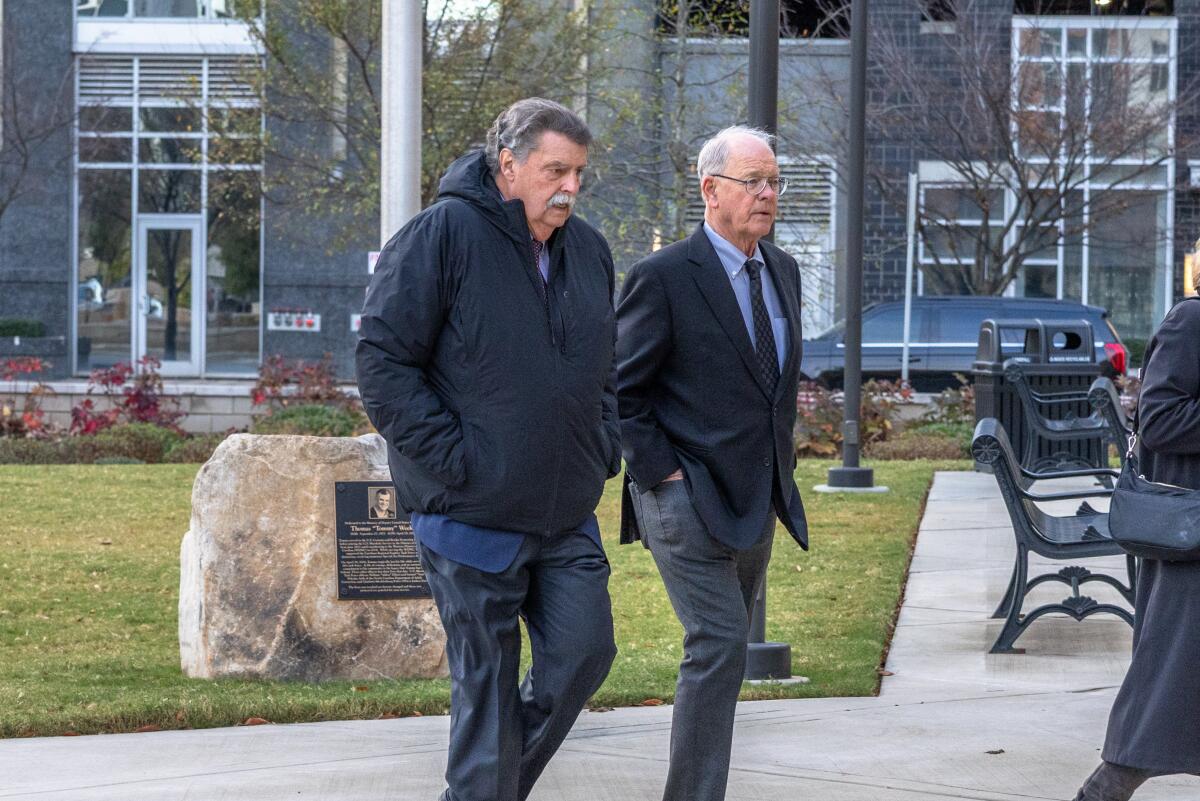
NASCAR CEO Jim France, right, walks with vice chairman Mike Helton outside the Charles R Jonas Federal Building on Dec. 1 in Charlotte, N.C.
(Grant Baldwin / Getty Images)
While attempts at settling the matter before the trial were unsuccessful, a settlement could occur at any time during the trial and, if needed, an appeal. Jury selection took place on Monday, with two potential jurors being dismissed after claiming to be huge Jordan fans.
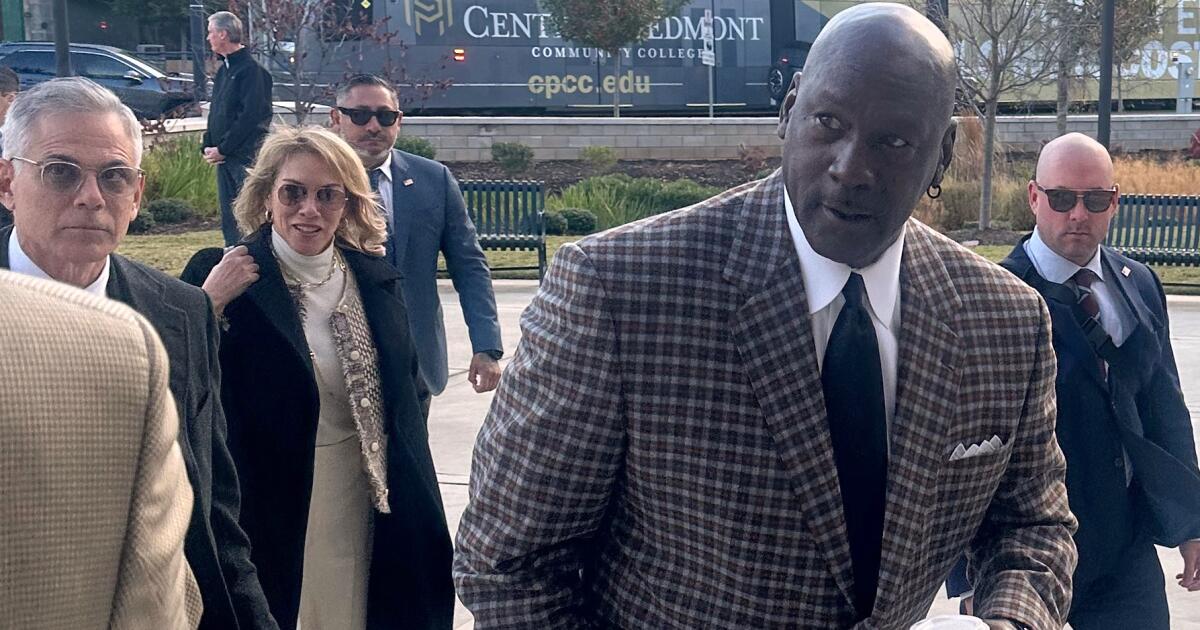
Hamlin and Jenkins were among those who testified throughout the week, setting the stage for Jordan’s hour-long appearance on the witness stand in front of a packed courthouse. At one point, the Naismith Basketball Hall of Famer was asked why 23XI didn’t sign the charter agreements last year.
“One, I didn’t think it was economically viable,” Jordan said. “Two, it said you could not sue NASCAR, that was an antitrust violation, I felt. Three, they gave us an ultimatum I didn’t think was fair to 23XI.”
Jordan added: “I wanted a partnership, and permanent charters wasn’t even a consideration. The pillars that the teams wanted, no one on the NASCAR side even negotiated or compromised. They were not even open-minded to welcome those conversations, so this is where we ended up.”
If the plaintiffs win, the jury will determine the monetary damages, with Judge Kenneth Bell having the ability to adjust the figure. Bell will also have to decide what to do if a monopoly is found, with options that could include forcing the France family to sell the organization or parts of it, getting rid of the charter system or ordering permanent charters.
If NASCAR wins, its structure will likely remain the same. In such a scenario, it’s difficult to imagine 23XI and Front Row returning to a charter system it went to court to alter.
If NASCAR wins, it could mean the end of 23XI and Front Row.
The Associated Press contributed to this report.
Comments (0)