
Remember me







Through the rush, the health service will do the thing it has always done best: work heroically in spite of itself, writes Terence Cosgrave
As the rest of the world drops down a few gears, preparing for the eventual slowdown and subsequent Christmas hiatus from the workplace, competitive colleagues and the grim business of making a living, doctors are just warming up for what looks like being an extremely busy Christmas.
For everyone else, December is a soft-focus montage of office parties, slightly undercooked turkeys, and festive jumpers that look like a cry for help in wool form. For doctors, it is the season when all the things they have been moaning about all year decide, in a spirit of togetherness, to arrive at the Emergency Department at exactly the same time.

Terence Cosgrave and pup
Over the past year, in these pages, we’ve talked about most of the usual suspects. The recruitment and retention crisis, for example, that great Irish parlour game where we train bright, motivated young doctors and then release them into the wilds of Canada and Australia like tagged migratory birds. We have raged gently about bed capacity, a phrase which sounds like something you’d encounter in an IKEA catalogue but in reality means: there is nowhere to put anyone, ever, under any circumstances, unless you can stack patients like Tetris blocks and nobody has yet signed off that as hospital policy. (Perhaps in 2026?)
We’ve revisited the trolley crisis so often that it now feels less like a crisis and more like a long-running soap opera, with recurring characters and plotlines:
Elderly patient on trolley for 48 hours. Harassed NCHDs trying to explain why. A Minister announcing a Winter Plan with the air of someone who has just discovered winter as a concept.We’ve talked about Sláintecare and reform, those misty creatures glimpsed briefly on PowerPoint slides before vanishing into the undergrowth of committees, reviews and revised timelines. We have noted that every new strategy appears to involve doing more work with fewer people and calling it transformation rather than what it actually is, which is ‘hoping for the best’.
We’ve also wandered through the small, unglamorous agonies: the GP practices already running at a permanent simmer, the mental health services that resemble a badly signposted maze, the IT systems that appear to have been designed in a previous century by someone who was actively suspicious of computers. We have, on more than one occasion, mentioned burnout, that quiet, grinding erosion of goodwill that happens when a vocation is treated like an endlessly stretchable resource.
All of this is the backdrop, the long prologue. And then December walks in, jingling ominously.
Because if there is one thing the Irish health service does not need, it is extra. Extra flu. Extra Covid. Extra RSV. Extra everything. Yet, as we have been pointing out all year, viruses do not read policy documents. They do not care about bed numbers, pay parity, consultant contracts or who said what to whom at what Oireachtas committee. They simply look at a population huddled indoors sharing air, hugs and badly ventilated family gatherings, and think:
‘Lovely. We’ll have some of that.’
So what will the Christmas rush at Emergency Rooms look like?
First, the Respiratory Grand Parade. This is the annual procession of every possible cough, wheeze and rattle known to modern medicine. Children bringing RSV and croup, older people with pneumonia and COPD exacerbations, the middle-aged with COVID who were entirely sure it was ‘just a head cold’ until it absolutely wasn’t. The waiting room soundtrack will be festive: a chorus of coughing in several keys, punctuated by the occasional ringtone playing ‘Fairytale of New York’. “Twas Christmas Eve babe, in the waiting room!”
Then we will have the Domestic Improvisation Injuries. Every year, people attempt DIY tasks that they would never contemplate in June. They will climb onto chairs to staple tinsel to things that should not, by rights, have tinsel on them. They will decide that the ladder is ‘grand’ despite being older than some of the interns. The result is a reliable influx of broken wrists, twisted ankles and the occasional fall from a height involving a plastic reindeer and a roof. This will be carefully documented in the notes as ‘fall from standing height’, because somehow the phrase ‘fell while attempting to cable-tie Rudolph to chimney’ does not fit neatly in the template.
Next, the Culinary Catastrophes. Nobody talks about this in official reports, but the Christmas period appears to involve an experimental approach to knives, hot fat and alcohol that would worry any occupational health and safety officer to an early grave. There will be carving injuries. There will be burns. There will be the person who tried to deep-fry something that should never be deep-fried outside of a controlled laboratory environment.
And of course, the Alcoholic Revels. We have noted all year the lack of joined-up thinking between health policy and anything resembling alcohol policy, and Christmas helpfully underlines the point with a neon highlighter. The Emergency Department will see the usual blur of falls, assaults, intoxication and the occasional creative insertion of foreign bodies that nobody wishes to discuss in the cold light of January. Somewhere in the corner, a doctor will be trying to have a compassionate conversation about addiction in a corridor that smells of hand sanitiser and stale lager.
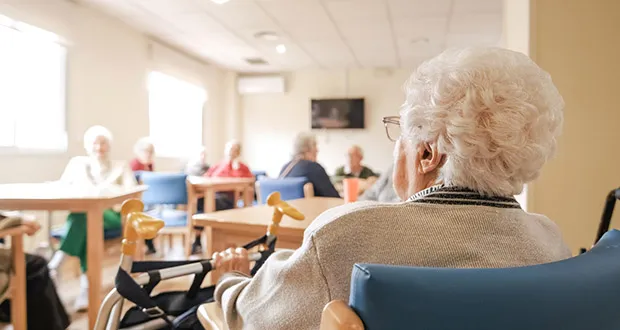
Threaded through all of this are the quiet, serious cases that never make the headlines: the lonely older person who has waited until Christmas Eve because they didn’t want to be a bother; the person in crisis whose mental health has finally buckled under the weight of festive expectations; the carers who have run out of steam and options at the same moment. We’ve talked all year about how little community support there is for these people, how patchy services collapse under the slightest extra demand. At Christmas, those gaps become chasms, and the Emergency Department becomes the safety net of last resort.
The staff, of course, will do what they always do. The same people we’ve been writing about all year – exhausted NCHDs, consultants juggling rotas and clinics, nurses who are somehow both triaging patients and locating a spare blanket with telepathic speed, healthcare assistants who keep the whole thing from wobbling off its axis – will turn up, again, and keep turning up. Some will grab a paper hat from a cracker in the hospital canteen. Someone will drape a bit of tinsel around a computer that last received a software update during the Celtic Tiger. Someone will produce a box of chocolates and a deeply suspicious-looking homemade cake.
And somewhere, in the early hours of St Stephen’s Day, a junior doctor will stand in an overcrowded corridor, look at the board full of names, recall everything we’ve been complaining about in print for twelve months – the underfunding, the staffing gaps, the interminable reforms-in-progress – and realise that none of it is abstract. It is all here, now, in the shape of people on trolleys, in cubicles, in waiting rooms.
Will anything fundamental have changed by the time the decorations come down? Probably not. The big themes we’ve been circling – the need for real capacity, for honest workforce planning, for community services that actually exist and function – will still be there, waiting impatiently for the next editorial. The buzzwords will still buzz. The strategies will still be in place, idling like corner boys.
But in the meantime, through this Christmas rush, the health service will do the thing it has always done best: work heroically in spite of itself. And as the rest of the country finally slows, doctors will do the opposite, shifting up through the gears, hoping that this year’s winter surge is only moderately apocalyptic, rather than fully biblical.
And when it’s all over, and the last Christmas wrist fracture has been plastered, and the last seasonal chest infection has been coaxed back from the brink, we’ll go back to writing about it. Because if the system insists on providing us with this much material, the least we can do is keep pointing out, with weary affection, that there might be better ways to run Christmas than on a permanent code black. 
Comments (0)