
Remember me






This is a sponsored article brought to you by The University of Sheffield.
Across global electricity networks, the shift to renewable energy has fundamentally changed the behavior of power systems. Decades of engineering assumptions, predictable inertia, dispatchable baseload generation, and slow, well-characterized system dynamics, are now eroding as wind and solar become dominant sources of electricity. Grid operators face increasingly steep ramp events, larger frequency excursions, faster transients, and prolonged periods where fossil generation is minimal or absent.
In this environment, battery energy storage systems (BESS) have emerged as essential tools for maintaining stability. They can respond in milliseconds, deliver precise power control, and operate flexibly across a range of services. But unlike conventional generation, batteries are sensitive to operational history, thermal environment, state of charge window, system architecture, and degradation mechanisms. Their long-term behavior cannot be described by a single model or simple efficiency curve, it is the product of complex electrochemical, thermal, and control interactions.
Most laboratory tests and simulations attempt to capture these effects, but they rarely reproduce the operational irregularities of the grid. Batteries in real markets are exposed to rapid fluctuations in power demand, partial state of charge cycling, fast recovery intervals, high-rate events, and unpredictable disturbances. As Professor Dan Gladwin, who leads Sheffield’s research into grid-connected energy storage, puts it, “you only understand how storage behaves when you expose it to the conditions it actually sees on the grid.”
This disconnect creates a fundamental challenge for the industry: How can we trust degradation models, lifetime predictions, and operational strategies if they have never been validated against genuine grid behavior?
Few research institutions have access to the infrastructure needed to answer that question. The University of Sheffield is one of them.
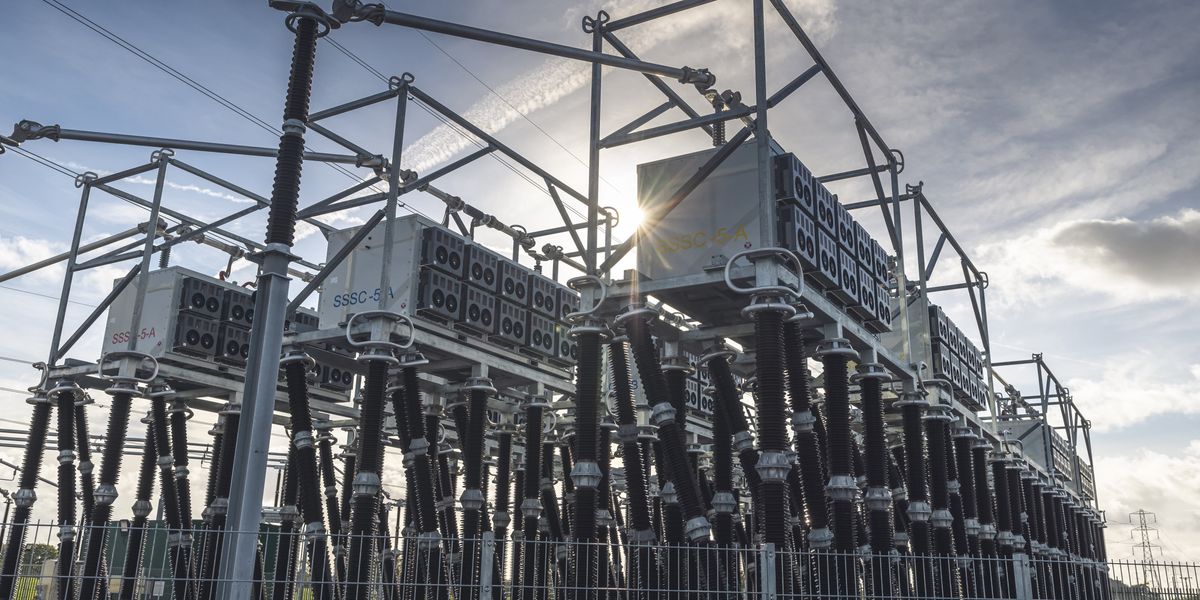
 Sheffield’s Centre for Research into Electrical Energy Storage and Applications (CREESA) operates one of the UK’s only research-led, grid-connected, multi-megawatt battery energy storage testbeds. The University of Sheffield
The Centre for Research into Electrical Energy Storage and Applications (CREESA) operates one of the UK’s only research-led, grid-connected, multi-megawatt battery energy storage testbeds. This environment enables researchers to test storage technologies not just in simulation or controlled cycling rigs, but under full-scale, live grid conditions. As Professor Gladwin notes, “we aim to bridge the gap between controlled laboratory research and the demands of real grid operation.”
At the heart of the facility is an 11 kV, 4 MW network connection that provides the electrical and operational realism required for advanced diagnostics, fault studies, control algorithm development, techno-economic analysis, and lifetime modeling. Unlike microgrid scale demonstrators or isolated laboratory benches, Sheffield’s environment allows energy storage assets to interact with the same disturbances, market signals, and grid dynamics they would experience in commercial deployment.
“The ability to test at scale, under real operational conditions, is what gives us insights that simulation alone cannot provide.” —Professor Dan Gladwin, The University of Sheffield
The facility includes:
A 2 MW / 1 MWh lithium titanate system, among the first independent grid-connected BESS of its kind in the UKA 100 kW second-life EV battery platform, enabling research into reuse, repurposing, and circular-economy modelsSupport for flywheel systems, supercapacitors, hybrid architectures, and fuel-cell technologiesMore than 150 laboratory cell-testing channels, environmental chambers, and impedance spectroscopy equipmentHigh-speed data acquisition and integrated control systems for parameter estimation, thermal analysis, and fault response measurementThe infrastructure allows Sheffield to operate storage assets directly on the live grid, where they respond to real market signals, deliver contracted power services, and experience genuine frequency deviations, voltage events, and operational disturbances. When controlled experiments are required, the same platform can replay historical grid and market signals, enabling repeatable full power testing under conditions that faithfully reflect commercial operation. This combination provides empirical data of a quality and realism rarely available outside utility-scale deployments, allowing researchers to analyse system behavior at millisecond timescales and gather data at a granularity rarely achievable in conventional laboratory environments.
According to Professor Gladwin, “the ability to test at scale, under real operational conditions, is what gives us insights that simulation alone cannot provide.”
 Dan Gladwin, Professor of Electrical and Control Systems Engineering, leads Sheffield’s research into grid-connected energy storage.The University of Sheffield
One of Sheffield’s earliest breakthroughs came with the installation of a 2 MW / 1 MWh lithium titanate demonstrator, a first-of-a-kind system installed at a time when the UK had no established standards for BESS connection, safety, or control. Professor Gladwin led the engineering, design, installation, and commissioning of the system, establishing one of the country’s first independent megawatt scale storage platforms.
The project provided deep insight into how high-power battery chemistries behave under grid stressors. Researchers observed sub-second response times and measured the system’s capability to deliver synthetic inertia-like behavior. As Gladwin reflects, “that project showed us just how fast and capable storage could be when properly integrated into the grid.”
But the demonstrator’s long-term value has been its continued operation. Over nearly a decade of research, it has served as a platform for:
Hybridization studies, including battery-flywheel control architecturesResponse time optimization for new grid servicesOperator training and market integration, exposing control rooms and traders to a live assetAlgorithm development, including dispatch controllers, forecasting tools, and prognostic and health management systemsComparative benchmarking, such as evaluation of different lithium-ion chemistries, lead-acid systems, and second-life batteriesA recurring finding is that behavior observed on the live grid often differs significantly from what laboratory tests predict. Subtle electrical, thermal, and balance-of-plant interactions that barely register in controlled experiments can become important at megawatt-scale, especially when systems are exposed to rapid cycling, fluctuating set-points, or tightly coupled control actions. Variations in efficiency, cooling system response, and auxiliary power demand can also amplify these effects under real operating stress. As Professor Gladwin notes, “phenomena that never appear in a lab can dominate behavior at megawatt scale.”
These real-world insights feed directly into improved system design. By understanding how efficiency losses, thermal behavior, auxiliary systems, and control interactions emerge at scale, researchers can refine both the assumptions and architecture of future deployments. This closes the loop between application and design, ensuring that new storage systems can be engineered for the operational conditions they will genuinely encounter rather than idealized laboratory expectations.
Ensuring longevity with advanced diagnostics  Sheffield’s Centre for Research into Electrical Energy Storage and Applications (CREESA) enables researchers to test storage technologies not just in simulation or controlled cycling rigs, but under full-scale, live grid conditions.The University of Sheffield
A major focus is accurate state estimation during highly dynamic operation. Using advanced observers, Kalman filtering, and hybrid physics-ML approaches, the team has developed methods that deliver reliable SOC, SOH and SOP estimates during rapid power swings, irregular cycling, and noisy conditions where traditional methods break down.
Another key contribution is understanding cell-to-cell divergence in large strings. Sheffield’s data shows how imbalance accelerates near SOC extremes, how thermal gradients drive uneven ageing, and how current distribution causes long-term drift. These insights inform balancing strategies that improve usable capacity and safety.
Sheffield has also strengthened lifetime and degradation modeling by incorporating real grid behavior directly into the framework. By analyzing actual market signals, frequency deviations, and dispatch patterns, the team uncovers ageing mechanisms that do not appear during controlled laboratory cycling and would otherwise remain hidden.
These contributions fall into four core areas:
State Estimation and Parameter IdentificationRobust SOC/SOH estimationOnline parameter identification for equivalent circuit modelsPower capability prediction using transient excitationData selection strategies under noise and variabilityDegradation and Lifetime ModellingDegradation models built on real frequency and market dataAnalysis of micro cycling and asymmetric duty cyclesHybrid physics-ML forecasting modelsThermal and Imbalance BehaviorCharacterizing thermal gradients in containerized systemsUnderstanding cell imbalance in large-scale systemsMitigation strategies at the cell and module levelCoupled thermal-electrical behavior under fast cyclingHybrid Systems and Multi-Technology OptimizationBattery-flywheel coordination strategiesTechno-economic modeling for hybrid assetsDispatch optimization using evolutionary algorithmsControl schemes that extend lifetime and enhance service performanceBeyond grid-connected systems, Sheffield’s diagnostic methods have also proved valuable in off-grid environments. A key example is the collaboration with MOPO, a company deploying pay-per-swap lithium-ion battery packs in low-income communities across Sub-Saharan Africa. These batteries face deep cycling, variable user behavior, and sustained high temperatures, all without active cooling or controlled environments. The team’s techniques in cell characterization, parameter estimation, and in-situ health tracking have helped extend the usable life of MOPO’s battery packs. “By applying our know-how, we can make these battery-swap packs clean, safe, and significantly more affordable than petrol and diesel generators for the communities that rely on them,” says Professor Gladwin.
Beyond grid-connected systems, Sheffield’s diagnostic methods have also proved valuable in off-grid environments. A key example is the collaboration with MOPO, a company deploying pay-per-swap lithium-ion battery packs in low-income communities across Sub-Saharan Africa. MOPO
Collaboration and the global futureA defining strength of Sheffield’s approach is its close integration with industry, system operators, technology developers, and service providers. Over the past decade, its grid-connected testbed has enabled organisations to trial control algorithms, commission their first battery assets, test market participation strategies, and validate performance under real operational constraints.
These partnerships have produced practical engineering outcomes, including improved dispatch strategies, refined control architectures, validated installation and commissioning methods, and a clearer understanding of degradation under real-world market operation. According to Gladwin, “It is a two-way relationship, we bring the analytical and research tools, industry brings the operational context and scale.”
 One of Sheffield’s earliest breakthroughs came with the installation of a 2 MW / 1 MWh lithium titanate demonstrator. Professor Gladwin led the engineering, design, installation, and commissioning of the system, establishing one of UK’s first independent megawatt scale storage platforms.The University of Sheffield
This two-way exchange, combining academic insight with operational experience, ensures that Sheffield’s research remains directly relevant to modern power systems. It continues to shape best practice in lifetime modelling, hybrid system control, diagnostics, and operational optimisation.
As electricity systems worldwide move toward net zero, the need for validated models, proven control algorithms, and empirical understanding will only grow. Sheffield’s combination of full-scale infrastructure, long-term datasets, and collaborative research culture ensures it will remain at the forefront of developing storage technologies that perform reliably in the environments that matter most, the real world.