
Remember me








Taxpayers face a potential £100million bill from a compensation bonanza following the Afghan data disaster.
A law firm today announced it has started legal proceedings on behalf of 1,200 people.
They were among those whose data was lost by bungling defence officials – leading to a massive secret evacuation scheme from Afghanistan which ministers hushed up with a super-injunction.
Now the Ministry of Defence has been served with a letter of claim by Barings Law seeking damages on behalf of its clients – said to include members of MI6 and UK special forces.
Sources estimated some could pocket up to £250,000 each in compensation, suggesting a total bill of between £100million and £300million.
The scandal began when the Government admitted it had put 100,000 people ‘at risk of death’ from vengeful Taliban warlords by a catastrophic leak of a database of those who had applied to the UK for sanctuary.
There were fears it would be used as a ‘kill list’. British military service personnel including spies were identified on the lost list, many of whom had been involved in the process of checking the validity of applications.
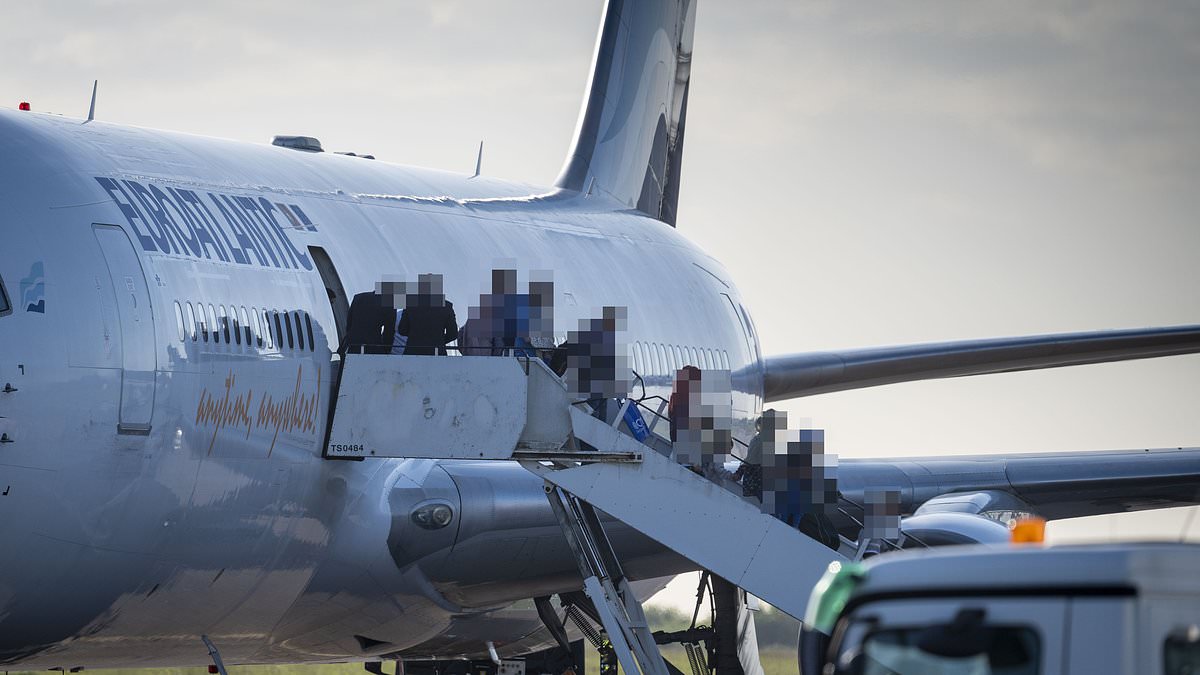
As exclusively discovered by the Daily Mail, but kept hidden by a superinjunction, in 2023 ministers launched one of the biggest peacetime evacuations in modern British history - Operation Rubific - to rescue thousands and airlift them here in secret.

Hundreds of migrants file off a taxpayer-chartered jet at Stansted airport during the two-year covert rescue mission

A blunder by the British government put Afghans loyal to British troops at risk of reprisal attacks by Taliban revenge squads

The confidential database that the British government lost, putting '100,000 people at risk of death' and triggering the evacuations mission Operation Rubific
Last October, ministers in charge of the scheme agreed to spend £7billion of public money, with taxpayers neither asked nor told, the High Court heard.
Now the compensation bonanza could send costs soaring as law firms mount class action court cases for damages.
Barings Law, based in Manchester, said it had sent the MOD a letter earlier this week, ahead of a potential legal claim being filed at the High Court.
The claimants include Afghans and their family members, along with Britons who worked for MI6 and UK special forces whose data was also leaked, it was said.
The MOD, which has 14 days to respond to the letter, vowed to ‘robustly defend against legal action or compensation’.
Robert Whitehead, chairman of Barings Law, said the letter represented the first step towards ‘holding the Ministry of Defence accountable’ for a ‘catastrophic failure’ to protect personal data.
He said: ‘The individuals affected were already at extreme risk, having applied for relocation to the UK because they feared reprisals from the Taliban.
‘We have evidence that people named on the leaked database, or those closely connected to them, have since been killed or subjected to intimidation and extortion by the Taliban, including threats made against their loved ones.

One of the unmarked planes landing at Stansted Airport carrying Afghans whose data was breached by the UK Government

How ministers signed up to a £7billion scheme to relocate Afghans to the UK, without asking or telling taxpayers or MPs. The MOD says the figure has since been revised to around £6billion

Afghans rescued by Britain land at Stansted Airport in Essex after being spirited across the border to Pakistan and airlifted to the UK
Mr Whitehead continued: ‘Our clients include individuals who have managed to reach safety in the UK, as well as others who remain in Afghanistan and are still in hiding, living in constant fear.
‘It was the Ministry of Defence's responsibility to protect this information, and the consequences of that failure are profound.
‘This case is expected to test new legal ground around the rights of data breach victims where the harm extends beyond financial loss to issues of personal safety and loss of life.’
The super-injunction was lifted in July this year, after the MOD commissioned a report by retired civil servant Paul Rimmer who concluded the threat to Afghans was not as high as feared and the injunction itself could have been making matters worse.
The MOD said: ‘As we have consistently indicated, we will robustly defend against legal action or compensation.
‘The independent Rimmer Review concluded that it is highly unlikely that merely being on the spreadsheet would be grounds for an individual to be targeted, and this is the basis on which the court lifted its super injunction.’