
Remember me

Scotland’s growing numbers of public inquiries are too expensive, ‘poorly defined’ and are damaging front-line services, a scathing new report has found.
Since the country first gained the legal powers to hold public inquiries in 2007, the cost to taxpayers has reached a staggering £258 million.
Several of the probes, including investigations into the Edinburgh trams fiasco and the death of Sheku Bayoh, have been widely criticised for dragging on for years.
Now a Holyrood committee has recommended that ministers fix budgets to stop costs spiralling – and also set definite timetables.
MSPs on the finance and public administration committee said inquiries are a valuable tool for ‘holding public bodies to account, reviewing past wrongs, identifying solutions and recommending changes to policy’.
But they concluded that the system is ‘overstretched and poorly defined’, with some inquiries lacking a ‘core objective’.

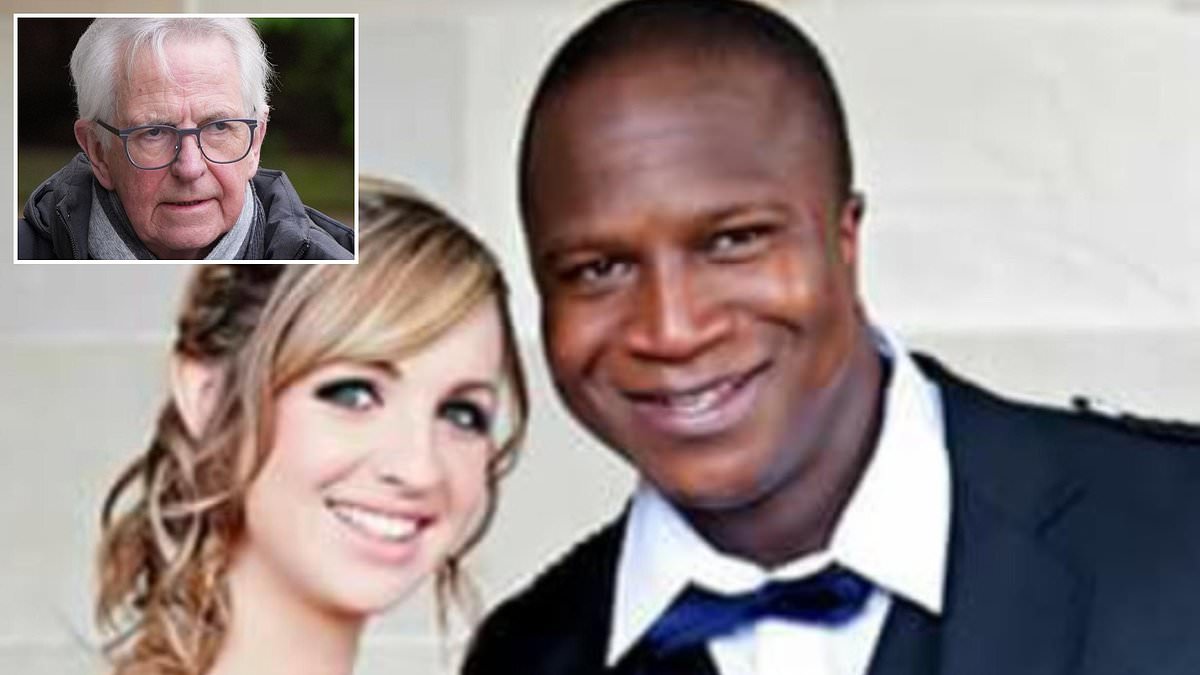
Sheku Bayoh and his partner Collette Bell. The inquiry into his death has been criticised for the length of time it has taken

Despite so far costing £26.2 million, the inquiry into Mr Bayoh's death faces an uncertain future after its chairman Lord Bracadale resigned in October
Their report also warns that, in some cases, participation in long-running inquiries is preventing judges and police officers from doing their core jobs.
In October, The Scottish Mail on Sunday revealed that Police Scotland had warned the MSPs preparing the report that sending so many officers to take part in inquiries was hampering the force’s efforts to fight crime.
Scottish Conservative MSP Stephen Kerr said: 'Scotland is being governed by an SNP administration that is simply not up to the job.
'£258 million has been blown on public inquiries because ministers can’t set clear objectives, control costs or take responsibility.
'This is a second‑rate government in action – endless drift, no grip, and a taxpayer‑funded gravy train that’s draining money away from frontline services.'
Committee convener Kenneth Gibson, a Nationalist MSP, said: ‘There is currently limited ability for ministers to control expenditure and stop costs spiralling – or to stop an inquiry dragging on for years.
‘We are also concerned at the impact on existing public services if resources are redirected to inquiries that may last for years.’
The committee concluded other countries use systems that provide ‘better alternatives for cost effectiveness and effective delivery’.
Mr Gibson added: ‘For example, Sweden normally requires its public inquiries to conclude within two years and within a set budget.’
The first public inquiry of the Holyrood era examined the 2004 ICL Stockline tragedy – in which nine people died when a plastics factory in Glasgow exploded. It published its report in 2009, exposing a series of failings and made recommendations for improving industry safety – all for the relatively modest cost of £1.9 million.
Other completed probes include the Campbell Inquiry into a police fingerprinting scandal, costing £4.8 million, the Vale of Leven Inquiry into hospital-acquired infections, costing £10.7 million and the £12.1 million Penrose Inquiry into the ‘tainted blood scandal’ that saw NHS patients infected with hepatitis C and HIV.
The inquiry into delays and costs during the construction of Edinburgh’s tram system was itself years late and massively over budget – finally producing a report in 2023 at a cost of £13.1 million.
The probe into the death of Sheku Bayoh – a 31-year-old who died in Kirkcaldy, Fife, while being restrained by police in 2015 – has been running for five years.
Despite so far costing £26.2 million, it faces an uncertain future after its chairman Lord Bracadale resigned in October amid claims he had not remained impartial.
The Holyrood report found the cost of inquiries overall was £258.8 million since 2007 – including £30 million this year alone.
Six public inquiries are ongoing. Two have only just started – investigating rogue surgeon Sam Eljamel and the death of sex worker Emma Caldwell – while four others, looking into Covid, child abuse, Scottish hospitals and the death of Mr Bayoh, have been running for more than four years.
The most expensive is the Scottish Child Abuse Inquiry, which started in 2014 and has so far cost more than £102 million.
The report concluded that some inquiries drag on because ministers were too vague in spelling out what they hoped to achieve.
Last night the Scottish Government said the chair of an inquiry is already legally obliged to avoid unnecessary costs – but also said ministers would consider the report’s recommendations.
A spokesman added: ‘We welcome this report. The proposals will be responded to in due course. Inquiries operate independently of government and are set up when no other avenue is deemed sufficient.’