
Remember me
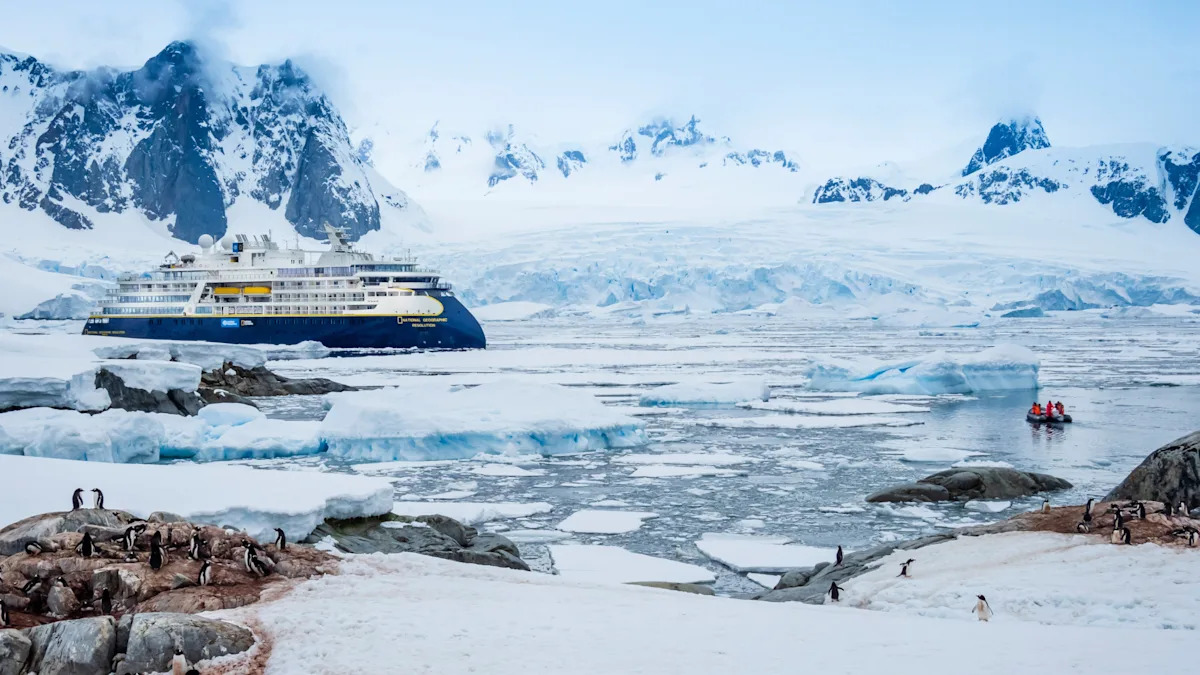







If you are going to Antarctica, there is only one company I recommend traveling with: National Geographic–Lindblad Expeditions. What stood out was the travelers' loyalty on board. Many guests were repeat passengers, some returning for their second or even tenth trip with Lindblad. One of the guests had just completed the trip and decided to jump onto another leg to do it again.
Another defining feature was expertise. Through National Geographic–Lindblad’s visiting scientists and educators program, researchers and teachers are invited to join expeditions to conduct real fieldwork. On my sailing, one scientist was researching algae in Antarctic waters, while three educators were participating as Grosvenor Teacher Fellows, taking part in the daily presentations of scientific and educational context.
National Geographic also has its elite team of naturalists, divers, photographers, and videographers on expeditions. We were shown underwater footage daily by onboard divers, and professional National Geographic photographers offered workshops, gear advice, and even lens loans. Knowing their photos and videos would be available for guests to download allowed me to put my camera down most of the time to experience everything.
Loved this branded parka I got to keep
(Kaila Yu)What surprised me most was the number of solo travelers on board. There were around 15 solo passengers. Solo travel to Antarctica is trending, and the ship is designed to accommodate it, with dedicated solo cabins and a social atmosphere. Shared dinner tables encouraged meeting new people, and crew members regularly joined guests at meals. Even the badass female CEO, Natalya Leahy of Lindblad Expeditions, was on board, which was an unexpected bonus.
From the warm expedition parka provided to every guest to the option to rent knee-high waterproof boots for landings, the logistics are thoughtfully handled. I cover exactly what I packed and what I recommend bringing here.
The passionate crew and people made the trip unforgettable, including our adventurous Captain Martin Graser, hotel manager Christian, our expedition leader Stefano Pozzi, and onboard photography expert Rich Reid, amongst many more!
National Geographic Resolution to Antarctica
(Andrew Peacock)The VoyageThe ship is engineered for polar exploration, a type of ice-breaker ship with its distinctive X-Bow design. Inspired by nature, the bullet-shaped bow minimizes wave impact, improves stability, and reduces disturbance to marine wildlife.
Another standout is the ship’s azipod propulsion system, which offers remarkable maneuverability in Antarctica’s sometimes treacherous waters. Combined with its Polar Class 5 rating, the Resolution is built to handle Antarctic conditions, from reinforced hull and propellers to powerful propulsion and onboard systems designed for extreme cold. Because anchoring in Antarctica is nearly impossible, the ship’s advanced technology allows it to maintain position without traditional anchoring. On our voyage, we were the southernmost ship in the region (a major flex!) and even explored new landing areas.
It takes about two days to cross the Drake Passage each way, making four days of choppy seas. While there is an option to fly over the Drake Passage, I would only recommend that for travelers who become extremely seasick. Crossing the Drake is a rite of passage. I don’t typically get seasick, though sleeping was a bit tricky on the rockier nights. I was hoping for an infamously wild crossing, but according to one crew member, our Drake was rated just a six out of ten.
Elephant seals
(Rich Reid)HighlightsThere were countless unforgettable moments on the ice, shortly after arriving and braving the Drake Passage, a pod of orcas swam directly up to the ship, the best kind of welcome to Antarctica.
On this expedition cruise, no two voyages are the same. Every day is shaped by weather and ice conditions. The goal is typically two excursions daily, most often a zodiac cruise and a landing.
Our first landing was at Neko Harbor, one of Antarctica’s most popular sites and home to around 500 nesting gentoo penguins. It was endearing to watch the male penguins waddle slowly across the ice, carefully carrying rocks back to their nesting partners.
On another day, we encountered an emperor penguin. I had no idea they were so tall, like a small child! One of the naturalists shared that he had not seen an emperor penguin in this area in more than 20 years of traveling here. The penguin was completely alone and remarkably curious, walking right up to us and playfully sliding across the ice on his belly.
We landed on ice which allowed us to directly get off from the boat onto the ice, not promised on every voyage!
(Kaila Yu)We were also able to step onto the Antarctic continent itself — not guaranteed on every voyage.
Another rare highlight was landing on an island of hundreds of elephant seals, not a promised stop on every expedition.
National Geographic Resolution cabin
(National Geographic–Lindblad Expeditions)I didn't have to leave my bedroom for stunning views
(Kaila Yu)RoomI stayed in a Category 5 Bridge Deck cabin, Room 702. The balcony cabin was comfortable, featuring two balcony chairs, a hammock, and a small table, which quickly became a favorite place to meditate and enjoy the stunning scenery. Inside, the room had one full-sized bed, a coffee table, a writing desk with a chair, two bedside tables, and a closet, which felt quite spacious for an expedition cruise. The heating system was also straightforward to use and customize to my ideal temperature.
Housekeeping was highly flexible, offering two cleaning times, a morning refresh, and an optional turndown service. Guests are also given a branded reusable water bottle to keep for the voyage and beyond.
Cook's Nook tuna
(Kaila Yu)DiningThe food was a major highlight of the trip. Dining is all-inclusive, including meals and basic alcohol. Cabins are also stocked with beer, wine, and sodas.
There are two main restaurants, along with a daily 4 PM tea service featuring desserts and sandwiches.
Two Seven Zero is the primary ocean-view dining room. Breakfast is served buffet-style with additional à la carte entrée options. Lunch and dinner are seated, multi-course meals, both followed by dessert. One detail I especially appreciated was the option to order half portions, which allowed me to sample multiple entrées in a single meal. I took advantage of this on several nights.
I cant believe they had okonomiyaki on board and it was good! There was almost always at least one Asian entree selection at lunch.
(Kaila Yu)There were also a few buffet-style dinners. A standout was the Filipino buffet night, a thoughtful nod to the onboard Filipino staff. In addition to nightly rotating menus, there were daily staples available at every meal, including a chicken breast, striploin steak, ship-made pasta, and either a Caesar or green salad. Menus also leaned into regional influences when possible.
A delicious chocolate bomb of a dessert
(Kaila Yu)Tres leches cake. Chef's kiss to our pastry chef, I ordered dessert at every meal because he hit it out of the part everytime.
(Kaila Yu)A special highlight was the made-to-order pasta, available at every meal, with a wide variety of pasta shapes and sauces. Also, many of us looked forward to the daily fresh-baked bread selections at lunch and dinner.
Tupaia is the more casual dining venue, serving breakfast and lunch with relaxed menus for quicker dining.
The Chef’s Table experience was an especially special touch that sets this cruise apart from its competitors. Every guest on board received an invitation at some point during the voyage. On the first night, solo travelers were seated together, which felt like a genuinely thoughtful detail that invited friendships for the upcoming journey. Read a more detailed description of what we ate at the meal here.
Onboard daily science lectures
(Kaila Yu)On Board ActivitiesDaily programming included expert-led lectures on wildlife, Antarctic history, and polar science. Most attendees are passionate about nature and wildlife, so these were all well attended.
The viral igloo experience on one of the ship's top decks was truly magical. Access is first-come, first-served, and guests typically have around ten opportunities to reserve a slot, depending on weather conditions, which can occasionally cancel availability. While the igloo is unheated, I stayed perfectly warm using the three hot water bottles provided. It is also conveniently located just steps from the sauna and hot tub, making it easy to warm up quickly afterward.
Polar Plunge
(National Geographic–Lindblad Expeditions)The Polar PlungeI always knew I was going to do the polar plunge, but we had no idea when it would happen. It was not listed on the schedule, and I assumed it would take place on the final day. Instead, on the second-to-last day in Antarctica, the crew suddenly announced it before dinner, giving us just one hour’s notice to get ready. After signing a waiver, about half the ship participated, making it a memorable, adrenaline-filled moment that felt spontaneous and celebratory. Half of our shipgoers participated, which was impressive!
National Geographic–Lindblad Expeditions hosted me on this trip, and all opinions expressed are my own.
Comments (0)