
Remember me





A widow who watched her husband with motor neurone disease end his own life in Switzerland has backed the assisted dying bill after being diagnosed with the condition herself.
In a terrible coincidence, Barbara Shooter, 69, was told she has incurable MND less than three years after her railway executive husband, Adrian, 74, died of the disease in December 2022.
She travelled to Pegasos, an assisted dying clinic in Basel, and held her husband of 16 years in her arms as he self-administered the intravenous drug which 'peacefully' ended his life, 18 months after his diagnosis.
Now Mrs Shooter is facing her own battle and has hit out at 'reprehensible filibustering' by members of the House of Lords, which could block The Terminally Ill Adults (End of Life) Bill, which was passed by MPs in June.
Kim Leadbeater, the Labour MP and architect of the legislation, has accused peers of tabling more than 1,000 'totally unnecessary' and 'very cruel' amendments in an attempt to scupper it. Supporters fear there will not be enough time to debate the long list of amendments before the parliamentary session ends, putting it at risk of collapse.
Considered one of the architects of the modern railway, Mr Shooter was a passionate railwayman who began his career with British Rail in 1970, but was best known for spearheading the successful privatisation of Chiltern Railways in the 1990s.
Such was the respect he inspired in the industry, that a bust of Mr Shooter was unveiled beside platform one at Marylebone station in central London in August 2022, a year after his diagnosis with MND.
Mrs Shooter told the Sunday Times that she had seen motor neurone disease 'up close' and it was a 'messy, brutal, nasty, vile disease.'

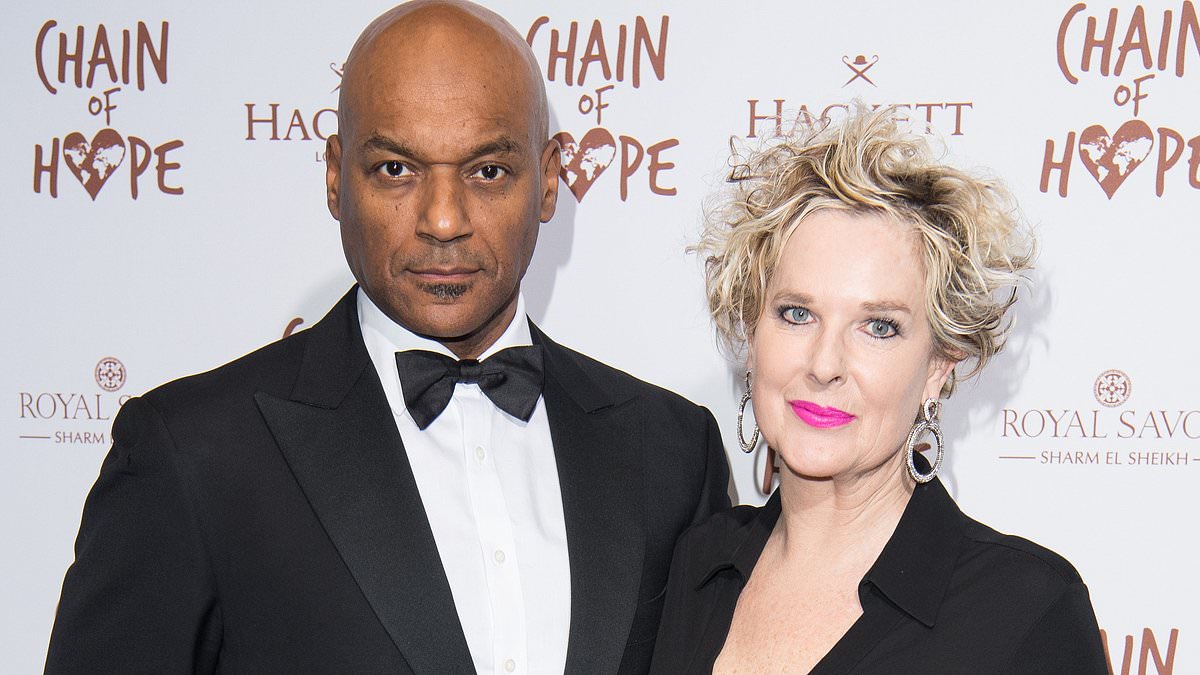
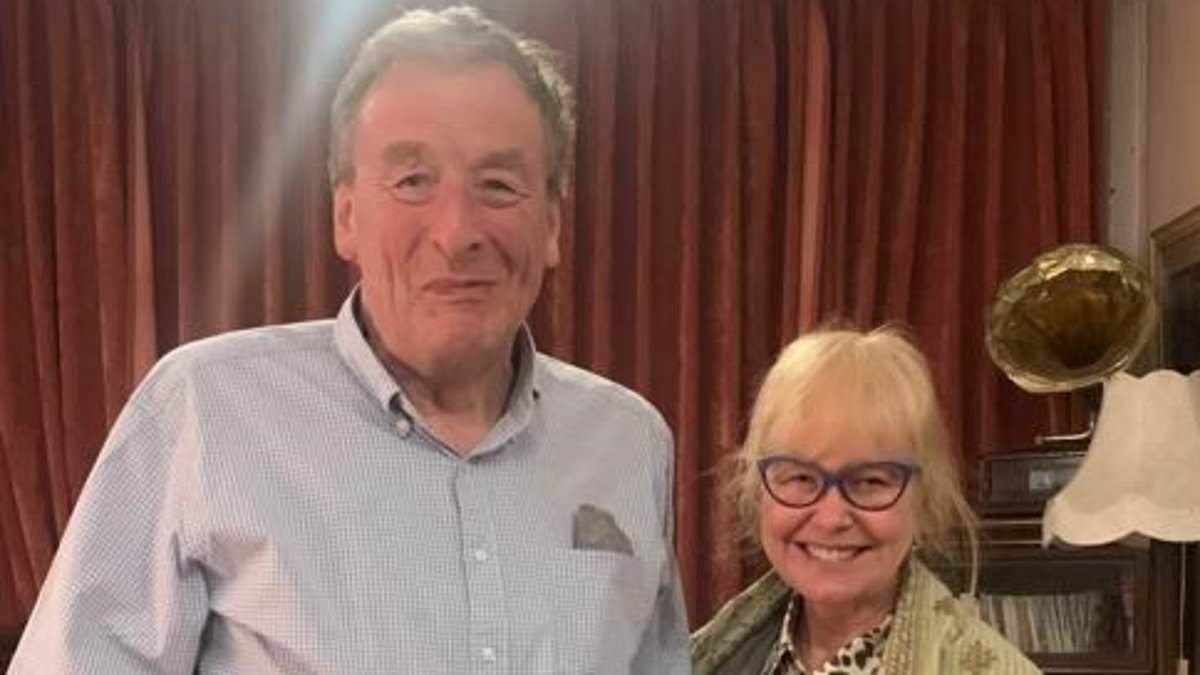
Adrian and Barbara Shooter pictured before his death in Switzerland in December 2022

Adrian Shooter CBE (pictured) beside a bronze statue of himself at Marylebone Station in London

MP Kim Leadbetter speaking during the debate of the Terminally Ill Adults (End of Life) Bill, in the chamber of the House of Commons in Westminster, London, last year
'Quite frankly, if I get to a stage when I think I can't carry on, that I've got to die, I will go to Switzerland, because that would hold no fear for me,' she said.
'I could afford it; it would be easy for me. But what about everybody else? What about people who haven't got £15,000, or who are too scared to go because it's against the law, or have no one to take them?
'It's about choice. The people who are so anti it, they don't have to have it. But don't stop me if I want to do it.'
The chances of a married couple both contracting MND, a progressive muscle-wasting disease that affects around one in every 100,000 people, is very rare.
The condition results in gradual paralysis, robbing sufferers of the ability to walk, eat and talk. Mrs Shooter's consultant, who delivered her devastating diagnosis last month, told her he had only ever seen a married couple both get it once before.
By the end, Mr Shooter, who had two children from a previous marriage, was entirely dependent on his second wife. He had severe respiratory problems, could not hold his head up or swallow, and was losing the capacity to speak.
Although he did not tell any other relatives of his plans to travel to Switzerland, he pre-prepared letters explaining why he wanted to take control of his own death.
One read: 'As I write this, my MND symptoms are getting rapidly worse, with the result that I cannot exist without constant care and attention to the most basic requirements.
'If I had not done this, I would have been condemned to months or quite possibly years of being confined to bed, unable to do anything for myself including talking.'
Mrs Shooter, who describes MND as 'a thief,' said she didn't want her grandchildren to remember her as 'the stick woman in the corner who couldn't swallow, who had to be fed through a tube and couldn't talk any more.'
'If you're in that state, I think that's a perfectly justifiable reason for ending your life,' she added.
If the bill completes its passage through the Lords, people in England and Wales with less than six months to live will have the right to an assisted death after approval from two doctors and a panel that includes a psychiatrist, a social worker and a senior lawyer.

Mr Shooter loved trains so much he built a track for a steam locomotive in his garden in Oxfordshire

Mrs Shooter (pictured) with the locomotive, which was used on the famous Darjeeling Himalayan (mountain) line in India in the late 19th century, in the couple's garden. The train has since been sold at auction
However, the proposals, which were not included in the Labour manifesto at the last general election and have unusually been introduced by a backbencher, have prompted concerns that the bill has not been as robustly constructed as some government legislation.
It is also vehemently opposed by disability rights campaigners, as well as some religious and mental health groups.
Mrs Shooter said attempts to 'filibuster' the bill were 'deeply shocking.'
'It's making a mockery of democracy,' she added.
She said it was 'reprehensible' for the 'unelected' Lords to decide to stall the legislation when the 'vast majority' of the public were in favour and the bill had been passed by the elected Commons.
If the bill does pass into law, the Government has four years in which to get an assisted dying service into place, meaning it could be 2029/30 before the first assisted death happens.