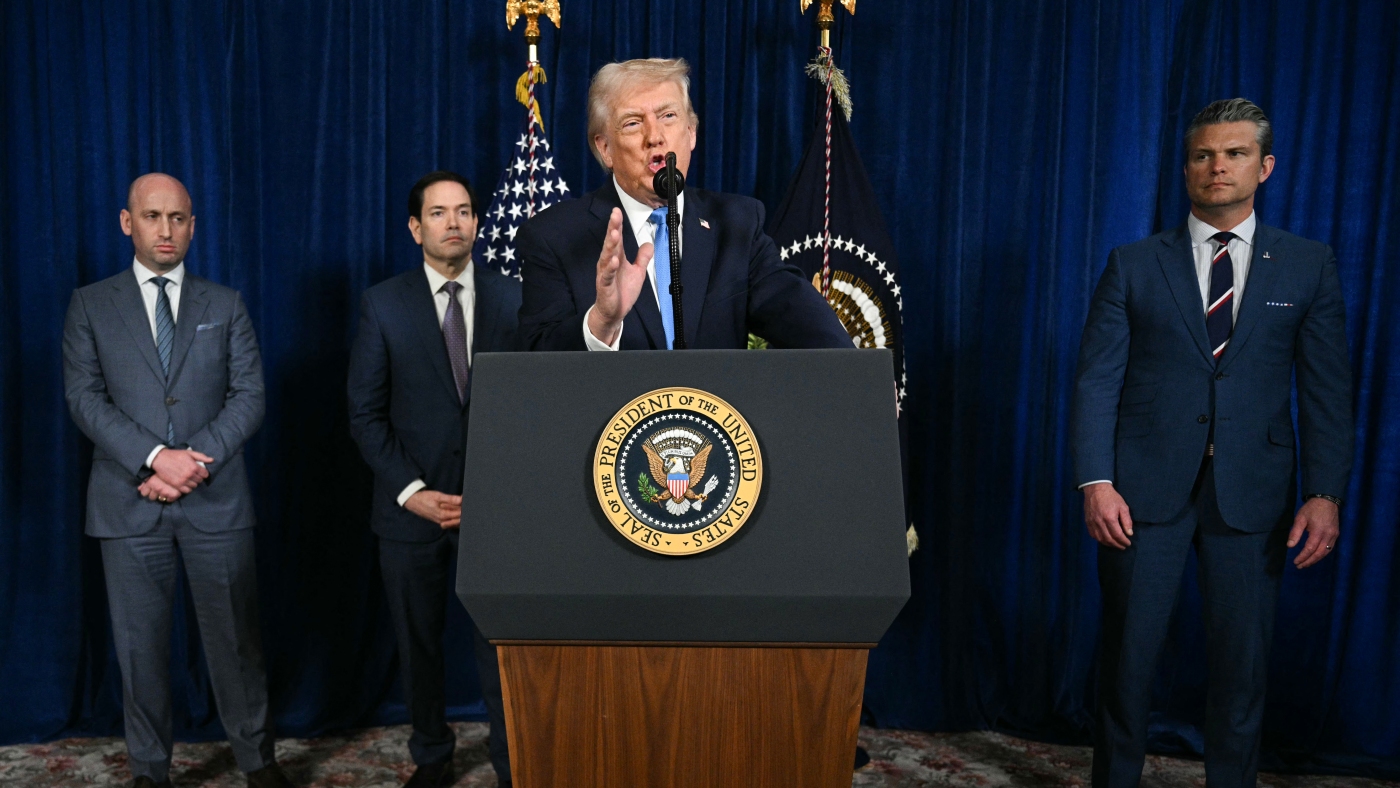
Jan. 1 is the day the extra financial help to buy Affordable Care Act health insurance goes away.
A MARTÍNEZ, HOST:
Health insurance is way more expensive this year for millions of Americans who purchase coverage through the Affordable Care Act.
MICHEL MARTIN, HOST:
Many people get government subsidies to help pay their monthly premium for that insurance. During the COVID pandemic, Congress created additional subsidies to help keep coverage affordable. But those additional subsidies expired last night, and now consumers face a hard choice. On average, premiums for these marketplace plans are more than twice as high compared to 2025. Coming up, we'll speak with Democratic Senator Peter Welch of Vermont about where bipartisan negotiations stand over the future of the insurance premiums. But first, let's get the facts.
MARTÍNEZ: Health reporter Sarah Boden joins us now to discuss what comes next. So, Sarah, higher premiums - what's enrollment looking like so far?
SARAH BODEN: Yeah, so preliminary data from December show that enrollment is down a bit compared to last December, but overall, it is higher than expected. I spoke with Cynthia Cox at the health policy think tank KFF, and she says that all of us need to realize that these numbers will probably change.
CYNTHIA COX: This is kind of like the difference between putting groceries in your shopping cart and actually purchasing them. So you don't actually own those groceries until you've paid for them. The same thing with health insurance. Like, you can sign up. You can pick a plan. But until you pay for it, it's not your health plan.
BODEN: So what she's watching for is how many people will keep their coverage. And a lot of people were automatically re-enrolled in the same policy but now have a higher premium, but they might not know that yet. So sticker shock is coming. It's estimated that 4.8 million people will drop their coverage because they can't pay for it.
MARTÍNEZ: Yeah. And health care costs are a big political issue right now. I mean, it is an election year, after all. So, I mean, is there any chance that this could change?
BODEN: You know, there is some discussion between Democrats and moderate Republicans to extend the subsidies. And if they did, they could make them retroactive. But many Republicans won't vote for it without getting something in return. For example, Republicans have suggested that people should set up health savings accounts to save up for emergencies. Others said they potentially support extending the subsidies in exchange for new restrictions on abortion. But these ideas have not gotten very far at all. And even if a compromise got through the House, the Senate would be tougher.
MARTÍNEZ: Yeah. You know, looking at the numbers, Sarah, 24 million Americans get their plans through the marketplace. I mean, so what are their options if they can't afford the new premium but don't want to be uninsured?
BODEN: The first step, if you haven't already, is go and see exactly how much you're set up to pay this year because if you don't like that number, you probably still have time to switch policies. In most states, the final deadline to sign up for a plan for 2026 is January 15. That coverage would start in February. And I've spoken with people who have chosen plans with lower premiums but higher out-of-pocket costs, so for instance, a deductible of 7 or $8,000.
MARTÍNEZ: Oh, man, that's a big ouch. That'll hurt.
BODEN: It is a lot of money, but it can be an OK option for people who are healthy and don't go to the doctor too much. It's a gamble.
MARTÍNEZ: Yeah, absolutely. That's health reporter Sarah Boden. Sarah, thank you very much for joining us.
BODEN: Thanks for having me.
Copyright © 2026 NPR. All rights reserved. Visit our website terms of use and permissions pages at www.npr.org for further information.
Accuracy and availability of NPR transcripts may vary. Transcript text may be revised to correct errors or match updates to audio. Audio on npr.org may be edited after its original broadcast or publication. The authoritative record of NPR’s programming is the audio record.