
Remember me






As Pimicikamak Cree Nation struggles to fix damage to homes caused by a four-day power outage, thousands are in the dark about when they can return to their community.
The northern Manitoba First Nation was evacuated last week after a power line servicing the community — located about 530 kilometres north of Winnipeg — snapped, leaving residents without heat in extreme cold temperatures that dropped below the –20 C mark.
Manitoba Hydro repaired the downed power line and fully restored electricity as of Friday. But during the power outage homes were rendered unsafe to live in due to damage to water and electrical systems.
The damages paired with shortage of essential supplies, including fuel, have forced the First Nation to indefinitely extend the evacuation of residents, Chief David Monias said in a statement on Sunday.
"We are asking people to stay out at their hotels until we can safely return you home," he said on social media. "If you do go back then it will be at your own risk."
Pimicikamak is trying to fix infrastructure and assess homes to determine if repairs are needed, but only about 200 of the over 1,300 residences in the community have been checked, said band Coun. Shirley Robinson.
"It's overwhelming right now," she told CBC News on Sunday. "We haven't had any help arrive yet in our nation."
More residents evacuated SundayBesides infrastructure issues, health concerns, including a lack of potable water, forced out at least 150 more residents from the First Nation by noon on Sunday. The community's water treatment plant was also damaged during the power outage.
Robinson said around 100 others expected to be evacuated by the end of the weekend.
"This is not going to stop," Robinson said. "Things [are] being currently looked at in ensuring the infants are out, the elders are out, the vulnerable are out."
At a hotel in Winnipeg, Robinson said evacuees are eager to know when they can go back home, but that date isn't fixed in the foreseeable future yet.
"I wish I could have that answer because when I'm listening to the elders here crying asking when they can go home," she said. "We're trying to get them there."
WATCH | Hundreds of homes unsafe in Pimicikimak:More than 4,000 people have been forced to leave Pimicikamak Cree Nation in northern Manitoba after a days-long power outage damaged a water treatment plant and plumbing systems, making hundreds of homes unlivable in its aftermath.Kelson Monias, an evacuated father of two, has been in his Winnipeg hotel room watching videos of water pouring from burst pipes and flooding homes in Pimicikamak. He said other residences burned in the community after residents lit wood stoves during the outage.
"It's sad. I just feel for the people that lost their homes," he said.
Monias said he left his home last week after his generator couldn't keep his family warm enough during the outage. He said his mom has been taking care of his house since, including turning the water off to prevent bursting pipes.
He is also concerned about damages to Pimicikamak's water treatment plant. He used to work at the facility that services most of the community and said that getting pieces to repair the aging piece of infrastructure has long been a challenge.
But for now, he said, all he can do is wait for Pimicikamak to finish the assessment and start repairs.
While he is grateful to have a place where to sleep at night, Monias said the evacuation has taken a toll, especially on his children who have been evacuated from their community twice since the summer.
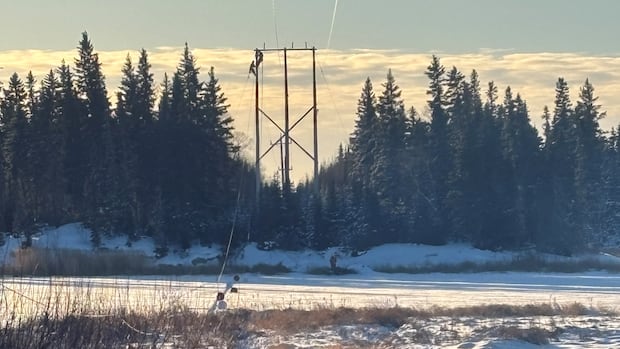
 Power has been fully restored in Pimicikamak Cree Nation, after a snapped line cut electricity to the northern Manitoba First Nation on Dec. 28. (Submitted by Manitoba Hydro)
"The situation right now is hard. The kids aren't eating what the staff are cooking," he said.
"I only brought like three pairs of clothes for myself, it's pretty rough right now … we really didn't know that was going to happen."
Robinson told CBC News many evacuees left home just like Monias' family — with only a few belongings tucked in a suitcase. Pimicikamak is trying to fill that void supplying clothing and hygiene products.
"We're also looking at getting programs in place for our people to ensure that we look after their mental health at the same time," she said. "All our people the way they deserve to be looked after."
'It's been really hard'A provincial spokesperson told CBC News that Premier Wab Kinew has spoken with the Pimicikamak Cree Nation chief, expressing interest in visiting the community this week, but a formal date has not been set yet.
Rebecca Chartrand, member of Parliament representing the riding where Pimicikamak is located, said federal partners are also co-ordinating a chartered visit to the community while moving forward with a plan to quickly help the First Nation.
Paige Paupanakis has been helping evacuees, raising funds to help Pimicikamak cover some of its resident's expenses.
"It's been really hard on the people and you can see it right away when you enter a hotel," she said. "I'm very upset that it's happening and that our chief and council have to beg for help."
 Paige Paupanakis, right, has been helping raise funds for Pimicikamak Cree Nation evacuees. (Justin Fraser/CBC)
Some of the money was used to organize a day of activities for children at a Winnipeg hotel, but most of the funds raised have been used to send food and winter clothing to Pimicikamak, where the need is greatest, she said.
"We have to realize that just because the power is on, there's a long process that's gonna happen after this, with the repairs, with the plumbing, with fixing the floors. There's tiles that are just coming right up."
Rena Brightnose has been staying in Winnipeg since last week and she is concerned about her house. Her daughter has told her there is still no heating despite the return of electricity and there's a sour smell lingering in the air.
Pimicikamak has put out a call for licensed plumbers and the Canadian Armed Forces to help with the repairs. Brightnose said their help is needed given the large number of houses in the community.
While evacuation has been hard for her, she said elders have been particularly affected because they are not used to be in the city.
"People that I talk to here … they want to go home, but they don't know what they're going to be expecting," she said.
Comments (0)