
Remember me





 Now’s the time to speak up! (Picture: Getty Images)
The era of nonchalance is officially over — love me loudly or not at all.
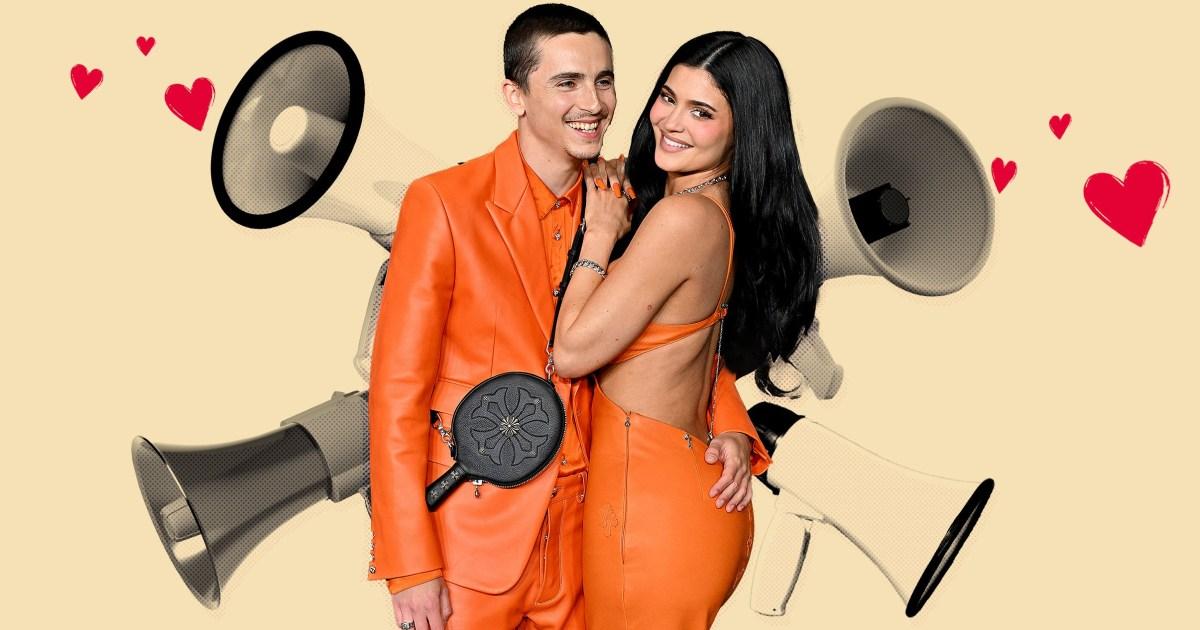
During his acceptance speech at the Critics’ Choice Awards, Timothée Chalamet – an actor known for his chameleon-like capabilities – couldn’t hide that he was head over heels in love.
Addressing his girlfriend Kylie Jenner as she sat in the audience, the actor stated: ‘Thank you to my partner of three years. Thank you for our foundation. I love you. I couldn’t do this without you. Thank you from the bottom of my heart.’
It’s safe to say that Timmy hit the nail bang on the head.
As the Year of the Horse trots into focus, a new dating trend is making its claim. Devouring scenes of Jonathan Bailey in ‘Bridgerton’ pining over Simone Ashley is no longer good enough. We want to see yearning play out in real time — a kind of devotion that would make even heartthrob Mr Darcy proud.
Indifference might have been sexy in 2025. But moving forward, we want to see declarations of love, boom boxes held on shoulders, and lengthy Instagram captions. Let’s get loud people.
‘Playing it cool’ is not a turn on, loud love isThere was definitely a time when aloofness sat at the tippy top of the sexy pyramid.
Heath Ledger in ’10 things I hate about you’, Matthew McConaughey in ‘How to Lose a Guy in 10 Days’ — these men were uninterested and we were totally hook, line, and sinker. But now, things have changed.
Dating and relationship coach Kate Mansfield tells Metro: ‘What I’m seeing with my clients is a fundamental shift in what women – and increasingly, all singles – find attractive in 2026.
‘The ‘cool guy/girl’ archetype, rooted in emotional distance and calculated indifference, has lost its appeal because it often signals unavailability rather than confidence. Yearning, by contrast, communicates genuine desire, emotional investment, and vulnerability, all qualities that build real intimacy.’
Psychologist Madeleine Roantree builds on this, noting how ‘for a long time, romantic coolness functioned as a kind of social currency […]The person who appeared least interested in dating often held the most power, and this imbalance was framed as chemistry.’
But now, loud loving has become far more desirable. Only recently, Metro interviewed two boyfriends who gave off big yearning energy — so much so that even I, a cynical bisexual, felt a pang of warmth in my heart.
 Kylie and Timmy for the win (Picture: Getty Images)
Matt Johnston, 28, met his girlfriend Rachel on Hinge in 2023 and described her as his ‘companion’ and ‘co-pilot.’
‘I love her, she’s allowed me to be the best version of me — and I don’t care who knows it.’
Once upon a time, such a declaration might have been called a bit much. But after years of ghosting defining dating, relationship coach Kate calls this OTT enthusiasm ‘refreshingly rare.’
‘Women are recognising that nonchalance often masks emotional unavailability, which creates anxiety and self-doubt in relationships. Yearning, when it’s healthy and reciprocated, can create the opposite: security and connection,’ she says.
Let’s also make one thing clear: there’s a big difference between private and nonchalant.
Not everyone cares for public declarations. But the crux of this ‘broader cultural recalibration’ that Kate describes reflects an overwhelming feeling from singles that modern dating is tiring enough as it is. Bring back decisiveness – now that’s a turn on.
I will never date a nonchalant man ever againIn a video titled ‘my Ted talk on why nonchalant men are the absolute worst’ TikToker Amanda Monsen shared how she craved being with someone who’d ‘confess their love, whether its through handwritten notes, random bouquets of flowers, paragraph texts, or just sitting me down and telling me to my face.’
‘Anything is better than this whole guessing game – why are men so scared of emotion. I will never date a nonchalant man ever again.’
And Amanda’s comments section proved that she wasn’t alone in this.
‘It honestly will bring down your sparkle, never again,’ one user wrote. Another added ‘I don’t have the ability to be interested in a nonchalant man. There’s just nothing to even fall for at that point.’
On the flip side, someone who yearns openly, giving you those handwritten notes or jotting down your favourite snack for future reference, shows emotional maturity. It symbolises what Madeleine frames as a ‘secure attachment – someone who is comfortable showing their vulnerability without being crushed by (the idea of) rejection.’
‘Open desire creates emotional safety. So when a persons interest is clear, both people can relax into the connection,’ she adds. ‘There is no second-guessing and less analysis of tone or timing. Paradoxically, this security often allows for more playfulness and confidence, not less. Yearning does not eliminate attraction’s tension; it grounds it.’
How to spot a nonchalant man in the wildThere are a few ways to identify a nonchalant man.
Some of the more obvious signs may include: putting little to zero effort into date planning, poor communication skills – typically backed up by an excuse such as ‘that’s just the way I text’ or ‘I’ve had a lot going on.’
 I told him it was in the wrong hole - then I found out why
Today is the riskiest day of the year for your relationship
The one small change that will make your marriage stronger in 2026
I told him it was in the wrong hole - then I found out why
Today is the riskiest day of the year for your relationship
The one small change that will make your marriage stronger in 2026
They’ll spend no time or energy trying to meet your friends or ask engaging questions about your life. They’ll scare easily and will constantly keep you guessing, wondering if they might all of a sudden walk straight out of your life.
A nonchalant partner will typically gaslight you into thinking your expectations are too high. How could someone possibly expect to receive emotional validation or affirmation three months into dating…? That’s far too overbearing.
Madeleine explains how she’s seen among her own clients a ‘growing unwillingness, particularly among women, to shoulder disproportionate emotional labour.’
She goes on to add: ”The nonchalant partner frequently creates a dynamic in which one person is left interpreting signals, initiating connection, and sustaining emotional momentum. As awareness grows around imbalance and burnout in relationships, that model feels increasingly outdated. People are less inclined to audition for affection or convince someone to care.’
Arrow MORE: Today is the riskiest day of the year for your relationship
Arrow MORE: Hacker deletes ‘Nazi dating site’ and leaks thousands of profiles online
Arrow MORE: Timothee Chalamet’s ‘authentic’ declaration of love for Kylie Jenner at Critics Choice Awards
Comment now Comments Add Metro as a Preferred Source on Google Add as preferred source