
Remember me







My fellow columnist Alex Kane has made the argument that “the vast majority of people, north and south, are nowhere close to being prepared for a serious, thought-through debate or campaign” on Irish unification.
The blame for that state of affairs lies squarely with the Irish government and specifically Micheál Martin.
His partner in government, Simon Harris, has no interest whatsoever in reunification. Indeed, no-one has been able to discern any aim or ideology for him being in politics except his own ambition.
Harris seems delighted to have moved to finance and to off-loaded foreign affairs and trade to someone who has never uttered a syllable on the north, except to complain about the number of asylum seekers coming south.
I suspect that not one unionist in a hundred could name her, and not many more nationalists either.

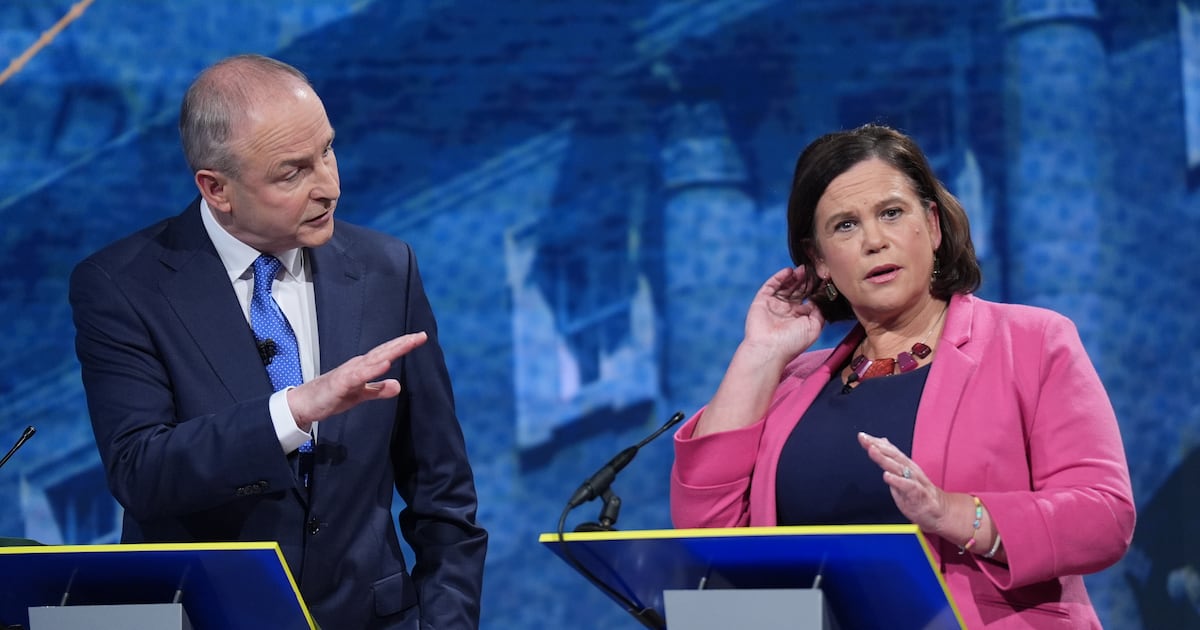
On the other hand, Micheál Martin, who has been around a long time in government, has spoken about the north up until about five or six years ago, when Sinn Féin outpolled Fianna Fáil in the 2020 general election and looked a serious candidate for government.
Since then he has taken to appeasing unionists – to no avail, of course – and set his face against reunification, for the party political reason that it means Sinn Féin in government and the end of Fianna Fáil.
As a result, Martin has placed himself and his party in the curious position of promoting the opposite of Article 3 of Bunreacht na hÉireann, which states that “it is the firm will of the Irish Nation, in harmony and friendship, to unite all the people who share the territory of the island of Ireland”.
It is his firm will not to. He has said he will not plan for a referendum and will not hold one this decade.
He says this in defiance of the all-party Oireachtas committee on the implementation of the Good Friday Agreement which has recommended that the government begin to plan “immediately” for a referendum.
 The Joint Committee on the Implementation of the Good Friday Agreement. L-R Deputy Frank Feighan, Deputy Pauline Tully, Senator Malachai O'Hara, Senator Emer Currie, Committee Cathaoirleach Deputy Fergus O'Dowd, Senator Frances Black, Deputy Brendan Smith, Deputy Rose Conway-Walsh.
 It’s mistaken to think that the Irish and British governments will wake up one day and announce that the conditions for holding a referendum have been met.
While it’s correct that legally it’s for the British to call one, but what would people vote for or against?
The fact is that it’s for the Irish government alone to set out what the reunified state would be.
A central sovereign state? A federal sovereign state? Would Stormont continue? What powers would it have? How much would it all cost?
Only the Irish government can do that. The British can’t announce what kind of Ireland people would be voting for and this Irish government won’t do it so there’s an impasse.
It’s possible, some say probable, that after the Starmageddon elections this May, all the devolved administrations will be led by people who want to bring the UK to an end. If so, that will hasten the reunification poll.
 British prime minister Sir Keir Starmer (Jonathan Brady/PA)
 However, if he’s still around, Safety First Starmer won’t call one. It’s a very big deal, and definitely something no British prime minister will “wake up some morning” and announce.
Starmer has already said he won’t call a second Scottish referendum even if the SNP win a majority in Edinburgh, though he may have to eat those words.
It’s a very big deal because calling a reunification poll in the north means whichever prime minister does it has decided to end the UK.
That’s because the Good Friday Agreement says “if it seems likely” a majority would vote for Irish unity.
It may be Scotland will go first, but whereas voting for reunification means the end of the UK, Scotland going means the end of Britain.
So, we end where we started. No-one’s ready for a serious, thought-through campaign because all opinion polls on the matter are based on sentiment, not reality.
That’s because the Irish government, which must take the lead in drafting a blueprint, simply refuses to do so.
The consequence of this irresponsible dereliction of duty is, as Alex says, that “any campaign is likely to descend at headlong speed into the toxicity and brutal madness of the Brexit referendum”.
An indictment of the Irish government, which ironically prepared so well for Brexit.
If you have an opinion on the issues raised in this article and would like to submit a Letter to the Editor to be considered for publication, please click hereLetters to the Editor are invited on any subject. They should be authenticated with a full name, address and a daytime telephone number. Pen names are not allowed.
