
Remember me








To start the new year, New Yorker writers are looking back on the last one, sifting through the vast number of books they encountered in 2025 to identify the experiences that stood out. This is the second installment in a series of their recommendations (read the first here) that will continue in the coming weeks. Stay tuned for the next one and, in the meantime, should you wish to grow your to-be-read pile further, you can always consult the magazine’s annual list of the year’s best new titles.
Out of My Leagueby George Plimpton

Years ago, I wrote a series of articles for my college newspaper about competing in contests for which I was comically unprepared: arm wrestling, archery, Scrabble. The compulsion to fail dramatically continued into my freelance writing career, when I finagled my way into the front corral at the Los Angeles Marathon. (I stuck with the élites for all of two hundred meters.) My inclination was Plimptonian. In 1961, George Plimpton, the co-founder of The Paris Review, published “Out of My League,” in which he recounts floundering epically on the baseball field. Plimpton did not invent participatory sports journalism—in 1922, the reporter Paul Gallico submitted himself to Jack Dempsey’s fists—but he mastered its steady accumulation of masochistic micro-detail. His book is a brutally funny chronicle of an afternoon at Yankee Stadium—“unbelievably vast, startlingly green”—where he, a former prep-school pitcher, “built rather like a bird of the stiltlike, wader variety,” threw a half inning of an exhibition game against Major League All-Stars. The climax finds Plimpton, marooned on the mound wearing a child’s mitt, having something like a panic attack as he faces Willie Mays and company. Following a wild pitch, Plimpton writes, “I felt I had to make some comment; what I’d done was too undignified to pass unnoticed, and so once again I hurried off the mound calling out, ‘Sorry! Sorry!’ ”—Charles Bethea
American Mermaidby Julia Langbein

For me, the best books to pick up during the quiet weeks around the holidays are literary novels, particularly those from fresh talents. One of my favorite finds of the past few years is “American Mermaid.” Langbein, an American expat who now lives near Paris, is something of a polymath; she earned a Ph.D. at the University of Chicago and has authored a monograph, “Laugh Lines,” about comedy in nineteenth-century France. In the early two-thousands, she did standup in New York, and wrote a popular humor blog, “The Bruni Digest,” in which she critiqued the Times columnist Frank Bruni’s restaurant reviews with, as a reporter for Food & Wine once wrote, “almost Talmudic attention.” “American Mermaid,” which came out in 2023, is Langbein’s first work of fiction, but has the confidence of a tenth. The story follows an English teacher, Penelope Schleeman, who has written a début novel about the adventures of a feisty mermaid living in a matriarchal pod. The book, which has a decidedly feminist bent, becomes a surprise best-seller, and soon Penelope finds herself in Hollywood, surrounded by blowhard executives and puerile male screenwriters who want to adapt her work into a blockbuster. What unfolds is a bit of a nightmare, as the industry campaigns to soften the edges of her subversive story, and also a bit of a magical-realist fantasy: Penelope starts believing that maybe mermaids actually exist—or perhaps she’s simply going crazy? It’s a book within a book wrapped in a parable, and I adored it. I laughed out loud, several times, and hardly wanted it to end. And, if you read it now, you’ll be able to say you were early to Langbein before her next novel—“Dear Monica Lewinsky,” about a woman who begins to pray to Lewinsky as a secular saint—arrives in April.—Rachel Syme
Death Comes for the Archbishopby Willa Cather

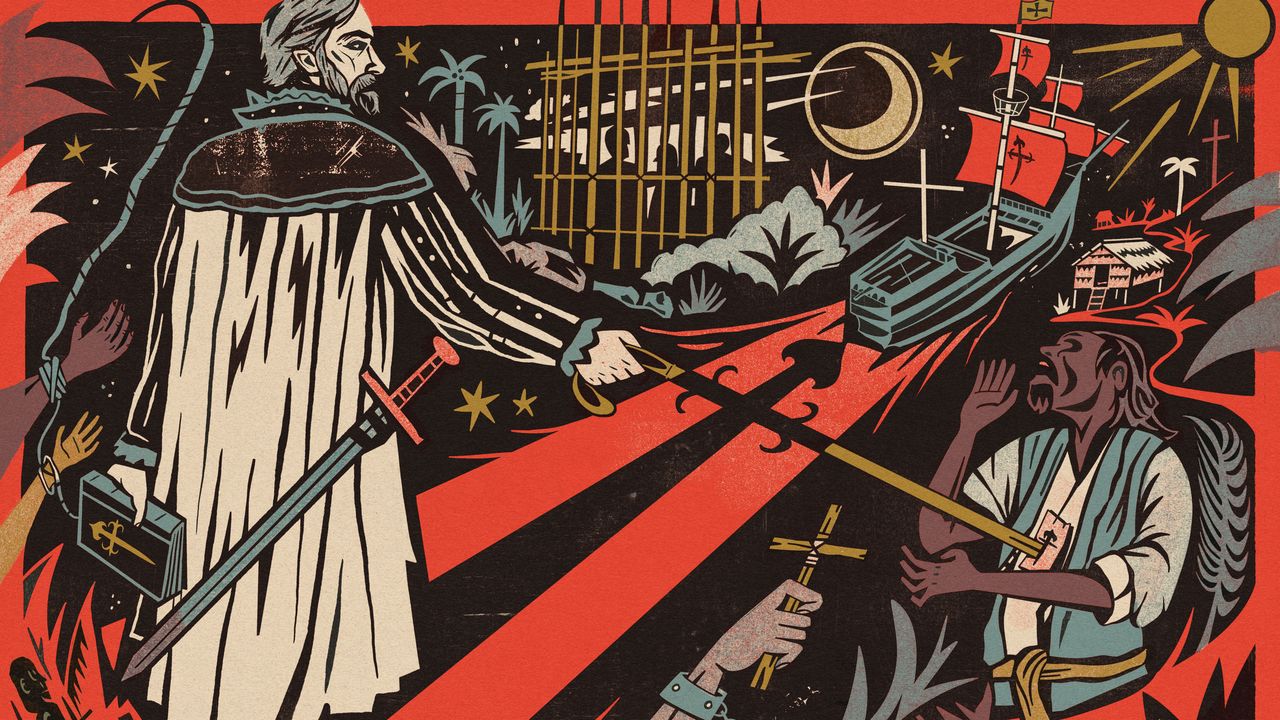
My colleague Katy Waldman recently wrote an appreciation of Mary McCarthy’s “One Touch of Nature,” an essay from 1970 on the decline of landscape in fiction. Melville’s oceans and Fenimore Cooper’s forests were charged with grandeur, McCarthy writes; by her own time, readers had to be content with Hemingway’s sportfishing and the masculinist idealization of Southwestern “ranch life.” Strangely, McCarthy overlooks one of twentieth-century American literature’s greatest observers of nature: Willa Cather, and, particularly, the wondrous, ruminative New Mexico of her 1927 novel “Death Comes for the Archbishop.”
Cather’s protagonist, Father Latour, is a French priest, who is appointed bishop of New Mexico following its 1851 annexation. The gringos are coming, and Latour must shore up the diocese, trekking between isolated haciendas and pueblos with his quasi-spousal companion Father Vaillant. (Cather was a lesbian, and her narrative conforms to Leslie Fiedler’s contention that American literature is fixated on the homoerotics of the frontier.) They meander through a series of hardscrabble vignettes, succoring the poor and rooting out parochial corruption. The real story is Latour’s encounter with the territory—transfigured, by Cather’s prose, into a metaphysical battleground and a sphinxlike witness.
Comments (0)