
Remember me

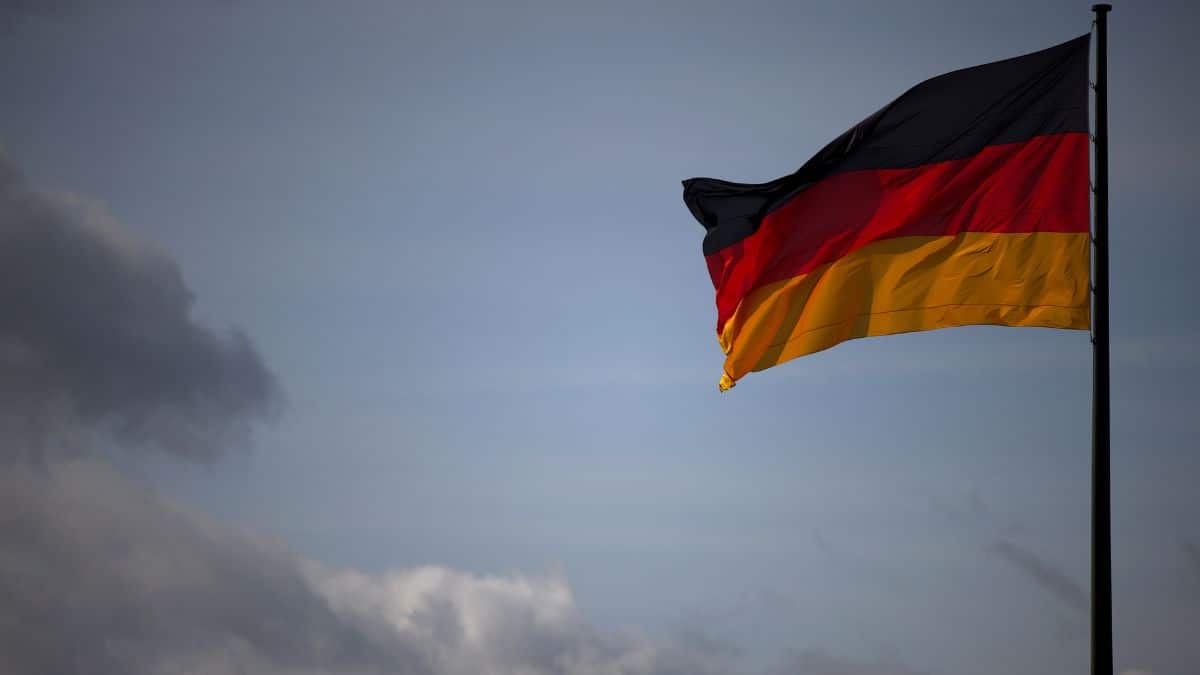


A large-scale power outage that left tens of thousands of residents in southwest Berlin without electricity, heating, mobile connectivity and transport services has triggered a federal terrorism investigation in Germany.
Authorities believe the incident, which took place during freezing winter conditions, was caused by a deliberate arson attack on critical energy infrastructure.
The case is now being treated as one of the most serious sabotage incidents in the German capital since the end of World War Two.
STORY CONTINUES BELOW THIS ADThe German federal prosecutor’s office confirmed on Tuesday (January 6, 2026), that it had formally taken over the investigation.
Officials said they were examining possible offences including “membership in a terrorist organisation, sabotage, arson and disruption of public services.”
More from Explainers
The blackout has been linked to a far-left extremist network known as the Vulkangruppe, or Volcano Group, which has claimed responsibility for the attack.
How the attack unfolded and what was damagedThe power failure began in the early hours of Saturday (January 3, 2026), after several high-voltage cables were set on fire on a bridge that carries electricity lines across the Teltow Canal in southwest Berlin.
The cables supplied power to a gas-fired power station in the Lichterfelde district, a key part of the city’s energy network.
According to German authorities, the attackers used incendiary devices to deliberately destroy the cables. Security officials later stated that the operation appeared to have been carefully planned.
A cable duct running over the canal was severely damaged, cutting off electricity to large parts of the city’s southwestern districts.
The impact was immediate and widespread. Approximately 45,000 households and around 2,200 businesses lost power, affecting an estimated 100,000 people.
Editor’s Picks
1Streets were left in darkness, heating systems stopped working, and mobile phone and internet connections were disrupted. Rail services in the area were also affected.
Cold winter temperatures worsened the situation, as many residents were left without heating for several days. Two-thirds of the affected households were still without electricity by Monday (January 5, 2026) as repair crews worked to assess and fix the damage.
STORY CONTINUES BELOW THIS ADThe state economy minister told German media that the destruction had been caused by deliberate sabotage.
Who claimed responsibility and what they saidResponsibility for the sabotage was claimed online by a far-left extremist network calling itself the Vulkangruppe, also referred to as the Volcano Group.
In a written statement titled “Cutting Off the Rulers’ Power” or “Turning off the juice to the rulers,” the group said it had “successfully sabotaged” the Lichterfelde gas-fired power plant.
The statement framed the attack as an ideological action against fossil fuel energy production rather than an attempt to cause widespread power outages.
The group argued that its objective was to strike at what it described as the destructive environmental impact of the fossil fuel industry.
In the statement, the group wrote, “In the greed for energy, the Earth is being drained, sucked dry, burned, ravaged, razed, raped and destroyed.”
The Vulkangruppe also said the action was an “act of self-defence” and an expression of solidarity with those who protect the environment.
While it apologised to less affluent residents who were affected by the power cuts, the group said it had less sympathy for “the many owners of villas.”
STORY CONTINUES BELOW THIS ADGerman police told AFP news agency that the statement appeared “plausible,” and Berlin’s Senate also considered the claim credible. Authorities have ruled out foreign involvement and are focusing on domestic left-wing extremism as the main line of inquiry.
How hospitals and vulnerable residents were impactedThe blackout posed serious risks to vulnerable groups, particularly patients in hospitals and residents of care homes who rely on electricity for medical equipment and heating.
Emergency generators were deployed to ensure that critical healthcare services could continue operating.
Some hospitals in the affected areas had their power restored by Sunday (January 4, 2026), but others continued to rely on backup systems. Officials said that hospitals and care facilities had received emergency generators and fuel to maintain essential services.
In addition, people who required care at home were transferred to facilities with available capacity. Some residents were moved out of the affected zones entirely to ensure their safety.
Berlin Mayor Kai Wegner condemned the attack, stating that “suspected left-wing extremists knowingly put lives at risk, especially those of patients in hospitals, as well as the elderly, children and families.”
Experts warned that the sabotage had created a serious danger for uninvolved civilians. They pointed out that prolonged power loss in hospitals could potentially lead to fatalities if medical devices failed.
STORY CONTINUES BELOW THIS ADHow Berlin responded to the blackoutBerlin’s emergency services launched a large-scale response to support residents affected by the blackout. The German army provided logistical assistance, while charity groups helped organise shelters and distribute aid.
People were offered warm accommodation in hotels, schools and sports centres across the city. Public buses were also deployed as temporary warming shelters for those who needed a heated place to rest.
Public swimming pools were opened around the clock so residents could shower and stay warm. These facilities became especially important for people who had been without hot water for several days.
Emergency measures remained in place throughout the outage. The military helped fuel emergency generators, while local authorities coordinated the relocation of vulnerable individuals.
Berlin’s city government also announced financial support for affected residents. It said it would cover hotel costs for people forced to leave their homes due to the ongoing power outage.
The offer applied to Berlin Partner hotels charging a capped rate of €70 (about $82) per double room per night.
Despite these efforts, daily life remained heavily disrupted. Around 20 schools stayed closed, including some that were due to reopen after the Christmas holidays. Public transport services were limited in certain areas, and many businesses were unable to operate normally.
STORY CONTINUES BELOW THIS ADWhy prosecutors are treating the case as terrorismGiven the scale of the disruption and the suspected ideological motives behind the attack, Germany’s federal prosecutor’s office decided to take over the investigation.
Officials said the case involved potential offences including anticonstitutional sabotage, arson, and membership in a terrorist organisation.
The Bundestag’s interior committee is set to receive a detailed briefing on the incident, reflecting the seriousness with which German authorities are treating the case.
Investigators believe the attack fits a pattern of activity associated with so-called Volcano Groups, which Germany’s domestic intelligence agency has monitored for years.
These groups are classified as “violence oriented” and are believed to operate in a decentralised manner, making it difficult to identify their leadership or membership.
In December 2025, domestic intelligence chief Sinan Selen warned of “worrying developments” in left-wing extremism during an interview with the newspaper Die Welt.
A domestic intelligence report stated, “In Berlin and Brandenburg, so-called Volcano groups have been carrying out arson attacks on critical infrastructure points at irregular intervals since 2011, often with noticeable impacts on the public.”
Authorities believe the Berlin blackout fits this long-standing pattern of attacks on infrastructure designed to disrupt public life and demonstrate the vulnerability of urban systems.
STORY CONTINUES BELOW THIS ADWhat we know of previous attacks linked to the Volcano GroupIn May 2021, unknown perpetrators carried out an arson attack at Tesla’s Grünheide factory near Berlin. Although the damage did not stop production for long, the incident caught public attention.
A more serious attack followed in March 2024, when a high-voltage pylon supplying electricity to Tesla’s factory was destroyed.
The incident halted production at the plant and cut power to nearby towns for several days. A Volcano Group claimed responsibility for that sabotage as well.
According to intelligence reports, the group views Tesla as a symbol of a supposedly “totalitarian system.” It accuses the company of contributing to technological expansion, environmental damage and the oppression of people.
Left-wing extremist attacks linked to Volcano Groups have not been limited to industrial sites. In 2020, a group claiming the same name said it was responsible for an arson attack on Berlin’s Fraunhofer Institute for Telecommunications, also known as the Heinrich-Hertz-Institut.
The group accused the institute of contributing to the development of a Covid-19 tracking app.
Berlin’s intelligence service said such acts of sabotage are intended to expose weaknesses in urban infrastructure, disrupt public order and cause significant material damage.
STORY CONTINUES BELOW THIS ADWhat we know about the timeline of restorationThe damage to the high-voltage infrastructure was extensive, and authorities warned early on that restoring power would take several days.
Berlin’s power network operator, Stromnetz Berlin, said the repair process was complex due to the location of the cables and the severity of the fire damage.
By Tuesday, around 24,700 households and 1,120 businesses were still without electricity. Many of these were located in the affluent Zehlendorf district, where the blackout had lasted for several days.
German news agency dpa reported that service was being gradually restored, with full reconnection expected by Thursday afternoon, January 8, 2026.
Electricity was finally restored to the numerous areas on Wednesday, following a carefully coordinated operation that began at 11 am (1000 GMT).
Berlin Mayor Kai Wegner described the process as gradual and technically demanding, reflecting the complexity of repairing high-voltage systems.
“This is the longest blackout in the city since the end of World War II,” officials said, highlighting the historical scale of the outage.
After power was restored, Wegner said, “Today is a good day for the many people affected who had been cut off from electricity and heat since January 3.”
What nextSome German politicians have called for increased investment to protect energy networks, transport systems and communication services from future attacks.
The involvement of the German army in supporting residents during the outage highlighted the seriousness of the situation. Authorities have stressed that there is no evidence of foreign involvement in the Berlin attack. The investigation is focused entirely on domestic extremism.
As of Tuesday, the German federal prosecutor’s office had formally taken over the case from local authorities.
Prosecutors are examining evidence related to the use of incendiary devices, the destruction of high-voltage cables, and the online statements claiming responsibility.
Police continue to treat the Volcano Group’s claim as credible, but no arrests have been announced so far.
Authorities have not disclosed details about specific suspects, citing the ongoing nature of the investigation.
The Bundestag’s interior committee is expected to receive a security briefing later in the week.
With inputs from agencies
HomeExplainersWhy is Berlin’s longest blackout since WWII being linked to terrorism?End of Article