
Remember me




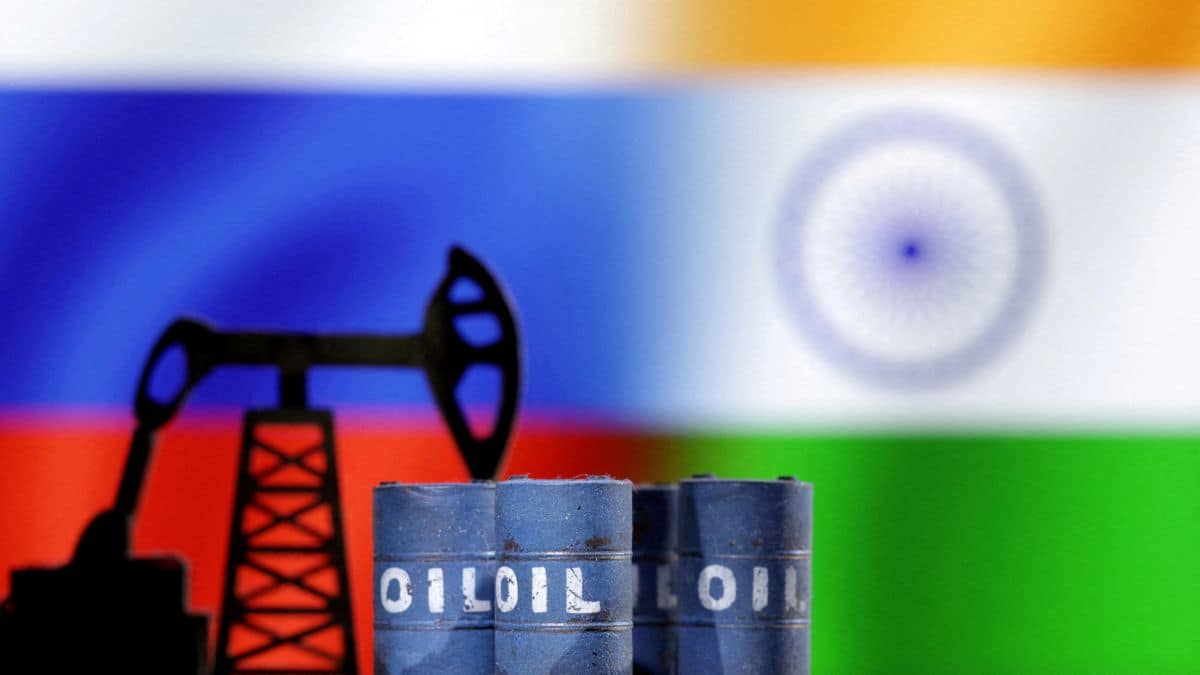
As Trump greenlights the Graham-Blumenthal sanctions bill to punish global buyers of Russian fuel, Washington faces a billion-dollar question: Can the US survive a 500% tariff on the very uranium it needs to power its future?
In a move that could reshape global energy markets and test the limits of American economic leverage, Senator Lindsey Graham (R-SC) announced on Thursday that President Donald Trump has officially “greenlit” the Sanctioning Russia Act of 2025.
The bipartisan bill, co-authored with Senator Richard Blumenthal (D-CT), aims to “economically cripple” Moscow by targeting its biggest customers.
However, a glaring contradiction sits at the heart of the legislation. While the US prepares to punish nations like India and China for buying Russian exports, Washington itself remains quietly addicted to Russian minerals and nuclear fuel.
STORY CONTINUES BELOW THIS ADThe ‘500% leverage’ strategyThe proposed legislation gives the US President authority to levy secondary tariffs of up to 500 percent on any nation that knowingly purchases Russian oil, gas, or uranium.
More from World
“This bill will allow President Trump to punish those countries who buy cheap Russian oil fueling Putin’s war machine,” Graham stated in a post on X. He explicitly named India, China, and Brazil as primary targets, suggesting the tariffs provide “tremendous leverage” to force these nations to pivot away from Moscow.
Despite the aggressive rhetoric, trade data reveals that the US is still a major financier of the Russian economy. In 2024 alone, Washington imported $1.27 billion worth of fertilisers, $878 million worth of Palladium (critical for the US automotive and electronics sectors), and $624 million worth of enriched uranium & plutonium.
While a 2024 law officially “banned” Russian uranium, it included a series of waivers allowing imports to continue until 2028, citing national energy security. This has led critics to ask if the US is essentially exempting itself from the same moral and economic standards it is now demanding of its allies.
STORY CONTINUES BELOW THIS ADThe stakes are highest in the nuclear sector. This week, the US Department of Energy awarded $2.7 billion in contracts to domestic companies to jumpstart American uranium enrichment. The goal is to produce HALEU (High-Assay Low-Enriched Uranium)—a fuel enriched to between 5% and 20%.
HALEU is the lifeblood of next-generation high-tech reactors, which are smaller, safer, and more efficient. The problem? Russia is currently the only country in the world producing HALEU in commercial volumes. Without Russian supply, the next generation of the American nuclear “renaissance” could stall before it begins.
Also read | Do you have a better deal? 7 times India defended its oil imports from Russia
Will Trump pull the plug?The big question is whether President Trump will actually use the “Sanctioning Russia Act” to stop US imports of uranium.
The bill includes a 180-day national security waiver, a loophole that many analysts believe will be used to protect the US power grid while the $2.7 billion domestic enrichment program scales up.
STORY CONTINUES BELOW THIS ADHomeWorldRussia sanctions bill: Will US sanction itself on Russian uranium?End of Article