
Remember me





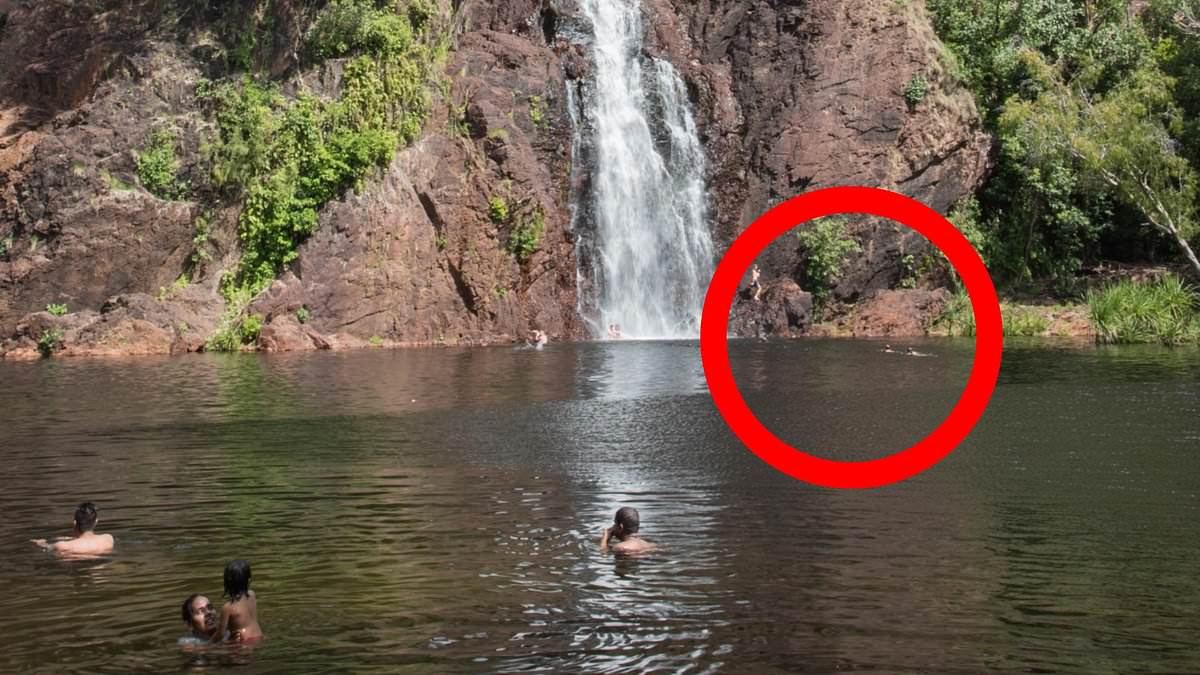
Visitors to the serene swimming spot of Wangi Falls in the Northern Territory have been told to stay out of the water after a 4.9m saltwater crocodile was captured there this week.
The enormous reptile was removed on January 5 from a creek feeding into the popular falls inside Litchfield National Park, after authorities deemed it a serious threat to public safety during the wet season.
The warning was sounded by Damian 'Wildman' Duffy, a wildlife enthusiast and nature guide who regularly urges visitors to respect crocodile signage in the area.
'In the wet season, many swimming holes close due to the increased risk of the presence of saltwater crocodiles,' Mr Duffy wrote in a Facebook post confirming the capture.
'Parks and Wildlife pulled this 4.9 metre croc from Wangi Falls in Litchfield National Park on Monday.
'Please don't risk your life, legends. It's just not worth the risk.'
While the removal was necessary, Mr Duffy also struck a note of sympathy for the animal, reminding Australians that the croc was simply doing what comes naturally.

Tourists and locals have been issued a stark reality check after a massive 4.9-metre saltwater crocodile was pulled from the water just days ago at Wangi Falls in the NT

Wangi Falls has long been sold as one of the Northern Territory's most serene swimming spots
'It definitely sucks he's been removed from the wild, he didn't know any better,' he wrote.
'I hope he's taken to someone who will respect him and give him a decent little billabong to live out his days. He's a big boy and has more than earned the right to life at his size.'
The message was echoed by Northern Territory Education Minister Jo Hersey, who also took to Facebook following the capture.
'A timely reminder to be wary around creeks and waterholes this wet season,' she wrote.
The capture prompted amazement from some at the sheer size of the animal.
'That's not a croc… it's a submarine,' one commenter joked.
Another recalled visiting the park just months earlier in November.
'Litchfield and many public swimming areas closed with croc signs. You wonder how they get there through narrow estuaries, but they do. No way was anyone risking a swim!'

The enormous reptile was captured on January 5 from a creek feeding into the popular falls inside Litchfield National Park, after authorities deemed it a serious threat to public safety during the wet season
'That croc was just being a croc inhabiting its habitat. We are the invaders,' another added.
The capture comes amid heightened crocodile activity across the Top End, with NT Parks and Wildlife confirming rangers have averaged one crocodile capture per day in the first week of 2026 alone.
Acting director of wildlife operations Sam Hyson told ABC News the Wangi Falls reptile was one of two crocodiles measuring more than four metres removed from the area within a few days.
'It's one of the larger ones caught in Litchfield for some time. It's certainly the largest one for the year [so far],' he told the news outlet.
Last year alone, 241 crocodiles were captured across the Northern Territory, with the majority removed from Darwin Harbour - a sign, rangers say, that management zones are working to intercept animals as they move into populated areas.

The capture comes amid heightened crocodile activity across the Top End, with NT Parks and Wildlife confirming rangers have averaged one crocodile capture per day in the first week of 2026 alone
Mr Hyson said crocodile detection will be stepped up even further this year, with rangers working alongside Charles Darwin University to trial new technologies including environmental DNA monitoring, artificial intelligence and underwater cameras.
For now, Litchfield National Park remains closed, with authorities confirming it will reopen only after the wet season ends and crocodile surveys are completed, which is expected around May 2026.
The closure is a blow for visitors, with the park covering approximately 1,500 square kilometres and famed for its crystal-clear plunge pools, cascading waterfalls, towering termite mounds and rugged sandstone pillars.

Last year alone, 241 crocodiles were captured across the Northern Territory, with the majority removed from Darwin Harbour. Wangi Falls are currently listed as closed on the Northern Territory Government website pictured
The land is culturally significant for the Koongurrukun, Mak Mak Marranunggu, Werat and Warray Aboriginal people, whose ancestral spirits are believed to remain present throughout the park.
During the dry season, thousands descend on swimming spots like Wangi, Florence and Tjaynera Falls, with guided tours - some costing more than $160 - promising visitors the chance to swim, walk wetlands and even spot crocodiles in the wild.
But as authorities and locals alike are stressing, there is one hard rule in the Top End that can't be ignored.
If the signs say don't swim - don't swim.
Where crocs have been caughtLast year, 241 saltwater crocodiles captured in the Top End.
According to the he Northern Territory Government website, they have been trapped in waterways of all sizes from freshwater creeks through to the open ocean, and as far south as Kalkaringi.
Capture zones for 2025:
Borroloola - 1
Katherine Zone - 1
Litchfield - 15
Lower Harbour - 36
Management Zone - 65
Nhulunbuy - 3
Outside Management Zone - 15
Shoal Bay - 53
Upper Harbour - 52
Annual Total - 241
Comments (0)