
Remember me




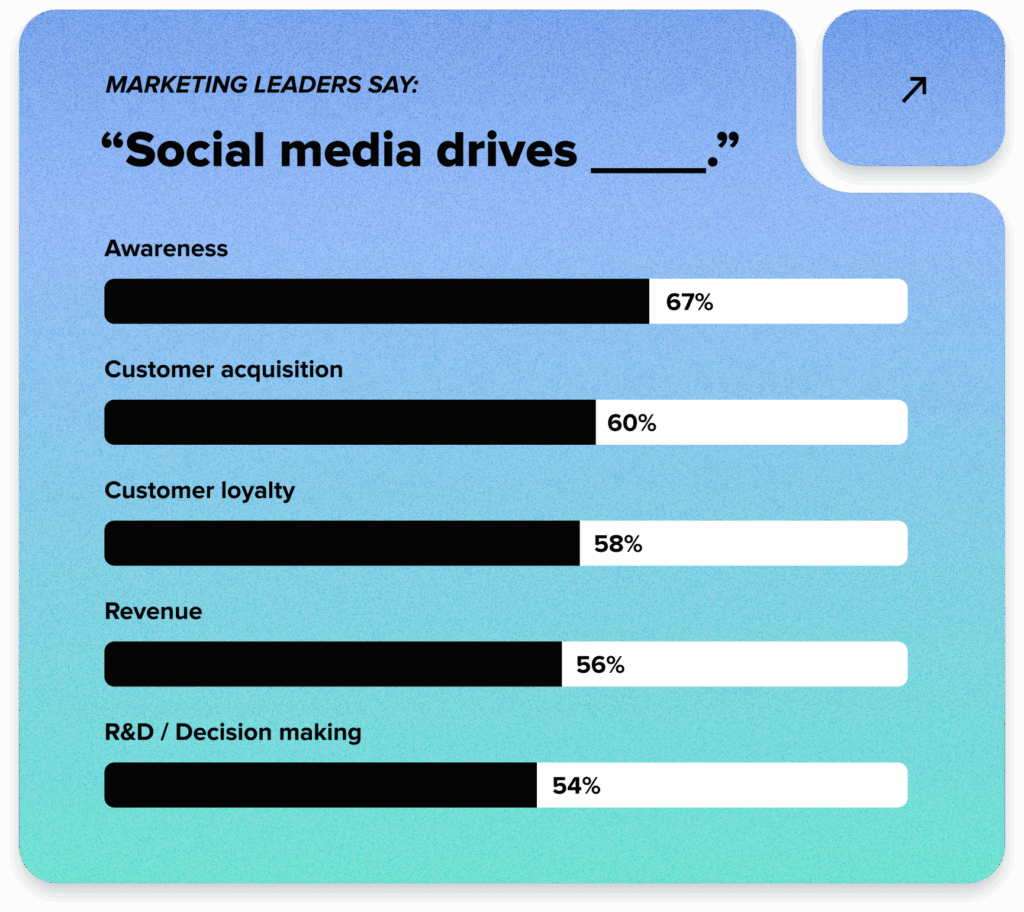
Marketing leaders are confident that social media can influence the entire customer journey. Per The 2025 Impact of Social Report, most leaders say social drives acquisition, loyalty, revenue and ROI. But they aren’t confident in their team’s ability to tie social to those outcomes.
Less than half (44%) rate their social team at the expert level when it comes to measuring the business impact of social, according to the same report. They aren’t seeing the metrics that matter most, to them or to other teams across the company. Although digital marketing teams are the most likely to use social data to inform decisions—by a long shot—leaders want teams like customer experience and success, customer care and support, and business development to use social insights to drive their decisions, too.
For that to happen, teams need to democratize access to social and share reports that go beyond engagements and conversions. If they don’t, they risk falling short of consumer expectations. Only 31% of consumers say companies effectively listen to what audiences say on social and act on their feedback, according to Sprout’s Q4 2025 Pulse Survey.
The solution: Turning social media insights into social business intelligence. By transforming social from a siloed marketing channel into a centralized insights hub, your team can play a critical role uniting your entire company around audience, industry and competitor intelligence.
Four ways to use social business intelligence across your orgSocial business intelligence starts with social listening. Social listening is the practice of collecting and analyzing conversations across social media platforms to draw useful, actionable business insights. Marketers today know what people say in influencer reviews and on Reddit threads shapes perception more than any billboard, ad campaign or website copy ever will.
Though listening is the foundation of social business intelligence, other social data sources—like influencer marketing tools and media monitoring platforms—feed social intelligence ecosystems too.
When all of this data converges, teams have trend predictions, consumer insights and market and competitive intelligence at their fingertips.
Trend predictions: Be proactive instead of reactiveTo win in the world of social search, you can’t rely on lagging indicators or internal assumptions. You need to spot trends early, optimize content and publish at the right time. Social business intelligence helps with all three.
By tapping into social intelligence, you can identify rising trends, creators and search behaviors on networks like TikTok, Reddit and Instagram. Rather than launching campaigns and hoping they land, your team can craft content that aligns with what your audience is already searching for—with the right keywords, structure and platform-specific cues.
By maximizing discoverability and relevance, you capture high-intent search traffic and turn social discovery into website visits, conversions and revenue.
Consumer behavior: Understand the voice of the customerWith social intelligence, you can build a direct line to customer behavior, expectations and emotions at scale—detecting sentiment shifts in real-time. A sudden spike in negative mentions about delayed shipping or a buggy app update can alert teams before support tickets flood in. Social teams can flag the issue, respond publicly and route insights to customer care or product, preventing a single complaint from turning into a widespread crisis.
But you can also use voice of the customer data on social to better understand your audiences’ motivations and desires. By analyzing recurring questions, complaints and comments on social, brands can spot friction points customers may never report through traditional feedback channels (i.e., confusing onboarding steps, unclear pricing tiers or features that don’t deliver on expectations). These insights help teams prioritize fixes that actually improve the customer experience.
Market intelligence: Inform product, market and customer strategyUsed strategically, social business intelligence doesn’t just inform how you go to market. It informs what you go to market with. It can shape the next product variation you release, the feature upgrades you prioritize, the retired items you decide to bring back and more.
By analyzing recurring themes in social conversations—feature requests, comparisons to competitors or unmet needs—teams can validate what to build next and what to deprioritize. Instead of relying solely on internal assumptions, product and marketing leaders use demand signals to guide roadmaps and launches. Social intelligence identifies emerging use cases, audience segments or category shifts by tracking how people talk about products they wish existed (or ways they’re adapting existing ones). These insights can inform expansion into new markets or the timing of when to introduce a new offering.
Social insights empower your team to seize opportunity early, anticipating customer needs and demands so you can iterate and evolve faster.
Competitive intelligence: Strengthen your brand’s market positionUse competitive intelligence to analyze your competitors’ messaging and product positioning to confirm the customers and pain points they’re targeting. Determine how effective they are at winning over your shared audience. What’s resonating? Where are they leaving gaps? Use performance insights to take note of their engagement benchmarks, and social listening and media monitoring tools to assess how well they’re permeating the market.
How to connect social intelligence across the enterpriseWhat does it take to move from your current state to teams across the organization accessing social intelligence? The answer lies in rethinking workflows, embedding AI into data processing and using Sprout Social as the connective tissue between social and the rest of your company.
Speed up time to social insightsHistorically, business leaders might have only reviewed social data retrospectively to gauge performance and progress to goals. We’ve entered a new era of social media management where that data can and should be used to drive proactive-decision making.
For example, social content focused on an older product might still consistently drive engagement, link clicks and website traffic. Your product team might use that data to upgrade the product in question, inspire a new product or bring back an old favorite, like when KFC brought back their beloved potato wedges.

Or maybe a wave of customers suddenly seek support through your social channels with concerns about a service outage, product flaw or website error. Based on those messages, your communications team can publish a statement while product or IT teams investigate. Meanwhile, customer service representatives can coordinate a support plan, monitor the situation and update customers as your business works toward a solution.
Beyond your product, you can also detect conversations bubbling up in your industry. Today’s news breaks on social before it reaches traditional media, and culture is born in niche online communities and comments sections. Which is why so many teams adopt a social media newsroom model. It enables visibility and cross-collaboration—allowing teams to surface critical insights across your organization, from the latest audience trends to competitor news.
In all scenarios, the resulting qualitative and quantitative social data helps your business make decisions in real-time, assess the impact and apply learnings in the future.
How Sprout fits in: Our Analytics and Listening solutions give businesses the power to harness real-time and retrospective social intelligence with ease.
With our Analytics tools, users unlock deep insights to learn what resonates with customers, identify market trends and prove the ROI of social impact so your organization can strategically wield social to increase future business impact. You can access social media performance across channels, from a network-level perspective all the way down to individual post performance. The intuitive interface makes it easy to navigate to the key performance indicators (KPIs) and metrics that matter most to your business, and to benchmark your performance against competitors.
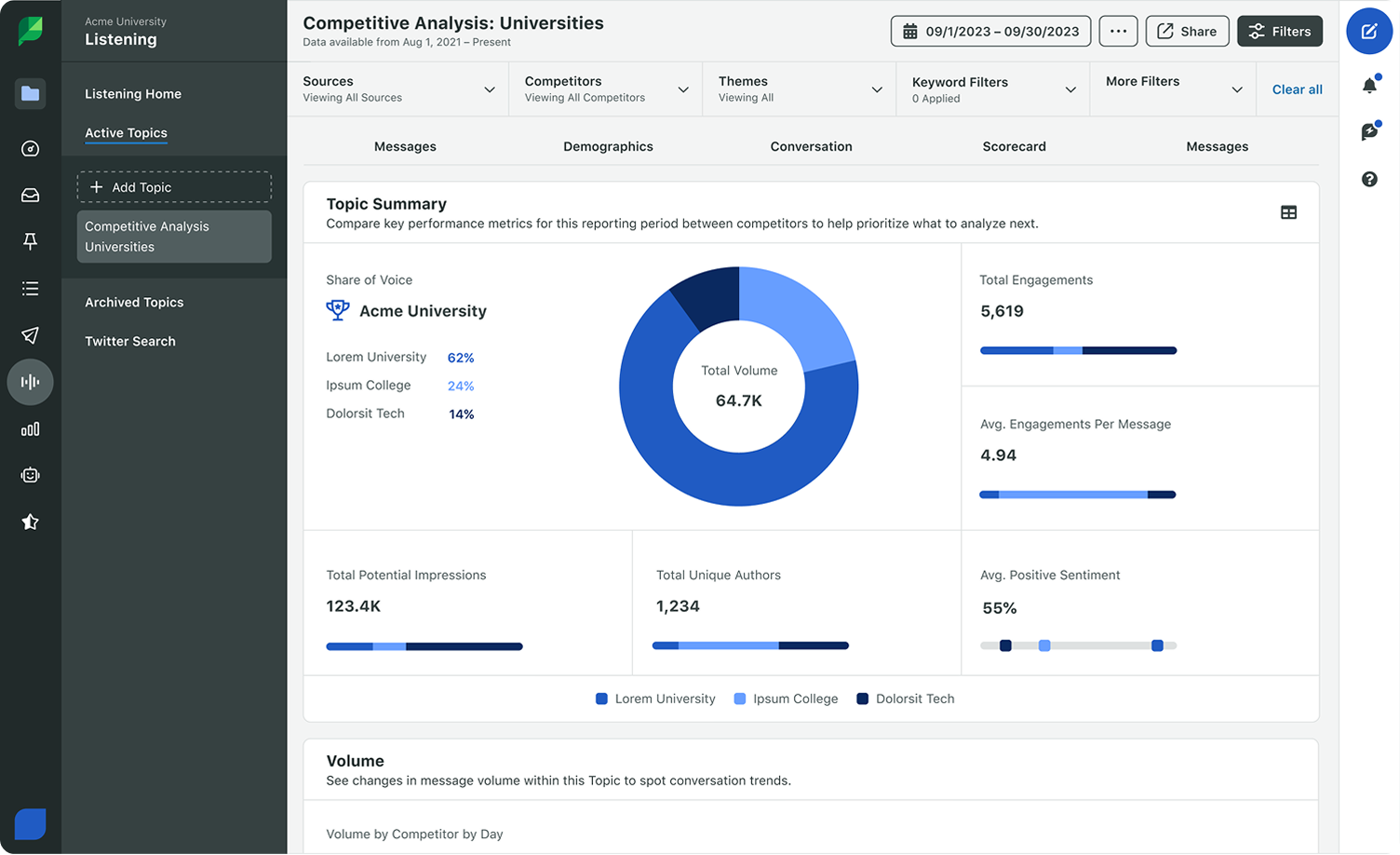
Our AI-driven Listening technology processes billions of data points automatically, delivering actionable learnings to help your brand stay ahead of the competition and exceed consumer expectations. You can track millions of conversations happening around key topics and turn data into actionable exec-ready learnings. More on that in the next section.
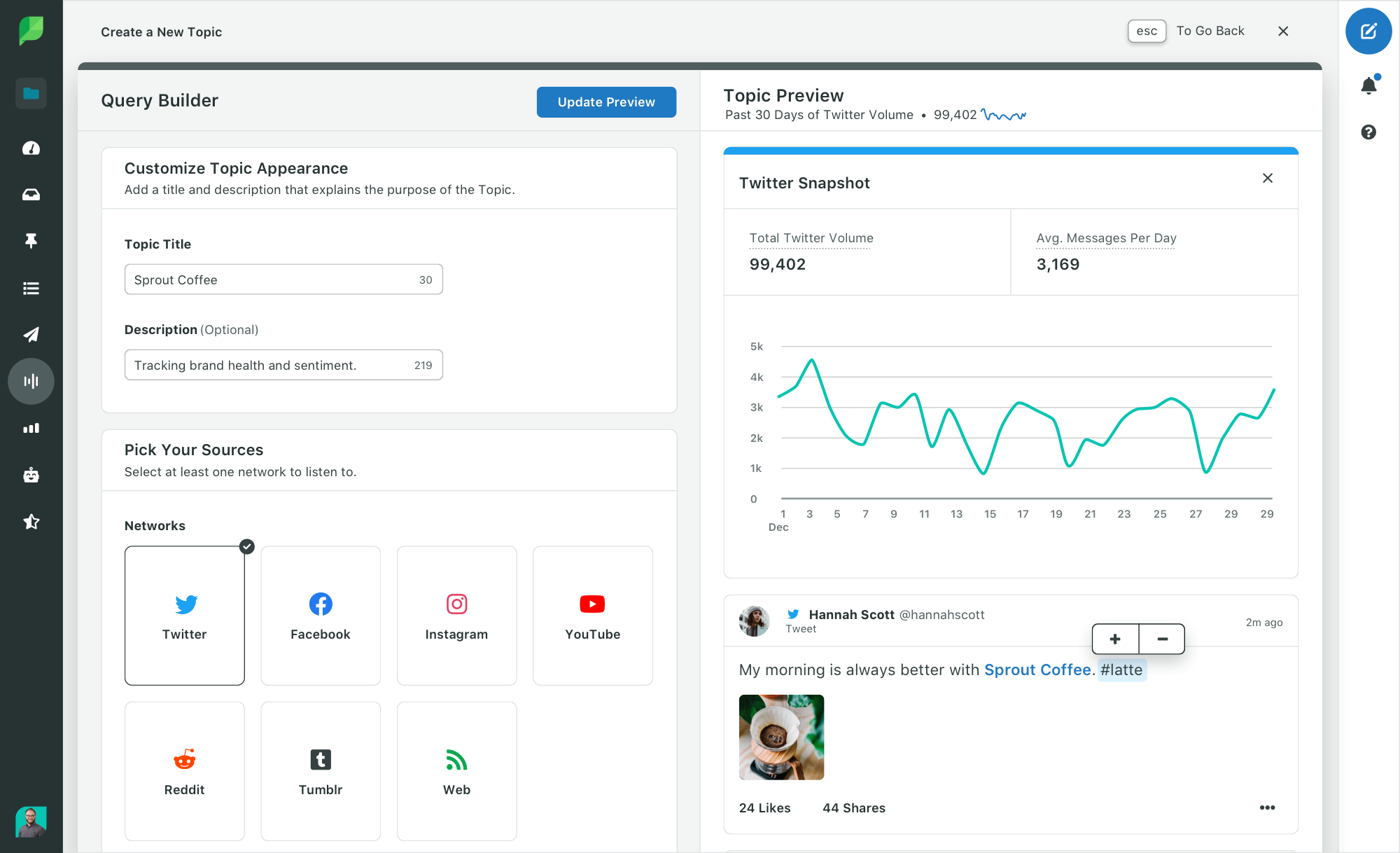 Democratize social listening data
As more businesses embrace social data as a business intelligence source, social professionals must be trusted and empowered to share their insights (check out our social media scorecard and executive summary templates for guidance on how to craft reports that go further than follower count and likes).
But moving forward, extracting value from social should be something anyone across a business can do. To truly make social a part of business transformation, brands must democratize social data.
Marketing departments are already challenged by a lack of technology adoption. If they have tools at all, they are typically cumbersome or prohibitive to users who aren’t deep analytics experts. Only 55% of social teams report using social media management platforms, per The Impact of Social Report.
At Sprout, employees outside of the marketing team are empowered to use listening data. Our sales representatives often use listening reports around timely events, and use the takeaways in their sales process. Listening also helps cross-functional teams reevaluate our business plan and hone in on what our customers need most.
How Sprout fits in: Sprout’s platform is intuitive enough for anyone to use, without a significant investment in technical training. With Sprout AI, social data becomes a central intelligence layer for your entire organization. Sprout AI isn’t a collection of features. It’s a new way of working that empowers marketers to:
Spot emerging trends, sentiment shifts and potential risks. Identify what’s resonating with your audience and how to optimize for discoverability. Provide analyst-level insights and recommendations from complex data sets to inform strategy, product innovation and competitive intelligence.Our new AI Agent, Trellis, is a strategic teammate that automates tedious tasks and surfaces real-time insights to drive better, faster decisions across every department. Teams can delegate complex research to Trellis and get custom, clear answers to pressing business questions with a simple, conversational query.
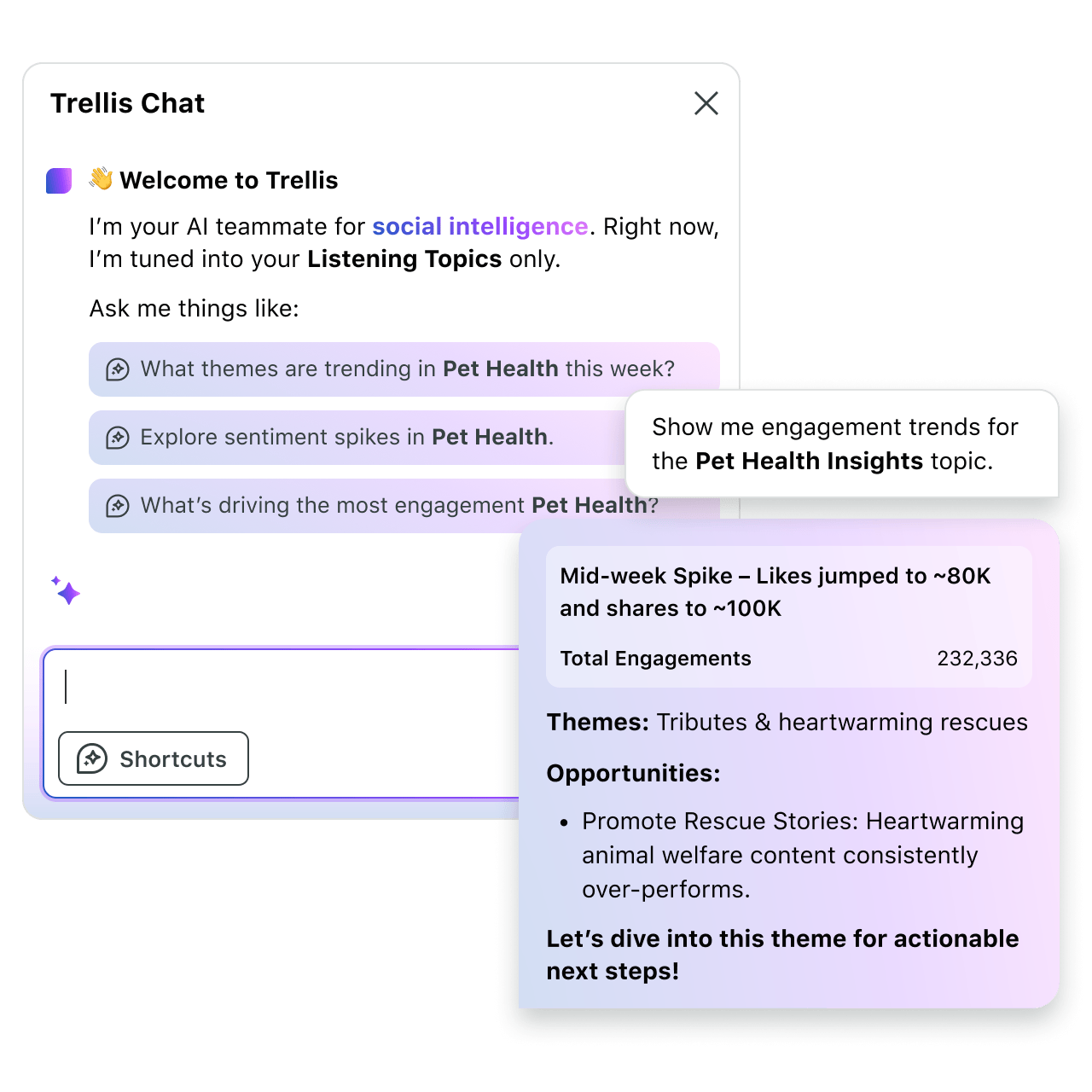
And Sprout’s ChatGPT connection is another secure, conversational way to get instant insights. Teams can analyze campaigns, discover top content and plan strategy with a simple conversation, empowering marketers to make faster, smarter decisions with solutions they already know and use.
Use social intelligence to drive business growthSprout customers have used our platform to answer questions like, what are the latest holiday shopping trends? Which creator should I partner with next? What are our competitors doing? But that’s just the tip of the iceberg.
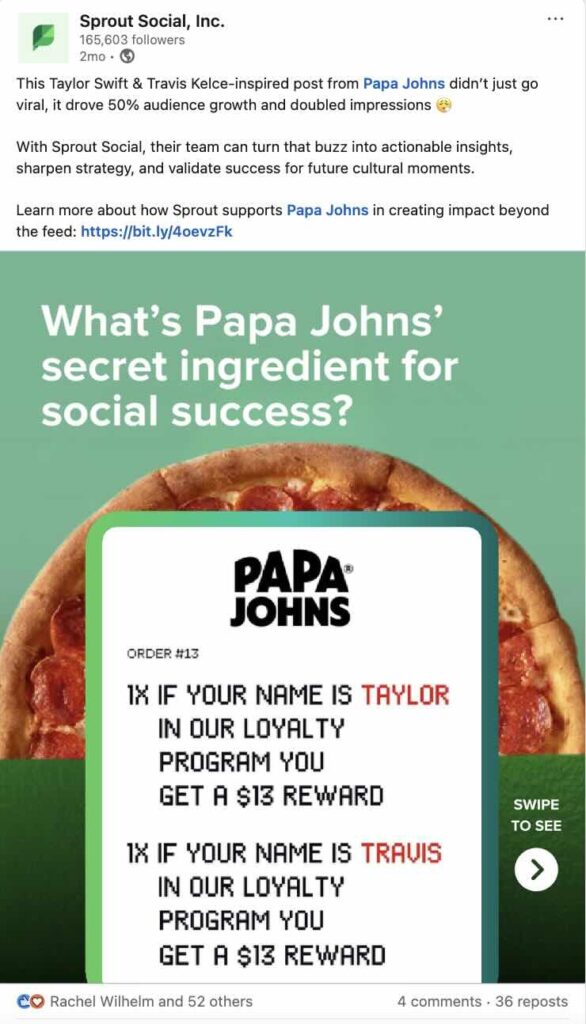
Ultimately, social intelligence is a business growth lever. As Papa John’s Director of Social Media & Brand Engagement said, “Social listening is my favorite part of social media. You can find opportunities you would have never known about just by listening and paying attention.”
But social intelligence can only become a true operating system for your organization if it flows across all of the systems your team and customers touch. Social data is too critical to live only in dashboards.
How Sprout fits in: Teams need a deeply embedded ecosystem where social intelligence flows directly into the tools they already use. At Sprout, we enrich Salesforce cases with full social context for faster, empathetic service. We pipe social data into Tableau for wider business insights. We push critical trends into Slack for coordinated action.
Our platform also makes it possible to seamlessly move from a trend signal in Sprout to building a campaign brief in Asana to creating assets in Canva or Adobe Express, eliminating unnecessary friction.
Unlock social business intelligence for allSocial media already shapes every stage of the customer journey. But its full value is only unlocked when insights are shared beyond marketing. By democratizing access to social business intelligence, organizations can move faster, listen better and make smarter decisions rooted in real audience behavior.
When social data flows across teams, it becomes a unifying intelligence layer that fuels product innovation, customer experience and competitive advantage. The brands that win next will be the ones that treat social not as a channel, but as a core operating system for the business.
To see our social intelligence platform in action, request a demo today.